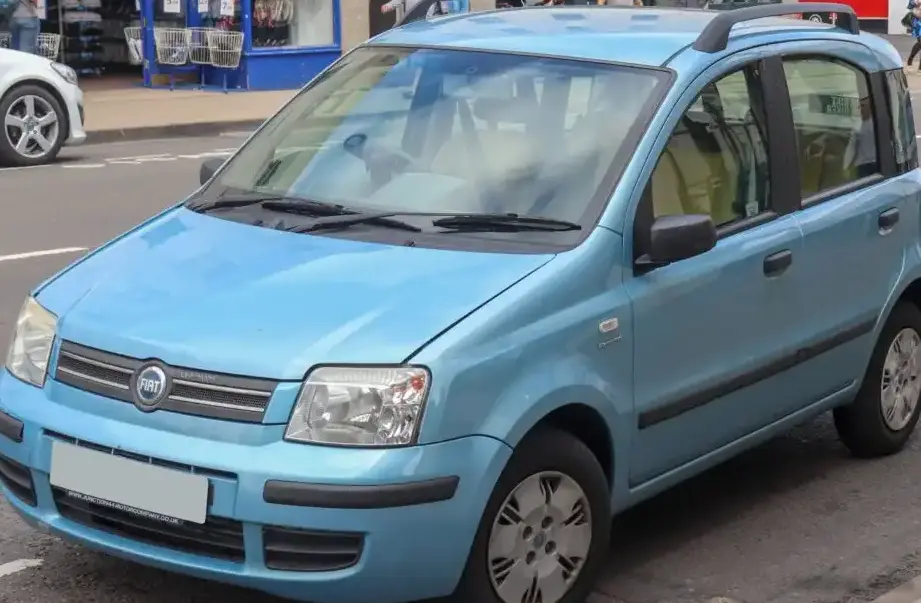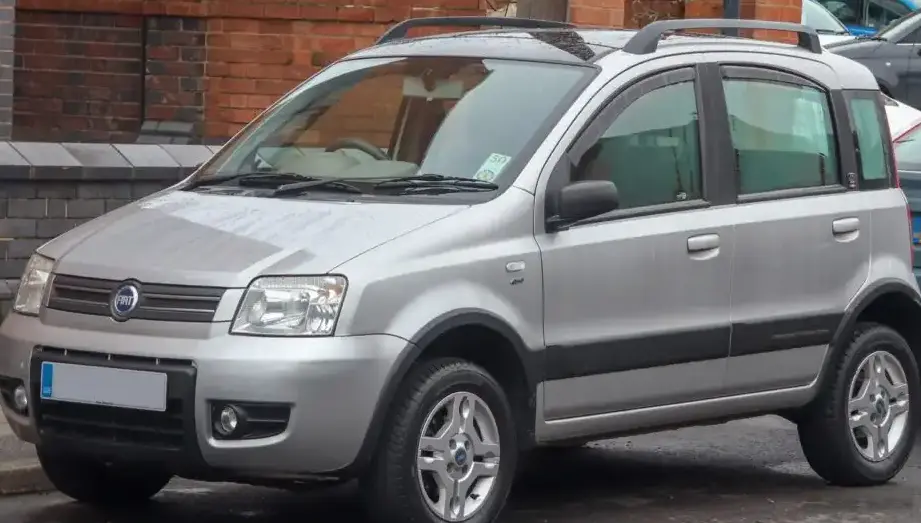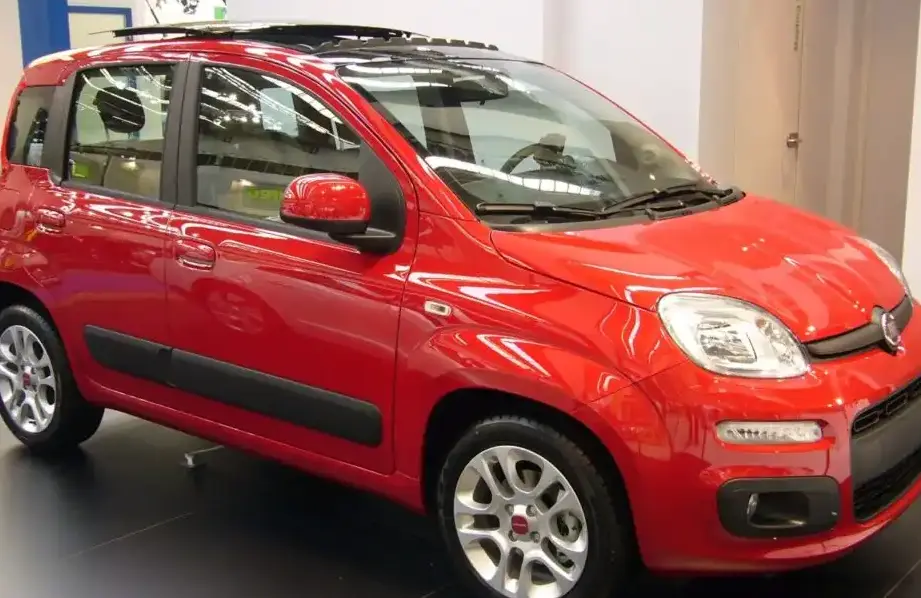
The Fiat Panda III (319) 1.2, producing 69 horsepower, was a key variant in the third generation of Fiat’s iconic city car. Introduced in 2018 and remaining in production through 2020, this model represented an entry point into the Panda III range, offering affordability and practicality for urban drivers. It was built on the 319 platform, a revised version of the earlier Panda’s architecture, focusing on improved safety and efficiency. This particular engine and transmission combination aimed to balance fuel economy with acceptable performance for its intended use case – primarily navigating congested city streets.
Technical Specifications
| Brand | Fiat |
| Model | Panda |
| Generation | Panda III (319) |
| Type (Engine) | 1.2 (69 Hp) |
| Start of production | 2018 year |
| End of production | 2020 year |
| Powertrain Architecture | Internal Combustion engine |
| Body type | Hatchback |
| Seats | 4-5 |
| Doors | 5 |
| Fuel consumption (urban) | 7.2 l/100 km (32.7 US mpg, 39.2 UK mpg, 13.9 km/l) |
| Fuel consumption (extra urban) | 4.8 l/100 km (49 US mpg, 58.9 UK mpg, 20.8 km/l) |
| Fuel consumption (combined) | 5.7 l/100 km (41.3 US mpg, 49.6 UK mpg, 17.5 km/l) |
| CO2 emissions | 131 g/km |
| Fuel Type | Petrol (Gasoline) |
| Acceleration 0 – 100 km/h | 14.8 sec |
| Acceleration 0 – 62 mph | 14.8 sec |
| Acceleration 0 – 60 mph | 14.1 sec |
| Maximum speed | 164 km/h (101.9 mph) |
| Emission standard | Euro 6d – Temp |
| Weight-to-power ratio | 15.3 kg/Hp, 65.4 Hp/tonne |
| Weight-to-torque ratio | 10.3 kg/Nm, 96.7 Nm/tonne |
| Power | 69 Hp @ 5500 rpm |
| Power per litre | 55.6 Hp/l |
| Torque | 102 Nm @ 3000 rpm (75.23 lb.-ft. @ 3000 rpm) |
| Engine layout | Front, Transverse |
| Engine Model/Code | 169A4000 |
| Engine displacement | 1242 cm3 (75.79 cu. in.) |
| Number of cylinders | 4 |
| Engine configuration | Inline |
| Cylinder Bore | 70.8 mm (2.79 in.) |
| Piston Stroke | 78.9 mm (3.11 in.) |
| Compression ratio | 11.1:1 |
| Number of valves per cylinder | 2 |
| Engine aspiration | Naturally aspirated engine |
| Engine oil capacity | 2.8 l (2.96 US qt | 2.46 UK qt) |
| Coolant | 4.6 l (4.86 US qt | 4.05 UK qt) |
| Kerb Weight | 1055 kg (2325.88 lbs.) |
| Max. weight | 1420-1440 kg (3130.56 – 3174.66 lbs.) |
| Max load | 365-385 kg (804.69 – 848.78 lbs.) |
| Trunk (boot) space – minimum | 225 l (7.95 cu. ft.) |
| Fuel tank capacity | 37 l (9.77 US gal | 8.14 UK gal) |
| Length | 3653 mm (143.82 in.) |
| Width | 1643 mm (64.69 in.) |
| Height | 1551 mm (61.06 in.) |
| Wheelbase | 2300 mm (90.55 in.) |
| Minimum turning circle | 9.3 m (30.51 ft.) |
| Drivetrain Architecture | The Internal combustion engine (ICE) drives the front wheels of the vehicle. |
| Drive wheel | Front wheel drive |
| Number of gears and type of gearbox | 5 gears, manual transmission |
| Front suspension | Independent, type McPherson with coil spring and anti-roll bar |
| Rear suspension | Torsion |
| Front brakes | Disc, 257 mm |
| Rear brakes | Drum, 203 mm |
| Assisting systems | ABS (Anti-lock braking system) |
| Steering type | Steering rack and pinion |
| Power steering | Electric Steering |
| Wheel rims size | 14; 15 |
Powertrain & Engine Architecture
The heart of this Panda variant is the 1.2-liter, naturally aspirated inline-four cylinder engine, designated the 169A4000. This engine is a relatively simple design, utilizing a single overhead camshaft (SOHC) and two valves per cylinder. Fuel delivery is managed by a multi-point fuel injection system, providing adequate atomization for efficient combustion. The engine’s 11.1:1 compression ratio contributes to its modest power output. The 69 horsepower and 75 lb-ft of torque are delivered at 5500 and 3000 rpm respectively. Paired with this engine was a standard five-speed manual transmission, optimized for fuel efficiency and urban driving. The transmission’s gear ratios were relatively tall, prioritizing economy over rapid acceleration.
Driving Characteristics
The 1.2-liter Panda is not a performance-oriented vehicle. Acceleration is leisurely, taking approximately 14.8 seconds to reach 62 mph (100 km/h). However, this was not the intended purpose of this trim level. The engine provides sufficient power for navigating city streets and maintaining highway speeds, albeit with limited reserves for overtaking. The tall gear ratios in the five-speed manual transmission contribute to a relaxed driving experience at cruising speeds, but require frequent downshifts when encountering hills or needing to accelerate quickly. Compared to higher-spec Panda models equipped with the 1.3-liter Multijet diesel or the more powerful 1.2 FireFly engine, the 1.2-liter version feels noticeably less responsive.
Equipment & Trim Levels
The 1.2-liter Panda typically served as the base trim level. Standard equipment generally included power steering, central locking, electric front windows, and an ABS anti-lock braking system. Interior appointments were basic, with durable cloth upholstery and a functional dashboard layout. Optional extras, such as air conditioning, a radio with Bluetooth connectivity, and alloy wheels, were available at an additional cost. The focus was on providing essential features at an affordable price point.
Chassis & Braking
The Panda III utilizes a McPherson strut front suspension and a torsion beam rear suspension. This setup provides a comfortable ride quality, particularly on smooth surfaces. The front brakes are disc brakes, while the rear brakes are drum brakes – a cost-saving measure common in entry-level vehicles. The steering is rack and pinion, providing reasonably precise control. Stabilizer bars were typically omitted on the base 1.2-liter model, contributing to a slightly more pronounced body roll during cornering.
Market Reception & Comparison
The Fiat Panda 1.2 was generally well-received as an affordable and practical city car. Critics praised its fuel efficiency and ease of driving, but noted its limited performance. Compared to other entry-level hatchbacks in the European market, such as the Renault Twingo and the Peugeot 108, the Panda offered a compelling combination of price, practicality, and Italian styling. The 1.2-liter engine offered better fuel economy than the diesel options, but at the cost of performance. Reliability was generally good, with the 169A4000 engine proving to be a durable and relatively trouble-free unit.
Legacy
The Fiat Panda III 1.2 (69 Hp) remains a popular choice in the used car market, particularly for first-time drivers or those seeking an economical and reliable city car. The 169A4000 engine is known for its longevity and relatively low maintenance costs. While not a particularly exciting vehicle to drive, its practicality, affordability, and fuel efficiency have ensured its continued relevance in the years since its production ended. Parts availability remains good, and the simple mechanical design makes it relatively easy to repair and maintain.