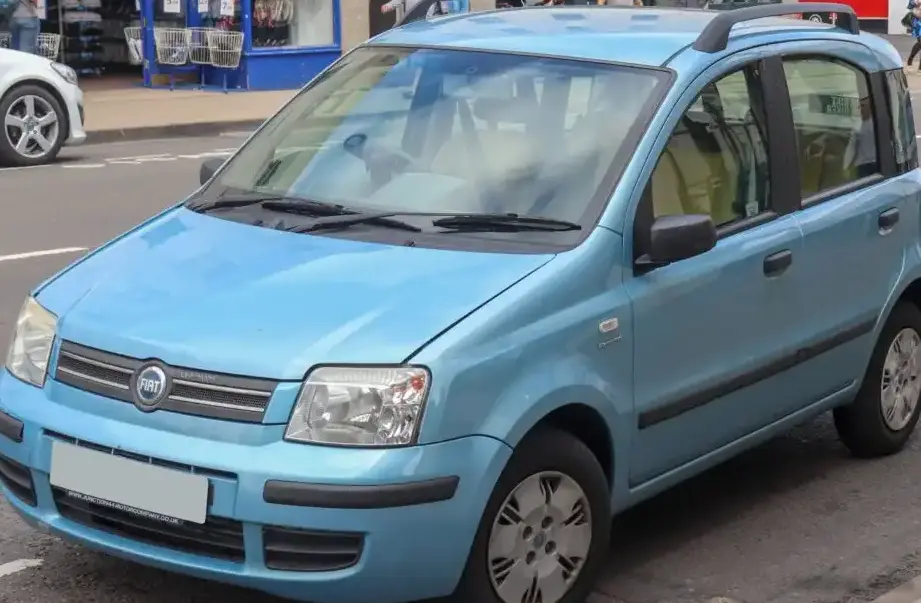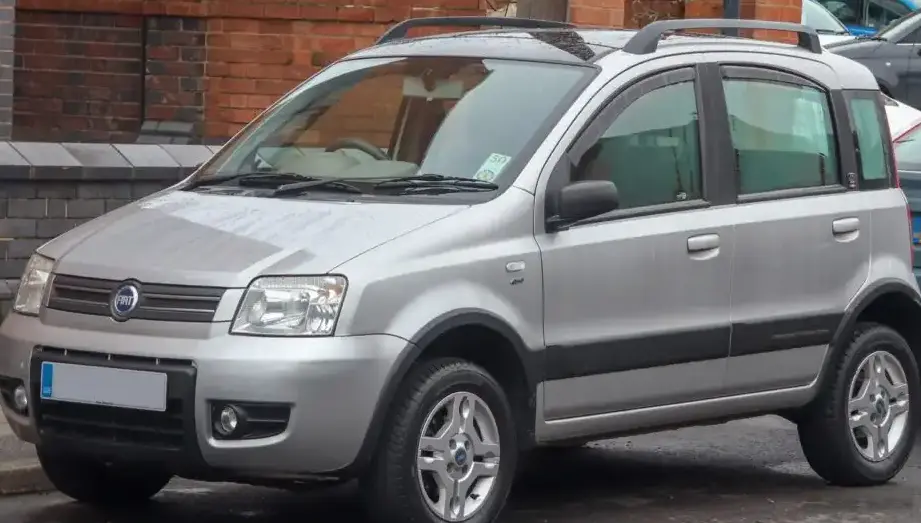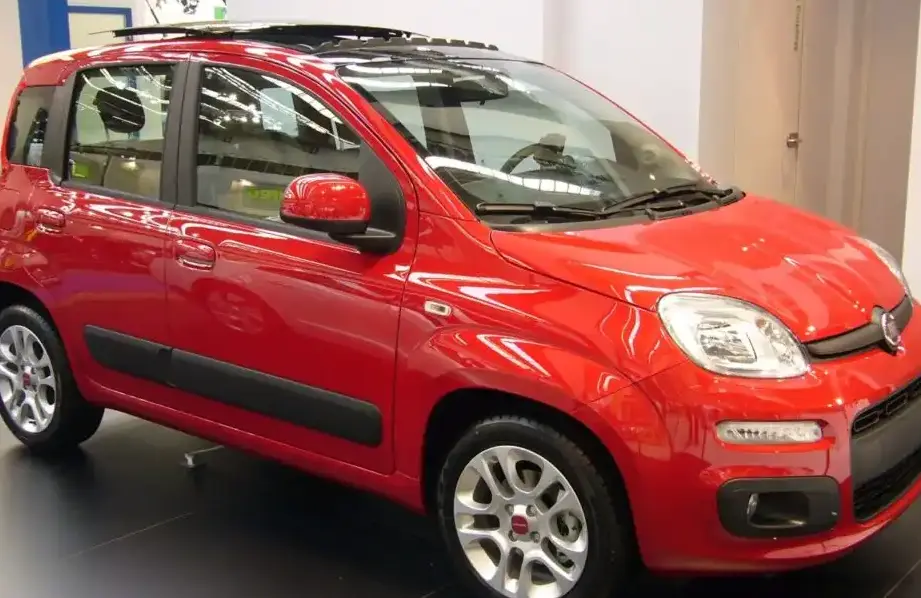
The Fiat Panda III (319) 1.2 FIRE, producing 69 horsepower, was a mainstay of the Panda lineup from 2011 to 2018. Positioned as the entry-level variant, it offered an affordable and economical means of transportation within the broader Panda III generation (platform 319). This model was particularly significant in European markets, where the Panda traditionally held a strong position as a compact, practical city car. The 1.2 FIRE engine, known for its simplicity and reliability, made this version a popular choice for budget-conscious buyers and those prioritizing fuel efficiency.
Technical Specifications
| Brand | Fiat |
| Model | Panda |
| Generation | Panda III (319) |
| Type (Engine) | 1.2 FIRE (69 Hp) |
| Start of production | 2011 |
| End of production | 2018 |
| Powertrain Architecture | Internal Combustion engine |
| Body type | Hatchback |
| Seats | 5 |
| Doors | 5 |
| Fuel consumption (urban) | 6.7 l/100 km (35.1 US mpg, 42.2 UK mpg, 14.9 km/l) |
| Fuel consumption (extra urban) | 4.3 l/100 km (54.7 US mpg, 65.7 UK mpg, 23.3 km/l) |
| Fuel consumption (combined) | 5.2 l/100 km (45.2 US mpg, 54.3 UK mpg, 19.2 km/l) |
| Fuel Type | Petrol (Gasoline) |
| Acceleration 0 – 100 km/h | 14.2 sec |
| Acceleration 0 – 62 mph | 14.2 sec |
| Acceleration 0 – 60 mph | 13.5 sec |
| Maximum speed | 164 km/h (101.9 mph) |
| Emission standard | Euro 5 |
| Weight-to-power ratio | 13.6 kg/Hp, 73.4 Hp/tonne |
| Weight-to-torque ratio | 9.2 kg/Nm, 108.5 Nm/tonne |
| Power | 69 Hp @ 5500 rpm |
| Power per litre | 55.6 Hp/l |
| Torque | 102 Nm @ 3000 rpm (75.23 lb.-ft. @ 3000 rpm) |
| Engine layout | Front, Transverse |
| Engine Model/Code | 169A4000 |
| Engine displacement | 1242 cm3 (75.79 cu. in.) |
| Number of cylinders | 4 |
| Engine configuration | Inline |
| Fuel injection system | Multi-port manifold injection |
| Engine aspiration | Naturally aspirated engine |
| Engine oil capacity | 2.8 l (2.96 US qt | 2.46 UK qt) |
| Coolant capacity | 4.6 l (4.86 US qt | 4.05 UK qt) |
| Kerb Weight | 940 kg (2072.35 lbs) |
| Trunk (boot) space – minimum | 225 l (7.95 cu. ft) |
| Fuel tank capacity | 37 l (9.77 US gal | 8.14 UK gal) |
| Length | 3653 mm (143.82 in) |
| Width | 1643 mm (64.69 in) |
| Height | 1551 mm (61.06 in) |
| Wheelbase | 2300 mm (90.55 in) |
| Front track | 1522 mm (59.92 in) |
| Rear track | 1519 mm (59.8 in) |
| Minimum turning circle | 9.3 m (30.51 ft) |
| Drivetrain Architecture | Front wheel drive |
| Number of gears | 5 gears, manual transmission |
| Front suspension | Independent type McPherson |
| Rear suspension | Torsion |
| Front brakes | Disc |
| Rear brakes | Drum |
| Assisting systems | ABS (Anti-lock braking system) |
| Steering type | Steering rack and pinion |
| Power steering | Electric Steering |
| Tires size | 175/65 R14 82T; 185/55 R15 82T |
| Wheel rims size | 14; 15 |
Introduction
The Fiat Panda III 1.2 FIRE (69 Hp) represented a core offering within the redesigned Panda range launched in 2011. The third generation Panda, designated as the 319 project, aimed to modernize the iconic city car while retaining its core values of affordability, practicality, and ease of use. This 1.2-liter variant served as the entry point to the lineup, appealing to buyers seeking a no-frills, economical vehicle for urban commuting. It was a key model for Fiat in several European countries, particularly Italy, where the Panda has historically been a best-selling vehicle.
Powertrain & Engine Architecture
The heart of this Panda variant is the 1.2-liter FIRE (Fully Integrated Robotized Engine) inline-four cylinder engine, specifically the 169A4000 code. The FIRE engine family is renowned for its simplicity, durability, and low production costs. This particular iteration features a single overhead camshaft (SOHC) valvetrain with two valves per cylinder. Fuel delivery is managed by a multi-point fuel injection system, providing adequate, though not exceptional, performance. The engine’s modest output of 69 horsepower at 5500 rpm and 75.23 lb-ft of torque at 3000 rpm is geared towards fuel efficiency rather than outright speed. The engine is transversely mounted at the front of the vehicle. The standard transmission was a five-speed manual gearbox, chosen for its cost-effectiveness and contribution to fuel economy. While an automated manual transmission (Dualogic) was available on other Panda trims, it wasn’t typically paired with the base 1.2 FIRE engine.
Driving Characteristics
The driving experience in the Panda 1.2 FIRE is best described as functional and undemanding. Acceleration is leisurely, taking approximately 14.2 seconds to reach 62 mph (100 km/h). The five-speed manual transmission is light and easy to operate, but the engine lacks the punch for quick overtaking maneuvers. The gear ratios are optimized for fuel economy, meaning the engine needs to be revved to extract the most performance. Compared to higher-output versions of the Panda, such as those equipped with the 1.4-liter engine, the 1.2 FIRE feels noticeably slower. However, its lightweight construction and nimble handling make it surprisingly enjoyable to drive in urban environments. The steering is light and precise, and the suspension provides a comfortable, if somewhat basic, ride.
Equipment & Trim Levels
The 1.2 FIRE variant typically represented the base trim level. Standard equipment generally included power steering, central locking, electric front windows, and a basic audio system. Safety features included ABS brakes and driver and passenger airbags. Interior upholstery was typically a durable, patterned cloth. Optional extras included air conditioning, a CD player, and alloy wheels. The dashboard layout was simple and functional, prioritizing ease of use over aesthetic appeal. Higher trim levels, such as the Lounge or Eleganza, added features like body-colored bumpers, upgraded interior trim, and more sophisticated audio systems, but these were not typically offered with the 1.2 FIRE engine.
Chassis & Braking
The Panda III utilizes a front-wheel-drive layout with an independent McPherson strut suspension at the front and a torsion beam suspension at the rear. This setup provides a good balance of ride comfort and handling for a vehicle of its size and price point. The front brakes are disc brakes, while the rear brakes are drum brakes – a cost-saving measure common in entry-level vehicles. The steering system employs a rack and pinion setup with electric power assistance, providing light and responsive steering feel. The tires are typically 175/65 R14 or 185/55 R15, depending on the trim level and optional equipment.
Market Reception & Comparison
The Panda 1.2 FIRE was generally well-received by critics as a practical and affordable city car. Its fuel efficiency was a major selling point, and its compact size made it easy to maneuver in congested urban areas. However, its modest performance and basic interior were often criticized. Compared to other trims in the Panda lineup, such as the 1.4-liter versions, the 1.2 FIRE offered significantly less power and refinement. However, it was also considerably cheaper to purchase and operate. In terms of reliability, the FIRE engine is known to be robust and relatively trouble-free, making the 1.2 FIRE a sensible choice for buyers seeking a dependable vehicle.
Legacy
The Fiat Panda III 1.2 FIRE has proven to be a reliable and economical vehicle in the used car market. Its simple mechanical design and readily available parts contribute to relatively low maintenance costs. While not a performance car, it remains a popular choice for those seeking a practical and affordable means of transportation. The FIRE engine’s reputation for durability ensures that well-maintained examples continue to provide years of service. The Panda III, and particularly this base model, cemented the Panda’s reputation as a dependable and accessible vehicle for a wide range of drivers.