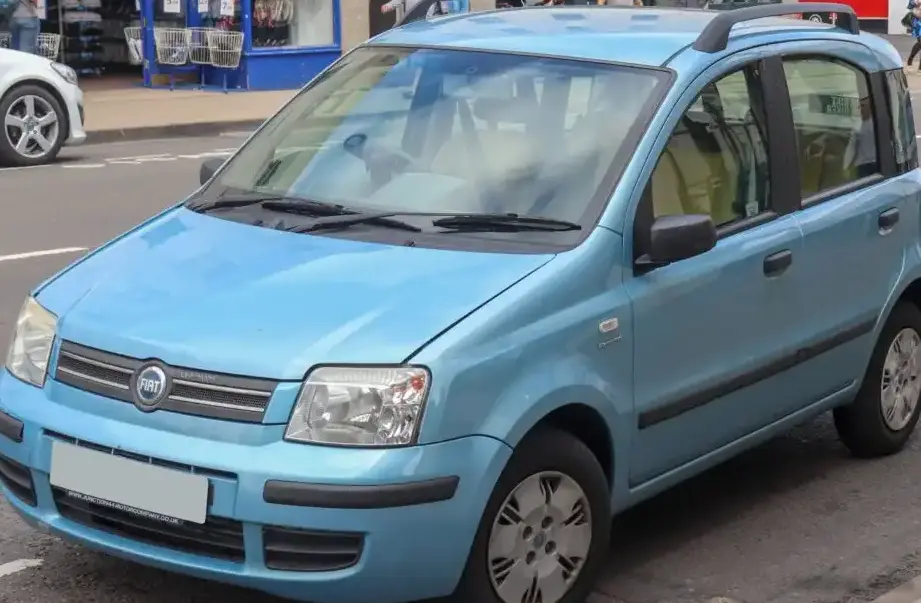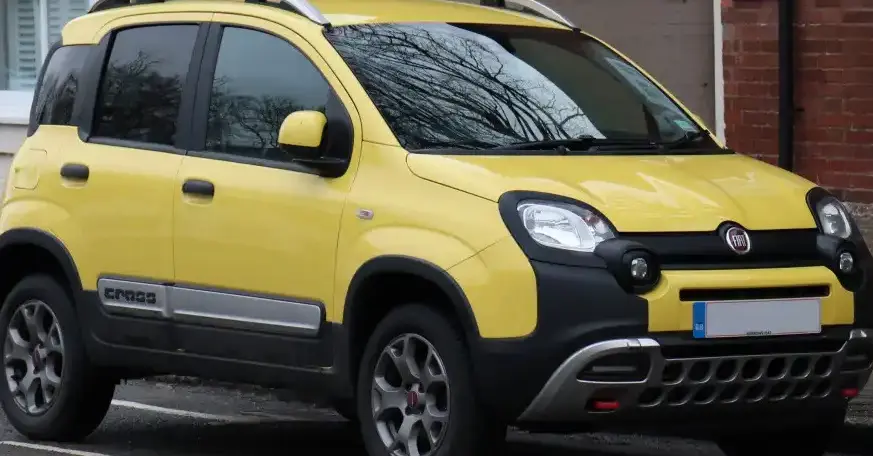
The Fiat Panda III Cross 1.3 Multijet II 4×4, produced between 2014 and 2018, represents a unique blend of practicality, affordability, and off-road capability within the compact city car segment. Positioned as the more adventurous variant of the third-generation Panda (introduced in 2003, internally designated as the 169 project), the Cross model aimed to broaden the Panda’s appeal beyond urban environments. It distinguished itself through increased ground clearance, a four-wheel-drive system, and rugged styling cues, making it a popular choice in regions with varied terrain, particularly in Europe. This specific 1.3 Multijet II engine, producing 95 horsepower, was a mid-range offering within the Panda Cross lineup, balancing fuel efficiency with adequate performance for its intended purpose.
Technical Specifications
| Brand | Fiat |
| Model | Panda |
| Generation | Panda III Cross |
| Type (Engine) | 1.3 Multijet II (95 Hp) 4×4 |
| Start of production | 2014 |
| End of production | 2018 |
| Powertrain Architecture | Internal Combustion engine |
| Body type | Hatchback |
| Seats | 5 |
| Doors | 5 |
| Fuel consumption (urban) | 4.8 l/100 km (49 US mpg, 58.9 UK mpg, 20.8 km/l) |
| Fuel consumption (extra urban) | 4.4 l/100 km (53.5 US mpg, 64.2 UK mpg, 22.7 km/l) |
| Fuel consumption (combined) | 4.5 l/100 km (52.3 US mpg, 62.8 UK mpg, 22.2 km/l) |
| CO2 emissions | 119 g/km |
| Fuel Type | Diesel |
| Acceleration 0 – 100 km/h | 12.7 sec |
| Acceleration 0 – 62 mph | 12.7 sec |
| Acceleration 0 – 60 mph | 12.1 sec |
| Maximum speed | 168 km/h (104.39 mph) |
| Emission standard | Euro 6 |
| Weight-to-power ratio | 12.3 kg/Hp, 81.5 Hp/tonne |
| Weight-to-torque ratio | 5.8 kg/Nm, 171.7 Nm/tonne |
| Power | 95 Hp @ 3750 rpm |
| Power per litre | 76.1 Hp/l |
| Torque | 200 Nm @ 1500 rpm (147.51 lb.-ft. @ 1500 rpm) |
| Engine layout | Front, Transverse |
| Engine Model/Code | 312B1000, 330A1000 |
| Engine displacement | 1248 cm3 (76.16 cu. in.) |
| Number of cylinders | 4 |
| Engine configuration | Inline |
| Cylinder Bore | 69.6 mm (2.74 in.) |
| Piston Stroke | 82 mm (3.23 in.) |
| Compression ratio | 16.8:1 |
| Number of valves per cylinder | 4 |
| Fuel injection system | Diesel Commonrail |
| Engine aspiration | Turbocharger, Intercooler |
| Valvetrain | DOHC |
| Engine oil capacity | 3.9 l (4.12 US qt | 3.43 UK qt) |
| Coolant | 6.3 l (6.66 US qt | 5.54 UK qt) |
| Kerb Weight | 1165 kg (2568.39 lbs.) |
| Max. weight | 1625 kg (3582.51 lbs.) |
| Max load | 460 kg (1014.13 lbs.) |
| Trunk (boot) space – minimum | 225 l (7.95 cu. ft.) |
| Trunk (boot) space – maximum | 870 l (30.72 cu. ft.) |
| Fuel tank capacity | 35 l (9.25 US gal | 7.7 UK gal) |
| Permitted trailer load with brakes (12%) | 900 kg (1984.16 lbs.) |
| Permitted trailer load without brakes | 400 kg (881.85 lbs.) |
| Length | 3705 mm (145.87 in.) |
| Width | 1662 mm (65.43 in.) |
| Width including mirrors | 1882 mm (74.09 in.) |
| Height | 1657 mm (65.24 in.) |
| Wheelbase | 2300 mm (90.55 in.) |
| Front track | 1403 mm (55.24 in.) |
| Rear (Back) track | 1406 mm (55.35 in.) |
| Drag coefficient (Cd) | 0.35 |
| Minimum turning circle | 9.7 m (31.82 ft.) |
| Approach angle | 24° |
| Departure angle | 34° |
| Ramp-over angle | 21° |
| Drive wheel | All wheel drive (4×4) |
| Number of gears and type of gearbox | 5 gears, manual transmission |
| Front suspension | Independent type McPherson |
| Rear suspension | Torsion |
| Front brakes | Ventilated discs |
| Rear brakes | Disc |
| Assisting systems | ABS (Anti-lock braking system) |
| Tires size | 185/65 R15 |
| Wheel rims size | 15 |
Powertrain & Engine Architecture
The heart of the Panda III Cross 1.3 Multijet II 4×4 is the 312B1000 or 330A1000 engine code, a 1.3-liter inline-four cylinder diesel engine. This engine is part of Fiat’s Multijet II family, known for its common-rail direct injection system and turbocharging. The Multijet II technology allows for multiple injections per combustion cycle, improving efficiency and reducing noise. The engine utilizes a single overhead camshaft (SOHC) design operating four valves per cylinder (DOHC). The turbocharger, coupled with an intercooler, helps to boost power output to 95 horsepower at 3750 rpm and 200 Nm (147.51 lb-ft) of torque at 1500 rpm. The engine is transversely mounted in the front of the vehicle. The 95 hp version was paired with a 5-speed manual transmission, delivering power to all four wheels via a selectable four-wheel-drive system.
Driving Characteristics
The 1.3 Multijet II engine, while not exceptionally powerful, provides adequate performance for everyday driving and light off-road excursions. The 4×4 system, selectable via a rotary dial, offers three modes: 4×2 (front-wheel drive for fuel economy), 4×4 Auto (automatic engagement of all-wheel drive when slip is detected), and 4×4 Lock (permanent all-wheel drive for more challenging terrain). The manual transmission’s gear ratios are geared towards fuel efficiency, meaning acceleration isn’t particularly brisk – 0-60 mph takes around 12.1 seconds. However, the engine’s strong low-end torque makes it feel more responsive in real-world driving situations, particularly when navigating hilly terrain or carrying a load. Compared to the base 1.2-liter petrol engine, the Multijet offered significantly more torque and better fuel economy, but lacked the petrol engine’s smoother refinement. Compared to higher-output versions of the Multijet, the 95 hp variant provided a more economical and accessible entry point into the Panda Cross range.
Equipment & Trim Levels
The Panda III Cross 1.3 Multijet II 4×4 typically came equipped with features such as air conditioning, central locking, electric front windows, and a basic audio system. The interior featured durable, hard-wearing materials designed to withstand the rigors of outdoor use. The seats were often upholstered in a combination of fabric and vinyl. Optional extras included alloy wheels, a more advanced audio system with Bluetooth connectivity, and parking sensors. The Cross trim level also included unique exterior styling elements, such as plastic body cladding, skid plates, and roof rails, giving it a more rugged appearance.
Chassis & Braking
The Panda III Cross utilizes a McPherson strut suspension setup at the front and a torsion beam suspension at the rear. The suspension was tuned to provide a comfortable ride on paved roads while also offering sufficient articulation for off-road driving. The increased ground clearance, a key feature of the Cross model, further enhances its off-road capability. The braking system consists of ventilated discs at the front and solid discs at the rear, equipped with ABS (Anti-lock Braking System) as standard. The relatively light weight of the vehicle contributes to its respectable braking performance.
Market Reception & Comparison
The Fiat Panda III Cross 1.3 Multijet II 4×4 was generally well-received by automotive critics for its practicality, affordability, and surprisingly capable off-road performance. It was praised for its fuel efficiency and its ability to navigate challenging terrain. However, some critics noted its relatively basic interior and its lack of refinement compared to more conventional hatchbacks. Compared to other trims in the Panda lineup, the Cross model commanded a premium price due to its four-wheel-drive system and rugged styling. However, it offered a unique combination of features that appealed to buyers seeking a versatile and adventurous city car.
Legacy
The 1.3 Multijet II engine, in various iterations, has proven to be a reliable and durable powerplant. The Panda Cross 1.3 Multijet II 4×4 has maintained a relatively good reputation for reliability, although, like any diesel engine, it is susceptible to issues related to the diesel particulate filter (DPF) if not properly maintained. On the used car market, these models are sought after for their practicality and affordability, and well-maintained examples continue to command reasonable prices. The Panda Cross, in general, helped to establish a niche for small, affordable, and capable off-road vehicles, influencing other manufacturers to offer similar models.