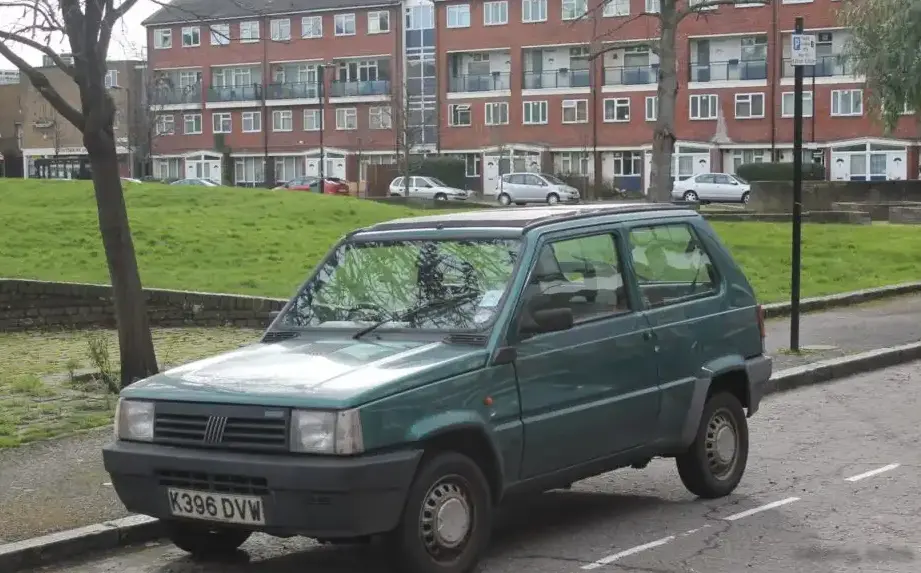
Technical Specifications
| Brand | Fiat |
| Model | Panda |
| Generation | Panda (ZAF 141, facelift 1991) |
| Type (Engine) | 750 (34 Hp) |
| Start of production | July, 1991 |
| End of production | December, 1992 |
| Powertrain Architecture | Internal Combustion engine |
| Body type | Hatchback |
| Seats | 5 |
| Doors | 3 |
| Fuel Type | Petrol (Gasoline) |
| Power | 34 Hp |
| Engine Model/Code | 156 A4.000 |
| Engine aspiration | Naturally aspirated engine |
| Engine oil capacity | 3.5 l (3.7 US qt | 3.08 UK qt) |
| Coolant capacity | 5.6 l (5.92 US qt | 4.93 UK qt) |
The Fiat Panda 750, produced from July 1991 to December 1992, was a continuation of the remarkably successful and innovative Panda model line. This variant, part of the ZAF 141 series following the 1991 facelift, served as the entry-level offering within the Panda range, providing basic, affordable transportation. It played a crucial role in maintaining the Panda’s popularity in Italy and other European markets, where it was valued for its practicality, compact size, and low running costs. The 750 model was particularly significant as it offered a relatively inexpensive entry point into car ownership for many, and functioned as a reliable workhorse for urban environments.
Powertrain & Engine Architecture
The heart of the Panda 750 is the 156 A4.000 engine, a 769cc, inline-two cylinder, naturally aspirated gasoline engine. This engine is a direct descendant of the original Fiat 900 engine, and is characterized by its inherent simplicity and robustness. It utilizes a single overhead valve (OHV) configuration with two valves per cylinder. Fuel delivery is managed by a single Weber carburetor, a relatively basic system compared to the fuel injection systems becoming increasingly common in other vehicles of the era. The carburetor’s simplicity contributed significantly to the engine’s ease of maintenance and overall reliability. The engine’s modest output of 34 horsepower at 5500 rpm and 55.6 Nm (41 lb-ft) of torque at 3000 rpm is delivered to the front wheels through a four-speed manual transmission. An automatic transmission was not offered on this specific variant. The engine block is constructed from cast iron, contributing to its durability, while the cylinder head is made of aluminum alloy. This combination of materials aimed to balance weight and longevity.
Driving Characteristics
The Panda 750’s driving experience is defined by its simplicity and focus on practicality. With only 34 horsepower propelling a vehicle weighing around 780 kg (1720 lbs), acceleration is decidedly leisurely. 0 to 60 mph times were not a priority for this vehicle, and realistically, it was designed for navigating urban speeds. The four-speed manual transmission is light and easy to operate, but frequent gear changes are necessary to maintain momentum, especially when climbing hills or attempting to merge onto highways. The steering is direct and unassisted, providing a good feel for the road, while the suspension, consisting of independent front suspension with coil springs and a twist-beam rear axle, offers a comfortable, if somewhat basic, ride. The small engine requires frequent shifting to keep it within its optimal power band, but it is surprisingly willing and responsive for its size. Compared to the slightly more powerful 900cc versions of the Panda, the 750 feels noticeably slower, particularly when fully loaded with passengers or cargo. The emphasis is on economy and maneuverability rather than outright performance.
Equipment & Trim Levels
The Panda 750 was deliberately minimalist in its equipment levels, reflecting its position as the entry-level model. Standard features included basic cloth upholstery, vinyl floor covering, and a simple dashboard with minimal instrumentation – typically a speedometer, fuel gauge, and warning lights. Power steering, central locking, and electric windows were not available, even as optional extras. The exterior featured black plastic bumpers and hubcaps. The interior was designed for functionality and ease of cleaning, prioritizing durability over luxury. Optional extras were limited to a radio and, in some markets, a heated rear window. The overall aesthetic was utilitarian, emphasizing practicality and affordability. The focus was on providing basic transportation at the lowest possible cost.
Chassis & Braking
The Panda 750 utilizes a monocoque chassis construction, providing a reasonable level of structural rigidity for its size and price point. The front suspension features independent coil springs and wishbones, while the rear suspension employs a simple twist-beam axle. Braking is handled by disc brakes on the front wheels and drum brakes on the rear wheels. The braking system is adequate for the vehicle’s performance capabilities, but lacks the stopping power of more modern vehicles. The steering is a direct, unassisted rack and pinion system, providing a responsive feel. The tires are typically narrow, contributing to fuel efficiency and reducing rolling resistance. The relatively simple chassis design contributed to the Panda’s light weight and ease of maintenance.
Market Reception & Comparison
The Panda 750 was generally well-received as a basic, affordable, and reliable city car. Critics praised its practicality, fuel efficiency (around 5.5-6.0 liters/100km or 43-39 mpg), and ease of parking. However, its lack of power and basic equipment levels were also noted. Compared to the 900cc Panda variants, the 750 offered a lower purchase price but sacrificed performance. It competed with other small city cars of the era, such as the Citroën AX and Renault Twingo, but often undercut them on price. The 750 was particularly popular in Italy, where it became a common sight in urban areas. It filled a niche for buyers seeking a no-frills, economical mode of transportation.
Legacy
The Fiat Panda 750, while not a performance icon, holds a significant place in automotive history as a symbol of affordable and practical transportation. The 156 A4.000 engine proved to be remarkably durable and reliable, and many examples are still on the road today. In the used car market, the Panda 750 is valued for its simplicity and low running costs, making it an attractive option for those seeking a basic and inexpensive vehicle. Its enduring popularity is a testament to the original Panda’s clever design and engineering. The Panda 750 represents a bygone era of automotive simplicity, where functionality and affordability were prioritized over luxury and performance. It remains a popular choice for classic car enthusiasts and those seeking a simple, reliable, and economical vehicle.