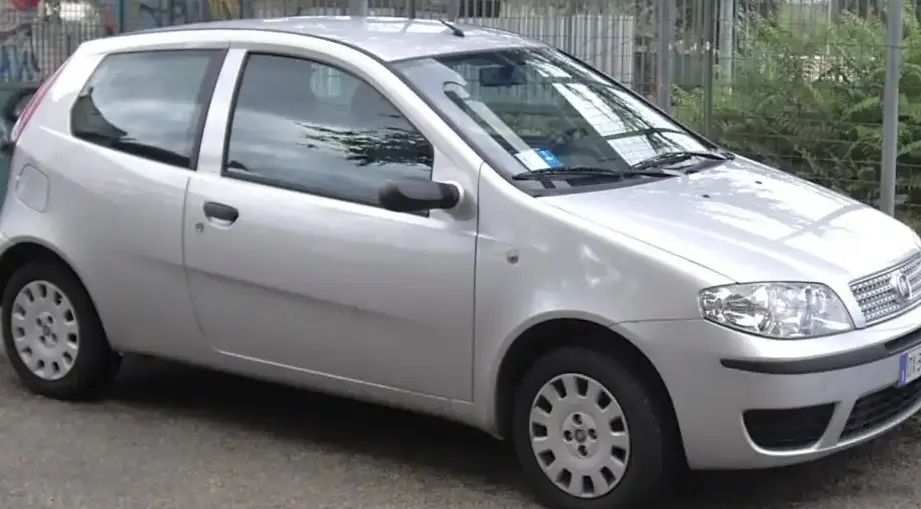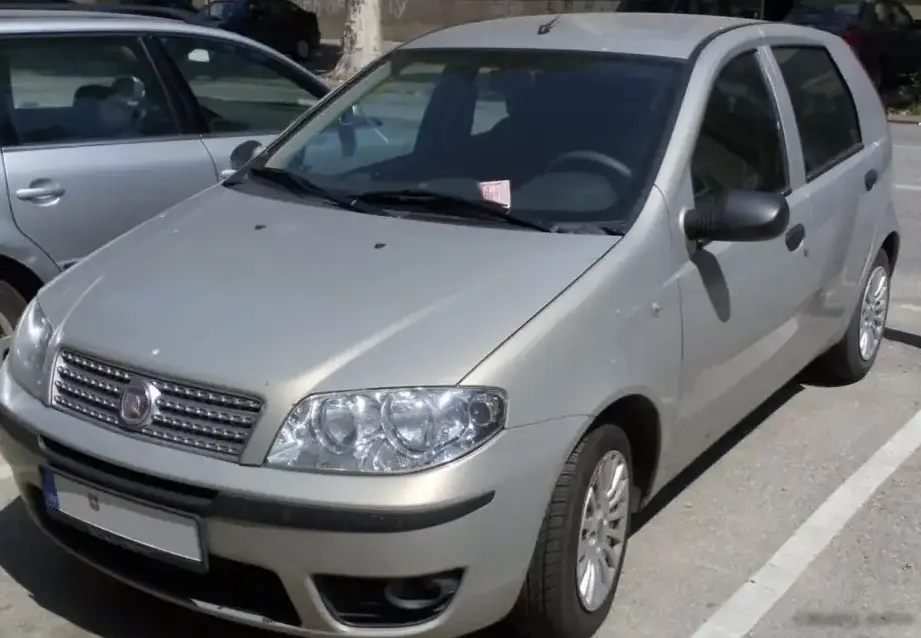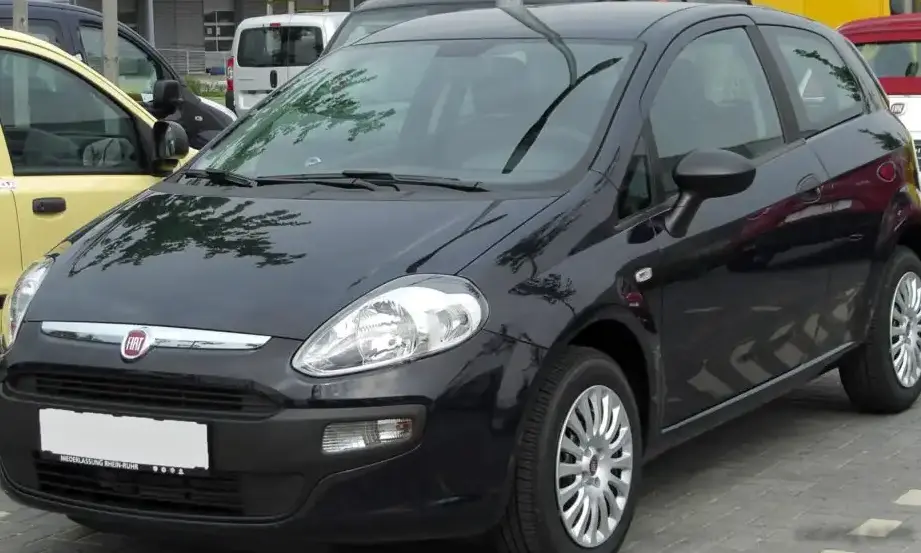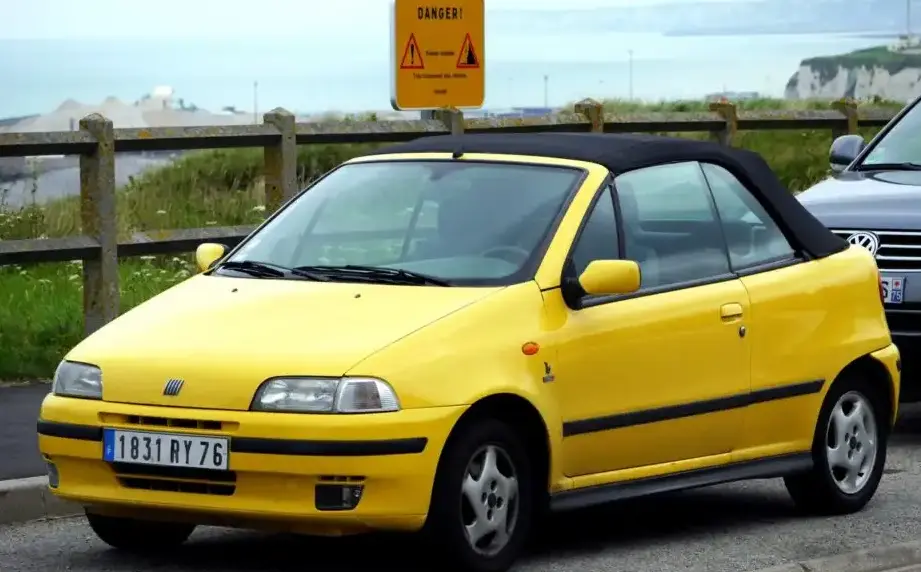
The Fiat Punto Cabrio (176C) 1.2, produced between 1997 and 1999, represented an affordable entry point into the world of open-top motoring for European and UK buyers. Positioned as the base engine option for the 176C Cabriolet, it offered a balance between economy and usability, appealing to a broad demographic seeking a stylish and practical convertible. The 176C itself was a significant model for Fiat, bringing a modern, accessible convertible to a market segment often dominated by more expensive offerings. It shared its underpinnings with the second-generation Fiat Punto (188 series) but distinguished itself with its unique convertible body style, designed by the renowned Italian design house, Pininfarina.
Technical Specifications
| Brand | Fiat |
| Model | Punto |
| Generation | Punto Cabrio (176C) |
| Type (Engine) | 1.2 (86 Hp) |
| Start of production | 1997 |
| End of production | 1999 |
| Powertrain Architecture | Internal Combustion engine |
| Body type | Cabriolet |
| Seats | 4 |
| Doors | 2 |
| Fuel consumption (urban) | 9.8 l/100 km (24 US mpg, 28.8 UK mpg, 10.2 km/l) |
| Fuel consumption (extra urban) | 5.5 l/100 km (42.8 US mpg, 51.4 UK mpg, 18.2 km/l) |
| Fuel Type | Petrol (Gasoline) |
| Acceleration 0 – 100 km/h | 12 sec |
| Acceleration 0 – 62 mph | 12 sec |
| Acceleration 0 – 60 mph | 11.4 sec |
| Maximum speed | 170 km/h (105.63 mph) |
| Weight-to-power ratio | 11.8 kg/Hp, 84.7 Hp/tonne |
| Weight-to-torque ratio | 9 kg/Nm, 111.3 Nm/tonne |
| Power | 86 Hp @ 6000 rpm |
| Power per litre | 69.2 Hp/l |
| Torque | 113 Nm @ 4500 rpm (83.34 lb.-ft. @ 4500 rpm) |
| Engine layout | Front, Transverse |
| Engine Model/Code | 176B9000 |
| Engine displacement | 1242 cm3 (75.79 cu. in.) |
| Number of cylinders | 4 |
| Engine configuration | Inline |
| Cylinder Bore | 70.8 mm (2.79 in.) |
| Piston Stroke | 78.9 mm (3.11 in.) |
| Compression ratio | 10.2:1 |
| Number of valves per cylinder | 4 |
| Fuel injection system | Multi-port manifold injection |
| Engine aspiration | Naturally aspirated engine |
| Valvetrain | DOHC |
| Engine oil capacity | 2.8 l (2.96 US qt | 2.46 UK qt) |
| Coolant | 4.5 l (4.76 US qt | 3.96 UK qt) |
| Kerb Weight | 1015 kg (2237.69 lbs.) |
| Max. weight | 1430 kg (3152.61 lbs.) |
| Max load | 415 kg (914.92 lbs.) |
| Trunk (boot) space – minimum | 200 l (7.06 cu. ft.) |
| Trunk (boot) space – maximum | 440 l (15.54 cu. ft.) |
| Fuel tank capacity | 47 l (12.42 US gal | 10.34 UK gal) |
| Length | 3760 mm (148.03 in.) |
| Width | 1625 mm (63.98 in.) |
| Height | 1447 mm (56.97 in.) |
| Wheelbase | 2450 mm (96.46 in.) |
| Front track | 1395 mm (54.92 in.) |
| Rear (Back) track | 1377 mm (54.21 in.) |
| Minimum turning circle | 9.7 m (31.82 ft.) |
| Drivetrain Architecture | Front wheel drive |
| Number of gears and type of gearbox | 5 gears, manual transmission |
| Front suspension | Spring Strut |
| Rear suspension | Coil spring |
| Front brakes | Disc |
| Rear brakes | Drum |
| Assisting systems | ABS (Anti-lock braking system) |
| Steering type | Steering rack and pinion |
| Power steering | Hydraulic Steering |
| Tires size | 165/65 R14 |
Powertrain & Engine Architecture
The heart of the Punto Cabrio 1.2 was the 176B9000 engine, a 1.2-liter inline-four cylinder gasoline engine. This engine was a common sight in various Fiat models of the era, known for its simplicity and relative reliability. It featured a single overhead camshaft (SOHC) design, although later iterations of the Punto used DOHC configurations. Fuel delivery was handled by a multi-point fuel injection system, providing adequate, though not exceptional, performance. The engine produced 86 horsepower at 6000 rpm and 113 Nm (83.34 lb-ft) of torque at 4500 rpm. The engine’s relatively low output was a characteristic of the base model, designed to prioritize fuel economy over outright speed. The standard transmission was a 5-speed manual, providing a reasonable spread of gears for both city driving and highway cruising.
Driving Characteristics
The 1.2-liter Punto Cabrio, with its modest power output, offered a relaxed and forgiving driving experience. Acceleration was not its strong suit, taking around 12 seconds to reach 62 mph. However, the car was perfectly adequate for everyday driving, particularly in urban environments. The gear ratios were tuned for economy, meaning the engine needed to be revved to extract the most performance. Compared to the more powerful 1.6-liter versions, the 1.2 felt noticeably slower, especially when fully loaded or tackling inclines. The lighter weight of the 1.2 compared to higher-spec models did help to mitigate some of the power deficit, providing a slightly more nimble feel. The steering was light and easy, making it easy to maneuver in tight spaces, but lacked the precision of more performance-oriented cars.
Equipment & Trim Levels
The Punto Cabrio 1.2 typically came with a fairly basic level of equipment, reflecting its position as the entry-level model. Standard features generally included power steering, central locking, and a basic stereo system. Interior upholstery was typically cloth, with a simple dashboard layout. Optional extras included alloy wheels, electric windows, and a more sophisticated audio system. The convertible top was manually operated, adding to the car’s affordability. The interior plastics were durable but not particularly luxurious, reflecting the car’s price point. The focus was on providing a functional and enjoyable open-top experience without excessive frills.
Chassis & Braking
The Punto Cabrio’s chassis was based on the standard Punto platform, with modifications to accommodate the convertible body style. Front suspension utilized a MacPherson strut setup, while the rear employed a twist-beam axle. This configuration provided a reasonable balance between ride comfort and handling. Braking was handled by disc brakes at the front and drum brakes at the rear. ABS (Anti-lock Braking System) was often included as standard equipment, enhancing safety. The suspension was tuned for comfort rather than outright sportiness, resulting in a relatively soft ride. Stabilizer bars were fitted to both the front and rear axles to reduce body roll during cornering.
Market Reception & Comparison
The Punto Cabrio 1.2 was generally well-received by critics as an affordable and stylish convertible. It was praised for its attractive design, ease of use, and relatively low running costs. However, its modest performance was often cited as a drawback. Compared to the 1.6-liter versions, the 1.2 offered significantly less power, but it also delivered better fuel economy. The 1.2 was a popular choice for buyers who prioritized affordability and fuel efficiency over outright performance. It competed with other small convertibles of the era, such as the Peugeot 205 Cabriolet and the Renault 5 Cabriolet.
Legacy
The Fiat Punto Cabrio 1.2, while not a performance icon, holds a place in automotive history as an accessible and enjoyable convertible. The 176B9000 engine, while simple, proved to be relatively reliable, and many examples are still on the road today. In the used car market, the 1.2-liter version is often the most affordable Punto Cabrio, making it an attractive option for those seeking a classic open-top experience on a budget. Its simplicity also makes it relatively easy and inexpensive to maintain. The Punto Cabrio, in all its variants, helped to democratize the convertible market, making open-top motoring accessible to a wider range of buyers.