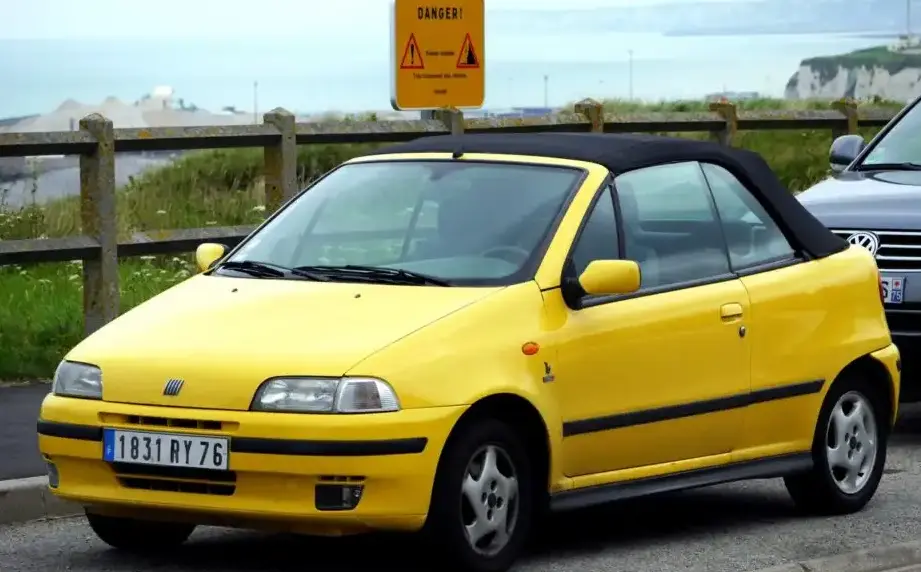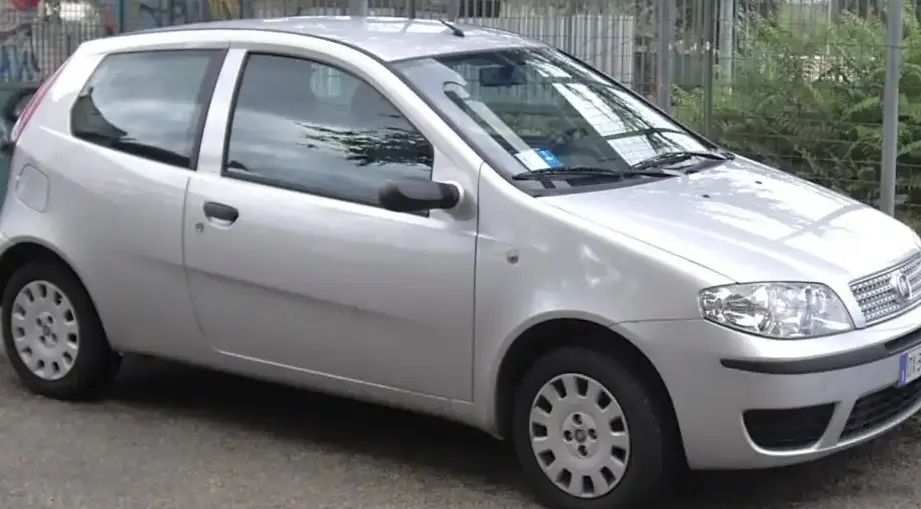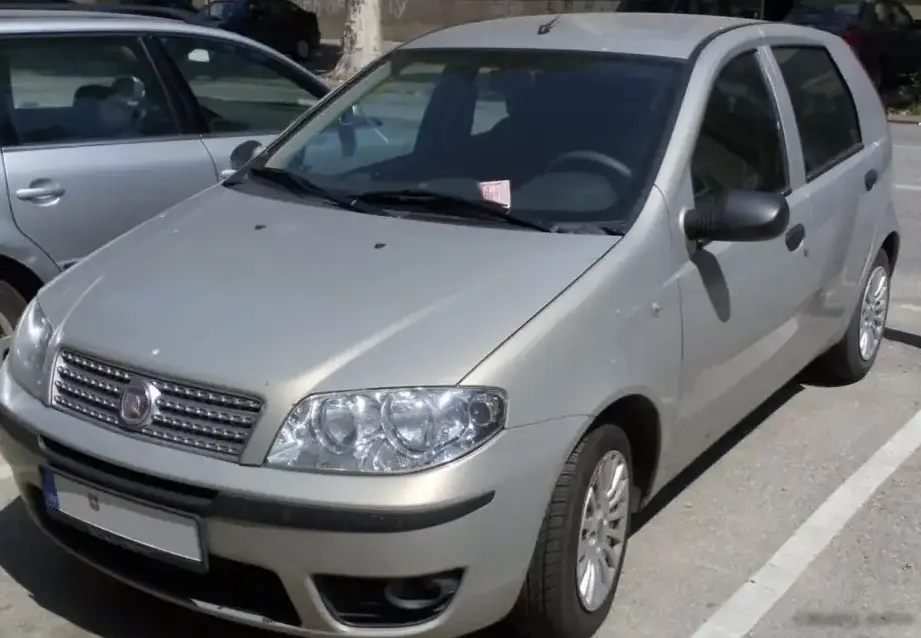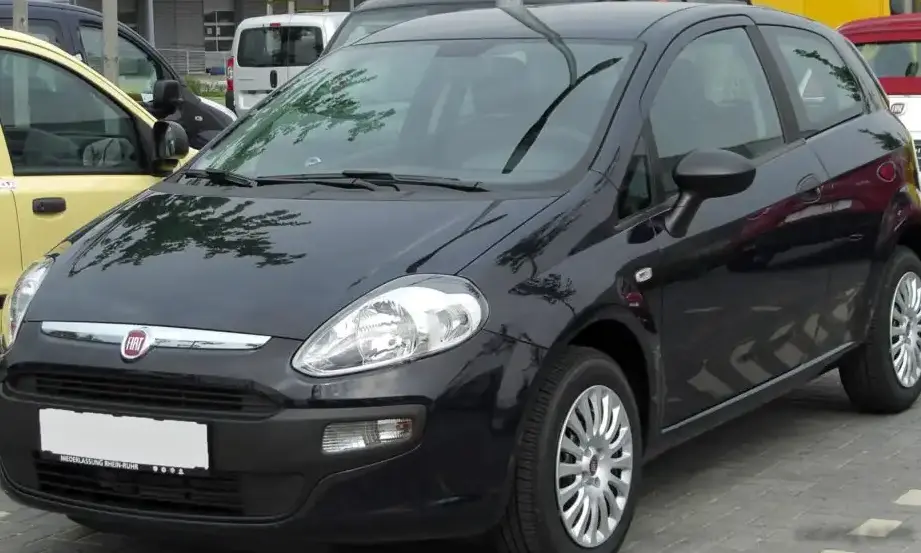
The Fiat Punto Evo 1.3 16V Multijet 75 HP Start&Stop DPF was a subcompact hatchback produced by Fiat from 2009 to 2011. It represented a significant refresh of the second-generation Punto (199 series), aiming to modernize the vehicle’s styling, interior, and technology. This particular variant, equipped with the 1.3-liter Multijet diesel engine and a five-speed manual transmission, was positioned as an entry-level offering within the Punto Evo range, prioritizing fuel efficiency and affordability. It was primarily marketed in Europe, where small, economical diesel hatchbacks were – and continue to be – highly popular.
Technical Specifications
| Brand | Fiat |
| Model | Punto |
| Generation | Punto Evo (199) |
| Type (Engine) | 1.3 16V Multijet (75 Hp) Start&Stop DPF |
| Start of production | 2009 |
| End of production | 2011 |
| Powertrain Architecture | Internal Combustion engine |
| Body type | Hatchback |
| Seats | 5 |
| Doors | 3-5 |
| Fuel consumption (urban) | 5.2 l/100 km (45.2 US mpg, 54.3 UK mpg, 19.2 km/l) |
| Fuel consumption (extra urban) | 3.5 l/100 km (67.2 US mpg, 80.7 UK mpg, 28.6 km/l) |
| Fuel consumption (combined) | 4.1 l/100 km (57.4 US mpg, 68.9 UK mpg, 24.4 km/l) |
| CO2 emissions | 108 g/km |
| Fuel Type | Diesel |
| Acceleration 0 – 100 km/h | 13.6 sec |
| Acceleration 0 – 62 mph | 13.6 sec |
| Acceleration 0 – 60 mph | 12.9 sec |
| Maximum speed | 165 km/h (102.53 mph) |
| Emission standard | Euro 5 |
| Weight-to-power ratio | 14.5 kg/Hp, 68.8 Hp/tonne |
| Weight-to-torque ratio | 5.7 kg/Nm, 174.3 Nm/tonne |
| Power | 75 Hp @ 4000 rpm |
| Power per litre | 60.1 Hp/l |
| Torque | 190 Nm @ 1750 rpm (140.14 lb.-ft. @ 1750 rpm) |
| Engine layout | Front, Transverse |
| Engine Model/Code | 199 A2.000, 199 A9.000 |
| Engine displacement | 1248 cm3 (76.16 cu. in.) |
| Number of cylinders | 4 |
| Engine configuration | Inline |
| Cylinder Bore | 69.6 mm (2.74 in.) |
| Piston Stroke | 82 mm (3.23 in.) |
| Compression ratio | 17.6:1 |
| Number of valves per cylinder | 4 |
| Fuel injection system | Diesel Commonrail |
| Engine aspiration | Turbocharger, Intercooler |
| Valvetrain | DOHC |
| Engine oil capacity | 3.2 l (3.38 US qt, 2.82 UK qt) |
| Coolant | 6.7 l (7.08 US qt, 5.9 UK qt) |
| Kerb Weight | 1090 kg (2403.04 lbs.) |
| Max. weight | 1650 kg (3637.63 lbs.) |
| Max load | 560 kg (1234.59 lbs.) |
| Trunk (boot) space – minimum | 275 l (9.71 cu. ft.) |
| Trunk (boot) space – maximum | 1030 l (36.37 cu. ft.) |
| Fuel tank capacity | 45 l (11.89 US gal, 9.9 UK gal) |
| Permitted trailer load with brakes (12%) | 1000 kg (2204.62 lbs.) |
| Permitted trailer load without brakes | 400 kg (881.85 lbs.) |
| Length | 4065 mm (160.04 in.) |
| Width | 1687 mm (66.42 in.) |
| Height | 1490 mm (58.66 in.) |
| Wheelbase | 2510 mm (98.82 in.) |
| Front track | 1473 mm (57.99 in.) |
| Rear (Back) track | 1466 mm (57.72 in.) |
| Drag coefficient (Cd) | 0.34 |
| Minimum turning circle | 10.9 m (35.76 ft.) |
| Drivetrain Architecture | Front wheel drive |
| Number of gears and type of gearbox | 5 gears, manual transmission |
| Front suspension | Independent, type McPherson with coil spring and anti-roll bar |
| Rear suspension | Semi-independent, coil spring |
| Front brakes | Ventilated discs |
| Rear brakes | Drum |
| Assisting systems | ABS (Anti-lock braking system) |
| Steering type | Steering rack and pinion |
| Power steering | Electric Steering |
| Tires size | 175/65 R15; 185/65 R15; 195/55 R16; 205/45 R17 |
| Wheel rims size | 15; 16; 17 |
INTRODUCTION
The Fiat Punto Evo, launched in 2009, was a comprehensive update to the outgoing Punto model. The 1.3 16V Multijet 75 HP variant, featuring Fiat’s second-generation common rail diesel technology and a Start&Stop system, was a key component of the lineup. This engine, part of the Fiat Group’s modular engine family, was designed for efficiency and reduced emissions, meeting the increasingly stringent Euro 5 standards. The Start&Stop system automatically shut off the engine when the vehicle was stationary, further enhancing fuel economy. This trim level was aimed at buyers seeking a practical, economical, and relatively affordable hatchback for urban driving.
Powertrain & Engine Architecture
The heart of this Punto Evo is the 1.3-liter 16V Multijet diesel engine, specifically identified by engine codes 199 A2.000 and 199 A9.000. This engine is a four-cylinder, inline configuration, utilizing a turbocharger with an intercooler to boost power and efficiency. The engine employs a second-generation common rail direct injection system, delivering fuel at extremely high pressure for optimized combustion. The 16-valve DOHC (Double Overhead Camshaft) valvetrain ensures efficient gas exchange. The 75 horsepower output is achieved at 4000 rpm, while the peak torque of 190 Nm (140 lb-ft) is available from just 1750 rpm, providing good low-end responsiveness. The five-speed manual transmission was the standard offering for this variant, chosen for its simplicity and contribution to fuel economy. The gear ratios were tuned to maximize efficiency and provide adequate acceleration for everyday driving.
Driving Characteristics
The Punto Evo 1.3 Multijet 75 HP, while not a performance-oriented vehicle, offered a surprisingly capable driving experience for its class. The relatively high torque output at low engine speeds made it well-suited for city driving, providing brisk acceleration from a standstill and effortless overtaking at lower speeds. However, the 75 horsepower limited its performance on highways and during uphill climbs. Compared to higher-output versions of the Punto Evo, such as those equipped with the 1.4-liter petrol engine, this variant felt noticeably slower. The five-speed manual transmission was smooth and precise, but the gear ratios were spaced to prioritize fuel economy over outright performance. The Start&Stop system, while effective in reducing fuel consumption in stop-and-go traffic, could sometimes feel slightly intrusive.
Equipment & Trim Levels
The 1.3 Multijet 75 HP Start&Stop DPF typically came with a reasonable level of standard equipment. This included power steering, central locking, electric front windows, and an ABS (Anti-lock Braking System). Interior upholstery was typically cloth, with a functional and durable design. Optional extras included air conditioning, alloy wheels, a radio with CD player, and electric rear windows. Higher trim levels within the Punto Evo range offered more luxurious features, such as upgraded upholstery, automatic climate control, and a more sophisticated infotainment system. The base trim focused on providing essential features at an affordable price point.
Chassis & Braking
The Punto Evo’s chassis featured an independent McPherson strut suspension at the front, providing a comfortable ride and decent handling. The rear suspension utilized a semi-independent torsion beam setup, which was a cost-effective solution that offered a reasonable balance between ride comfort and handling. The front brakes were ventilated discs, providing adequate stopping power, while the rear brakes were drums, a common feature in this segment to reduce costs. The electric power steering provided light and easy steering, making it ideal for maneuvering in tight urban environments.
Market Reception & Comparison
The Punto Evo 1.3 Multijet 75 HP was generally well-received by critics for its fuel efficiency and affordability. It was praised for its low running costs and practicality, making it a popular choice for budget-conscious buyers. However, some critics noted its lack of power and relatively basic interior. Compared to other diesel hatchbacks in its class, such as the Volkswagen Polo and Renault Clio, the Punto Evo offered a competitive price point but lacked some of the refinement and features of its rivals. Its fuel economy was comparable to other small diesel cars, and its reliability was generally considered to be good.
Legacy
The 1.3 Multijet engine proved to be a robust and reliable unit, and many Punto Evo models equipped with this engine are still on the road today. While not known for exceptional performance, the engine’s durability and fuel efficiency have made it a popular choice in the used car market. Maintenance costs are generally reasonable, and parts availability is good. However, as with any diesel engine, it’s important to ensure regular servicing and address any potential issues with the diesel particulate filter (DPF) promptly. The Punto Evo 1.3 Multijet 75 HP remains a practical and economical option for those seeking a small, affordable hatchback.