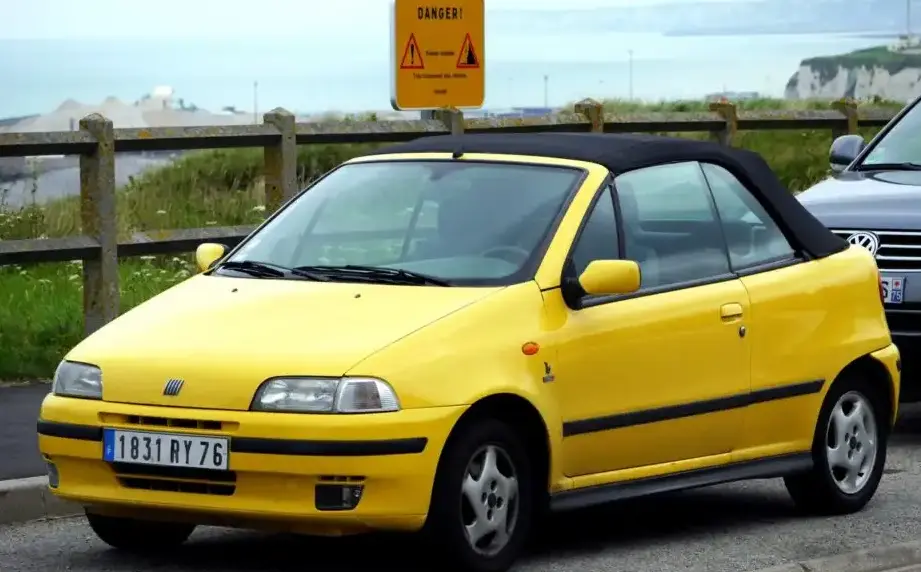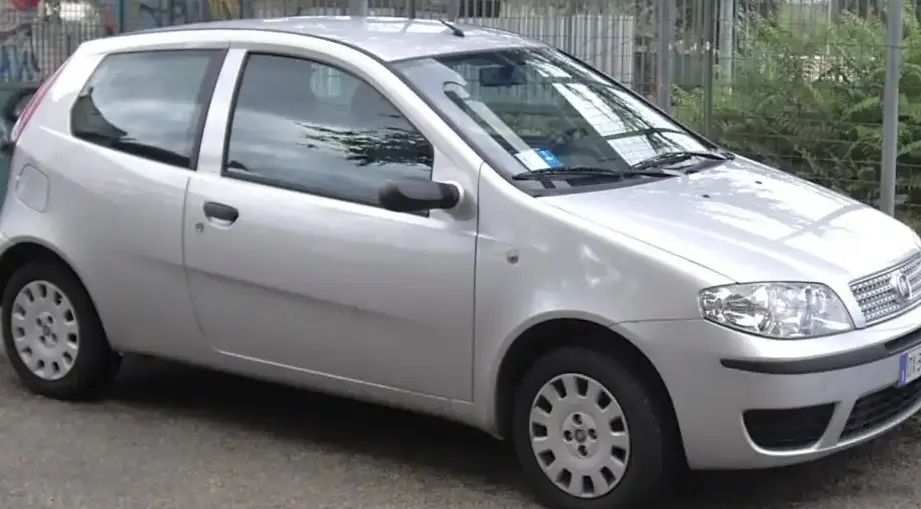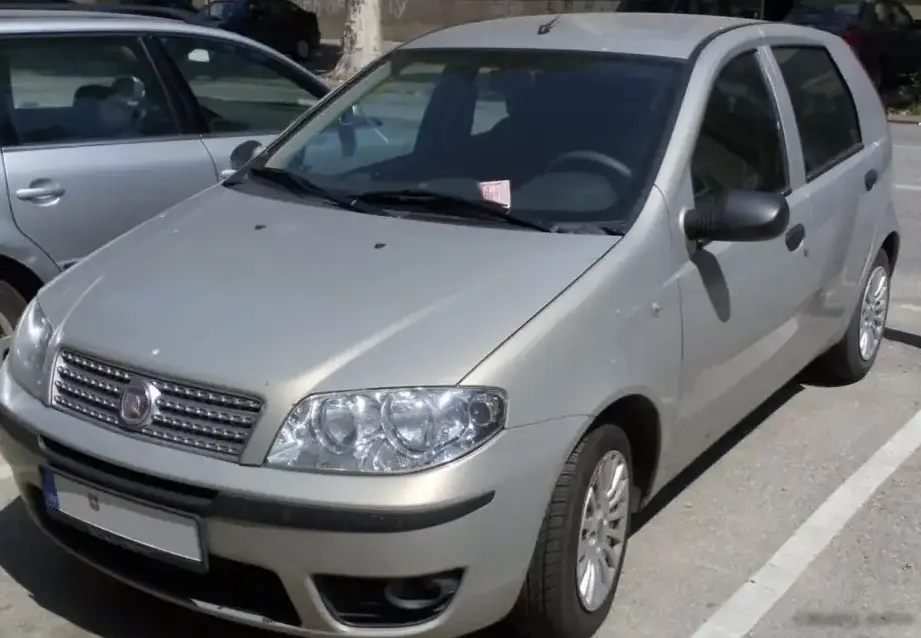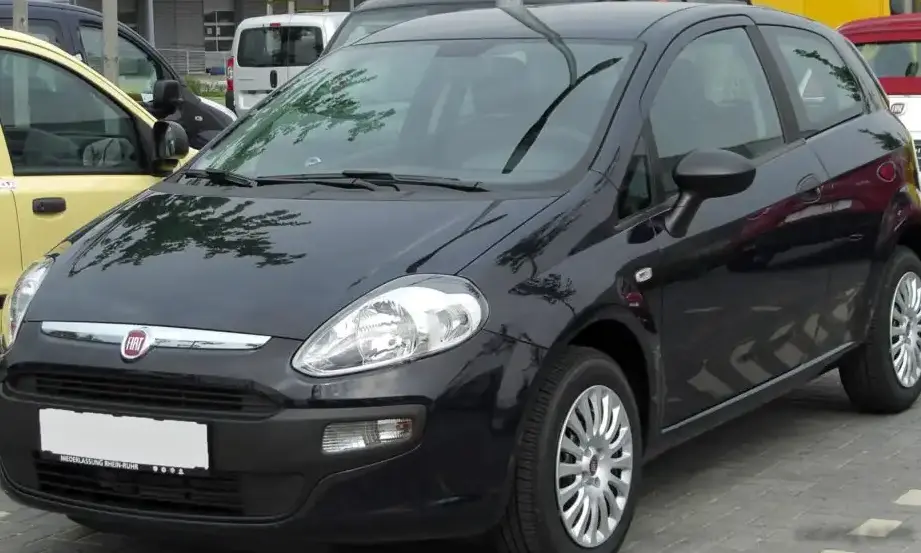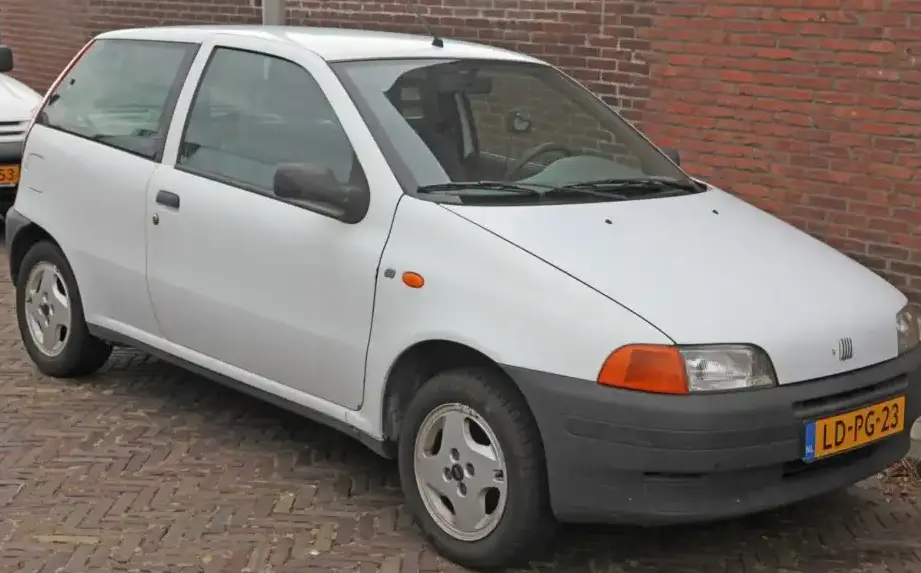
The Fiat Punto I (176) 70 1.7 TD was a diesel-powered variant of the first-generation Fiat Punto, produced between 1994 and 1997. Positioned as an economy-focused option within the Punto range, it offered a balance of fuel efficiency and practicality for European buyers. This model played a significant role in establishing the Punto as a popular choice in the supermini segment, particularly for those seeking a cost-effective and reliable vehicle. It was available in both 3-door and 5-door body styles.
Technical Specifications
| Brand | Fiat |
| Model | Punto |
| Generation | Punto I (176) |
| Type (Engine) | 70 1.7 TD (70 Hp) |
| Start of production | 1994 |
| End of production | 1997 |
| Powertrain Architecture | Internal Combustion engine |
| Body type | Hatchback |
| Seats | 5 |
| Doors | 3-5 |
| Fuel consumption (urban) | 8.4 l/100 km (28 US mpg, 33.6 UK mpg, 11.9 km/l) |
| Fuel consumption (extra urban) | 4.9 l/100 km (48 US mpg, 57.6 UK mpg, 20.4 km/l) |
| Fuel consumption (combined) | 6.2 l/100 km (37.9 US mpg, 45.6 UK mpg, 16.1 km/l) |
| Fuel Type | Diesel |
| Acceleration 0 – 100 km/h | 14.8 sec |
| Acceleration 0 – 62 mph | 14.8 sec |
| Acceleration 0 – 60 mph | 14.1 sec |
| Maximum speed | 163 km/h (101.28 mph) |
| Weight-to-power ratio | 14.4 kg/Hp, 69.3 Hp/tonne |
| Weight-to-torque ratio | 7.5 kg/Nm, 132.7 Nm/tonne |
| Power | 70 Hp @ 4500 rpm |
| Power per litre | 41.2 Hp/l |
| Torque | 134 Nm @ 2500 rpm (98.83 lb.-ft. @ 2500 rpm) |
| Engine layout | Front, Transverse |
| Engine Model/Code | 176 A5.000 |
| Engine displacement | 1698 cm3 (103.62 cu. in.) |
| Number of cylinders | 4 |
| Engine configuration | Inline |
| Cylinder Bore | 82.6 mm (3.25 in.) |
| Piston Stroke | 79.1 mm (3.11 in.) |
| Compression ratio | 19:1 |
| Number of valves per cylinder | 2 |
| Fuel injection system | Precombustion chamber injection |
| Engine aspiration | Turbocharger |
| Valvetrain | OHC |
| Engine oil capacity | 4.8 l (5.07 US qt | 4.22 UK qt) |
| Coolant capacity | 7.1 l (7.5 US qt | 6.25 UK qt) |
| Kerb Weight | 1010 kg (2226.67 lbs.) |
| Max. weight | 1460 kg (3218.75 lbs.) |
| Max load | 450 kg (992.08 lbs.) |
| Trunk (boot) space – minimum | 275 l (9.71 cu. ft.) |
| Trunk (boot) space – maximum | 1080 l (38.14 cu. ft.) |
| Fuel tank capacity | 47 l (12.42 US gal | 10.34 UK gal) |
| Length | 3760 mm (148.03 in.) |
| Width | 1625 mm (63.98 in.) |
| Height | 1460 mm (57.48 in.) |
| Wheelbase | 2450 mm (96.46 in.) |
| Front track | 1369 mm (53.9 in.) |
| Rear track | 1352 mm (53.23 in.) |
| Drag coefficient (Cd) | 0.31 |
| Minimum turning circle | 10.2 m (33.46 ft.) |
| Drivetrain Architecture | Front wheel drive |
| Number of gears | 5 |
| Gearbox type | Manual transmission |
| Front suspension | Wishbone |
| Rear suspension | Trailing arm |
| Front brakes | Disc |
| Rear brakes | Drum |
| Steering type | Steering rack and pinion |
| Power steering | Hydraulic |
| Tires size | 175/60 R14 |
INTRODUCTION
The Fiat Punto I (176) 70 1.7 TD, launched in 1994, was a key variant within the first generation of the Punto, known internally as the 176 project. Built on the 1HX0/A3 platform, it aimed to provide an affordable and fuel-efficient option for buyers in Europe. The 1.7 TD model distinguished itself from the petrol-powered Puntos with its turbocharged diesel engine, offering significantly improved fuel economy. It was positioned as a practical choice for daily commuting and longer journeys, appealing to budget-conscious drivers.
Powertrain & Engine Architecture
The heart of the Punto 176 1.7 TD is the 176A5.000 engine, a 1.7-liter inline-four cylinder diesel. This engine utilized a precombustion chamber injection system, a common technology for diesel engines of the era. This system involved injecting fuel into a precombustion chamber connected to the main cylinder, promoting more complete combustion. The engine was turbocharged, boosting power output to 70 horsepower at 4500 rpm and 134 Nm (98.83 lb-ft) of torque at 2500 rpm. The turbocharger significantly improved the engine’s responsiveness and overall performance. The engine featured an overhead camshaft (OHC) valvetrain with two valves per cylinder. The engine was paired with a five-speed manual transmission, optimized for fuel efficiency and providing adequate gear ratios for everyday driving.
Driving Characteristics
The 1.7 TD Punto offered a distinctly different driving experience compared to the petrol-powered versions. While lacking the outright acceleration of the 1.2 or 1.4-liter petrol engines, the diesel provided a substantial amount of low-end torque. This made it surprisingly capable in urban environments and when carrying a full load. The five-speed manual transmission allowed drivers to keep the engine in its optimal torque band. Acceleration to 60 mph took around 14.1 seconds, and the top speed was approximately 101 mph. The gear ratios were relatively long, prioritizing fuel economy over sporty performance. Compared to the higher-output petrol versions, the 1.7 TD felt less refined, with more engine noise and vibration, but it compensated with significantly better fuel economy.
Equipment & Trim Levels
The Punto 1.7 TD typically came with a fairly basic level of equipment, reflecting its position as an economy-focused model. Standard features generally included power steering, central locking, and a basic instrument cluster. Interior upholstery was typically cloth, and the dashboard featured a functional, if somewhat spartan, design. Optional extras included electric windows, a sunroof, and upgraded audio systems. Trim levels varied slightly depending on the market, but generally focused on adding convenience features rather than significantly altering the car’s core functionality. The emphasis was on providing a practical and affordable vehicle.
Chassis & Braking
The Punto 176 1.7 TD utilized a relatively simple chassis setup. Front suspension consisted of independent wishbones, while the rear employed a trailing arm setup. This configuration provided a reasonable balance of ride comfort and handling. Braking was handled by disc brakes on the front wheels and drum brakes on the rear. The hydraulic power steering provided light and easy steering, making it maneuverable in urban environments. The suspension was tuned for comfort rather than sporty handling, and stabilizer bars were often omitted or relatively thin to keep costs down. The car’s weight of around 1010 kg (2226.67 lbs) contributed to its manageable handling characteristics.
Market Reception & Comparison
The Fiat Punto 1.7 TD was generally well-received by critics as a practical and economical choice. Its fuel efficiency was a major selling point, particularly in Europe where diesel fuel was often cheaper than petrol. Compared to other superminis of the time, such as the Peugeot 205 and Renault Clio, the Punto offered a competitive level of space and practicality. However, it was often criticized for its relatively noisy and unrefined engine compared to some of its rivals. The 1.7 TD offered a significant fuel economy advantage over the petrol-powered Puntos, but at the expense of performance and refinement. It appealed to a different type of buyer – those prioritizing economy and practicality over driving excitement.
Legacy
The 176A5.000 engine, while not known for being particularly high-tech, proved to be relatively durable and reliable. Many examples of the Punto 1.7 TD are still on the road today, testament to the engine’s robustness. In the used car market, these models are often sought after by those looking for a simple, affordable, and fuel-efficient vehicle. Maintenance is generally straightforward, and parts availability remains reasonable. While not a collector’s item, the Punto 1.7 TD holds a place in automotive history as a practical and economical supermini that helped establish the Punto as a popular choice for European drivers.