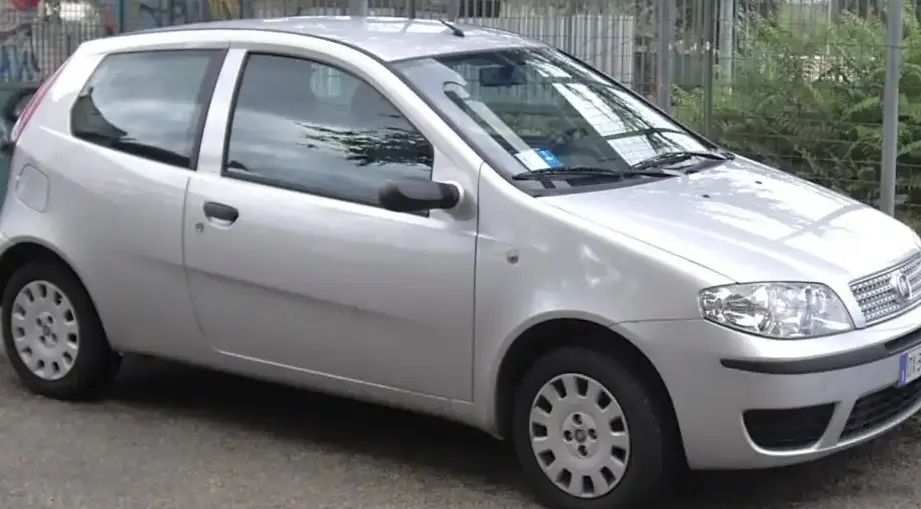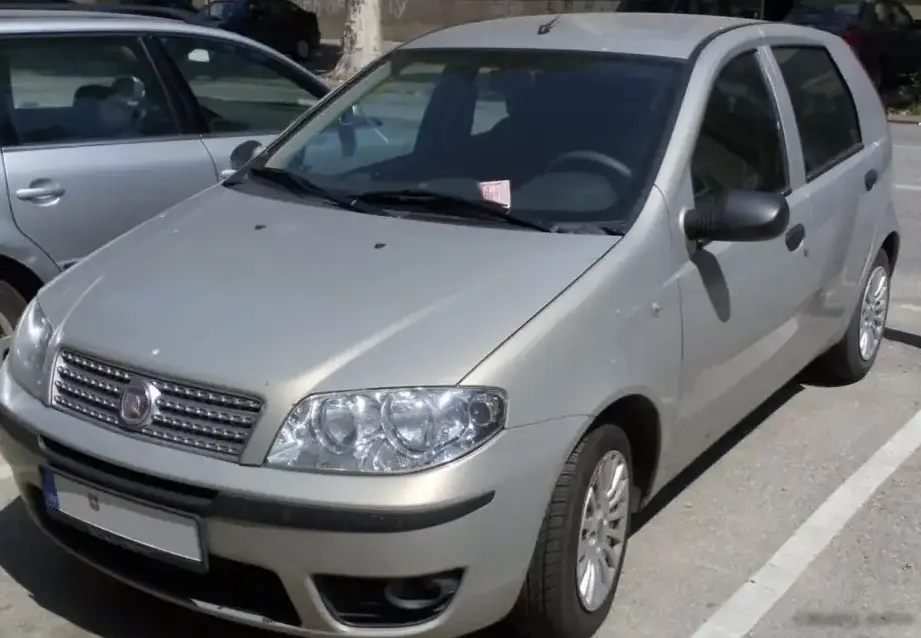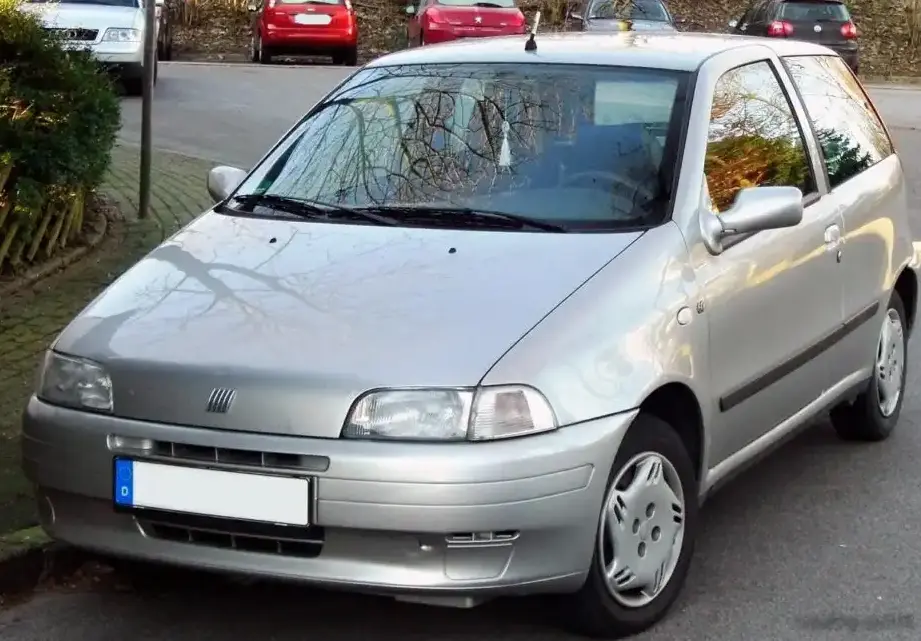
The Fiat Punto I 85 1.2, produced from 1997 to 1999, represents a key iteration of the first-generation Punto (Project 176) following its 1997 facelift. This variant occupied a middle-ground position within the Punto lineup, offering a balance between affordability, fuel efficiency, and acceptable performance. It was primarily marketed in Europe as an economical and practical hatchback for urban driving and young drivers. The facelift brought cosmetic updates and minor mechanical refinements to the original Punto, solidifying its position as a popular supermini in a competitive market.
Technical Specifications
| Brand | Fiat |
| Model | Punto |
| Generation | Punto I (176, facelift 1997) |
| Type (Engine) | 85 1.2 (86 Hp) |
| Start of production | 1997 |
| End of production | 1999 |
| Powertrain Architecture | Internal Combustion engine |
| Body type | Hatchback |
| Seats | 5 |
| Doors | 3-5 |
| Fuel consumption (urban) | 9.3 l/100 km (25.3 US mpg) |
| Fuel consumption (extra urban) | 5.2 l/100 km (45.2 US mpg) |
| Fuel consumption (combined) | 6.7 l/100 km (35.1 US mpg) |
| Fuel Type | Petrol (Gasoline) |
| Acceleration 0 – 100 km/h | 10.9 sec |
| Acceleration 0 – 62 mph | 10.9 sec |
| Acceleration 0 – 60 mph | 10.4 sec |
| Maximum speed | 177 km/h (109.98 mph) |
| Weight-to-power ratio | 10.5 kg/Hp |
| Weight-to-torque ratio | 8 kg/Nm |
| Power | 86 Hp @ 6000 rpm |
| Torque | 113 Nm @ 4500 rpm (83.34 lb.-ft. @ 4500 rpm) |
| Engine layout | Front, Transverse |
| Engine Model/Code | 176B9000 |
| Engine displacement | 1242 cm3 (75.79 cu. in.) |
| Number of cylinders | 4 |
| Engine configuration | Inline |
| Cylinder Bore | 70.8 mm (2.79 in.) |
| Piston Stroke | 78.9 mm (3.11 in.) |
| Compression ratio | 10.2:1 |
| Number of valves per cylinder | 4 |
| Fuel injection system | Multi-port manifold injection |
| Engine aspiration | Naturally aspirated |
| Valvetrain | DOHC |
| Engine oil capacity | 2.8 l (2.96 US qt | 2.46 UK qt) |
| Coolant capacity | 4.5 l (4.76 US qt | 3.96 UK qt) |
| Kerb Weight | 900 kg (1984.16 lbs.) |
| Max. weight | 1390 kg (3064.43 lbs.) |
| Max load | 490 kg (1080.27 lbs.) |
| Trunk (boot) space – minimum | 275 l (9.71 cu. ft.) |
| Trunk (boot) space – maximum | 1080 l (38.14 cu. ft.) |
| Fuel tank capacity | 47 l (12.42 US gal | 10.34 UK gal) |
| Length | 3770 mm (148.43 in.) |
| Width | 1625 mm (63.98 in.) |
| Height | 1460 mm (57.48 in.) |
| Wheelbase | 2450 mm (96.46 in.) |
| Front track | 1369 mm (53.9 in.) |
| Rear track | 1352 mm (53.23 in.) |
| Drag coefficient (Cd) | 0.31 |
| Minimum turning circle | 10.2 m (33.46 ft.) |
| Drivetrain | Front wheel drive |
| Number of gears | 5 |
| Gearbox type | Manual transmission |
| Front suspension | Independent type McPherson |
| Front brakes | Ventilated discs |
| Rear brakes | Drum |
| Steering type | Steering rack and pinion |
| Power steering | Hydraulic |
| Tires size | 165/65 R14 |
Powertrain & Engine Architecture
The 1.2-liter engine, designated 176B9000, is a naturally aspirated, inline-four cylinder gasoline engine. It features a double overhead camshaft (DOHC) valvetrain operating four valves per cylinder. This configuration, while not particularly powerful, offered a good balance of efficiency and drivability. Fuel delivery is managed by a multi-port fuel injection system, contributing to improved fuel atomization and combustion efficiency compared to earlier carburetor-based systems. The engine produces 86 horsepower at 6000 rpm and 83.34 lb-ft of torque at 4500 rpm. The Punto 85 1.2 was exclusively offered with a five-speed manual transmission, designed to maximize the engine’s limited power output. The transmission’s gear ratios were tuned for acceleration in urban environments and reasonable highway cruising.
Driving Characteristics
The Punto 85 1.2, with its 86 hp and manual transmission, provided adequate, but not exhilarating, performance. Acceleration from 0-60 mph took approximately 10.4 seconds, and top speed was around 110 mph. The engine felt relatively responsive at lower RPMs, making it suitable for city driving. However, overtaking maneuvers on highways required careful planning and downshifting. Compared to the more powerful 1.6-liter versions of the Punto, the 1.2 felt noticeably slower. The manual transmission allowed for greater driver control and engagement, but the gear ratios were somewhat tall, prioritizing fuel economy over outright performance. The steering was light and precise, making the Punto easy to maneuver in tight spaces.
Equipment & Trim Levels
The 85 1.2 Punto typically came equipped with basic, but functional, features. Standard equipment included power steering, central locking, and a basic stereo system. Interior upholstery was typically cloth, with a simple dashboard layout. Optional extras included air conditioning, electric windows, and alloy wheels. The trim level was generally considered entry-level to mid-range, appealing to buyers seeking an affordable and reliable hatchback. The interior plastics were durable but not particularly luxurious, reflecting the car’s price point.
Chassis & Braking
The Punto I utilized a McPherson strut independent suspension system at the front, providing a comfortable ride and decent handling. The rear suspension employed a torsion beam setup, which was cost-effective but less sophisticated than a fully independent system. Braking duties were handled by ventilated discs at the front and drum brakes at the rear. While adequate for normal driving conditions, the braking system lacked the stopping power of more advanced setups found in higher-performance vehicles. The Punto’s relatively light weight helped to compensate for the less powerful brakes.
Market Reception & Comparison
The Fiat Punto 85 1.2 was generally well-received by automotive critics as a practical and economical city car. It was praised for its fuel efficiency, nimble handling, and affordable price. However, it was often criticized for its lack of power and somewhat basic interior. Compared to other superminis of the time, such as the Peugeot 206 and the Renault Clio, the Punto offered a competitive package, particularly in terms of value for money. The 1.2-liter engine offered better fuel economy than the larger 1.6-liter engine, but at the expense of performance. Reliability was generally good, although some owners reported minor electrical issues.
Legacy
The Fiat Punto I 85 1.2 remains a relatively common sight on European roads today, testament to its durability and affordability. The 176B9000 engine is known for its reliability, although regular maintenance is essential to prevent issues such as oil leaks and timing belt failure. In the used car market, these Puntos are typically very affordable, making them attractive to first-time drivers or those seeking a cheap and cheerful runabout. While not a particularly exciting car, the Punto 85 1.2 played a significant role in establishing the Punto as a popular and enduring supermini.