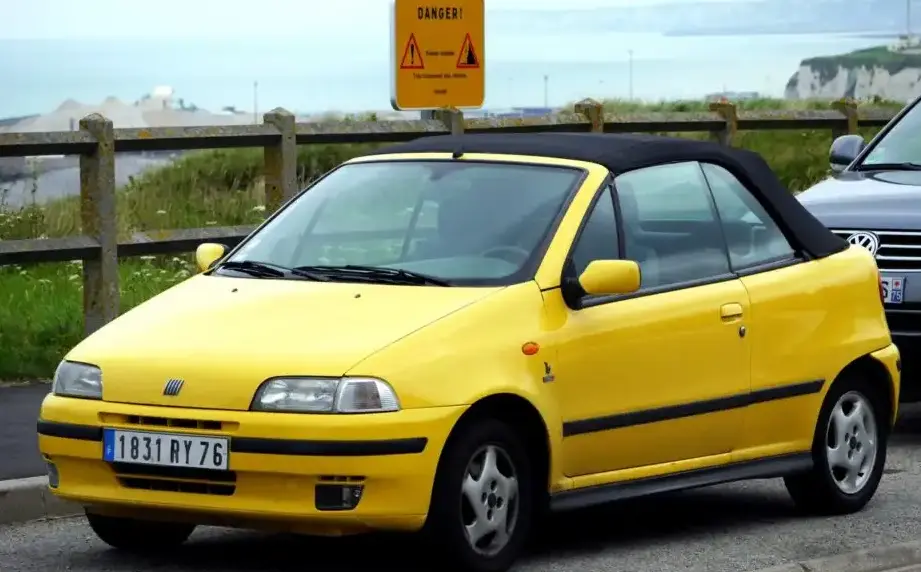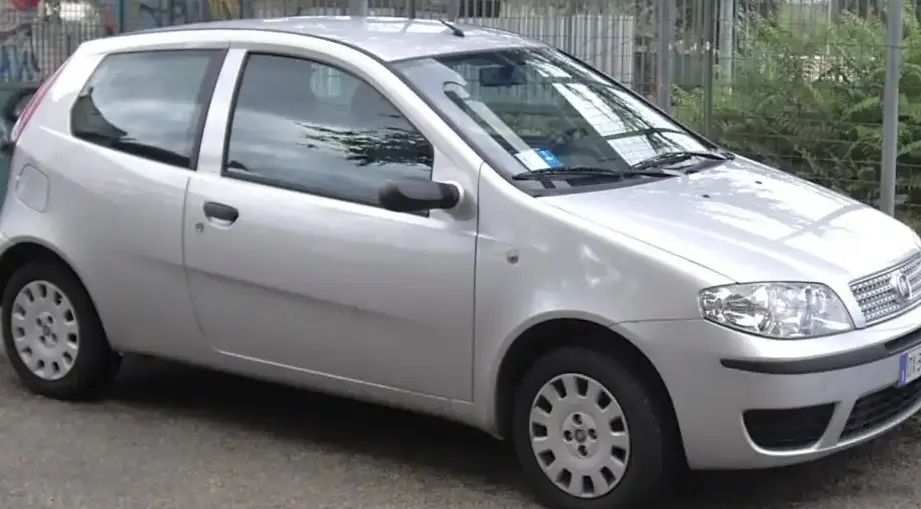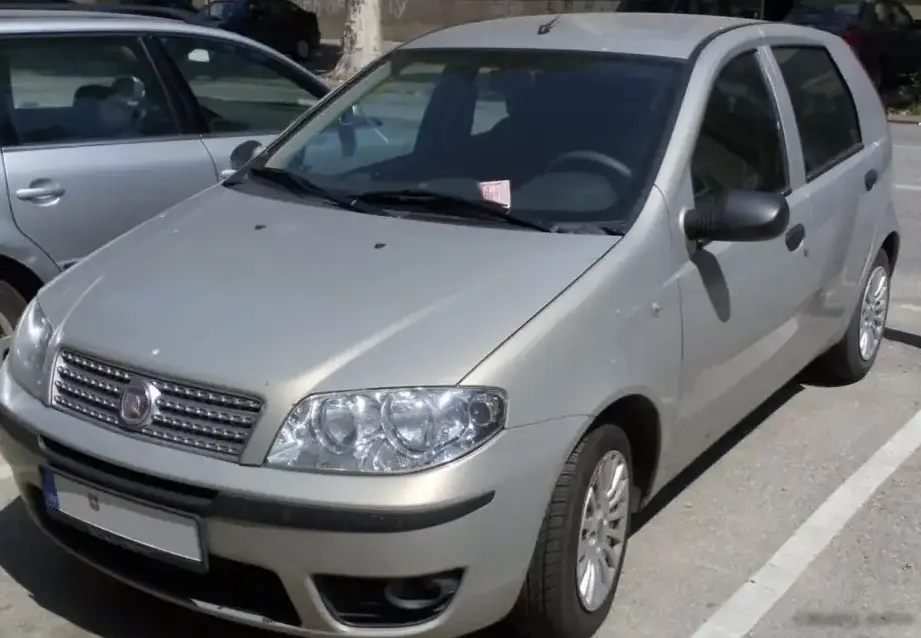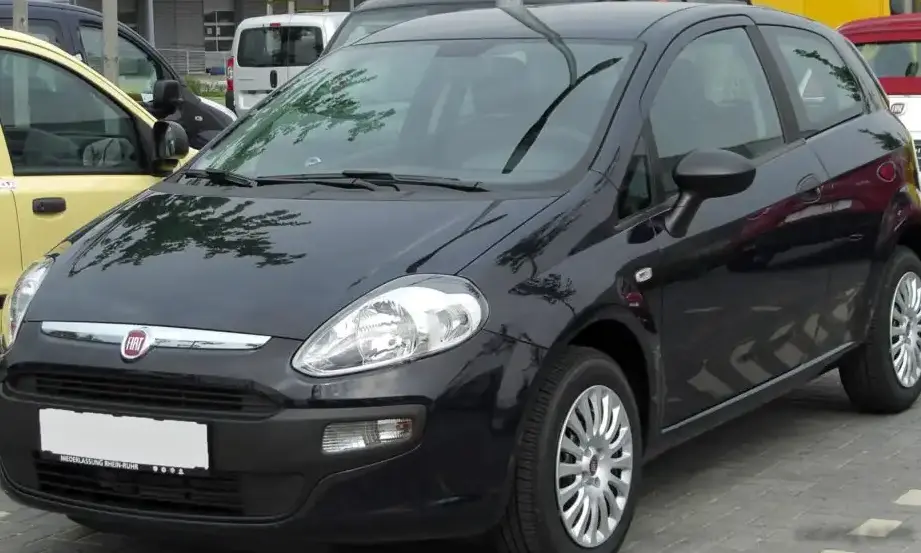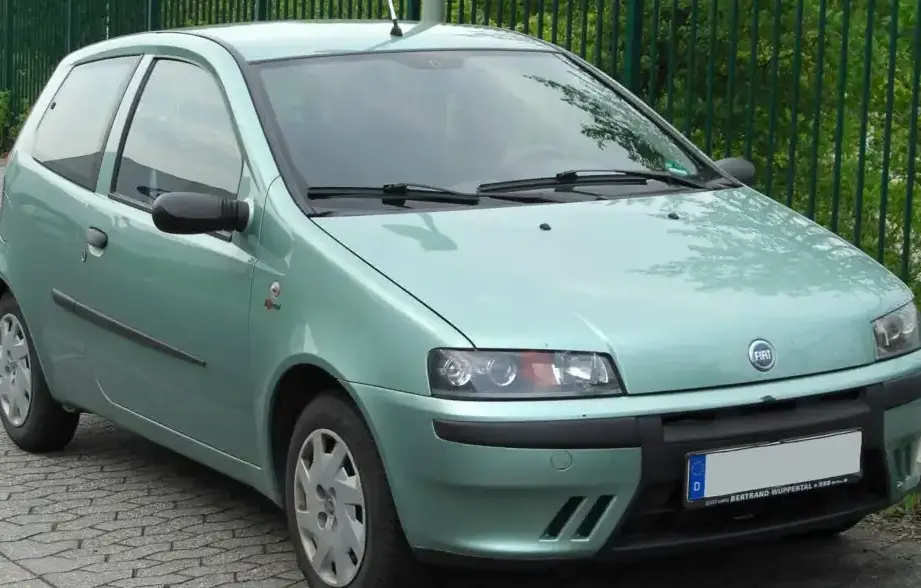
The Fiat Punto II (188) 3-door 1.2, producing 60 horsepower, was a mainstay of the Punto range from 1999 to 2003. Positioned as the entry-level variant, it offered affordable transportation within the supermini segment, particularly in European markets. This model represented a significant update over the original Punto, utilizing the 188 platform which shared components with the Lancia Ypsilon. The 3-door body style appealed to younger buyers and those prioritizing a sportier aesthetic, while the 1.2-liter engine focused on fuel efficiency rather than outright performance.
Technical Specifications
| Brand | Fiat |
| Model | Punto |
| Generation | Punto II (188) 3dr |
| Type (Engine) | 1.2 (60 Hp) |
| Start of production | 1999 |
| End of production | 2003 |
| Powertrain Architecture | Internal Combustion engine |
| Body type | Hatchback |
| Seats | 5 |
| Doors | 3 |
| Fuel consumption (urban) | 7.3 l/100 km (32.2 US mpg, 38.7 UK mpg, 13.7 km/l) |
| Fuel consumption (extra urban) | 4.8 l/100 km (49 US mpg, 58.9 UK mpg, 20.8 km/l) |
| Fuel consumption (combined) | 5.7 l/100 km (41.3 US mpg, 49.6 UK mpg, 17.5 km/l) |
| Fuel Type | Petrol (Gasoline) |
| Acceleration 0 – 100 km/h | 14.3 sec |
| Acceleration 0 – 62 mph | 14.3 sec |
| Acceleration 0 – 60 mph | 13.6 sec |
| Maximum speed | 155 km/h (96.31 mph) |
| Emission standard | Euro 3 |
| Weight-to-power ratio | 14.3 kg/Hp, 69.8 Hp/tonne |
| Weight-to-torque ratio | 8.4 kg/Nm, 118.6 Nm/tonne |
| Power | 60 Hp @ 5000 rpm |
| Power per litre | 48.3 Hp/l |
| Torque | 102 Nm @ 2500 rpm (75.23 lb.-ft. @ 2500 rpm) |
| Engine layout | Front, Transverse |
| Engine Model/Code | 188A4000 |
| Engine displacement | 1242 cm3 (75.79 cu. in.) |
| Number of cylinders | 4 |
| Engine configuration | Inline |
| Cylinder Bore | 70.8 mm (2.79 in.) |
| Piston Stroke | 78.9 mm (3.11 in.) |
| Compression ratio | 9.5:1 |
| Number of valves per cylinder | 2 |
| Fuel injection system | Multi-port manifold injection |
| Engine aspiration | Naturally aspirated engine |
| Valvetrain | OHC |
| Engine oil capacity | 2.8 l (2.96 US qt | 2.46 UK qt) |
| Coolant | 4.2 l (4.44 US qt | 3.7 UK qt) |
| Kerb Weight | 860 kg (1895.98 lbs.) |
| Max. weight | 1370 kg (3020.33 lbs.) |
| Max load | 510 kg (1124.36 lbs.) |
| Trunk (boot) space – minimum | 264 l (9.32 cu. ft.) |
| Trunk (boot) space – maximum | 1080 l (38.14 cu. ft.) |
| Fuel tank capacity | 47 l (12.42 US gal | 10.34 UK gal) |
| Length | 3800 mm (149.61 in.) |
| Width | 1660 mm (65.35 in.) |
| Height | 1480 mm (58.27 in.) |
| Wheelbase | 2460 mm (96.85 in.) |
| Front track | 1398 mm (55.04 in.) |
| Rear (Back) track | 1392 mm (54.8 in.) |
| Drag coefficient (Cd) | 0.32 |
| Minimum turning circle | 10.2 m (33.46 ft.) |
| Drivetrain Architecture | Front wheel drive |
| Number of gears | 5 gears, manual transmission |
| Front suspension | Wishbone |
| Rear suspension | Coil spring |
| Front brakes | Disc |
| Rear brakes | Drum |
| Assisting systems | ABS (Anti-lock braking system) |
| Steering type | Steering rack and pinion |
| Tires size | 165/70 R14 |
Powertrain & Engine Architecture
The Punto II 1.2 60 hp variant utilized the 188A4.000 engine, a naturally aspirated, inline-four cylinder petrol engine. This engine was a common sight in various Fiat and Lancia models of the era. It featured a single overhead camshaft (OHC) valvetrain with two valves per cylinder. Fuel delivery was managed by a multi-point fuel injection system, providing adequate, though not exceptional, combustion control. The engine’s 1242 cc displacement produced 60 horsepower at 5000 rpm and 102 Nm (75.23 lb-ft) of torque at 2500 rpm. The engine was transversely mounted, driving the front wheels. The transmission was a standard five-speed manual gearbox, optimized for fuel economy and smooth operation rather than sporty performance.
Driving Characteristics
The driving experience in the Punto II 1.2 60 hp was characterized by its light steering and nimble handling, making it well-suited for urban environments. However, the 60 horsepower output meant acceleration was modest. 0-60 mph took approximately 13.6 seconds, and top speed was around 96 mph. The five-speed gearbox helped to keep the engine within its optimal power band, but overtaking maneuvers required careful planning. Compared to higher-output versions of the Punto II, such as the 1.8-liter models, the 1.2 felt significantly less powerful. The manual transmission offered a more engaging driving experience than the optional Dualogic automated manual transmission, which was sometimes criticized for its slow and jerky shifts.
Equipment & Trim Levels
The 1.2 60 hp Punto II 3-door typically came with a basic level of equipment, reflecting its position as the entry-level model. Standard features included power steering, central locking, and a basic audio system. Interior upholstery was typically cloth, and the dashboard featured a simple, functional design. Optional extras included air conditioning, electric windows, and alloy wheels. Higher trim levels, such as the ELX, added more features, but the base 1.2 model prioritized affordability. Safety features were relatively basic for the time, including a driver’s airbag and ABS brakes.
Chassis & Braking
The Punto II’s chassis featured a front independent suspension with wishbones and a rear coil spring suspension. This setup provided a comfortable ride quality, although it wasn’t particularly sporty. The front brakes were discs, while the rear brakes were drums, a cost-saving measure common in this segment. ABS (Anti-lock Braking System) was standard, enhancing braking performance and safety. The relatively light weight of the vehicle – around 860 kg (1896 lbs) – helped to offset the modest engine power, contributing to reasonable handling characteristics.
Market Reception & Comparison
The Fiat Punto II 1.2 60 hp was generally well-received as an affordable and practical city car. Critics praised its fuel efficiency and nimble handling, but noted its lack of outright performance. Compared to rivals like the Ford Fiesta and Volkswagen Polo, the Punto offered a competitive price point and a stylish design. However, some reviewers criticized the interior quality and the basic level of equipment. In terms of fuel economy, the 1.2-liter engine offered a significant advantage over the larger-displacement engines in the Punto range, achieving around 41.3 US mpg on the combined cycle. Reliability was generally good, although some owners reported minor issues with the electrical system.
Legacy
The Fiat Punto II 1.2 60 hp remains a common sight on European roads today, testament to its durability and affordability. While not a performance icon, it served as a reliable and economical mode of transportation for many drivers. In the used car market, these models are typically very affordable, making them a popular choice for first-time car buyers or those seeking a cheap and cheerful runabout. The 188A4.000 engine is known for its relative simplicity and ease of maintenance, although finding replacement parts may become more challenging over time. The Punto II, in all its variants, played a significant role in establishing Fiat as a major player in the European supermini segment.