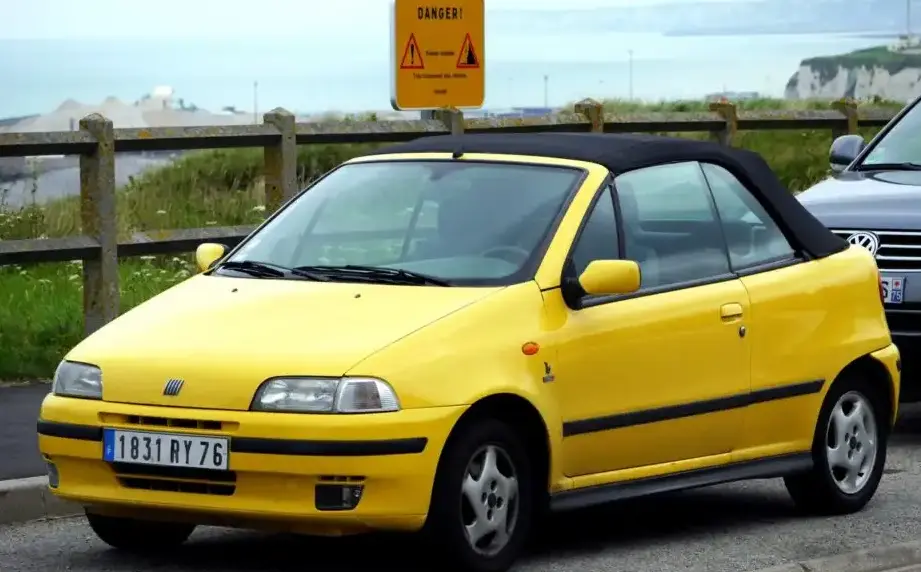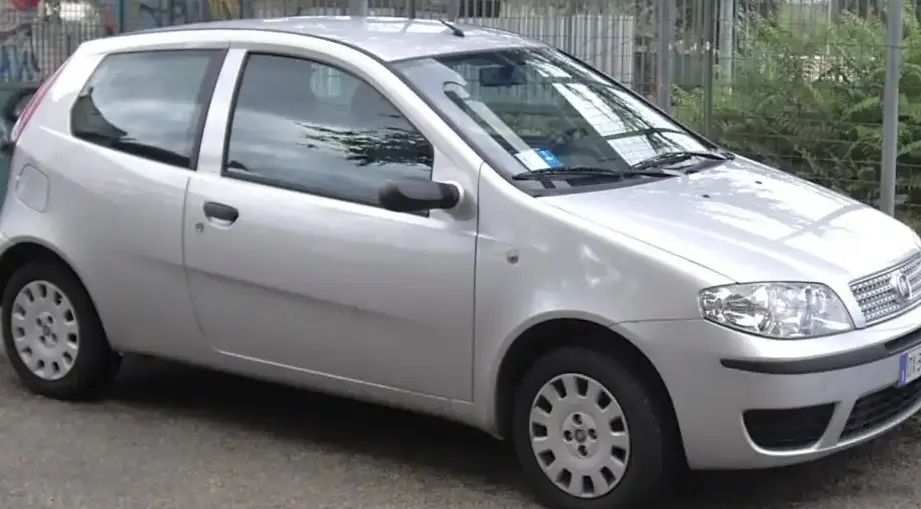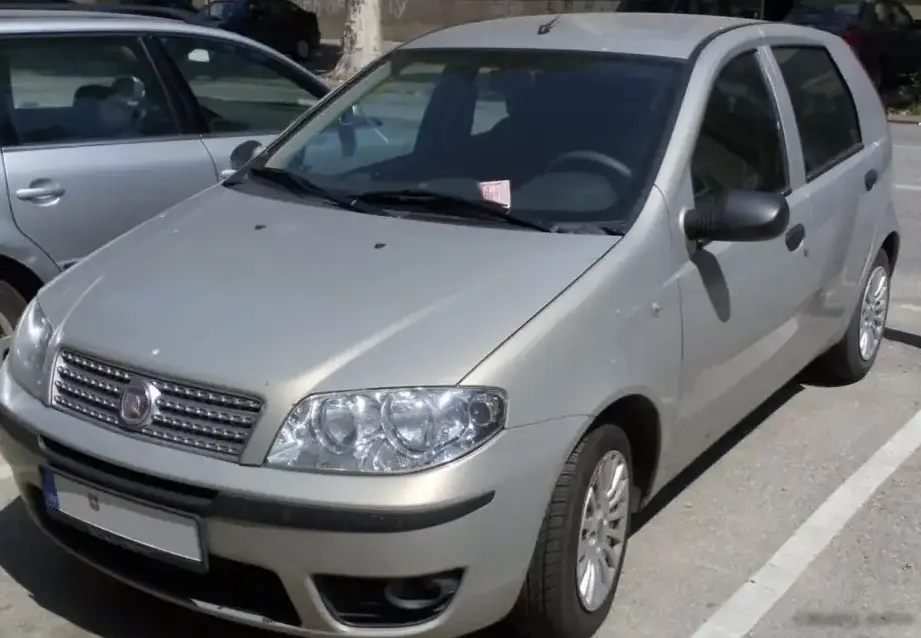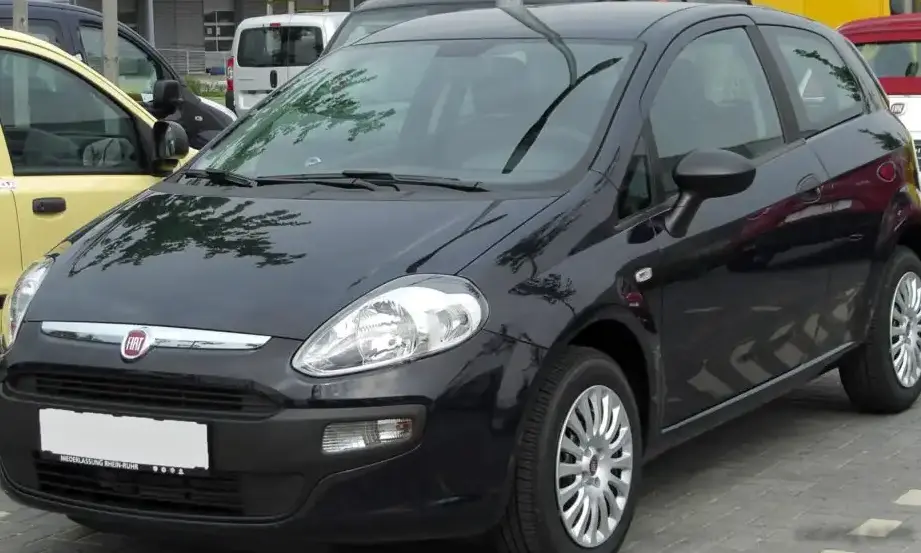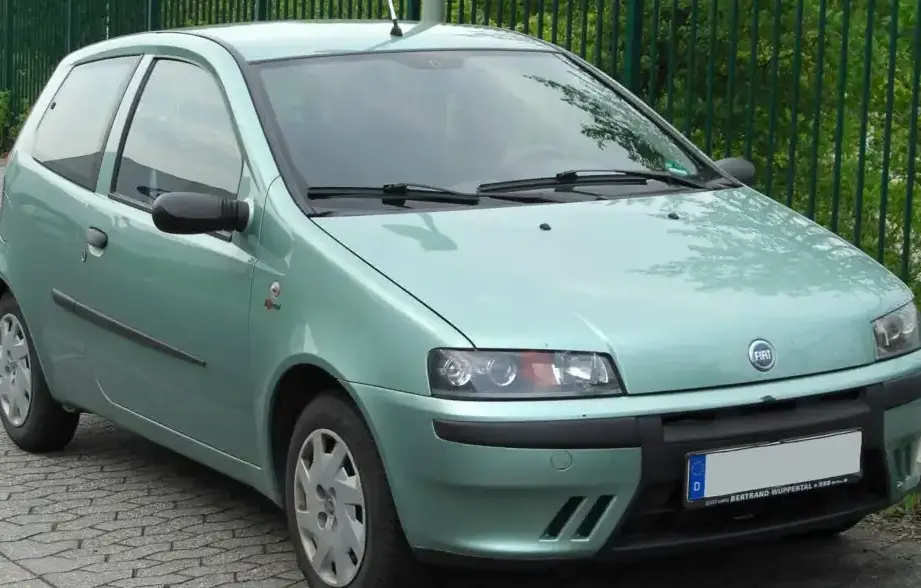
The Fiat Punto II, specifically the three-door 1.2-liter (80 horsepower) variant with an automatic transmission, was produced between 1999 and 2003. This model, designated as the 188 series, represented a significant update to the original Punto, offering improved styling, safety features, and a more refined driving experience. Within the Punto II range, this configuration occupied the entry-level to mid-range position, appealing to buyers seeking affordability and ease of use, particularly in urban environments. It was primarily marketed in Europe, where compact hatchbacks were – and continue to be – a dominant segment of the automotive market.
Technical Specifications
| Brand | Fiat |
| Model | Punto |
| Generation | Punto II (188) 3dr |
| Type (Engine) | 1.2 (80 Hp) Automatic |
| Start of production | 1999 |
| End of production | 2003 |
| Powertrain Architecture | Internal Combustion engine |
| Body type | Hatchback |
| Seats | 5 |
| Doors | 3 |
| Fuel consumption (urban) | 8.4 l/100 km (28 US mpg, 33.6 UK mpg, 11.9 km/l) |
| Fuel consumption (extra urban) | 5.5 l/100 km (42.8 US mpg, 51.4 UK mpg, 18.2 km/l) |
| Fuel consumption (combined) | 6.5 l/100 km (36.2 US mpg, 43.5 UK mpg, 15.4 km/l) |
| Fuel Type | Petrol (Gasoline) |
| Acceleration 0 – 100 km/h | 12.6 sec |
| Acceleration 0 – 62 mph | 12.6 sec |
| Acceleration 0 – 60 mph | 12 sec |
| Maximum speed | 165 km/h (102.53 mph) |
| Emission standard | Euro 3 |
| Weight-to-power ratio | 11.5 kg/Hp |
| Weight-to-torque ratio | 8.1 kg/Nm |
| Power | 80 Hp @ 5000 rpm |
| Torque | 114 Nm @ 4000 rpm (84.08 lb.-ft. @ 4000 rpm) |
| Engine layout | Front, Transverse |
| Engine Model/Code | 188A5000 |
| Engine displacement | 1242 cm3 (75.79 cu. in.) |
| Number of cylinders | 4 |
| Engine configuration | Inline |
| Cylinder Bore | 70.8 mm (2.79 in.) |
| Piston Stroke | 78.9 mm (3.11 in.) |
| Compression ratio | 10.6:1 |
| Number of valves per cylinder | 4 |
| Fuel injection system | Multi-port manifold injection |
| Engine aspiration | Naturally aspirated |
| Valvetrain | DOHC |
| Engine oil capacity | 2.8 l (2.96 US qt | 2.46 UK qt) |
| Coolant capacity | 4.2 l (4.44 US qt | 3.7 UK qt) |
| Kerb Weight | 920 kg (2028.25 lbs.) |
| Max. weight | 1430 kg (3152.61 lbs.) |
| Max load | 510 kg (1124.36 lbs.) |
| Trunk (boot) space – minimum | 264 l (9.32 cu. ft.) |
| Trunk (boot) space – maximum | 1080 l (38.14 cu. ft.) |
| Fuel tank capacity | 47 l (12.42 US gal | 10.34 UK gal) |
| Length | 3800 mm (149.61 in.) |
| Width | 1660 mm (65.35 in.) |
| Height | 1480 mm (58.27 in.) |
| Wheelbase | 2460 mm (96.85 in.) |
| Front track | 1398 mm (55.04 in.) |
| Rear track | 1392 mm (54.8 in.) |
| Drag coefficient (Cd) | 0.32 |
| Minimum turning circle | 10.2 m (33.46 ft.) |
| Drivetrain Architecture | Front wheel drive |
| Number of gears | 6 |
| Gearbox type | Automatic transmission |
| Front suspension | Wishbone |
| Rear suspension | Coil spring |
| Front brakes | Disc |
| Rear brakes | Drum |
| Assisting systems | ABS (Anti-lock braking system) |
| Steering type | Steering rack and pinion |
| Power steering | Hydraulic |
| Tires size | 165/70 R14 |
| Wheel rims size | 14 |
Powertrain & Engine Architecture
The heart of this Punto variant is the 1.2-liter, 188A5000 inline-four cylinder engine. This engine is a naturally aspirated unit featuring a double overhead camshaft (DOHC) valvetrain with four valves per cylinder. It utilizes a multi-port fuel injection system, a common setup for engines of this era, providing adequate fuel atomization for efficient combustion. The engine produces 80 horsepower at 5000 rpm and 114 Nm (84 lb-ft) of torque at 4000 rpm. The automatic transmission is a conventional six-speed unit, designed to provide smooth shifts and ease of driving, particularly in congested urban traffic. While not known for its sporting performance, the engine is relatively durable and straightforward to maintain.
Driving Characteristics
The 1.2-liter automatic Punto offers a comfortable, if uninspiring, driving experience. Acceleration is modest, taking approximately 12.6 seconds to reach 62 mph (100 km/h). The automatic transmission, while convenient, does sap some power compared to the available five-speed manual gearbox. Gear ratios are tuned for fuel efficiency and drivability rather than outright performance. In real-world conditions, the car feels best suited to city driving and shorter trips. Compared to the more powerful 1.8-liter versions, this variant lacks the punch needed for spirited driving or highway overtaking. However, it offers a smoother and more relaxed driving experience, particularly for less experienced drivers.
Equipment & Trim Levels
The 1.2-liter automatic Punto typically came equipped with basic but functional features. Standard equipment included power steering, central locking, and an anti-lock braking system (ABS). Interior upholstery was typically cloth, and the dashboard featured a simple, functional design. Optional extras included air conditioning, electric windows, and a radio/cassette player. The trim level often dictated the quality of the interior materials and the availability of these optional features. This variant generally represented a step up from the base model, offering a slightly more comfortable and well-equipped interior.
Chassis & Braking
The Punto II’s chassis features a wishbone front suspension and a coil spring rear suspension. The front brakes are discs, providing adequate stopping power, while the rear brakes are drums, a cost-saving measure common in this class of vehicle. The suspension is tuned for comfort, providing a reasonably smooth ride over uneven surfaces. The car’s relatively light weight (920 kg or 2028 lbs) helps to mitigate the effects of the modest engine power. Stabilizer bars were typically fitted to improve handling and reduce body roll, although the thickness may have varied depending on the specific trim level.
Market Reception & Comparison
The 1.2-liter automatic Punto was generally well-received as an affordable and practical city car. Critics praised its ease of use and fuel efficiency, but noted its lack of performance. Compared to other trims in the Punto II lineup, such as the 1.8-liter versions, this variant offered lower running costs but sacrificed performance. It was often seen as a sensible choice for drivers who prioritized practicality and affordability over driving excitement. Fuel economy figures of around 36.2 US mpg (combined) were competitive for the time.
Legacy
The 1.2-liter automatic Punto II has proven to be a relatively reliable vehicle, with the engine and transmission generally holding up well over time. However, like all cars of this age, it is susceptible to rust and age-related wear and tear. In the used car market today, these Puntos are typically very affordable, making them attractive to first-time buyers or those seeking a cheap and cheerful runabout. While not a particularly collectible model, the 1.2-liter automatic Punto II represents a significant part of Fiat’s history and a popular choice for many European drivers during its production run.