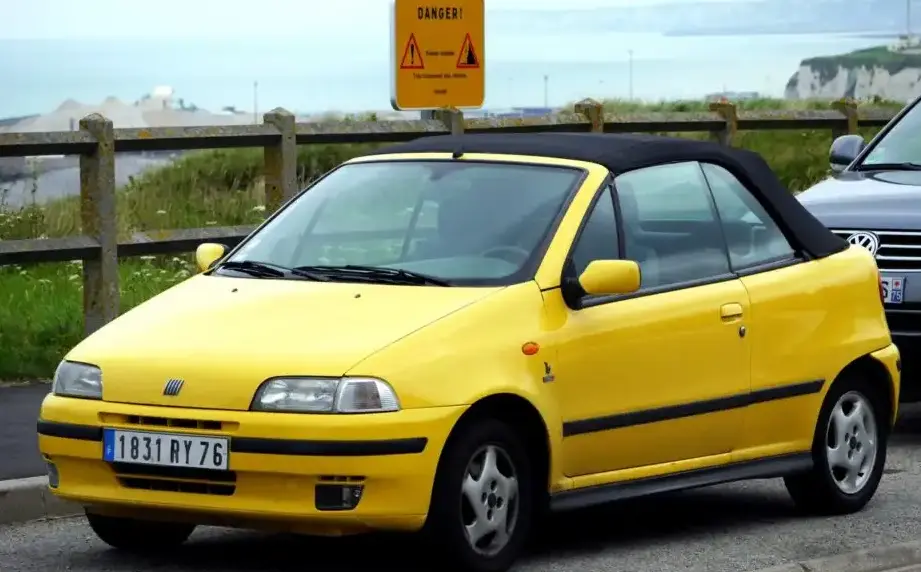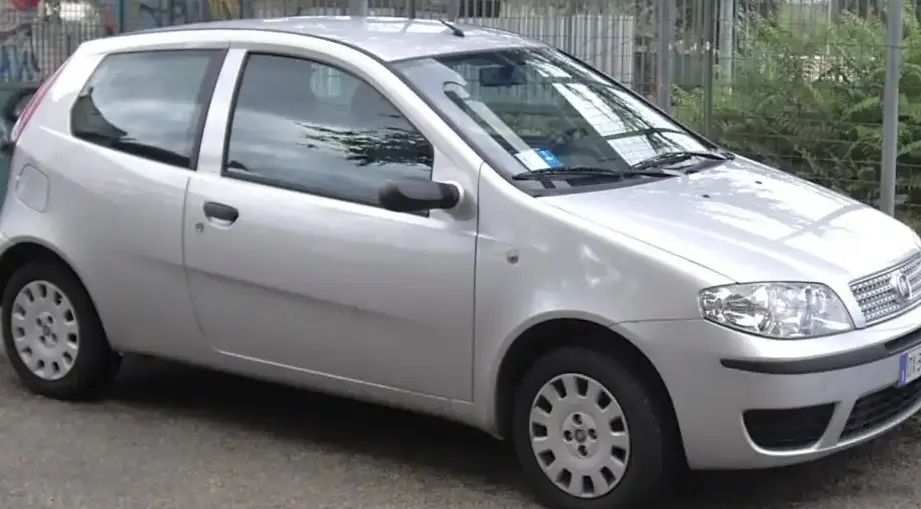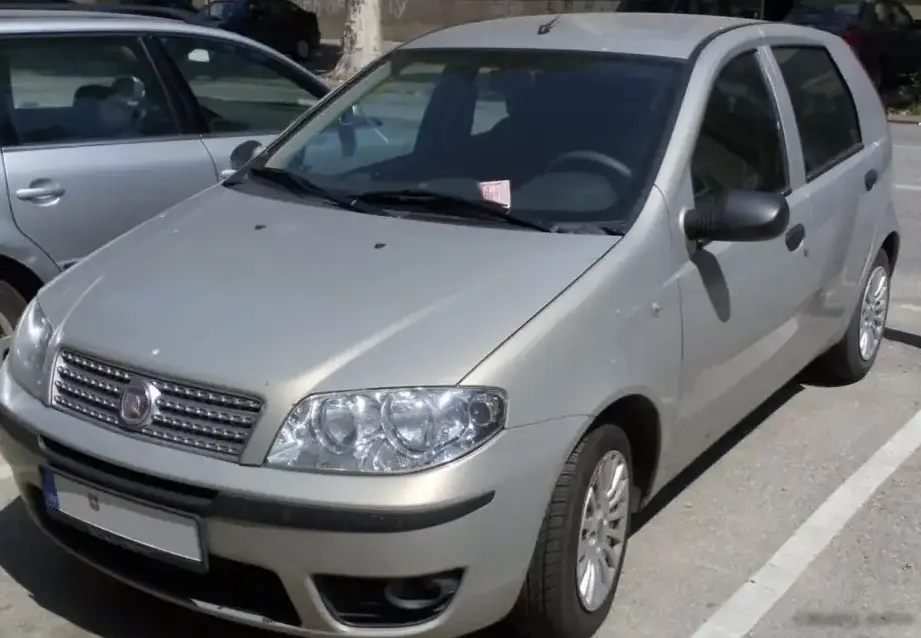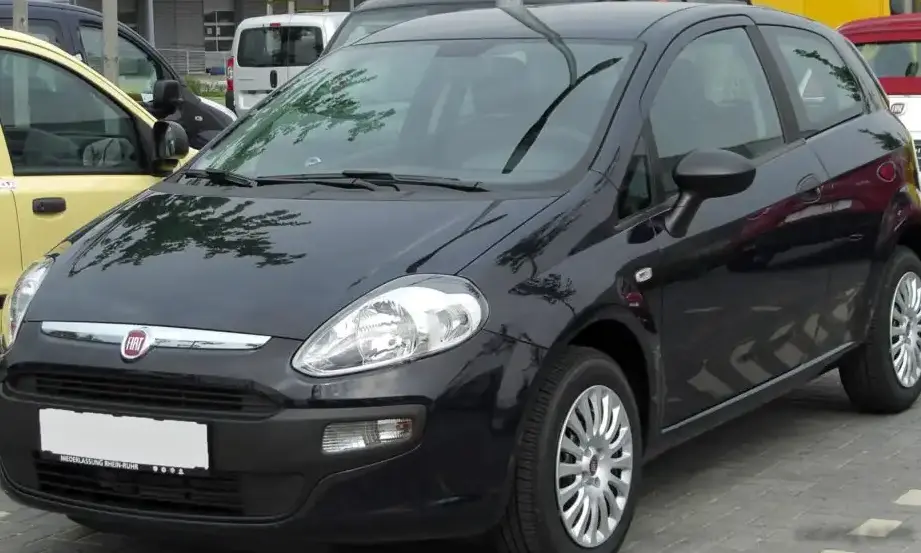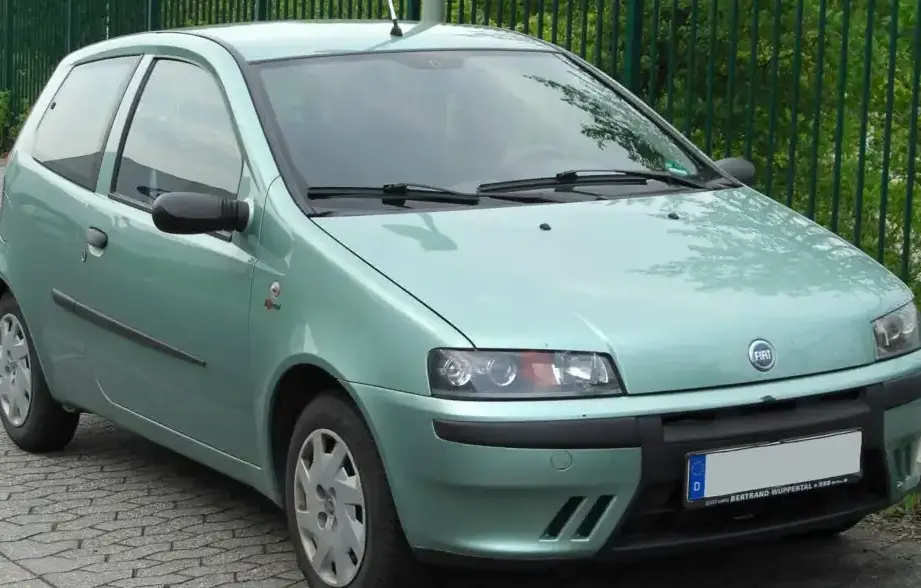
The Fiat Punto II (188) 3-door 1.9 JTD, produced from 1999 to 2001, represented a significant offering in the European subcompact hatchback segment. Positioned as an economical and practical choice, this variant utilized Fiat’s advanced direct injection diesel technology to deliver a balance of fuel efficiency and reasonable performance. It was part of the 188 series, the second generation of the Punto, which aimed to modernize the brand’s small car offering and compete with rivals like the Renault Clio, Peugeot 206, and Volkswagen Polo. The 1.9 JTD trim occupied a middle ground in the Punto II lineup, offering a more refined driving experience and improved fuel economy compared to the lower-spec petrol models, while remaining more affordable than the higher-performance or more luxuriously equipped versions.
Technical Specifications
| Brand | Fiat |
| Model | Punto |
| Generation | Punto II (188) 3dr |
| Type (Engine) | 1.9 JTD (80 Hp) |
| Start of production | 1999 |
| End of production | 2001 |
| Powertrain Architecture | Internal Combustion engine |
| Body type | Hatchback |
| Seats | 5 |
| Doors | 3 |
| Fuel consumption (urban) | 6.6 l/100 km (35.6 US mpg, 42.8 UK mpg, 15.2 km/l) |
| Fuel consumption (extra urban) | 4 l/100 km (58.8 US mpg, 70.6 UK mpg, 25 km/l) |
| Fuel consumption (combined) | 4.9 l/100 km (48 US mpg, 57.6 UK mpg, 20.4 km/l) |
| Fuel Type | Diesel |
| Acceleration 0 – 100 km/h | 12.2 sec |
| Acceleration 0 – 62 mph | 12.2 sec |
| Acceleration 0 – 60 mph | 11.6 sec |
| Maximum speed | 170 km/h (105.63 mph) |
| Emission standard | Euro 3 |
| Weight-to-power ratio | 13 kg/Hp, 76.9 Hp/tonne |
| Weight-to-torque ratio | 5.3 kg/Nm, 188.5 Nm/tonne |
| Power | 80 Hp @ 3000 rpm |
| Power per litre | 41.9 Hp/l |
| Torque | 196 Nm @ 1500 rpm (144.56 lb.-ft. @ 1500 rpm) |
| Engine layout | Front, Transverse |
| Engine Model/Code | 188A2000 |
| Engine displacement | 1910 cm3 (116.56 cu. in.) |
| Number of cylinders | 4 |
| Engine configuration | Inline |
| Cylinder Bore | 82 mm (3.23 in.) |
| Piston Stroke | 90.4 mm (3.56 in.) |
| Compression ratio | 18.5:1 |
| Number of valves per cylinder | 2 |
| Fuel injection system | Diesel Commonrail |
| Engine aspiration | Turbocharger, Intercooler |
| Engine oil capacity | 4.3 l (4.54 US qt | 3.78 UK qt) |
| Coolant capacity | 6.2 l (6.55 US qt | 5.46 UK qt) |
| Kerb Weight | 1040 kg (2292.81 lbs.) |
| Max. weight | 1550 kg (3417.17 lbs.) |
| Max load | 510 kg (1124.36 lbs.) |
| Trunk (boot) space – minimum | 264 l (9.32 cu. ft.) |
| Trunk (boot) space – maximum | 1080 l (38.14 cu. ft.) |
| Fuel tank capacity | 49 l (12.94 US gal | 10.78 UK gal) |
| Length | 3800 mm (149.61 in.) |
| Width | 1660 mm (65.35 in.) |
| Height | 1480 mm (58.27 in.) |
| Wheelbase | 2460 mm (96.85 in.) |
| Front track | 1398 mm (55.04 in.) |
| Rear track | 1392 mm (54.8 in.) |
| Drag coefficient (Cd) | 0.32 |
| Minimum turning circle | 10.5 m (34.45 ft.) |
| Drivetrain Architecture | Front wheel drive |
| Number of gears | 5 |
| Gearbox type | Manual transmission |
| Front suspension | Independent type McPherson |
| Rear suspension | Torsion |
| Front brakes | Ventilated discs |
| Rear brakes | Drum |
| Assisting systems | ABS (Anti-lock braking system) |
| Steering type | Steering rack and pinion |
| Power steering | Electric |
| Tires size | 185/60 R14 |
| Wheel rims size | 6J x 14 |
Powertrain & Engine Architecture
The heart of the Punto II 1.9 JTD was the 188A2000 engine, a 1910cc inline-four cylinder diesel. This engine was a product of Fiat’s collaboration with Common Rail technology, allowing for precise fuel delivery and reduced engine noise compared to older diesel designs. The engine featured a turbocharger with an intercooler, boosting power output to 80 horsepower at 3000 rpm and a substantial 196 Nm (144.56 lb-ft) of torque at just 1500 rpm. This torque curve provided strong low-end and mid-range acceleration, making it well-suited for everyday driving. The engine utilized a two-valve per cylinder configuration and a compression ratio of 18.5:1. The five-speed manual transmission was the standard offering, providing a good balance between fuel economy and drivability.
Driving Characteristics
The 1.9 JTD variant of the Punto II offered a surprisingly refined driving experience for a subcompact diesel. The abundant low-end torque made it easy to navigate city streets and provided effortless overtaking on the highway. While not a particularly fast car – 0-60 mph took around 11.6 seconds – it felt more responsive than the petrol-powered versions. The five-speed gearbox was well-matched to the engine’s characteristics, allowing drivers to keep the engine in its optimal power band. Compared to the 1.2-liter petrol models, the 1.9 JTD offered significantly more pulling power, making it a better choice for those who frequently carried passengers or cargo. However, it lacked the outright punch of the more powerful Punto models like the 1.8-liter petrol versions.
Equipment & Trim Levels
The 3-door 1.9 JTD Punto II typically came with a reasonable level of standard equipment. This included power steering, central locking, front electric windows, and an adjustable steering column. Interior upholstery was typically cloth, with a functional, if somewhat basic, dashboard layout. Optional extras included air conditioning, alloy wheels, and a radio/cassette player. The trim level was generally considered a mid-range offering, bridging the gap between the entry-level models and the more luxurious versions.
Chassis & Braking
The Punto II utilized a McPherson strut independent suspension at the front and a torsion beam suspension at the rear. This setup provided a comfortable ride quality, although it wasn’t particularly sporty. The front brakes were ventilated discs, offering good stopping power, while the rear brakes were drums. ABS (Anti-lock Braking System) was standard, enhancing safety. The relatively lightweight nature of the car – around 1040 kg (2292.81 lbs) – contributed to its nimble handling.
Market Reception & Comparison
The Fiat Punto II 1.9 JTD was well-received by European consumers and automotive critics alike. It was praised for its fuel efficiency, strong torque, and relatively low running costs. Compared to the petrol-powered Punto models, the 1.9 JTD offered significantly better fuel economy – around 48 US mpg combined – and a more relaxed driving experience. However, some critics noted that the diesel engine was slightly noisier than the petrol alternatives. Against competitors like the Renault Clio and Peugeot 206, the Punto II 1.9 JTD offered a competitive package in terms of price, fuel economy, and practicality.
Legacy
The 1.9 JTD engine proved to be remarkably durable and reliable, and many examples are still on the road today. The Punto II 1.9 JTD has gained a reputation as a dependable and economical used car. While maintenance costs can be higher for diesel engines compared to petrol, the long-term fuel savings and robust engine design often offset these expenses. The 1.9 JTD engine became a popular choice for engine swaps and modifications, demonstrating its versatility and potential. Today, the Punto II 1.9 JTD represents a practical and affordable entry point into the world of European hatchbacks, offering a blend of fuel efficiency, reliability, and everyday usability.