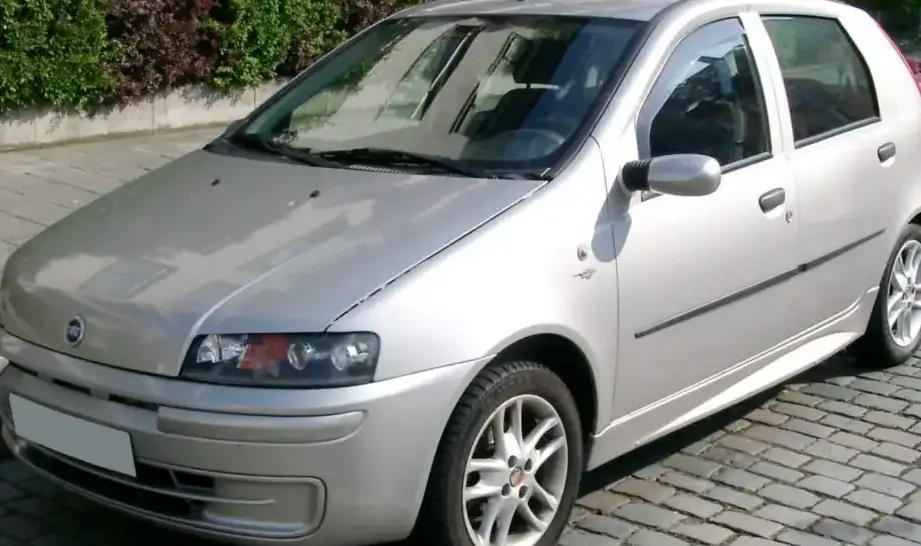
Technical Specifications
| Brand | Fiat |
| Model | Punto |
| Generation | Punto II (188) 5dr |
| Type (Engine) | 1.2 (80 Hp) |
| Start of production | 1999 |
| End of production | 2003 |
| Powertrain Architecture | Internal Combustion engine |
| Body type | Hatchback |
| Seats | 5 |
| Doors | 5 |
| Fuel consumption (urban) | 7.6 l/100 km (30.9 US mpg) |
| Fuel consumption (extra urban) | 5 l/100 km (47 US mpg) |
| Fuel consumption (combined) | 6 l/100 km (39.2 US mpg) |
| Fuel Type | Petrol (Gasoline) |
| Acceleration 0 – 100 km/h | 11.4 sec |
| Acceleration 0 – 62 mph | 11.4 sec |
| Acceleration 0 – 60 mph | 10.8 sec |
| Maximum speed | 172 km/h (106.88 mph) |
| Emission standard | Euro 3 |
| Weight-to-power ratio | 11.7 kg/Hp |
| Weight-to-torque ratio | 8.2 kg/Nm |
| Power | 80 Hp @ 5000 rpm |
| Torque | 114 Nm @ 4000 rpm (84.08 lb.-ft. @ 4000 rpm) |
| Engine layout | Front, Transverse |
| Engine Model/Code | 188A5000 |
| Engine displacement | 1242 cm3 (75.79 cu. in.) |
| Number of cylinders | 4 |
| Engine configuration | Inline |
| Cylinder Bore | 70.8 mm (2.79 in.) |
| Piston Stroke | 78.9 mm (3.11 in.) |
| Compression ratio | 10.6:1 |
| Number of valves per cylinder | 4 |
| Fuel injection system | Multi-port manifold injection |
| Engine aspiration | Naturally aspirated |
| Valvetrain | DOHC |
| Engine oil capacity | 2.8 l (2.96 US qt | 2.46 UK qt) |
| Coolant capacity | 4.2 l (4.44 US qt | 3.7 UK qt) |
| Kerb Weight | 935 kg (2061.32 lbs.) |
| Max. weight | 1445 kg (3185.68 lbs.) |
| Max load | 510 kg (1124.36 lbs.) |
| Trunk (boot) space – minimum | 297 l (10.49 cu. ft.) |
| Trunk (boot) space – maximum | 1080 l (38.14 cu. ft.) |
| Fuel tank capacity | 47 l (12.42 US gal | 10.34 UK gal) |
| Length | 3835 mm (150.98 in.) |
| Width | 1660 mm (65.35 in.) |
| Height | 1480 mm (58.27 in.) |
| Wheelbase | 2460 mm (96.85 in.) |
| Front track | 1398 mm (55.04 in.) |
| Rear track | 1392 mm (54.8 in.) |
| Drag coefficient (Cd) | 0.32 |
| Minimum turning circle | 10.2 m (33.46 ft.) |
| Drivetrain | Front wheel drive |
| Number of gears | 5 |
| Gearbox type | Manual transmission |
| Front suspension | Wishbone |
| Rear suspension | Coil spring |
| Front brakes | Disc |
| Rear brakes | Drum |
| Assisting systems | ABS (Anti-lock braking system) |
| Steering type | Steering rack and pinion |
| Power steering | Hydraulic |
| Tires size | 165/70 R14 |
| Wheel rims size | 14 |
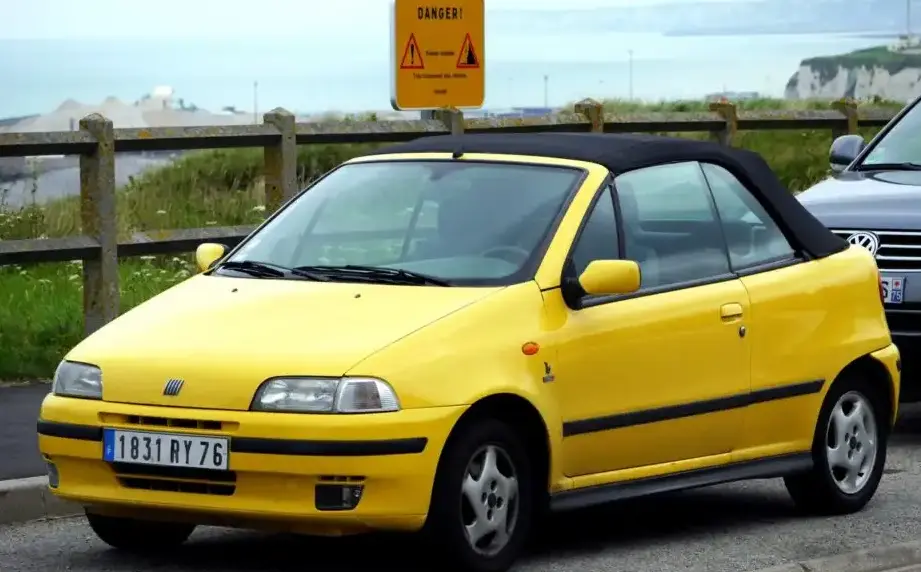
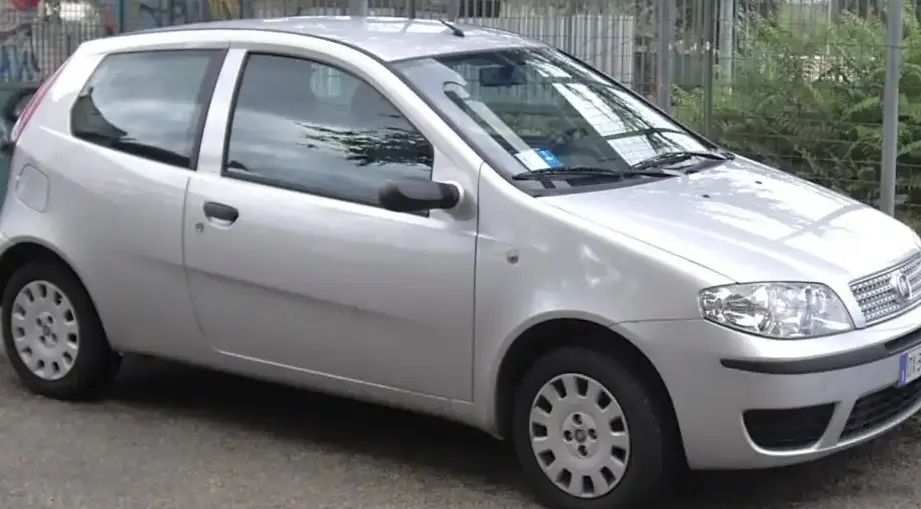
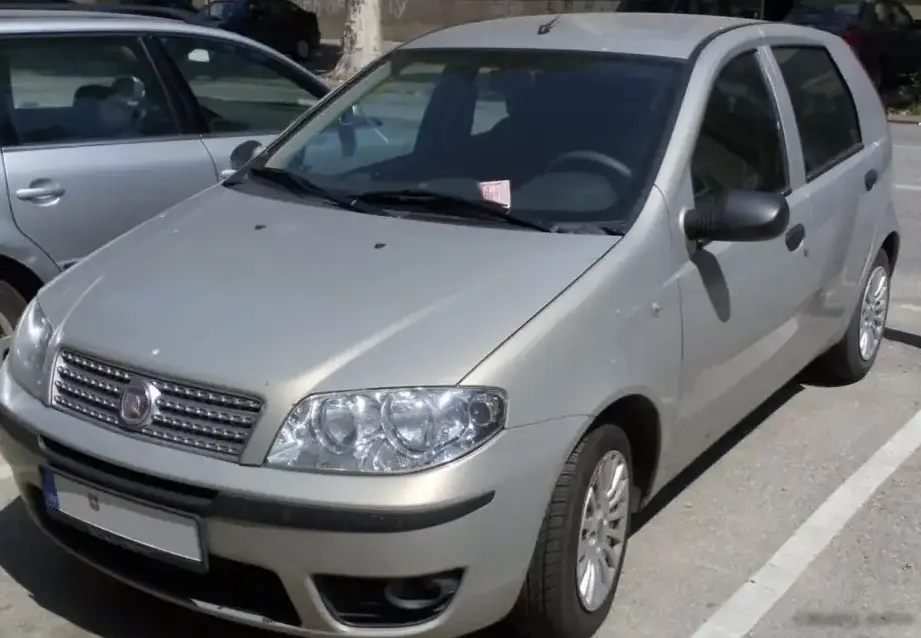
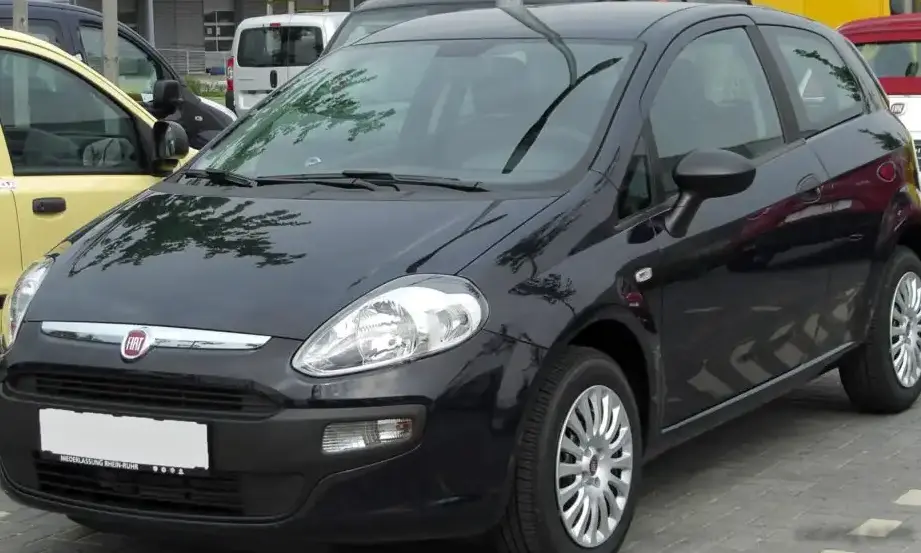
The Fiat Punto II, specifically the 5-door hatchback variant equipped with the 1.2-liter 80 horsepower engine, was a common sight on European roads from 1999 to 2003. Representing the second generation of the Punto, the 188 series was designed to improve upon the success of the original Punto by offering enhanced styling, improved safety features, and a more refined driving experience. This particular engine and trim level served as the entry point into the Punto II range, appealing to buyers prioritizing affordability and fuel efficiency. It was a practical and reliable choice for everyday transportation.
Powertrain & Engine Architecture
The 1.2-liter inline-four cylinder engine, designated as the Fiat 188A5000, powers this Punto variant. This engine belongs to Fiat’s renowned FIRE (Fully Integrated Robotized Engine) family, celebrated for its inherent simplicity and robust durability. While early FIRE engines utilized a single overhead camshaft (SOHC) design, later iterations, including some versions of the 1.2-liter, incorporated a dual overhead camshaft (DOHC) configuration to enhance performance. The 80 horsepower output was achieved through a multi-port fuel injection system and a compression ratio of 10.6:1. This engine’s relatively small displacement and modest power output were intentionally designed to prioritize fuel economy and minimize emissions, aligning with the demands of the European automotive market. The engine was most commonly paired with a five-speed manual transmission, although a four-speed automatic transmission was also available, albeit less frequently chosen. The automatic transmission, while offering convenience, inevitably resulted in a slight reduction in both acceleration and fuel efficiency compared to the manual gearbox.
Driving Characteristics
The Punto II 1.2 Automatic provided a comfortable, though not particularly exhilarating, driving experience. Acceleration was sufficient for typical urban and suburban driving conditions, but overtaking maneuvers required careful consideration and planning. The four-speed automatic transmission, while generally smooth in operation, featured relatively long gear ratios, contributing to a somewhat deliberate and less responsive feel. The steering was light and precise, making it easy to maneuver in congested city streets. The suspension, tuned for comfort, effectively absorbed bumps and road imperfections, providing a reasonably smooth ride. Compared to the more powerful 1.8-liter versions of the Punto II, this variant lacked the punch needed for spirited driving, but it excelled in delivering a relaxed and economical daily commute.
Equipment & Trim Levels
The base-level Punto II 1.2 Automatic typically included standard features such as power steering, central locking, electric front windows, and an adjustable steering column. The interior upholstery was generally cloth, and the dashboard featured a simple, functional layout. Optional extras included air conditioning, alloy wheels, and a radio/cassette player. Higher trim levels, such as the ELX, added enhancements like body-colored bumpers, upgraded interior trim materials, and additional safety equipment. These upgrades offered a more refined and feature-rich experience for buyers willing to spend a bit more.
Chassis & Braking
The Punto II employed a front-wheel-drive layout, coupled with a MacPherson strut front suspension and a twist-beam rear suspension. To keep costs down, the front brakes were disc brakes, while the rear brakes were drum brakes – a common practice in this vehicle segment. Anti-lock Braking System (ABS) was offered as an optional extra, improving braking performance and enhancing overall safety. The chassis was engineered to strike a balance between ride comfort and handling, prioritizing a comfortable ride over sporty handling characteristics.
Market Reception & Comparison
The Punto II 1.2 Automatic was generally well-received as a practical and affordable city car. Automotive critics praised its fuel efficiency and ease of driving, but often noted its modest performance capabilities. When compared to other small cars available in the European market, such as the Renault Clio and the Peugeot 206, the Punto II offered a competitive price point and a relatively spacious interior. However, the automatic transmission version was frequently criticized for its sluggishness and reduced fuel economy compared to the manual transmission models. The 1.8-liter Punto, while offering significantly more performance, came at a higher price and with increased running costs.
Legacy
The Fiat Punto II 1.2 Automatic remains a relatively common sight on European roads today, a testament to its inherent durability and reliability. The FIRE engine is well-known for its longevity, and with consistent and proper maintenance, these vehicles can continue to provide dependable transportation for many years to come. In the used car market, this variant represents an affordable entry point into Punto II ownership, appealing to buyers seeking a practical and economical vehicle. While it may not be considered a performance icon, the 1.2-liter automatic Punto II played a significant role in providing affordable mobility to a broad range of drivers.