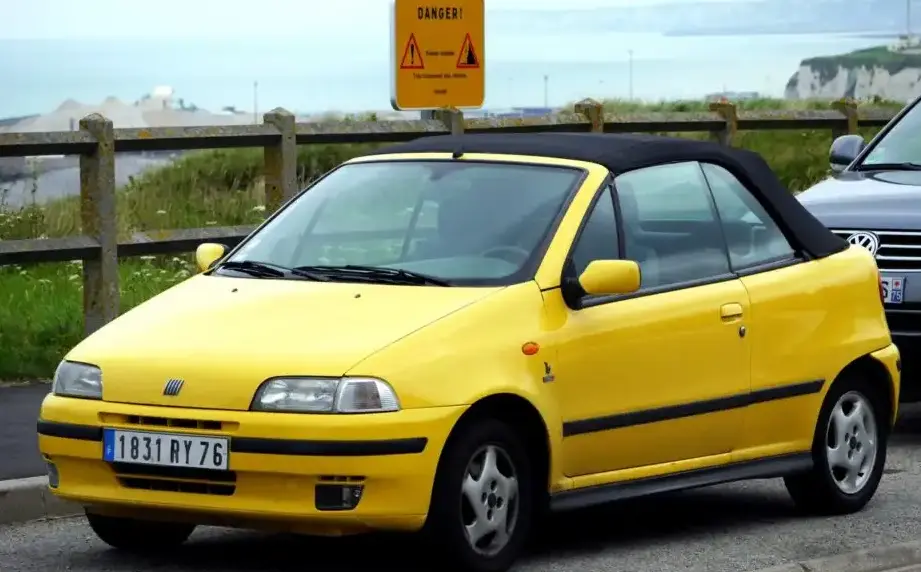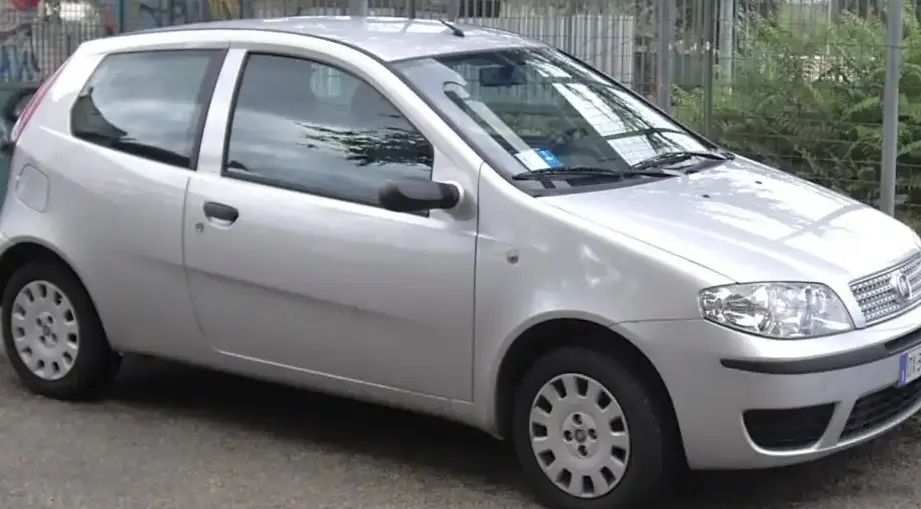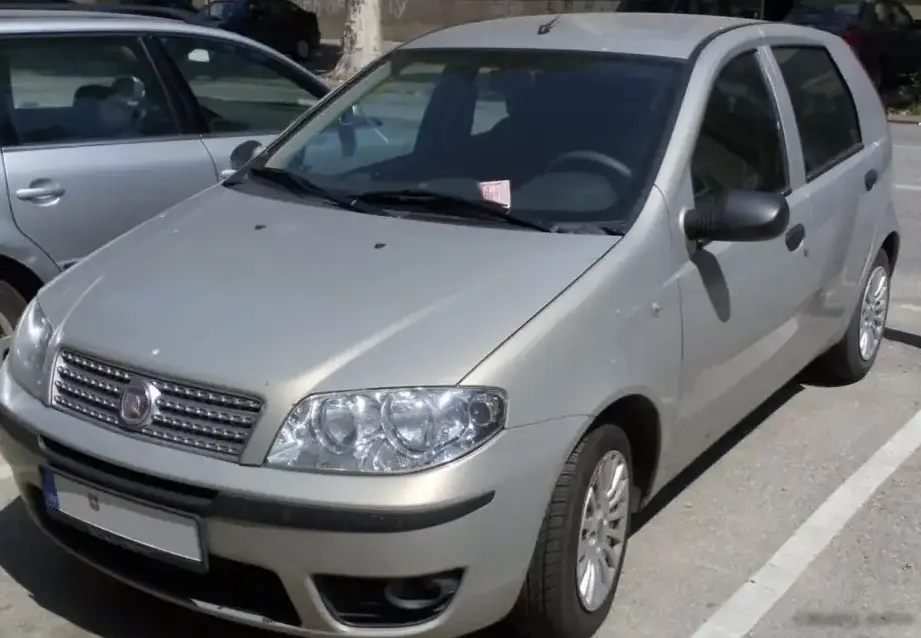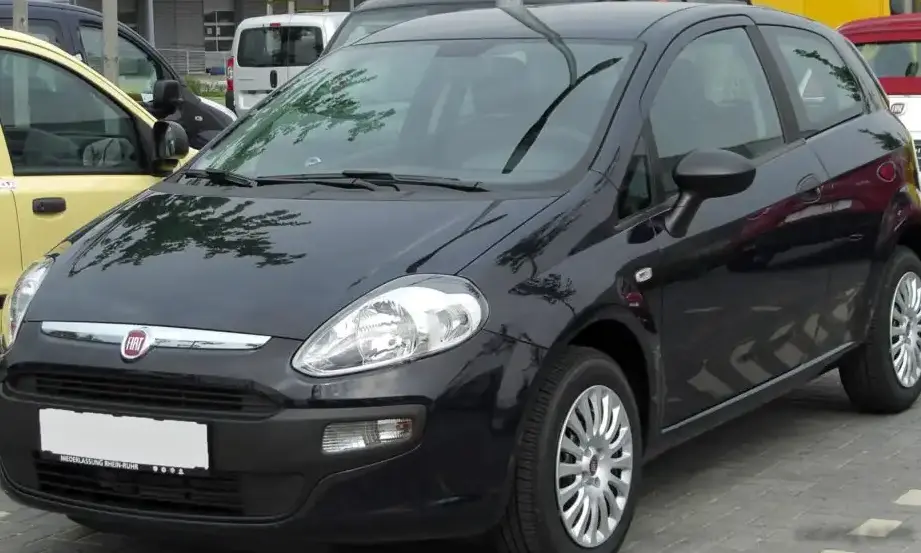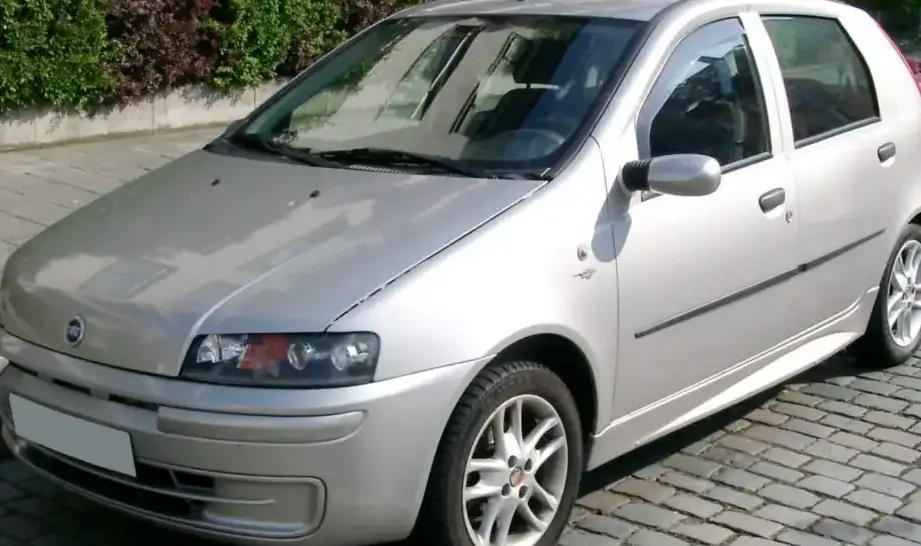
The Fiat Punto II, specifically the 5-door hatchback variant equipped with the 1.2-liter 80 horsepower engine and automatic transmission, was produced from 1999 to 2003. This model, designated as the 188 series, represented a significant update to the original Punto, offering improved styling, safety features, and a more refined driving experience. Within the Punto II lineup, this configuration served as an entry-level option, aimed at buyers prioritizing affordability and ease of use over outright performance. It was a common sight on European roads, particularly in Italy and other markets where compact, economical hatchbacks were highly popular.
Technical Specifications
| Brand | Fiat |
| Model | Punto |
| Generation | Punto II (188) 5dr |
| Type (Engine) | 1.2 (80 Hp) Automatic |
| Start of production | 1999 year |
| End of production | 2003 year |
| Powertrain Architecture | Internal Combustion engine |
| Body type | Hatchback |
| Seats | 5 |
| Doors | 5 |
| Fuel consumption (urban) | 8.4 l/100 km (28 US mpg, 33.6 UK mpg, 11.9 km/l) |
| Fuel consumption (extra urban) | 5.5 l/100 km (42.8 US mpg, 51.4 UK mpg, 18.2 km/l) |
| Fuel consumption (combined) | 6.5 l/100 km (36.2 US mpg, 43.5 UK mpg, 15.4 km/l) |
| Fuel Type | Petrol (Gasoline) |
| Acceleration 0 – 100 km/h | 12.6 sec |
| Acceleration 0 – 62 mph | 12.6 sec |
| Acceleration 0 – 60 mph | 12 sec |
| Maximum speed | 165 km/h (102.53 mph) |
| Emission standard | Euro 3 |
| Weight-to-power ratio | 11.7 kg/Hp, 85.6 Hp/tonne |
| Weight-to-torque ratio | 8.2 kg/Nm, 121.9 Nm/tonne |
| Power | 80 Hp @ 5000 rpm |
| Power per litre | 64.4 Hp/l |
| Torque | 114 Nm @ 4000 rpm (84.08 lb.-ft. @ 4000 rpm) |
| Engine layout | Front, Transverse |
| Engine Model/Code | 188A5000 |
| Engine displacement | 1242 cm3 (75.79 cu. in.) |
| Number of cylinders | 4 |
| Engine configuration | Inline |
| Cylinder Bore | 70.8 mm (2.79 in.) |
| Piston Stroke | 78.9 mm (3.11 in.) |
| Compression ratio | 10.6:1 |
| Number of valves per cylinder | 4 |
| Fuel injection system | Multi-port manifold injection |
| Engine aspiration | Naturally aspirated engine |
| Valvetrain | DOHC |
| Engine oil capacity | 2.8 l (2.96 US qt | 2.46 UK qt) |
| Coolant | 4.5 l (4.76 US qt | 3.96 UK qt) |
| Kerb Weight | 935 kg (2061.32 lbs.) |
| Max. weight | 1445 kg (3185.68 lbs.) |
| Max load | 510 kg (1124.36 lbs.) |
| Trunk (boot) space – minimum | 297 l (10.49 cu. ft.) |
| Trunk (boot) space – maximum | 1080 l (38.14 cu. ft.) |
| Fuel tank capacity | 47 l (12.42 US gal | 10.34 UK gal) |
| Length | 3835 mm (150.98 in.) |
| Width | 1660 mm (65.35 in.) |
| Height | 1480 mm (58.27 in.) |
| Wheelbase | 2460 mm (96.85 in.) |
| Front track | 1398 mm (55.04 in.) |
| Rear (Back) track | 1392 mm (54.8 in.) |
| Drag coefficient (Cd) | 0.32 |
| Minimum turning circle | 10.2 m (33.46 ft.) |
| Drivetrain Architecture | The Internal combustion engine (ICE) drives the front wheels of the vehicle. |
| Drive wheel | Front wheel drive |
| Number of gears and type of gearbox | 6 gears, automatic transmission |
| Front suspension | Wishbone |
| Rear suspension | Coil spring |
| Front brakes | Disc |
| Rear brakes | Drum |
| Assisting systems | ABS (Anti-lock braking system) |
| Steering type | Steering rack and pinion |
| Power steering | Hydraulic Steering |
| Tires size | 165/70 R14 |
| Wheel rims size | 14 |
Powertrain & Engine Architecture
The heart of this Punto variant is the Fiat 188A5000 1.2-liter inline-four cylinder engine. This engine, a mainstay of Fiat’s small car offerings for many years, utilizes a multi-port fuel injection system and a double overhead camshaft (DOHC) valvetrain. The 1242cc displacement produces 80 horsepower at 5000 rpm and 114 Nm (84 lb-ft) of torque at 4000 rpm. The engine’s design prioritized fuel efficiency and smooth operation over outright performance. Paired with this engine is a six-speed automatic transmission, a relatively uncommon feature in this segment at the time. This transmission, while offering convenience, was known for its somewhat conservative shift programming, prioritizing fuel economy over spirited acceleration. The engine’s 10.6:1 compression ratio was typical for naturally aspirated gasoline engines of the era.
Driving Characteristics
The 1.2-liter automatic Punto offered a comfortable, if uninspiring, driving experience. Acceleration was modest, with a 0-60 mph time of around 12 seconds. The automatic transmission, while smooth, lacked the responsiveness of a manual gearbox, and often required a significant throttle input to downshift for overtaking. The gear ratios were tuned for economy, resulting in a relaxed cruising experience but limited acceleration in higher gears. Compared to the more powerful 1.8-liter versions of the Punto II, this variant felt significantly slower. However, it offered a noticeable improvement in fuel economy and ease of driving, particularly in urban environments.
Equipment & Trim Levels
The 1.2 Automatic Punto typically came equipped with basic, but functional, features. Standard equipment included power steering, central locking, electric front windows, and an ABS anti-lock braking system. Interior upholstery was typically cloth, with a simple dashboard layout. Optional extras included air conditioning, alloy wheels, and a radio/cassette player. The trim level was generally considered entry-level, focusing on providing a practical and affordable transportation solution.
Chassis & Braking
The Punto II featured a front-wheel-drive layout with a wishbone front suspension and a coil spring rear suspension. The front brakes were discs, while the rear brakes were drums – a cost-saving measure common in this class of vehicle. The suspension setup provided a comfortable ride, but handling was not particularly sporty. The hydraulic power steering offered light and easy steering, making it ideal for city driving. The relatively lightweight construction of the Punto (935 kg / 2061 lbs) helped to mitigate the effects of the modest engine power.
Market Reception & Comparison
The 1.2-liter automatic Punto was generally well-received as a practical and economical city car. Critics praised its fuel efficiency and ease of use, but noted its lack of performance. Compared to the manual transmission versions of the same engine, the automatic offered slightly worse fuel economy and slower acceleration. Against competitors like the Renault Clio and Peugeot 206, the Punto offered a competitive price point and a comfortable interior, but lacked the more refined driving dynamics of some rivals.
Legacy
The 1.2-liter engine and automatic transmission combination in the Fiat Punto II proved to be reasonably reliable, although the automatic transmission could be prone to wear and tear with high mileage. Today, these vehicles are relatively affordable on the used car market, but finding well-maintained examples can be challenging. The Punto II, in general, is remembered as a solid and practical supermini that provided affordable transportation for many European drivers. While not a performance icon, the 1.2 Automatic variant remains a testament to Fiat’s commitment to building economical and user-friendly vehicles.