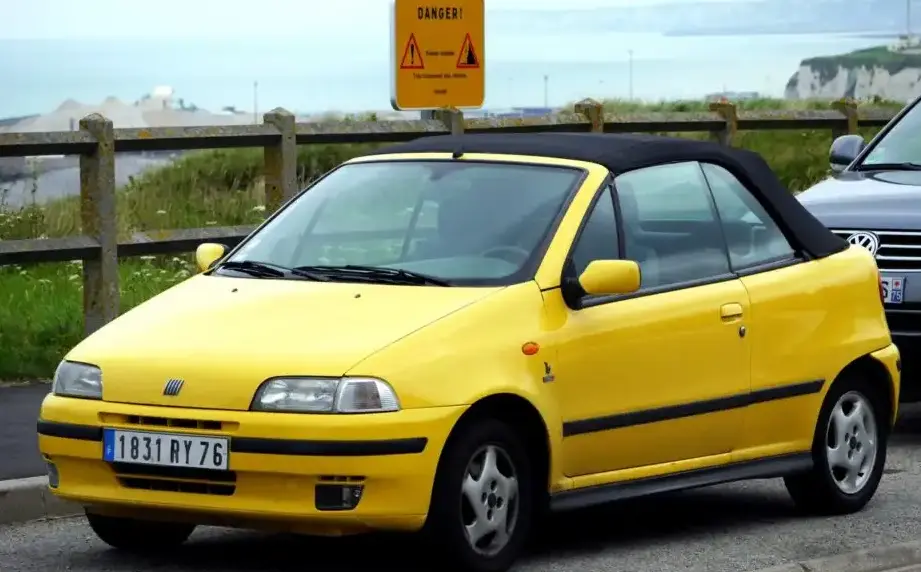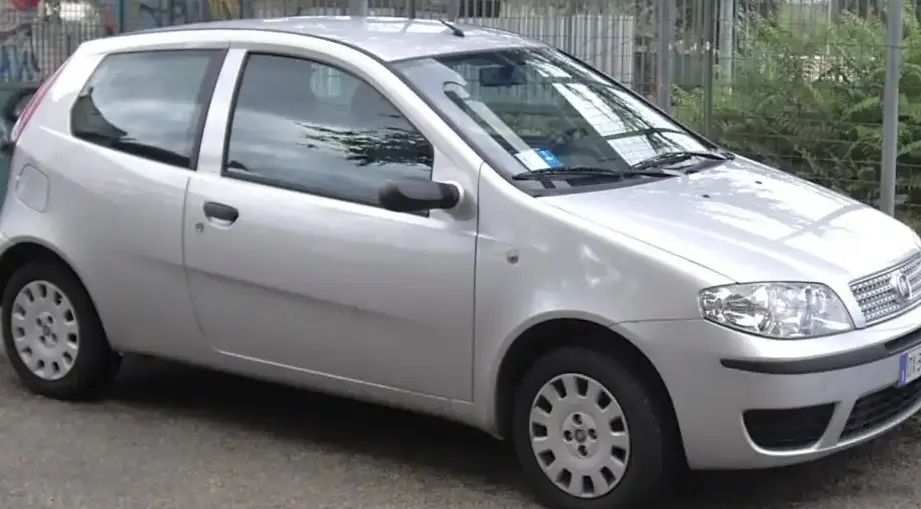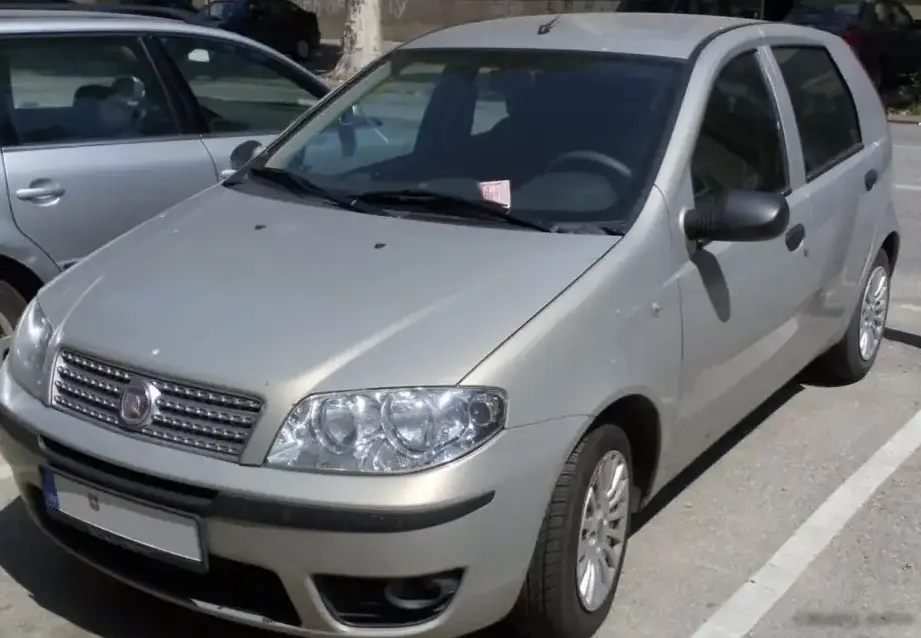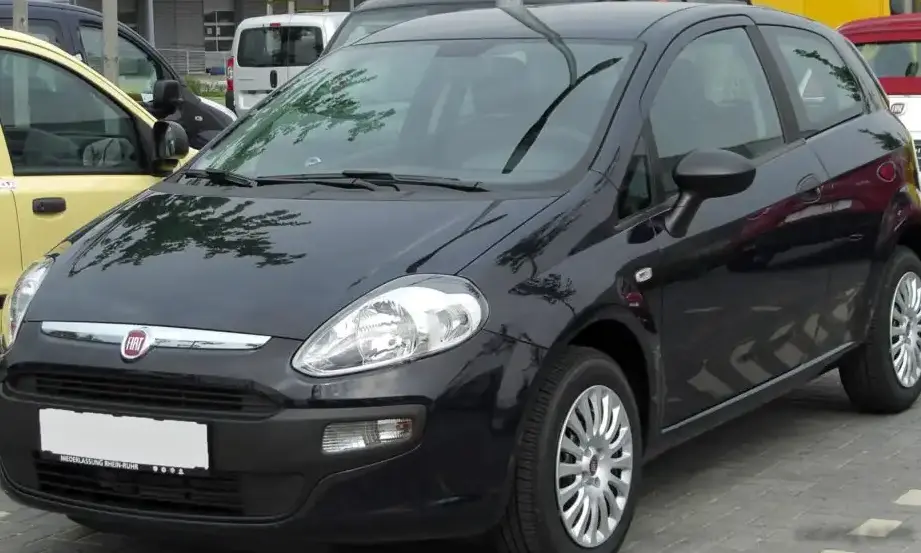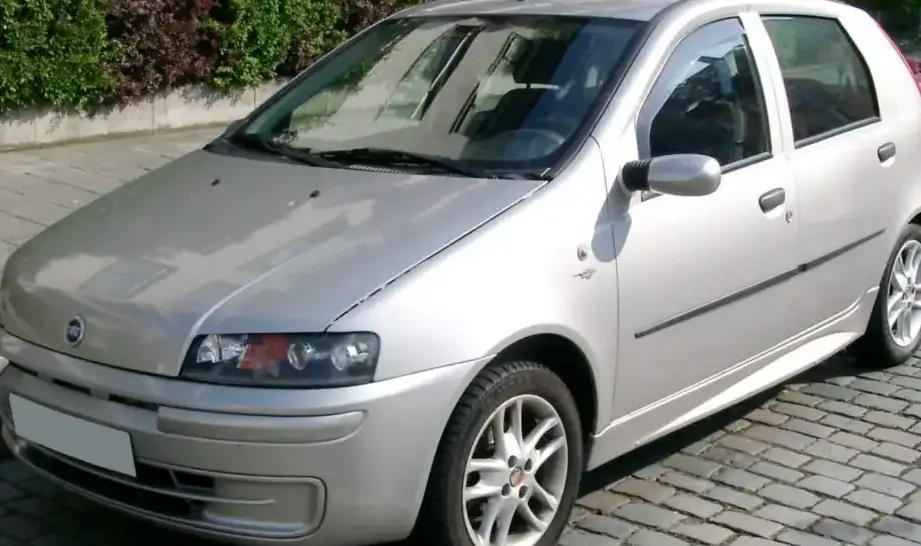
The Fiat Punto II, specifically the 5-door 1.9 D variant producing 60 horsepower, was a mainstay of the European small car market from 1999 to 2003. Part of the 188 project series, this Punto represented a significant step forward in design and engineering compared to its predecessor. Positioned as an entry-level offering within the Punto II range, it prioritized fuel efficiency and affordability over outright performance. This model aimed at buyers seeking a practical and economical vehicle for daily commuting and urban driving. It was a common sight on European roads, offering a budget-friendly alternative to more expensive rivals.
Technical Specifications
| Brand | Fiat |
| Model | Punto |
| Generation | Punto II (188) 5dr |
| Type (Engine) | 1.9 D (60 Hp) |
| Start of production | 1999 year |
| End of production | 2003 year |
| Powertrain Architecture | Internal Combustion engine |
| Body type | Hatchback |
| Seats | 5 |
| Doors | 5 |
| Fuel consumption (urban) | 7.2 l/100 km (32.7 US mpg, 39.2 UK mpg, 13.9 km/l) |
| Fuel consumption (extra urban) | 4.8 l/100 km (49 US mpg, 58.9 UK mpg, 20.8 km/l) |
| Fuel consumption (combined) | 5.7 l/100 km (41.3 US mpg, 49.6 UK mpg, 17.5 km/l) |
| Fuel Type | Diesel |
| Acceleration 0 – 100 km/h | 15 sec |
| Acceleration 0 – 62 mph | 15 sec |
| Acceleration 0 – 60 mph | 14.3 sec |
| Maximum speed | 155 km/h (96.31 mph) |
| Emission standard | Euro 3 |
| Weight-to-power ratio | 17.3 kg/Hp, 58 Hp/tonne |
| Weight-to-torque ratio | 8.8 kg/Nm, 114 Nm/tonne |
| Power | 60 Hp @ 4500 rpm |
| Power per litre | 31.4 Hp/l |
| Torque | 118 Nm @ 2250 rpm (87.03 lb.-ft. @ 2250 rpm) |
| Engine layout | Front, Transverse |
| Engine Model/Code | 188A3000 |
| Engine displacement | 1910 cm3 (116.56 cu. in.) |
| Number of cylinders | 4 |
| Engine configuration | Inline |
| Cylinder Bore | 82 mm (3.23 in.) |
| Piston Stroke | 90.4 mm (3.56 in.) |
| Compression ratio | 22.6:1 |
| Number of valves per cylinder | 2 |
| Fuel injection system | Precombustion chamber injection |
| Engine aspiration | Naturally aspirated engine |
| Valvetrain | OHC |
| Engine oil capacity | 4.3 l (4.54 US qt | 3.78 UK qt) |
| Coolant | 6.2 l (6.55 US qt | 5.46 UK qt) |
| Kerb Weight | 1035 kg (2281.78 lbs.) |
| Max. weight | 1545 kg (3406.14 lbs.) |
| Max load | 510 kg (1124.36 lbs.) |
| Trunk (boot) space – minimum | 297 l (10.49 cu. ft.) |
| Trunk (boot) space – maximum | 1080 l (38.14 cu. ft.) |
| Fuel tank capacity | 47 l (12.42 US gal | 10.34 UK gal) |
| Length | 3835 mm (150.98 in.) |
| Width | 1660 mm (65.35 in.) |
| Height | 1480 mm (58.27 in.) |
| Wheelbase | 2460 mm (96.85 in.) |
| Front track | 1398 mm (55.04 in.) |
| Rear (Back) track | 1392 mm (54.8 in.) |
| Drag coefficient (Cd) | 0.32 |
| Minimum turning circle | 10.2 m (33.46 ft.) |
| Drivetrain Architecture | The Internal combustion engine (ICE) drives the front wheels of the vehicle. |
| Drive wheel | Front wheel drive |
| Number of gears | 5 gears, manual transmission |
| Front suspension | Wishbone |
| Rear suspension | Coil spring |
| Front brakes | Disc |
| Rear brakes | Drum |
| Assisting systems | ABS (Anti-lock braking system) |
| Steering type | Steering rack and pinion |
| Power steering | Hydraulic Steering |
| Tires size | 165/70 R14 |
| Wheel rims size | 5.5J x 14 |
Powertrain & Engine Architecture
The heart of this Punto variant is the 1.9-liter, inline-four cylinder diesel engine, designated as the 188A3000. This engine utilizes a precombustion chamber injection system, a common technology for diesel engines of that era. This system involves injecting fuel into a small pre-chamber within the cylinder head, where it partially combusts before igniting the main charge in the cylinder. This design aids in smoother combustion and reduced engine noise. The engine features an overhead camshaft (OHC) valvetrain with two valves per cylinder. The 1910cc displacement, combined with the pre-chamber injection, resulted in a relatively durable, if not particularly powerful, engine. The engine’s 60 horsepower and 118 Nm (87 lb-ft) of torque were delivered at 4500 and 2250 rpm respectively. The engine was paired with a five-speed manual transmission, chosen for its simplicity and cost-effectiveness.
Driving Characteristics
The 1.9 D Punto was not designed for spirited driving. Acceleration was modest, taking around 15 seconds to reach 62 mph (100 km/h). The focus was on maximizing fuel economy and providing adequate power for everyday driving. The gear ratios in the five-speed manual transmission were geared towards efficiency, with taller gearing in the upper gears to reduce engine speed at highway speeds. Compared to the more powerful 1.8-liter petrol versions, the diesel offered significantly less horsepower but a substantial increase in low-end torque. This made it more tractable in urban environments and better suited for carrying loads. The diesel’s power delivery was linear, but lacked the responsiveness of the petrol engines. The manual transmission, while not particularly sporty, was precise and easy to use.
Equipment & Trim Levels
The 1.9 D variant of the Punto II typically came with a basic level of equipment. Standard features included power steering, central locking, and front electric windows. Interior upholstery was typically a durable cloth material. Optional extras included air conditioning, alloy wheels, and a radio/cassette player. The dashboard layout was functional and straightforward, prioritizing usability over aesthetics. The trim level was generally considered the entry point into the Punto II range, appealing to budget-conscious buyers.
Chassis & Braking
The Punto II featured a front-wheel-drive layout with a MacPherson strut front suspension and a twist-beam rear suspension. The suspension setup was tuned for comfort and ride quality, rather than sporty handling. The front brakes were ventilated discs, while the rear brakes were drums. ABS (Anti-lock Braking System) was standard, providing enhanced braking safety. The steering was a hydraulic power-assisted rack and pinion system, offering light and easy steering feel. The 165/70 R14 tires provided adequate grip for everyday driving conditions.
Market Reception & Comparison
The 1.9 D Punto was well-received in markets where diesel fuel was affordable and fuel economy was a primary concern. Critics praised its fuel efficiency and low running costs, but noted its lack of performance. Compared to the 1.8-liter petrol versions, the diesel offered significantly better fuel economy but less power and refinement. The 1.8 petrol models were favored by drivers who prioritized performance and driving enjoyment, while the 1.9 D appealed to those seeking a practical and economical vehicle. The diesel’s reliability was generally good, although the precombustion chamber injection system could require occasional maintenance.
Legacy
The Fiat Punto II 1.9 D remains a relatively common sight on European roads today, testament to its durability and affordability. The 188A3000 engine, while not known for its high performance, proved to be a reliable and long-lasting unit. In the used car market, these Puntos are valued for their low running costs and simplicity. However, potential buyers should be aware of the age-related issues common to older vehicles, such as corrosion and wear and tear on suspension components. The 1.9 D Punto represents a practical and economical choice for those seeking a budget-friendly small car.