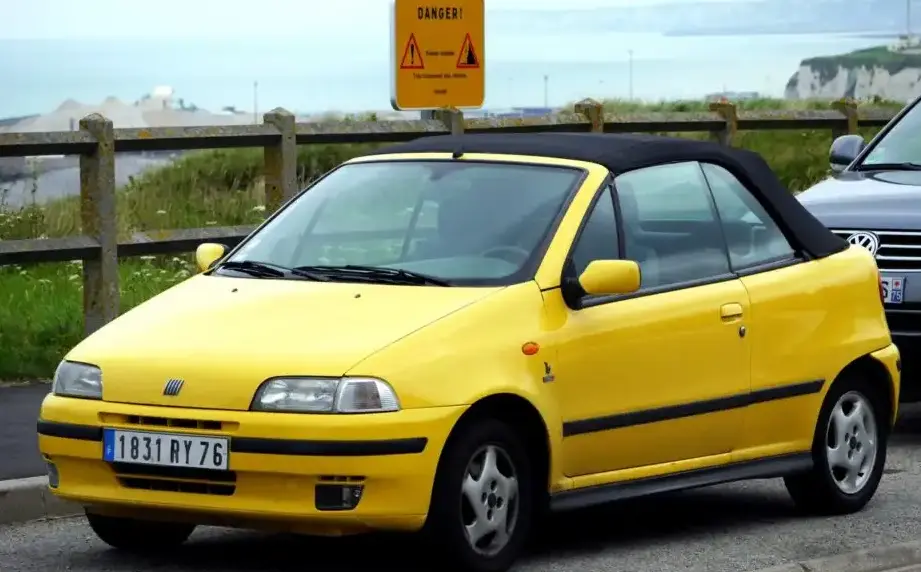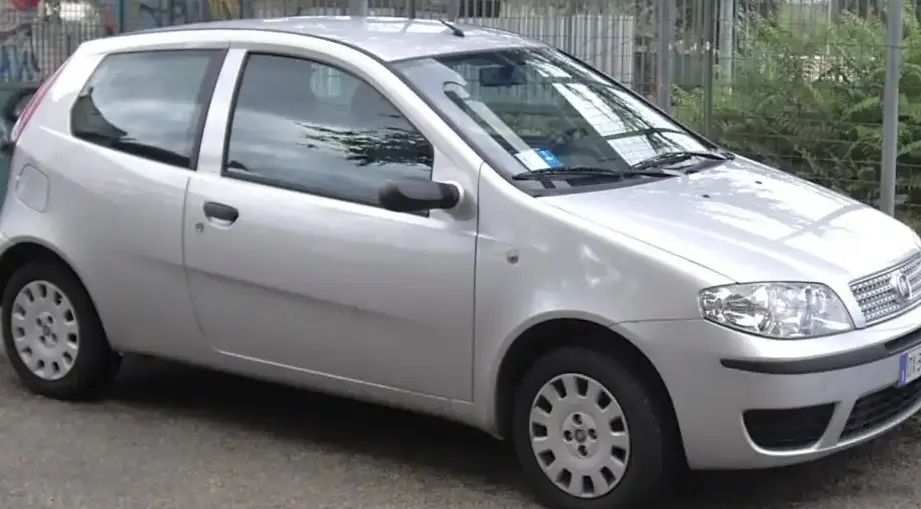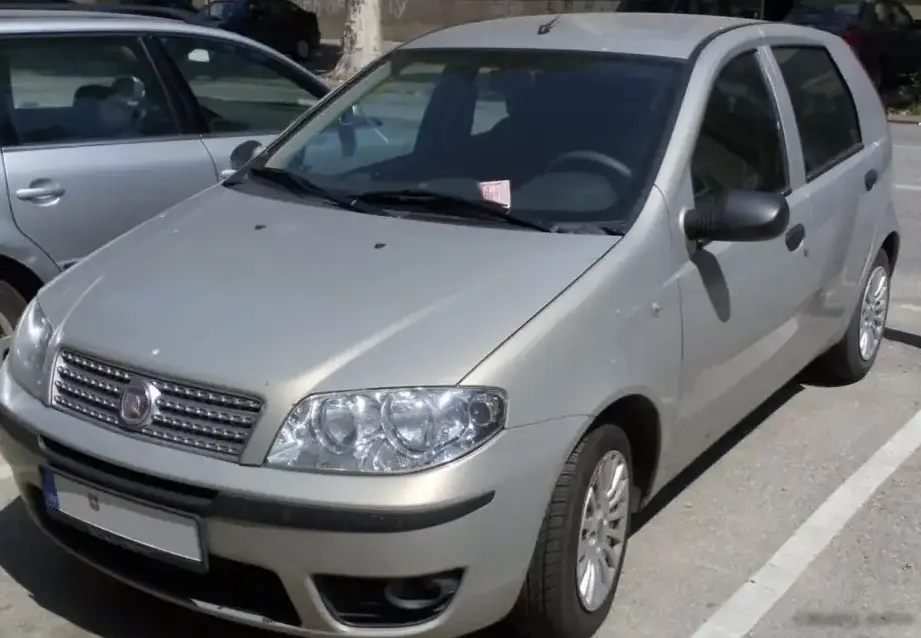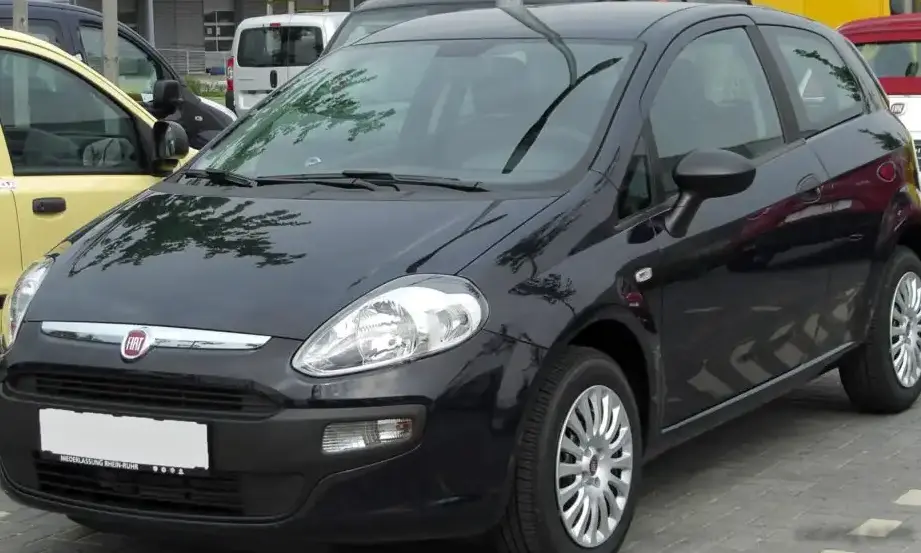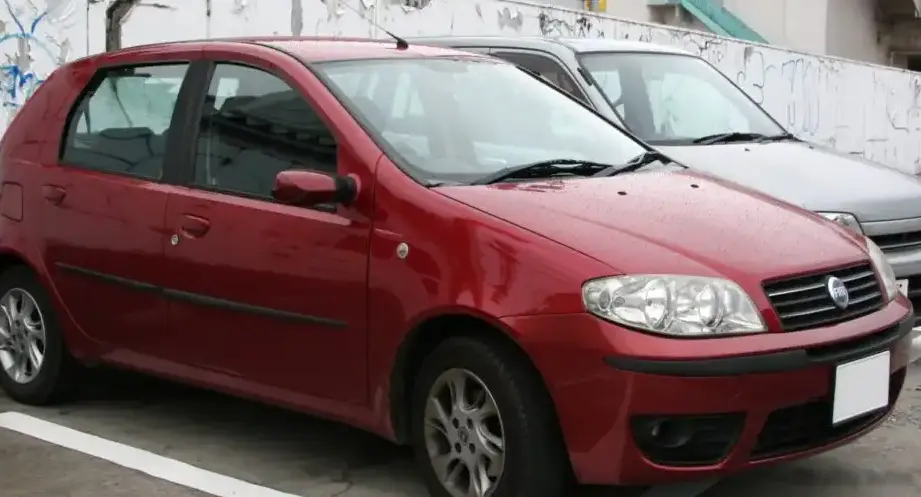
The Fiat Punto II, specifically the 5-door hatchback variant powered by the 1.2-liter 80 horsepower engine, was a mainstay of the European small car market from 2003 to 2007. This iteration, representing a facelift of the 188 series, occupied a crucial position in Fiat’s lineup, offering an affordable and practical option for urban commuters and small families. It was built on the 1HX0/A3 platform, shared with other Stellantis vehicles of the era. This particular engine and transmission combination represented an entry-level offering, prioritizing fuel efficiency and affordability over outright performance.
Technical Specifications
| Brand | Fiat |
| Model | Punto |
| Generation | Punto II (188, facelift 2003) 5dr |
| Type (Engine) | 1.2 (80 Hp) |
| Start of production | 2003 |
| End of production | 2007 |
| Powertrain Architecture | Internal Combustion engine |
| Body type | Hatchback |
| Seats | 5 |
| Doors | 5 |
| Fuel consumption (urban) | 7.6 l/100 km (30.9 US mpg) |
| Fuel consumption (extra urban) | 5.1 l/100 km (46.1 US mpg) |
| Fuel consumption (combined) | 6 l/100 km (39.2 US mpg) |
| Fuel Type | Petrol (Gasoline) |
| Acceleration 0 – 100 km/h | 11.4 sec |
| Acceleration 0 – 62 mph | 11.4 sec |
| Acceleration 0 – 60 mph | 10.8 sec |
| Maximum speed | 172 km/h (106.88 mph) |
| Emission standard | Euro 4 |
| Weight-to-power ratio | 11.7 kg/Hp |
| Weight-to-torque ratio | 8.2 kg/Nm |
| Power | 80 Hp @ 5000 rpm |
| Torque | 114 Nm @ 4000 rpm (84.08 lb.-ft. @ 4000 rpm) |
| Engine layout | Front, Transverse |
| Engine Model/Code | 188A5000 |
| Engine displacement | 1242 cm3 (75.79 cu. in.) |
| Number of cylinders | 4 |
| Engine configuration | Inline |
| Cylinder Bore | 70.8 mm (2.79 in.) |
| Piston Stroke | 78.9 mm (3.11 in.) |
| Compression ratio | 10.6:1 |
| Number of valves per cylinder | 4 |
| Fuel injection system | Multi-port manifold injection |
| Engine aspiration | Naturally aspirated |
| Valvetrain | OHC |
| Engine oil capacity | 2.8 l (2.96 US qt | 2.46 UK qt) |
| Coolant capacity | 4.2 l (4.44 US qt | 3.7 UK qt) |
| Kerb Weight | 935 kg (2061.32 lbs.) |
| Max. weight | 1445 kg (3185.68 lbs.) |
| Max load | 510 kg (1124.36 lbs.) |
| Trunk (boot) space – minimum | 297 l (10.49 cu. ft.) |
| Trunk (boot) space – maximum | 1080 l (38.14 cu. ft.) |
| Fuel tank capacity | 47 l (12.42 US gal | 10.34 UK gal) |
| Length | 3865 mm (152.17 in.) |
| Width | 1660 mm (65.35 in.) |
| Height | 1480 mm (58.27 in.) |
| Wheelbase | 2460 mm (96.85 in.) |
| Front track | 1398 mm (55.04 in.) |
| Rear track | 1392 mm (54.8 in.) |
| Drag coefficient (Cd) | 0.32 |
| Minimum turning circle | 10.5 m (34.45 ft.) |
| Drivetrain | Front wheel drive |
| Number of gears | 5 |
| Gearbox type | Manual transmission |
| Front suspension | Spring Strut |
| Rear suspension | Torsion |
| Front brakes | Disc |
| Rear brakes | Drum |
| Assisting systems | ABS (Anti-lock braking system) |
| Steering type | Steering rack and pinion |
| Power steering | Electric |
| Tires size | 165/70 R14 |
Introduction
The 1.2-liter, 80 horsepower Punto II facelift represented a core offering within the Punto range. Introduced in 2003, this version aimed to provide economical transportation for a broad customer base. It slotted in as the entry-level engine option, below the more powerful 1.4-liter and sporting 1.8-liter variants. The facelift brought subtle cosmetic changes, including revised headlights and bumpers, along with minor interior refinements. The Punto II, in general, was a significant model for Fiat, representing a move towards more modern design and engineering, and it was a popular choice in Europe, particularly in Italy, France, and Germany.
Powertrain & Engine Architecture
The heart of this Punto variant is the 188A5000 engine, a 1.2-liter inline-four cylinder petrol engine. This engine utilizes a single overhead camshaft (OHC) configuration and multi-point fuel injection. The 1242cc displacement is achieved with a bore of 70.8mm and a stroke of 78.9mm, operating with a compression ratio of 10.6:1. The engine produces 80 horsepower at 5000 rpm and 114 Nm (84.08 lb-ft) of torque at 4000 rpm. The engine is transversely mounted, driving the front wheels. The transmission is a standard five-speed manual gearbox, chosen for its simplicity and contribution to fuel economy. While an automated manual transmission (Dualogic) was available on other Punto models, it was not offered with this specific engine/trim combination.
Driving Characteristics
The 1.2-liter Punto II with a manual transmission delivers modest performance. Acceleration from 0-60 mph takes around 10.8 seconds, and the top speed is approximately 106.88 mph. The engine feels somewhat underpowered when fully loaded or tackling steep inclines. The five-speed gearbox is well-matched to the engine’s characteristics, with relatively short gear ratios designed to keep the engine in its optimal power band. Compared to the 1.4-liter or 1.8-liter versions, this variant prioritizes fuel efficiency over spirited driving. The steering is light and easy, making it well-suited for city driving, but lacks the precision of more performance-oriented models.
Equipment & Trim Levels
The 1.2-liter Punto II typically came with a basic level of equipment. Standard features generally included power steering, central locking, front airbags, and an adjustable steering column. Interior upholstery was typically cloth, and the dashboard featured a simple, functional design. Optional extras included air conditioning, electric windows, and a radio/CD player. Higher trim levels, such as the “Active” or “Dynamic,” added features like alloy wheels, fog lights, and upgraded interior trim. However, the base 1.2-liter model was intentionally kept relatively spartan to maintain its affordability.
Chassis & Braking
The Punto II’s chassis features a MacPherson strut suspension at the front and a torsion beam suspension at the rear. This setup provides a reasonable balance between ride comfort and handling. The front brakes are disc brakes, while the rear brakes are drum brakes – a cost-saving measure common in this segment. ABS (Anti-lock Braking System) was standard, enhancing safety. The relatively lightweight nature of the car (around 935 kg or 2061 lbs) helps to offset the modest engine power, contributing to acceptable handling characteristics.
Market Reception & Comparison
The 1.2-liter Punto II was generally well-received as an affordable and practical city car. Critics praised its fuel efficiency and ease of driving, but noted its lack of outright performance. Compared to the 1.4-liter version, the 1.2 offered significantly better fuel economy but felt noticeably slower. The 1.8-liter variant provided a much more engaging driving experience but came at a higher price point and with increased running costs. The Punto II competed with other small hatchbacks such as the Renault Clio, Peugeot 206, and Volkswagen Polo, offering a competitive package in terms of price and features.
Legacy
The 1.2-liter Punto II, while not a performance icon, proved to be a reliable and durable powertrain. The 188A5000 engine is known for its relative simplicity and robustness. In the used car market, these Puntos are often sought after as inexpensive and economical transportation. While maintenance costs are generally low, potential buyers should be aware of common issues such as corrosion and wear on suspension components. The Punto II, in its various forms, remains a common sight on European roads, a testament to its enduring practicality and affordability.