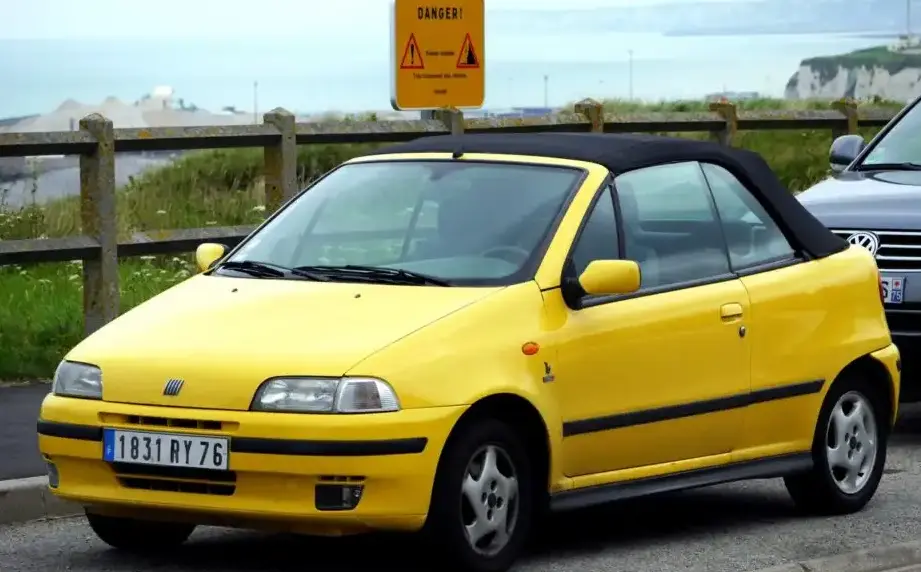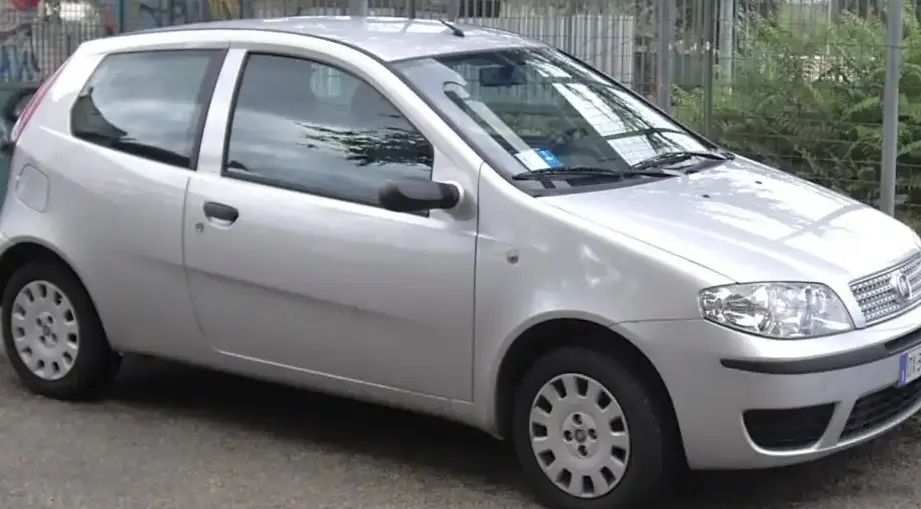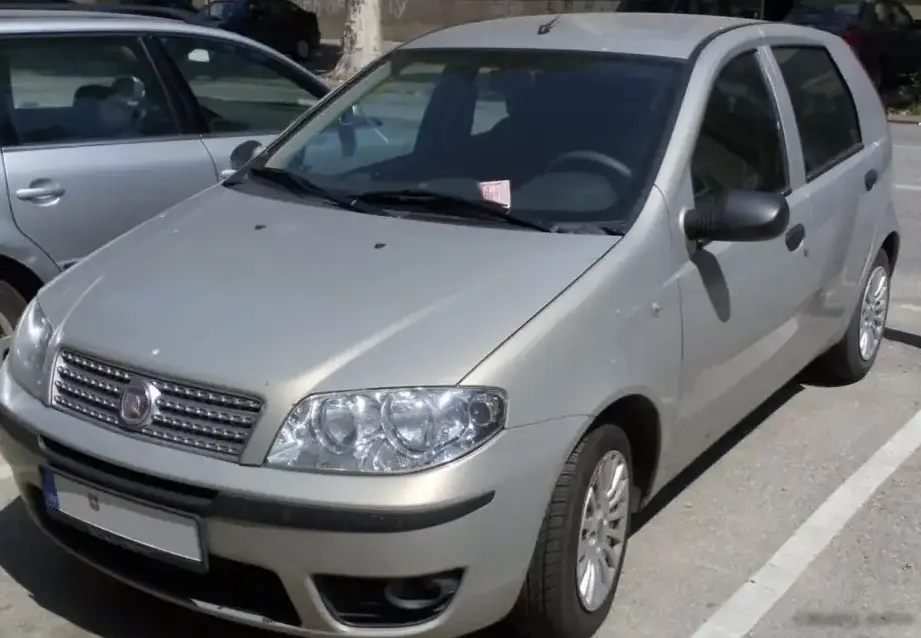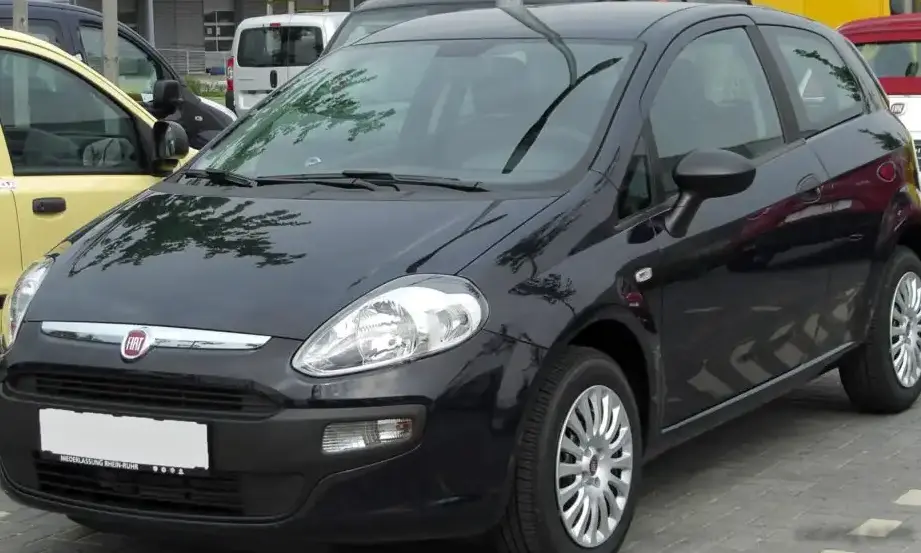
The Fiat Punto III (199) 1.3 Multijet 85 HP Start&Stop was a subcompact hatchback produced by the Italian automaker Fiat from 2012 to 2015. Positioned as an entry-level offering within the Punto III range, it aimed to provide fuel efficiency and affordability to buyers in the European market. This variant was a key part of Fiat’s strategy to offer a diverse range of engine options, catering to different driving needs and budgets. It utilized the 199 platform, also known as the A3 platform, shared with other small Fiat and Peugeot/Citroen vehicles.
Technical Specifications
| Brand | Fiat |
| Model | Punto |
| Generation | Punto III (199) |
| Type (Engine) | 1.3 Multijet (85 Hp) Start&Stop |
| Start of production | 2012 |
| End of production | 2015 |
| Powertrain Architecture | Internal Combustion engine |
| Body type | Hatchback |
| Seats | 5 |
| Doors | 3-5 |
| Fuel consumption (urban) | 4.4 l/100 km (53.5 US mpg, 64.2 UK mpg, 22.7 km/l) |
| Fuel consumption (extra urban) | 2.9 l/100 km (81.1 US mpg, 97.4 UK mpg, 34.5 km/l) |
| Fuel consumption (combined) | 3.5 l/100 km (67.2 US mpg, 80.7 UK mpg, 28.6 km/l) |
| CO2 emissions | 90 g/km |
| Fuel Type | Diesel |
| Acceleration 0 – 100 km/h | 13.1 sec |
| Acceleration 0 – 62 mph | 13.1 sec |
| Acceleration 0 – 60 mph | 12.4 sec |
| Maximum speed | 172 km/h (106.88 mph) |
| Emission standard | Euro 5 |
| Weight-to-power ratio | 13.3 kg/Hp, 75.2 Hp/tonne |
| Weight-to-torque ratio | 5.7 kg/Nm, 177 Nm/tonne |
| Power | 85 Hp @ 3500 rpm |
| Power per litre | 68.1 Hp/l |
| Torque | 200 Nm @ 1500 rpm (147.51 lb.-ft. @ 1500 rpm) |
| Engine layout | Front, Transverse |
| Engine Model/Code | 199B4000 |
| Engine displacement | 1248 cm3 (76.16 cu. in.) |
| Number of cylinders | 4 |
| Engine configuration | Inline |
| Cylinder Bore | 69.6 mm (2.74 in.) |
| Piston Stroke | 82 mm (3.23 in.) |
| Compression ratio | 16.8:1 |
| Number of valves per cylinder | 4 |
| Fuel injection system | Diesel Commonrail |
| Engine aspiration | Turbocharger, Intercooler |
| Valvetrain | DOHC |
| Engine oil capacity | 3.2 l (3.38 US qt | 2.82 UK qt) |
| Coolant | 6.7 l (7.08 US qt | 5.9 UK qt) |
| Kerb Weight | 1130 kg (2491.22 lbs.) |
| Trunk (boot) space – minimum | 275 l (9.71 cu. ft.) |
| Trunk (boot) space – maximum | 1030 l (36.37 cu. ft.) |
| Fuel tank capacity | 45 l (11.89 US gal | 9.9 UK gal) |
| Permitted trailer load with brakes (12%) | 1000 kg (2204.62 lbs.) |
| Permitted trailer load without brakes | 400 kg (881.85 lbs.) |
| Length | 4065 mm (160.04 in.) |
| Width | 1687 mm (66.42 in.) |
| Height | 1490 mm (58.66 in.) |
| Wheelbase | 2510 mm (98.82 in.) |
| Front track | 1473 mm (57.99 in.) |
| Rear (Back) track | 1466 mm (57.72 in.) |
| Drag coefficient (Cd) | 0.34 |
| Minimum turning circle (turning diameter) | 10.0 m (32.81 ft.) |
| Drivetrain Architecture | The Internal combustion engine (ICE) drives the front wheels of the vehicle. |
| Drive wheel | Front wheel drive |
| Number of gears and type of gearbox | 5 gears, manual transmission |
| Front suspension | Independent type McPherson |
| Rear suspension | Torsion |
| Front brakes | Ventilated discs |
| Rear brakes | Drum |
| Assisting systems | ABS (Anti-lock braking system) |
| Steering type | Steering rack and pinion |
| Power steering | Electric Steering |
| Tires size | 175/65 R15 |
| Wheel rims size | 15 |
INTRODUCTION
The Fiat Punto III 1.3 Multijet 85 HP Start&Stop, launched in 2012, represented Fiat’s commitment to providing an economical and practical vehicle for the European market. It was positioned as a more affordable and fuel-efficient alternative to higher-powered Punto variants. The “Start&Stop” system, a key feature, automatically shut off the engine when the vehicle was stationary, further enhancing fuel economy and reducing emissions. This model was a significant player in the competitive subcompact segment, appealing to urban drivers and those seeking a low-cost-of-ownership vehicle.
Powertrain & Engine Architecture
At the heart of this Punto variant lies the 1.3-liter Multijet diesel engine, specifically the 199B4000 engine code. This engine is a four-cylinder, inline configuration, utilizing a common rail direct injection system. The Multijet technology, developed by Fiat, allows for multiple injections of fuel during each combustion cycle, resulting in smoother operation, reduced noise, and improved fuel efficiency. The engine features a turbocharger with an intercooler, boosting power output to 85 horsepower at 3500 rpm and 200 Nm (147.51 lb.-ft.) of torque at 1500 rpm. The Start&Stop system relies on a reinforced starter motor and a dual-mass flywheel to handle the frequent engine restarts. The engine is paired with a five-speed manual transmission, chosen for its simplicity and efficiency. While an automated manual transmission (Dualogic) was available on other Punto models, it wasn’t offered with this specific engine/power combination.
Driving Characteristics
The 1.3 Multijet 85 HP variant of the Punto III offered a practical, if not particularly exciting, driving experience. Acceleration from 0-100 km/h (0-62 mph) took around 13.1 seconds, and top speed was limited to 172 km/h (106.88 mph). The engine’s peak torque, available from a low 1500 rpm, provided adequate pulling power for everyday driving situations, including city commutes and highway cruising. However, it lacked the punch of the more powerful 1.4-liter petrol or higher-output diesel versions. The five-speed manual transmission was well-matched to the engine’s characteristics, with gear ratios optimized for fuel efficiency. The relatively low power output meant that frequent gear changes were often necessary, especially when overtaking or climbing hills. The Start&Stop system, while effective in reducing fuel consumption, could sometimes feel slightly jerky during restarts.
Equipment & Trim Levels
The 1.3 Multijet 85 HP Start&Stop typically came with a fairly basic level of equipment, reflecting its position as an entry-level model. Standard features generally included power steering, ABS brakes, front airbags, and a basic audio system. Higher trim levels, such as the “Lounge” or “Sport” variants, offered additional features like air conditioning, alloy wheels, electric windows, and a more sophisticated infotainment system. Interior upholstery was typically cloth, with a functional and durable design. Optional extras included parking sensors, a navigation system, and upgraded audio systems. The dashboard layout was straightforward and user-friendly, prioritizing practicality over aesthetics.
Chassis & Braking
The Punto III utilized a McPherson strut suspension setup at the front and a torsion beam suspension at the rear. This configuration provided a reasonable balance between ride comfort and handling. The front brakes were ventilated discs, offering good stopping power, while the rear brakes were drums, a cost-saving measure common in this segment. The electric power steering provided light and easy steering, making it ideal for maneuvering in tight urban environments. Stabilizer bars were fitted to both the front and rear axles to reduce body roll during cornering. The Punto’s relatively lightweight construction (1130 kg / 2491.22 lbs) contributed to its agility and fuel efficiency.
Market Reception & Comparison
The Fiat Punto III 1.3 Multijet 85 HP Start&Stop was generally well-received by critics for its fuel efficiency and affordability. It was praised for its low running costs and practicality, making it a popular choice for budget-conscious buyers. However, it was also criticized for its relatively modest performance and basic interior. Compared to other Punto variants, such as the 1.4-liter petrol or the 1.6 Multijet diesel, the 1.3 Multijet offered significantly lower power output but superior fuel economy. Against competitors like the Volkswagen Polo, Ford Fiesta, and Renault Clio, the Punto offered a competitive price point and a comparable level of fuel efficiency, but often lagged behind in terms of interior quality and refinement.
Legacy
The 1.3 Multijet engine, in various iterations, proved to be a reliable and durable powertrain. The Punto III 1.3 Multijet 85 HP Start&Stop remains a relatively common sight on European roads today, testament to its longevity. On the used car market, these models are typically affordable and offer excellent value for money, particularly for those seeking a fuel-efficient and practical city car. However, potential buyers should be aware of the potential for wear and tear on the turbocharger and common rail system, as with any diesel engine. Regular maintenance and servicing are crucial to ensure the continued reliability of this powertrain.