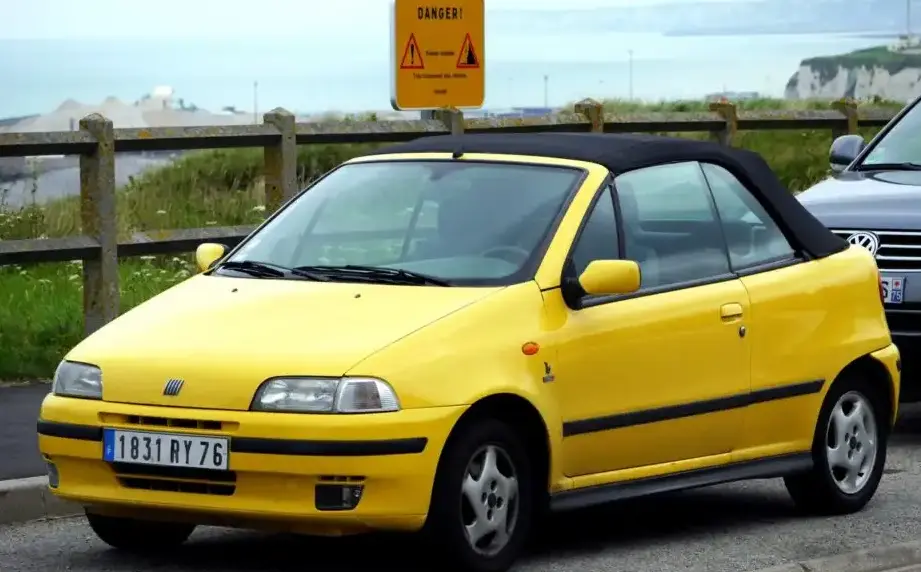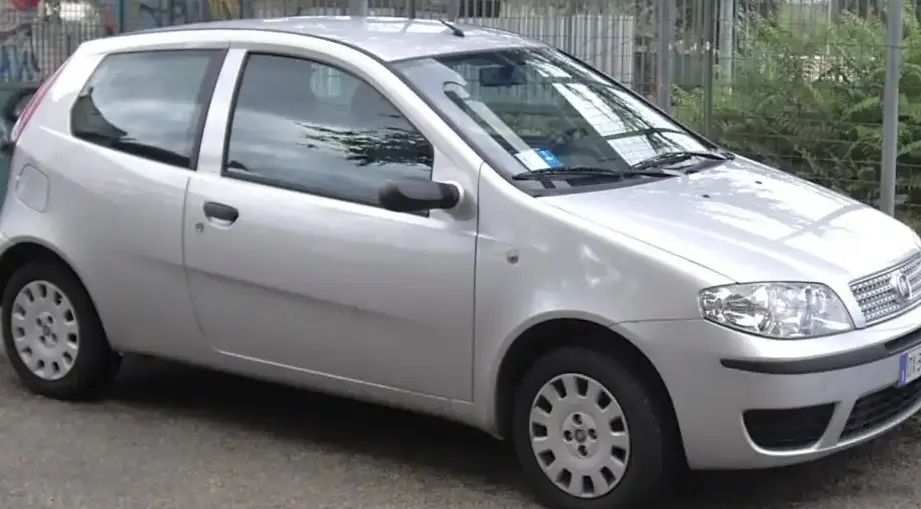
The Fiat Punto III (199) 1.3 Multijet 95 Hp Start&Stop was a subcompact hatchback produced by the Italian manufacturer Fiat between 2012 and 2013. This variant occupied a key position within the Punto III range, offering a balance between fuel efficiency, reasonable performance, and affordability. It was primarily aimed at the European market, where demand for economical diesel-powered vehicles was high. The 199 series represented a significant update to the Punto line, incorporating revised styling, improved safety features, and a new generation of engines, including the 1.3 Multijet. This particular engine and transmission combination was designed to appeal to buyers seeking low running costs and practicality in a small package.
Technical Specifications
| Brand | Fiat |
| Model | Punto |
| Generation | Punto III (199) |
| Type (Engine) | 1.3 Multijet (95 Hp) Start&Stop |
| Start of production | 2012 |
| End of production | 2013 |
| Powertrain Architecture | Internal Combustion engine |
| Body type | Hatchback |
| Seats | 5 |
| Doors | 3-5 |
| Fuel consumption (urban) | 5.3 l/100 km (44.4 US mpg, 53.3 UK mpg, 18.9 km/l) |
| Fuel consumption (extra urban) | 3.5 l/100 km (67.2 US mpg, 80.7 UK mpg, 28.6 km/l) |
| Fuel consumption (combined) | 4.2 l/100 km (56 US mpg, 67.3 UK mpg, 23.8 km/l) |
| CO2 emissions | 110 g/km |
| Fuel Type | Diesel |
| Acceleration 0 – 100 km/h | 11.7 sec |
| Acceleration 0 – 62 mph | 11.7 sec |
| Acceleration 0 – 60 mph | 11.1 sec |
| Maximum speed | 178 km/h (110.6 mph) |
| Emission standard | Euro 5 |
| Weight-to-power ratio | 11.9 kg/Hp, 84.1 Hp/tonne |
| Weight-to-torque ratio | 5.7 kg/Nm, 177 Nm/tonne |
| Power | 95 Hp @ 4000 rpm |
| Power per litre | 76.1 Hp/l |
| Torque | 200 Nm @ 1500 rpm (147.51 lb.-ft. @ 1500 rpm) |
| Engine layout | Front, Transverse |
| Engine Model/Code | 199B1000 |
| Engine displacement | 1248 cm3 (76.16 cu. in.) |
| Number of cylinders | 4 |
| Engine configuration | Inline |
| Cylinder Bore | 69.6 mm (2.74 in.) |
| Piston Stroke | 82 mm (3.23 in.) |
| Compression ratio | 16.8:1 |
| Number of valves per cylinder | 4 |
| Fuel injection system | Diesel Commonrail |
| Engine aspiration | Turbocharger, Intercooler |
| Valvetrain | DOHC |
| Engine oil capacity | 3.2 l (3.38 US qt | 2.82 UK qt) |
| Coolant | 6.7 l (7.08 US qt | 5.9 UK qt) |
| Kerb Weight | 1130 kg (2491.22 lbs.) |
| Trunk (boot) space – minimum | 275 l (9.71 cu. ft.) |
| Trunk (boot) space – maximum | 1030 l (36.37 cu. ft.) |
| Fuel tank capacity | 45 l (11.89 US gal | 9.9 UK gal) |
| Permitted trailer load with brakes (12%) | 1000 kg (2204.62 lbs.) |
| Permitted trailer load without brakes | 400 kg (881.85 lbs.) |
| Length | 4065 mm (160.04 in.) |
| Width | 1687 mm (66.42 in.) |
| Height | 1490 mm (58.66 in.) |
| Wheelbase | 2510 mm (98.82 in.) |
| Front track | 1473 mm (57.99 in.) |
| Rear (Back) track | 1466 mm (57.72 in.) |
| Drag coefficient (Cd) | 0.34 |
| Minimum turning circle | 10.0 m (32.81 ft.) |
| Drivetrain Architecture | The Internal combustion engine (ICE) drives the front wheels of the vehicle. |
| Drive wheel | Front wheel drive |
| Number of gears and type of gearbox | 5 gears, manual transmission |
| Front suspension | Independent type McPherson |
| Rear suspension | Torsion |
| Front brakes | Ventilated discs |
| Rear brakes | Drum |
| Assisting systems | ABS (Anti-lock braking system) |
| Steering type | Steering rack and pinion |
| Power steering | Electric Steering |
| Tires size | 185/65 R15 |
| Wheel rims size | 15 |
INTRODUCTION
The Fiat Punto III 1.3 Multijet 95 Hp Start&Stop, launched in 2012, represented a key offering in Fiat’s subcompact lineup. Built on the 199 platform, it was designed to provide an economical and practical transportation solution for European drivers. The “Start&Stop” system, a relatively new technology at the time, further enhanced fuel efficiency by automatically shutting off the engine when the vehicle was stationary. This variant aimed to bridge the gap between the base-level Punto and the more powerful, yet more expensive, versions.
Powertrain & Engine Architecture
At the heart of this Punto variant lies the 199B1000 1.3 Multijet engine. This is a four-cylinder, inline diesel engine utilizing common rail direct injection and a turbocharger with intercooler. The engine code ‘199B1000’ identifies a specific iteration of the Multijet family. The common rail system, operating at extremely high pressures, allows for precise fuel delivery and optimized combustion. The turbocharger boosts power output, while the intercooler cools the intake air, increasing density and further improving performance. The engine features a double overhead camshaft (DOHC) valvetrain, contributing to efficient gas exchange. The 95 horsepower and 200 Nm (147.51 lb.-ft.) of torque are respectable figures for a 1.3-liter diesel. The engine was paired with a five-speed manual transmission, chosen for its simplicity and efficiency. The Start&Stop system relies on a robust starter motor and a dual-mass flywheel to ensure smooth and reliable restarts.
Driving Characteristics
The 1.3 Multijet 95 Hp Start&Stop Punto offered a driving experience focused on economy and usability rather than outright performance. Acceleration from 0-100 km/h (0-62 mph) took around 11.7 seconds, which was adequate for urban and suburban driving but not particularly brisk. The engine’s peak torque of 200 Nm was available from a low 1500 rpm, providing good responsiveness in everyday driving situations. The five-speed manual transmission was well-matched to the engine’s characteristics, with gear ratios optimized for fuel efficiency. Compared to higher-output Punto variants, such as those with larger engines, this version felt less powerful, especially when fully loaded or tackling steep inclines. However, its lighter weight and efficient engine contributed to significantly better fuel economy.
Equipment & Trim Levels
The 1.3 Multijet 95 Hp Start&Stop typically came with a reasonable level of standard equipment. This included power steering, central locking, electric front windows, and an ABS anti-lock braking system. Interior upholstery was typically cloth, with a functional and durable design. Depending on the specific market and optional packages, features like air conditioning, a radio with CD player, and alloy wheels could be added. The dashboard layout was straightforward and user-friendly, prioritizing practicality over luxury. Safety features included driver and passenger airbags, although the Punto III’s safety rating was considered average for its time.
Chassis & Braking
The Punto III utilized a McPherson strut independent suspension at the front and a torsion beam suspension at the rear. This setup provided a reasonable balance between ride comfort and handling. The front brakes were ventilated discs, offering good stopping power, while the rear brakes were drums, a cost-saving measure common in this segment. The electric power steering provided light and easy steering, making it ideal for maneuvering in tight spaces. The chassis was designed to be lightweight, contributing to the car’s overall fuel efficiency. Stabilizer bars were fitted to both the front and rear axles to reduce body roll during cornering.
Market Reception & Comparison
The Fiat Punto III 1.3 Multijet 95 Hp Start&Stop was generally well-received by critics as a practical and economical city car. Its fuel efficiency was a major selling point, and the Start&Stop system was praised for its contribution to reducing emissions. Compared to other Punto variants, such as the 1.4-liter petrol models, the 1.3 Multijet offered significantly better fuel economy, albeit with slightly less performance. Against competitors like the Renault Clio and Volkswagen Polo, the Punto offered a competitive price point and a good level of standard equipment. However, some critics noted that the interior quality was not as refined as some of its rivals.
Legacy
The 1.3 Multijet engine proved to be a reliable and durable powerplant, and many examples of the Punto III 1.3 Multijet are still on the road today. While the Start&Stop system could be prone to issues if not properly maintained, the engine itself is generally considered robust. In the used car market, this variant represents a good value proposition for buyers seeking an economical and practical hatchback. Its low running costs and relatively simple mechanicals make it an attractive option for those on a budget. However, potential buyers should be aware of the importance of regular maintenance and servicing to ensure long-term reliability.