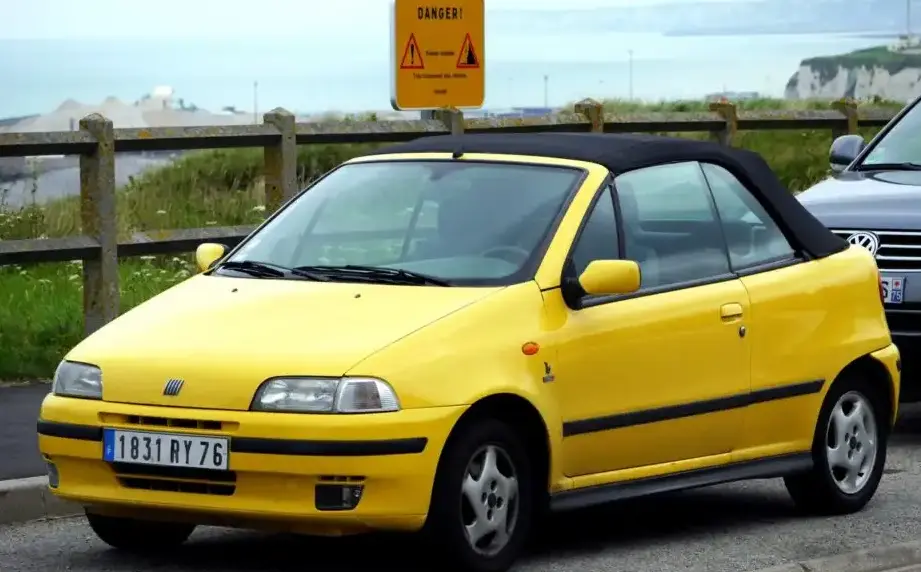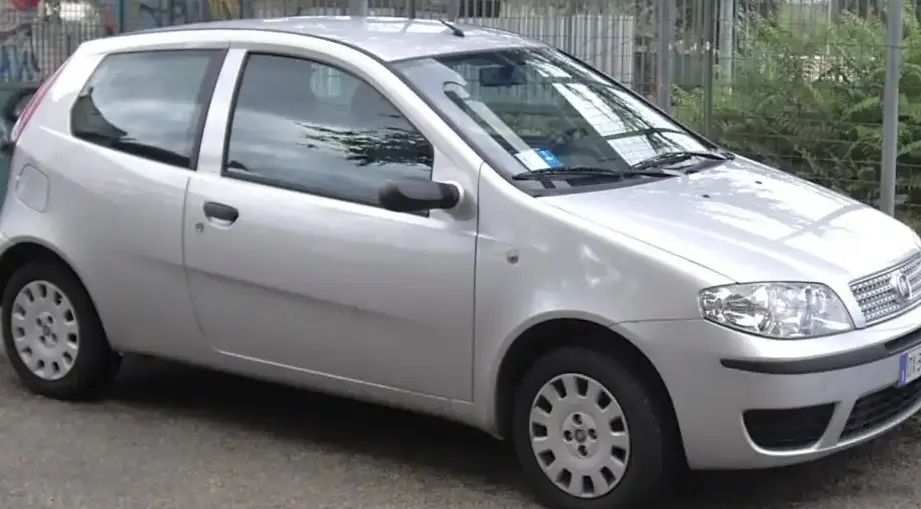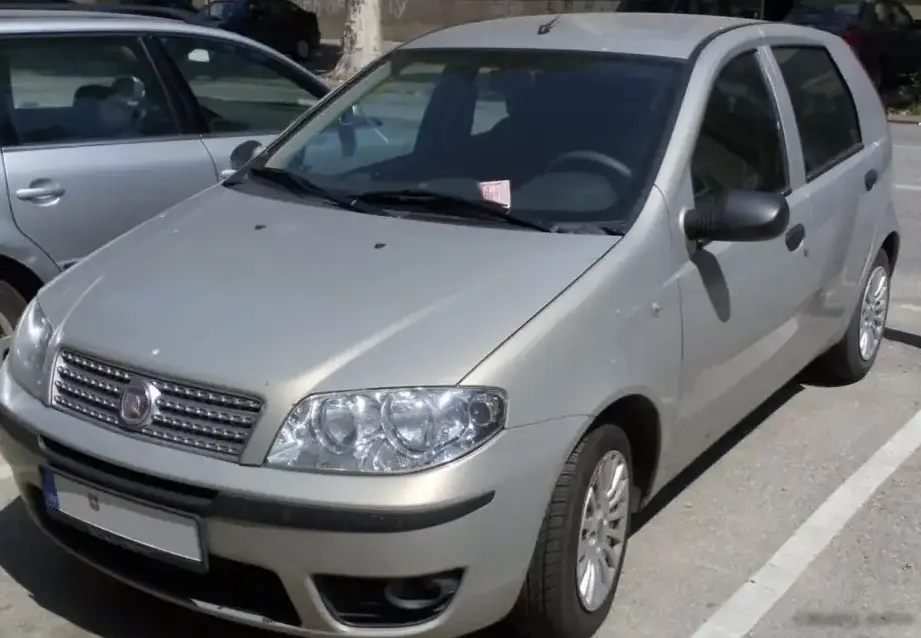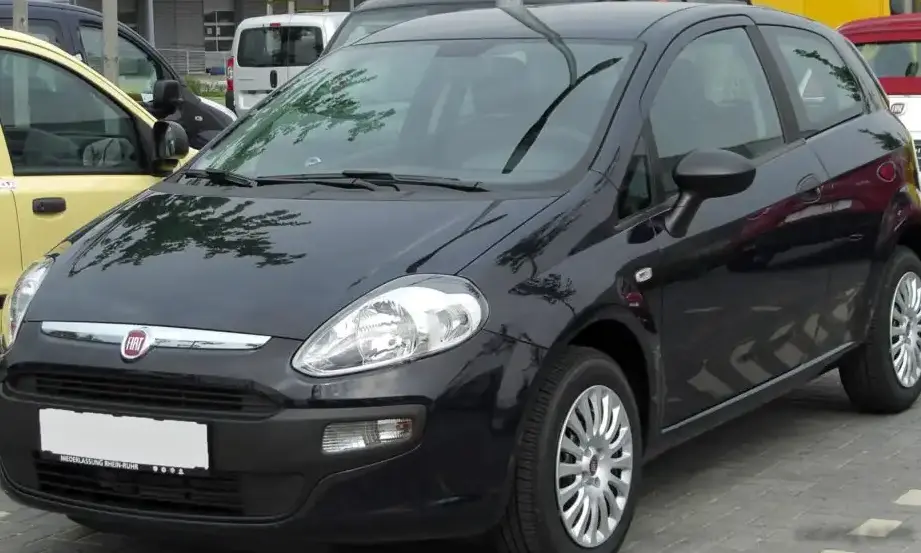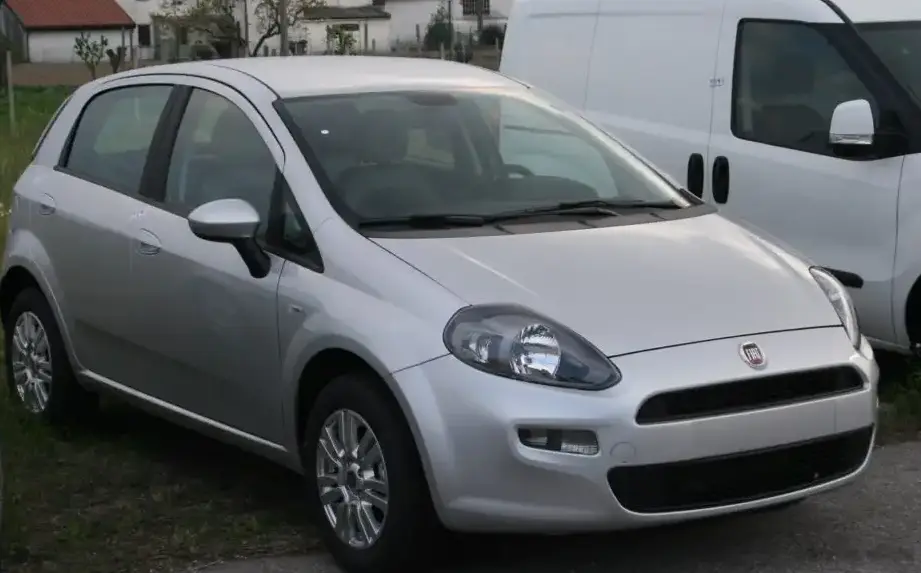
The Fiat Punto III (199) 1.4 Easypower (77 hp) was a front-wheel-drive hatchback produced by the Italian manufacturer Fiat from 2012 to 2018. Positioned as an entry-level offering within the Punto III range, it aimed to provide affordable and economical transportation. This variant was particularly significant in markets where fuel efficiency and low running costs were prioritized. The 199 series represented the third generation of the Punto, built on the Fiat Small Wide Platform, and was a common sight on European roads.
Technical Specifications
| Brand | Fiat |
| Model | Punto |
| Generation | Punto III (199) |
| Type (Engine) | 1.4 Easypower (77 Hp) |
| Start of production | 2012 |
| End of production | 2018 |
| Powertrain Architecture | Internal Combustion engine |
| Body type | Hatchback |
| Seats | 5 |
| Doors | 3-5 |
| Fuel consumption (economy) – urban | 7.3 l/100 km (32.2 US mpg, 38.7 UK mpg, 13.7 km/l) |
| Fuel consumption (economy) – extra urban | 4.8 l/100 km (49 US mpg, 58.9 UK mpg, 20.8 km/l) |
| Fuel consumption (economy) – combined | 5.7 l/100 km (41.3 US mpg, 49.6 UK mpg, 17.5 km/l) |
| CO2 emissions | 133 g/km |
| Fuel Type | Petrol |
| Acceleration 0 – 100 km/h | 13.2 sec |
| Acceleration 0 – 62 mph | 13.2 sec |
| Acceleration 0 – 60 mph | 12.5 sec |
| Maximum speed | 165 km/h (102.53 mph) |
| Emission standard | Euro 5 |
| Weight-to-power ratio | 13.3 kg/Hp |
| Weight-to-torque ratio | 8.9 kg/Nm |
| Power | 77 Hp @ 6000 rpm |
| Torque | 115 Nm @ 3000 rpm (84.82 lb.-ft. @ 3000 rpm) |
| Engine layout | Front, Transverse |
| Engine Model/Code | 350A1000 |
| Engine displacement | 1368 cm3 (83.48 cu. in.) |
| Number of cylinders | 4 |
| Engine configuration | Inline |
| Cylinder Bore | 72 mm (2.83 in.) |
| Piston Stroke | 84 mm (3.31 in.) |
| Compression ratio | 11.1:1 |
| Number of valves per cylinder | 2 |
| Fuel injection system | Multi-port manifold injection |
| Engine aspiration | Naturally aspirated engine |
| Engine oil capacity | 2.6 l (2.75 US qt | 2.29 UK qt) |
| Coolant | 5.3 l (5.6 US qt | 4.66 UK qt) |
| Kerb Weight | 1025 kg (2259.74 lbs.) |
| Max. weight | 1585 kg (3494.33 lbs.) |
| Max load | 560 kg (1234.59 lbs.) |
| Trunk (boot) space – minimum | 252 l (8.9 cu. ft.) |
| Trunk (boot) space – maximum | 1008 l (35.6 cu. ft.) |
| Fuel tank capacity | 45 l (11.89 US gal | 9.9 UK gal) |
| Length | 4065 mm (160.04 in.) |
| Width | 1687 mm (66.42 in.) |
| Height | 1490 mm (58.66 in.) |
| Wheelbase | 2510 mm (98.82 in.) |
| Front track | 1473 mm (57.99 in.) |
| Rear (Back) track | 1466 mm (57.72 in.) |
| Drag coefficient (Cd) | 0.34 |
| Minimum turning circle | 10.9 m (35.76 ft.) |
| Drivetrain Architecture | Front wheel drive |
| Number of gears and type of gearbox | 5 gears, manual transmission |
| Front suspension | Independent, type McPherson with coil spring and anti-roll bar |
| Rear suspension | Semi-independent, coil spring |
| Front brakes | Ventilated discs |
| Rear brakes | Drum |
| Assisting systems | ABS (Anti-lock braking system) |
| Steering type | Steering rack and pinion |
| Power steering | Electric Steering |
| Tires size | 185/65 R15 |
| Wheel rims size | 15 |
INTRODUCTION
The Fiat Punto III 1.4 Easypower (77 hp) was a key model in Fiat’s lineup during the early to mid-2010s. Introduced as part of the 199 series, which debuted in 2012, it represented a significant update to the Punto range. Built on the Fiat Small Wide platform, shared with other models like the Fiat 500, the Punto III aimed to offer a blend of practicality, affordability, and modern features. The 1.4 Easypower variant specifically targeted buyers seeking a cost-effective and reliable city car, offering a balance between fuel economy and acceptable performance. It was available in both 3-door and 5-door configurations, catering to different lifestyle needs.
Powertrain & Engine Architecture
At the heart of the 1.4 Easypower was the 350A1000 engine, a 1.4-liter inline-four cylinder petrol engine. This engine featured a naturally aspirated design with a multi-point fuel injection system. The engine produced 77 horsepower at 6000 rpm and 115 Nm (84.82 lb-ft) of torque at 3000 rpm. The engine utilized a single overhead camshaft (SOHC) valvetrain with two valves per cylinder. The 5-speed manual transmission was the standard offering, providing a relatively conventional driving experience. The engine’s design prioritized fuel efficiency and reliability over outright performance. It was a relatively simple engine, making it easier and less expensive to maintain compared to more complex, higher-output engines.
Driving Characteristics
The Punto III 1.4 Easypower offered a predictable and undemanding driving experience. With 77 hp, acceleration was modest, taking approximately 13.2 seconds to reach 62 mph (100 km/h). The engine felt adequate for city driving and short highway trips, but struggled when fully loaded or tackling steep inclines. The 5-speed manual transmission was well-matched to the engine’s characteristics, with gear ratios designed to maximize fuel economy. Compared to higher-spec Punto models with larger engines (like the 1.4 MultiAir), the 1.4 Easypower felt noticeably slower. However, it offered a smoother and more relaxed driving experience, particularly in urban environments. The relatively light weight of the vehicle (around 1025 kg) helped to mitigate the lack of power.
Equipment & Trim Levels
The 1.4 Easypower typically came with a basic but functional equipment list. Standard features generally included power steering, central locking, electric front windows, and an ABS anti-lock braking system. Interior upholstery was typically cloth, with a simple dashboard layout. Optional extras included air conditioning, alloy wheels, a radio/CD player, and electric rear windows. Higher trim levels, such as the Lounge or Eleganza, added features like alloy wheels, upgraded interior trim, and a more comprehensive infotainment system. The focus of the Easypower trim was on providing essential features at an affordable price point.
Chassis & Braking
The Punto III utilized a McPherson strut front suspension and a semi-independent torsion beam rear suspension. This setup provided a comfortable ride quality, although it wasn’t particularly sporty. The front brakes were ventilated discs, while the rear brakes were drums. This configuration was typical for vehicles in this weight class and price range. ABS was standard, enhancing braking performance and safety. The steering was a rack and pinion system with electric power assistance, providing light and easy steering feel.
Market Reception & Comparison
The Fiat Punto III 1.4 Easypower was generally well-received as an affordable and practical city car. Critics praised its fuel efficiency and low running costs, but noted its lack of performance. Compared to other Punto variants, such as the 1.4 MultiAir, the Easypower offered a more economical option, albeit with significantly less power. It competed with other small hatchbacks like the Volkswagen Polo, Ford Fiesta, and Renault Clio. In terms of fuel economy, the 1.4 Easypower was competitive, achieving around 5.7 l/100 km (41.3 US mpg) on the combined cycle. Reliability was generally considered good, although some owners reported minor issues with the electrical system.
Legacy
The Fiat Punto III 1.4 Easypower remains a relatively common sight on used car markets today. Its simple engine and robust construction contribute to its long-term reliability. While not a performance car, it continues to offer affordable and economical transportation for those seeking a practical city vehicle. The 350A1000 engine is known for its durability, and parts availability is generally good. However, potential buyers should be aware of the possibility of age-related wear and tear, and a thorough inspection is recommended before purchase. The Punto III 1.4 Easypower represents a practical and economical choice for budget-conscious buyers.