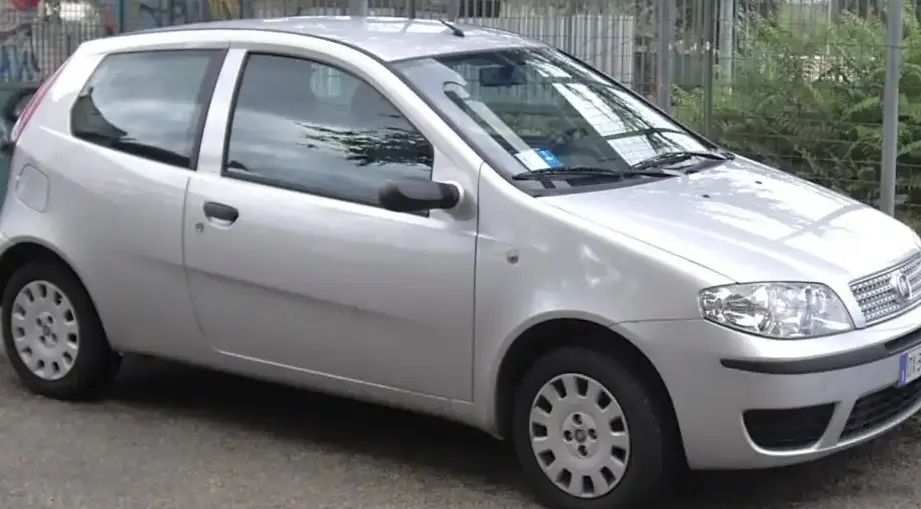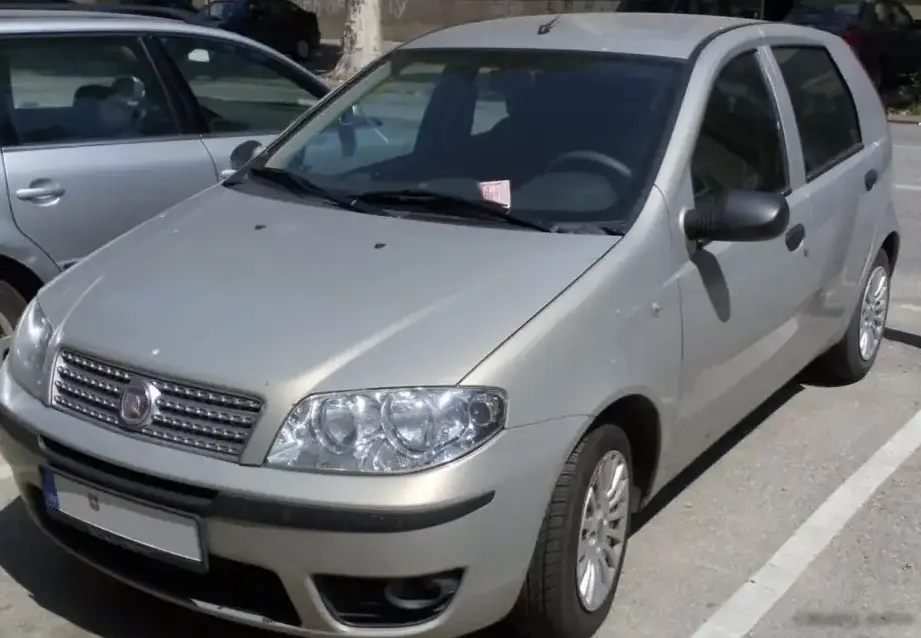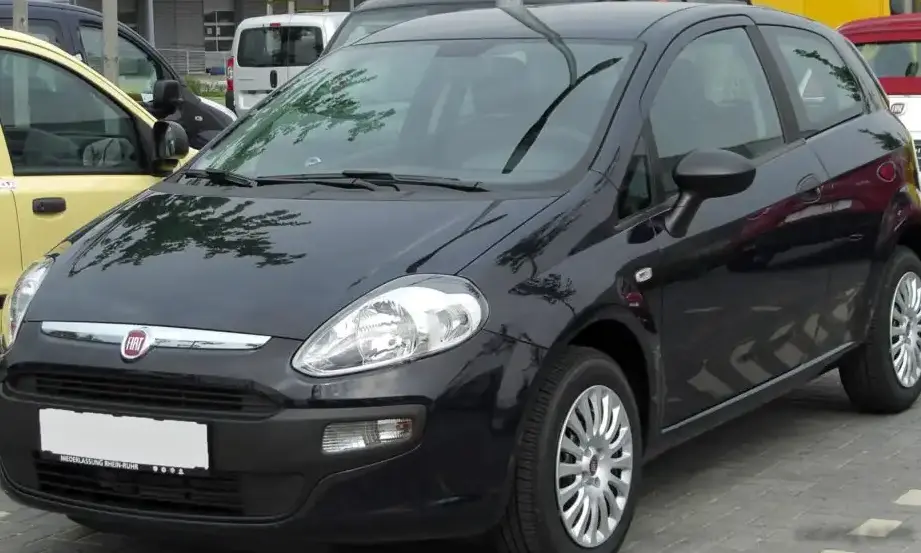
The Fiat Punto III (199) 1.4 T-jet MultiAir, produced from 2012 to 2013, represented a significant step forward in the Punto range, offering a blend of performance and efficiency. This variant, equipped with the 955A2000 engine code, was positioned as a mid-range offering within the Punto III lineup, bridging the gap between the more economical base models and the sportier Abarth versions. It was primarily marketed in Europe, where the Punto competed in the highly competitive supermini segment, appealing to buyers seeking a stylish and relatively powerful hatchback.
Technical Specifications
| Brand | Fiat |
| Model | Punto |
| Generation | Punto III (199) |
| Type (Engine) | 1.4 T-jet MultiAir (135 Hp) Start&Stop |
| Start of production | 2012 |
| End of production | 2013 |
| Powertrain Architecture | Internal Combustion engine |
| Body type | Hatchback |
| Seats | 5 |
| Doors | 3-5 |
| Fuel consumption (urban) | 7.3 l/100 km (32.2 US mpg, 38.7 UK mpg, 13.7 km/l) |
| Fuel consumption (extra urban) | 4.6 l/100 km (51.1 US mpg, 61.4 UK mpg, 21.7 km/l) |
| Fuel consumption (combined) | 5.6 l/100 km (42 US mpg, 50.4 UK mpg, 17.9 km/l) |
| CO2 emissions | 129 g/km |
| Fuel Type | Petrol (Gasoline) |
| Acceleration 0 – 100 km/h | 8.5 sec |
| Acceleration 0 – 62 mph | 8.5 sec |
| Acceleration 0 – 60 mph | 8.1 sec |
| Maximum speed | 200 km/h (124.27 mph) |
| Emission standard | Euro 5 |
| Weight-to-power ratio | 8.6 kg/Hp, 116.9 Hp/tonne |
| Weight-to-torque ratio | 5.6 kg/Nm, 178.4 Nm/tonne |
| Power | 135 Hp @ 5000 rpm |
| Power per litre | 98.7 Hp/l |
| Torque | 206 Nm @ 1750 rpm (151.94 lb.-ft. @ 1750 rpm) |
| Engine layout | Front, Transverse |
| Engine Model/Code | 955A2000 |
| Engine displacement | 1368 cm3 (83.48 cu. in.) |
| Number of cylinders | 4 |
| Engine configuration | Inline |
| Cylinder Bore | 72 mm (2.83 in.) |
| Piston Stroke | 84 mm (3.31 in.) |
| Compression ratio | 9.8:1 |
| Number of valves per cylinder | 4 |
| Fuel injection system | Multi-port manifold injection |
| Engine aspiration | Turbocharger, Intercooler |
| Valvetrain | SOHC |
| Engine oil capacity | 3.5 l (3.7 US qt | 3.08 UK qt) |
| Coolant | 6 l (6.34 US qt | 5.28 UK qt) |
| Kerb Weight | 1155 kg (2546.34 lbs.) |
| Trunk (boot) space – minimum | 275 l (9.71 cu. ft.) |
| Trunk (boot) space – maximum | 1030 l (36.37 cu. ft.) |
| Fuel tank capacity | 45 l (11.89 US gal | 9.9 UK gal) |
| Permitted trailer load with brakes (12%) | 1000 kg (2204.62 lbs.) |
| Permitted trailer load without brakes | 400 kg (881.85 lbs.) |
| Length | 4065 mm (160.04 in.) |
| Width | 1687 mm (66.42 in.) |
| Height | 1490 mm (58.66 in.) |
| Wheelbase | 2510 mm (98.82 in.) |
| Front track | 1473 mm (57.99 in.) |
| Rear (Back) track | 1466 mm (57.72 in.) |
| Drag coefficient (Cd) | 0.34 |
| Minimum turning circle | 10.0 m (32.81 ft.) |
| Drivetrain Architecture | Front wheel drive |
| Drive wheel | Front wheel drive |
| Number of gears and type of gearbox | 5 gears, manual transmission |
| Front suspension | Independent type McPherson |
| Rear suspension | Torsion |
| Front brakes | Ventilated discs |
| Rear brakes | Disc |
| Assisting systems | ABS (Anti-lock braking system) |
| Steering type | Steering rack and pinion |
| Power steering | Electric Steering |
| Tires size | 185/65 R15 |
| Wheel rims size | 15 |
Powertrain & Engine Architecture
The heart of the Punto III 1.4 T-jet MultiAir is the 955A2000 engine, a 1368cc inline-four cylinder petrol engine. This engine utilizes Fiat’s MultiAir technology, a fully variable valve actuation system. MultiAir allows for independent control of the intake valve timing and lift, optimizing combustion efficiency and reducing emissions. The system uses a hydraulic actuator instead of a traditional camshaft, resulting in faster response times and improved fuel economy. The engine is turbocharged with an intercooler, boosting power output to 135 horsepower at 5000 rpm and 206 Nm (152 lb-ft) of torque at 1750 rpm. The engine employs multi-port fuel injection. The Punto 1.4 T-jet typically came equipped with a five-speed manual transmission, although an automated manual transmission (Dualogic) was also available as an option. The Dualogic transmission, while offering some convenience, was often criticized for its slow and jerky shifts compared to a traditional automatic or even a well-executed manual.
Driving Characteristics
The 1.4 T-jet MultiAir offered a noticeable step up in performance compared to the lower-powered Punto variants. Acceleration from 0 to 60 mph took around 8.1-8.5 seconds, making it a relatively quick supermini. The turbocharger provides a good amount of low-end torque, making it feel responsive in everyday driving situations. However, the power delivery isn’t particularly linear; there’s a noticeable surge of power as the turbo spools up. The five-speed manual transmission is well-matched to the engine, although some drivers found the gear ratios slightly tall, requiring frequent downshifts when overtaking or climbing hills. The Dualogic transmission, when equipped, diminished the driving experience, with slower shift times and a less engaging feel. The Punto’s suspension provided a comfortable ride, but the handling wasn’t particularly sporty, leaning towards a more comfort-oriented setup.
Equipment & Trim Levels
The 1.4 T-jet MultiAir typically came with a reasonable level of standard equipment. This included air conditioning, power steering, electric front windows, a radio with CD player, and ABS brakes. Higher trim levels added features such as alloy wheels, fog lights, a multi-function steering wheel, and a more sophisticated audio system. Optional extras included a sunroof, parking sensors, and upgraded upholstery. Interior materials were generally of good quality for the class, but the overall design was somewhat conservative. The Punto III offered a practical and spacious interior for its size, with comfortable seating for five adults.
Chassis & Braking
The Punto III utilized a McPherson strut front suspension and a torsion beam rear suspension. This setup provided a good balance between ride comfort and handling. The front brakes were ventilated discs, while the rear brakes were solid discs. ABS (Anti-lock Braking System) was standard on all models. The steering was electrically assisted, providing a light and easy driving experience. The Punto’s chassis was relatively lightweight, contributing to its nimble handling and good fuel economy.
Market Reception & Comparison
The Fiat Punto III 1.4 T-jet MultiAir was generally well-received by automotive critics. It was praised for its responsive engine, good fuel economy, and comfortable ride. However, some critics noted the somewhat bland interior design and the occasionally jerky shifts of the Dualogic transmission. Compared to other superminis in its class, such as the Ford Fiesta and Volkswagen Polo, the Punto offered a good value proposition, with a competitive price and a generous level of standard equipment. The 1.4 T-jet offered a significant performance upgrade over the base 1.2-liter engine, but it wasn’t as sporty as the Abarth version. Fuel economy was comparable to other turbocharged engines in the segment.
Legacy
The 1.4 T-jet MultiAir engine proved to be relatively reliable, although the MultiAir system itself has been known to experience issues in some cases, such as solenoid failures. Regular maintenance, including oil changes and timing belt replacements, is crucial for ensuring the longevity of this engine. Today, the Punto III 1.4 T-jet MultiAir can be found on the used car market at affordable prices. It remains a practical and economical choice for buyers seeking a small, stylish hatchback. However, potential buyers should be aware of the potential issues with the MultiAir system and ensure that the vehicle has been properly maintained.