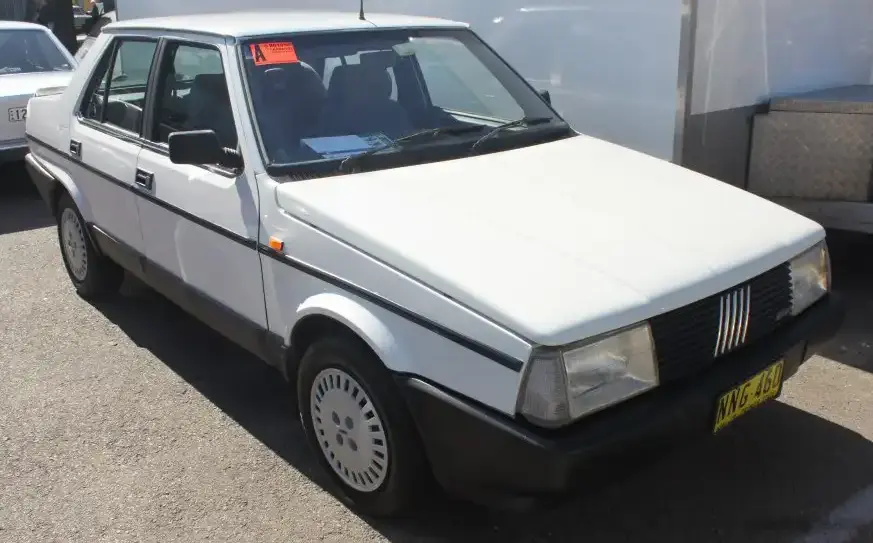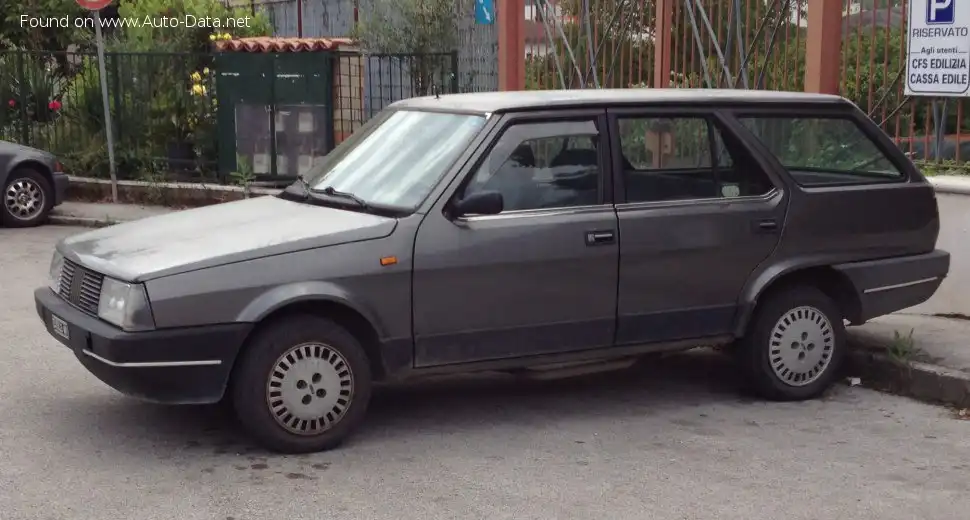
The Fiat Regata Weekend 85 1.5, produced between 1984 and 1989, was a practical and affordable station wagon aimed at families and those needing versatile cargo space. It represented Fiat’s entry into the compact estate car market, offering a more spacious alternative to the smaller hatchback models of the time. The “Weekend” designation specifically denoted the station wagon body style, differentiating it from the sedan and other variants within the Regata range. This particular 85 1.5 version, with its 82 horsepower engine and typically paired automatic transmission (though manual options existed), occupied a middle ground in the Regata Weekend lineup, balancing affordability with reasonable performance.
Technical Specifications
| Brand | Fiat |
| Model | Regata |
| Generation | Regata Weekend |
| Type (Engine) | 85 1.5 (82 Hp) |
| Start of Production | 1984 |
| End of Production | 1989 |
| Powertrain Architecture | Internal Combustion Engine |
| Body Type | Station Wagon (Estate) |
| Fuel Type | Petrol (Gasoline) |
| Power | 82 Hp |
| Engine Model/Code | 149 A5.000 |
| Engine Aspiration | Naturally Aspirated |
| Engine Oil Capacity | 4.1 l (4.33 US qt | 3.61 UK qt) |
| Coolant Capacity | 7 l (7.4 US qt | 6.16 UK qt) |
| Length | 4267 mm (167.99 in) |
| Width | 1650 mm (64.96 in) |
| Height | 1450 mm (57.09 in) |
| Wheelbase | 2455 mm (96.65 in) |
Powertrain & Engine Architecture
The Fiat Regata Weekend 85 1.5 was powered by the 149 A5.000 engine, a 1.5-liter inline-four cylinder gasoline engine. This engine was a relatively simple design, featuring a single overhead camshaft (SOHC) operating two valves per cylinder. Fuel delivery was managed by a carburetor, a common feature for vehicles of this era, rather than the more advanced fuel injection systems found in some contemporary cars. The carburetor provided adequate fuel atomization for the engine’s modest power output. The engine’s block was cast iron, contributing to its durability, while the cylinder head was aluminum. The 82 horsepower output was achieved at approximately 5600 rpm, with peak torque of around 98 lb-ft at 3000 rpm. While a five-speed manual transmission was available, the 85 1.5 was often equipped with a three-speed automatic transmission, a relatively basic unit designed for smooth, if not particularly sporty, operation. This automatic transmission was known for its simplicity and reliability, but it did contribute to slightly lower fuel economy and slower acceleration compared to the manual version.
Driving Characteristics
The Regata Weekend 85 1.5 with the automatic transmission offered a comfortable, albeit unhurried, driving experience. Acceleration was adequate for everyday driving, but overtaking maneuvers required careful planning. The three-speed automatic transmission had relatively wide gear ratios, meaning the engine would rev up considerably before shifting, and downshifts weren’t particularly quick. The suspension, consisting of MacPherson struts in the front and a twist-beam axle in the rear, provided a reasonably comfortable ride, absorbing bumps and imperfections in the road surface effectively. However, the suspension wasn’t particularly sporty, and the car exhibited noticeable body roll during cornering. Steering was light and easy, making it maneuverable in urban environments, but lacked the precision and feedback desired by more enthusiastic drivers. The overall driving experience was geared towards practicality and ease of use rather than performance.
Equipment & Trim Levels
The Regata Weekend 85 1.5 typically came with a fairly basic level of equipment, reflecting its position as a value-oriented family car. Standard features generally included cloth upholstery, a basic instrument cluster with speedometer, fuel gauge, and temperature gauge, and manually adjustable seats. Power steering was often an optional extra, as were features like a radio/cassette player and electric windows. The interior was functional and durable, with hard-wearing plastics used throughout. The “85” designation likely referred to a specific trim level, potentially indicating slightly upgraded interior trim or additional features compared to the base model. The spaciousness of the Weekend’s cargo area was a key selling point, offering ample room for luggage, groceries, or other bulky items. Rear seats could be folded down to further increase cargo capacity.
Chassis & Braking
The Regata Weekend’s chassis was a traditional body-on-frame construction, providing a robust and durable platform. The front suspension utilized MacPherson struts, while the rear suspension employed a simple twist-beam axle. Braking was typically accomplished with disc brakes on the front wheels and drum brakes on the rear wheels. The braking system was adequate for normal driving conditions, but lacked the stopping power and fade resistance of more modern braking systems. Stabilizer bars were often omitted on the base models, contributing to increased body roll during cornering. The tires were typically narrow, prioritizing fuel economy and ride comfort over grip.
Market Reception & Comparison
The Fiat Regata Weekend 85 1.5 was generally well-received as a practical and affordable family car. Critics praised its spacious interior, comfortable ride, and reasonable fuel economy. However, the engine’s modest power output and the automatic transmission’s lack of responsiveness were often cited as drawbacks. Compared to other station wagons of the time, such as the Ford Escort Estate or the Opel Kadett Estate, the Regata Weekend offered a competitive price point and a relatively simple, reliable design. The manual transmission versions of the Regata Weekend were generally preferred by drivers seeking better performance and fuel economy. The 1.5-liter engine was considered a good compromise between affordability and usability, although the larger 1.6-liter and 2.0-liter engines offered significantly more power.
Legacy
The Fiat Regata Weekend, and specifically the 85 1.5 variant, has become a relatively rare sight on the roads today. While generally reliable, the cars were often subjected to hard use and many have succumbed to rust or mechanical failure. The 149 A5.000 engine is known for its durability, but maintenance can be challenging due to the age of the vehicle and the limited availability of spare parts. In the used car market, well-maintained examples of the Regata Weekend are sought after by classic car enthusiasts and Fiat collectors. The car represents a significant piece of automotive history, embodying the design and engineering philosophies of the 1980s. Its simplicity, practicality, and affordability continue to appeal to those seeking a nostalgic and characterful classic car.