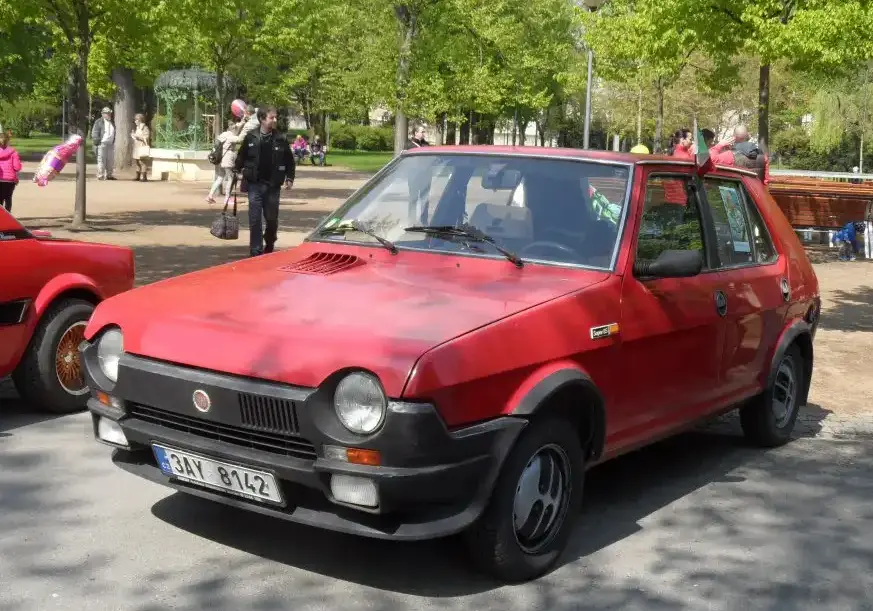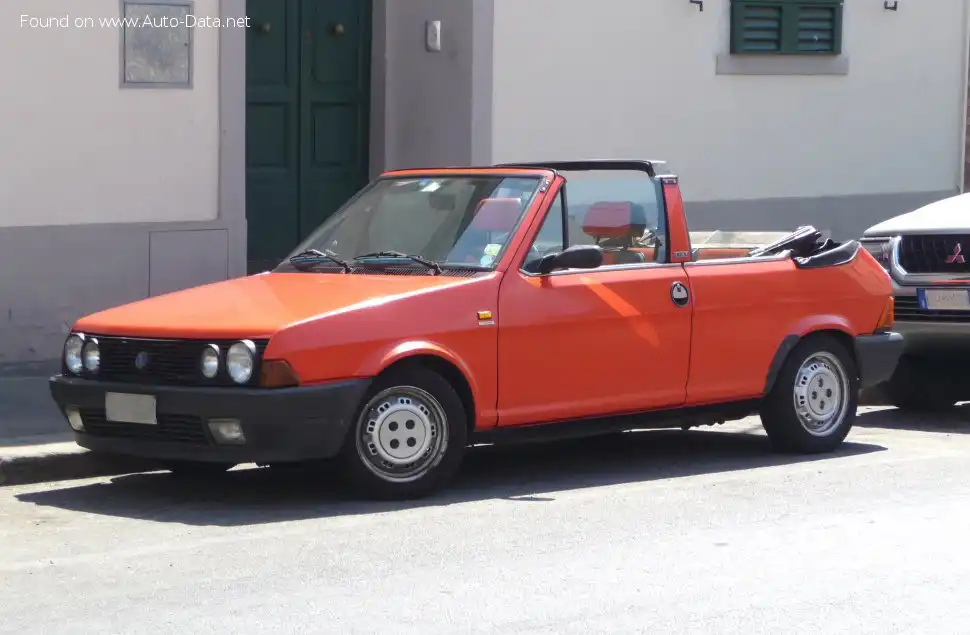
The Fiat Ritmo Bertone Cabriolet 100 1.6, produced between 1985 and 1987, represents a unique and relatively rare iteration of the Ritmo (Strada in some markets) family. This open-top variant, designed and built by Bertone, aimed to offer a stylish and affordable convertible experience within the European compact car segment. It was positioned as a more aspirational version of the Ritmo, appealing to buyers seeking a blend of Italian design and open-air motoring. The Ritmo itself was Fiat’s attempt to modernize its compact offerings, replacing the aging 128, and the Bertone Cabriolet was a late-life addition intended to boost the model’s image.
Technical Specifications
| Brand | Fiat |
| Model | Ritmo |
| Generation | Ritmo Bertone Cabrio I |
| Type (Engine) | 100 1.6 (100 Hp) |
| Start of Production | 1985 |
| End of Production | 1987 |
| Powertrain Architecture | Internal Combustion Engine |
| Body Type | Cabriolet |
| Fuel Type | Petrol (Gasoline) |
| Power | 100 Hp |
| Engine Model/Code | 149.A4.000 |
| Engine Aspiration | Naturally Aspirated |
Powertrain & Engine Architecture
The Ritmo Bertone Cabriolet 100 1.6 was powered by Fiat’s 149.A4.000 engine, a 1.6-liter inline-four cylinder gasoline engine. This engine was a common sight in other Fiat and Lancia models of the era. It featured a cast iron block and an aluminum cylinder head, employing a single overhead camshaft (SOHC) design operating two valves per cylinder. Fuel delivery was managed by a Bosch mechanical fuel injection system, a step up from the carburetors used in earlier Ritmo variants. This injection system, while not as sophisticated as later electronic systems, provided improved fuel efficiency and smoother power delivery compared to carbureted engines. The engine produced 100 horsepower (metric, approximately 98 US hp) at 6000 rpm and 137 Nm (101 lb-ft) of torque at 4000 rpm. The engine was mated to a three-speed automatic transmission, a relatively uncommon option for European cars of this period, and one that significantly impacted the driving experience.
Driving Characteristics
The combination of the 1.6-liter engine and the three-speed automatic transmission resulted in a driving experience that prioritized comfort and ease of use over outright performance. Acceleration was adequate for everyday driving, but the car wasn’t particularly quick. The three-speed automatic, while providing smooth shifts, lacked the responsiveness of a manual gearbox or a more modern automatic with additional gears. The gear ratios were spaced to favor fuel economy and relaxed cruising rather than spirited acceleration. Compared to the manual transmission versions of the 1.6-liter Ritmo, the automatic was noticeably slower, particularly in overtaking situations. The automatic also diminished the engine’s potential, as the driver had less control over maintaining the engine in its optimal power band. The Bertone Cabriolet’s convertible top added weight, further impacting performance. Handling was typical of front-wheel-drive cars of the era – safe and predictable, but not particularly engaging. The soft suspension, designed for comfort, contributed to noticeable body roll in corners.
Equipment & Trim Levels
The Ritmo Bertone Cabriolet 100 1.6 was generally well-equipped for its price point, reflecting its positioning as a more premium variant. Standard features included cloth upholstery, a leather-wrapped steering wheel, and a basic stereo system. The interior design was functional and typically 1980s Italian, with a focus on practicality rather than luxury. The dashboard featured a straightforward layout with clearly marked gauges. Optional extras included power windows, central locking, and upgraded stereo systems. The exterior trim was relatively simple, with body-colored bumpers and a black fabric convertible top. The Bertone design featured a distinctive wedge shape, with a sloping hood and a short rear deck. The interior trim levels were fairly basic, with a focus on durability rather than lavish materials. The seats were typically upholstered in a patterned cloth, and the door panels were made of molded plastic.
Chassis & Braking
The Ritmo Bertone Cabriolet utilized a front-wheel-drive chassis with independent front suspension using MacPherson struts and a torsion beam rear suspension. The steering was rack and pinion, providing reasonable precision. Braking was accomplished via disc brakes on the front wheels and drum brakes on the rear wheels. The braking system was adequate for normal driving conditions, but lacked the stopping power of more modern systems. The Cabriolet’s chassis was reinforced compared to the standard Ritmo to compensate for the loss of structural rigidity due to the removal of the roof. However, the car still exhibited some noticeable chassis flex, particularly over uneven road surfaces. Stabilizer bars were fitted to both the front and rear axles to reduce body roll during cornering.
Market Reception & Comparison
The Ritmo Bertone Cabriolet was generally well-received by critics, who praised its stylish design and affordable price. However, the car was also criticized for its lack of performance, particularly with the automatic transmission. Compared to other convertibles on the market, such as the Peugeot 205 Cabriolet and the Volkswagen Golf Cabriolet, the Ritmo Bertone Cabriolet offered a more affordable alternative, but lacked the refinement and driving dynamics of its rivals. The 1.6-liter engine with the automatic transmission was considered a compromise, offering convenience at the expense of performance. Manual transmission versions of the Ritmo were generally preferred by enthusiasts. Fuel economy was reasonable for the time, averaging around 30-35 mpg in mixed driving conditions. Reliability was generally good, although the Bosch fuel injection system could occasionally require maintenance.
Legacy
The Fiat Ritmo Bertone Cabriolet 100 1.6 remains a relatively uncommon and collectible car today. Its limited production numbers and distinctive design have made it a favorite among Fiat enthusiasts. The 149.A4.000 engine is known for its durability, but regular maintenance is essential to prevent issues. The three-speed automatic transmission, while reliable, is often considered a weak point by enthusiasts. Parts availability can be challenging, but many components are still available through specialist Fiat parts suppliers. The Ritmo Bertone Cabriolet represents a unique chapter in Fiat’s history, showcasing the company’s willingness to experiment with different body styles and designs. It’s a reminder of a time when affordable convertibles were becoming increasingly popular, and Italian design was at its peak.