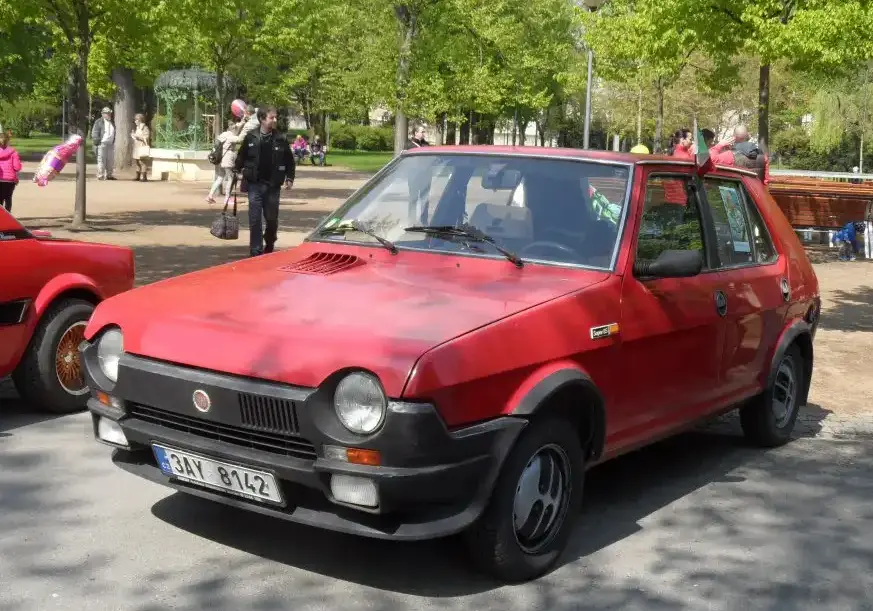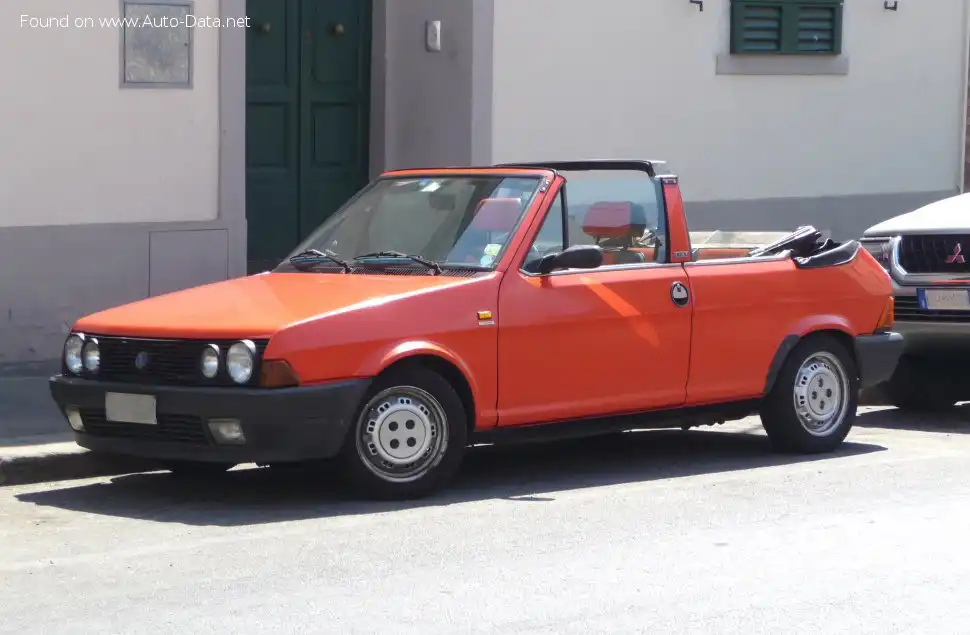
The Fiat Ritmo Bertone Cabriolet, produced between 1985 and 1987, represents a unique and relatively rare iteration of the Ritmo (Strada in some markets) family. This open-top variant, designed and built by Bertone, aimed to offer a stylish and affordable convertible option within the European small car segment. The “100 1.6” designation refers to the trim level and engine displacement, signifying a 1.6-liter engine producing 105 horsepower. It occupied a mid-range position within the Cabriolet lineup, offering a balance between performance and cost, positioned above the base models and below any potential limited-edition or higher-performance variants. The Ritmo Bertone Cabriolet was primarily a European market vehicle, with limited or no official sales in North America.
Technical Specifications
| Brand | Fiat |
| Model | Ritmo |
| Generation | Ritmo Bertone Cabrio I |
| Type (Engine) | 100 1.6 (105 Hp) |
| Start of Production | 1985 |
| End of Production | 1987 |
| Powertrain Architecture | Internal Combustion Engine |
| Body Type | Cabriolet |
| Fuel Type | Petrol (Gasoline) |
| Power | 105 Hp |
| Engine Model/Code | 138 AR.000 |
| Engine Aspiration | Naturally Aspirated |
Powertrain & Engine Architecture
The heart of the Ritmo Bertone Cabriolet 100 1.6 is the Fiat 138 AR.000 engine, a 1.6-liter inline-four cylinder gasoline engine. This engine, a development of Fiat’s long-running 138 series, featured a cast iron block and an aluminum cylinder head. It employed a single overhead camshaft (SOHC) valvetrain operating two valves per cylinder. Fuel delivery was managed by a Bosch mechanical fuel injection system, a relatively sophisticated setup for the time, offering improved efficiency and driveability compared to carbureted engines. The 105 horsepower output was achieved at approximately 6000 rpm, with peak torque of around 107 lb-ft (145 Nm) at 4000 rpm. The engine was mated to a four-speed automatic transmission, a somewhat unusual pairing for a sporty convertible, but one intended to broaden the car’s appeal to drivers prioritizing ease of use over outright performance. The automatic transmission was a Fiat-designed unit, known for its robustness but not particularly for its responsiveness or fuel efficiency.
Driving Characteristics
The Ritmo Bertone Cabriolet 100 1.6, with its automatic transmission, offered a relaxed and comfortable driving experience. Acceleration was adequate for everyday driving, with a 0-60 mph time estimated around 12-13 seconds. However, it was noticeably slower than the manual transmission versions or those equipped with the larger 1.6-liter engines. The automatic transmission’s gear ratios were geared towards fuel economy and smooth cruising rather than spirited acceleration. The car’s relatively light weight (around 2,200 lbs or 1000 kg) helped to mitigate the performance deficit somewhat. Handling was typical of front-wheel-drive cars of the era – safe and predictable, but not particularly engaging. The convertible top, while adding to the car’s aesthetic appeal, did contribute to some chassis flex, particularly on uneven road surfaces. Compared to the manual versions, the automatic lacked the driver involvement and responsiveness that enthusiasts often sought.
Equipment & Trim Levels
The “100” trim level of the Ritmo Bertone Cabriolet indicated a mid-range specification. Standard equipment typically included cloth upholstery, a basic instrument cluster, and power steering. The interior design was functional and relatively simple, reflecting the car’s affordable price point. Optional extras included upgraded upholstery materials, a more comprehensive instrument panel, and a radio/cassette player. The exterior featured body-colored bumpers, chrome trim, and steel wheels with hubcaps. The convertible top was manually operated, a cost-saving measure common in this class of vehicle. The interior plastics were durable but lacked the refinement found in more expensive convertibles. The dashboard layout was straightforward, with easy-to-read gauges and logically placed controls.
Chassis & Braking
The Ritmo Bertone Cabriolet utilized a front-wheel-drive chassis with independent front suspension featuring MacPherson struts and a torsion beam rear suspension. The front suspension provided a comfortable ride, while the rear suspension helped to maintain stability. Braking was accomplished via disc brakes on the front wheels and drum brakes on the rear wheels. The braking system was adequate for normal driving conditions, but lacked the stopping power of more modern systems. A stabilizer bar was fitted to the front suspension to reduce body roll during cornering. The steering was a rack-and-pinion system, providing reasonably precise steering feel. The chassis was reinforced in key areas to compensate for the loss of structural rigidity associated with the convertible body style, but some flex was still noticeable.
Market Reception & Comparison
The Ritmo Bertone Cabriolet was generally well-received by automotive critics as an affordable and stylish convertible. However, the automatic transmission version was often criticized for its lack of performance and responsiveness. Compared to other convertibles in the European market, such as the Peugeot 205 Cabriolet and the Volkswagen Golf Cabriolet, the Ritmo offered a competitive price point but lacked the same level of refinement and driving dynamics. Fuel economy was reasonable for the time, averaging around 28-32 mpg (depending on driving conditions). Reliability was generally good, although the automatic transmission could be prone to occasional issues if not properly maintained. The Ritmo Bertone Cabriolet appealed to buyers seeking a fashionable and practical open-top car without breaking the bank.
Legacy
The Fiat Ritmo Bertone Cabriolet, particularly the 100 1.6 automatic version, remains a relatively uncommon sight today. While not known for exceptional performance or groundbreaking technology, it represents a charming and affordable entry into the world of classic convertibles. The 138 AR.000 engine is generally considered to be a durable and reliable unit, although finding parts can become increasingly challenging. The automatic transmission, while not the most desirable configuration, is still serviceable with proper maintenance. In the used car market, well-maintained examples of the Ritmo Bertone Cabriolet are gaining popularity among collectors and enthusiasts, particularly those seeking a unique and affordable classic Italian car. Its enduring appeal lies in its distinctive styling, open-air driving experience, and relative simplicity.