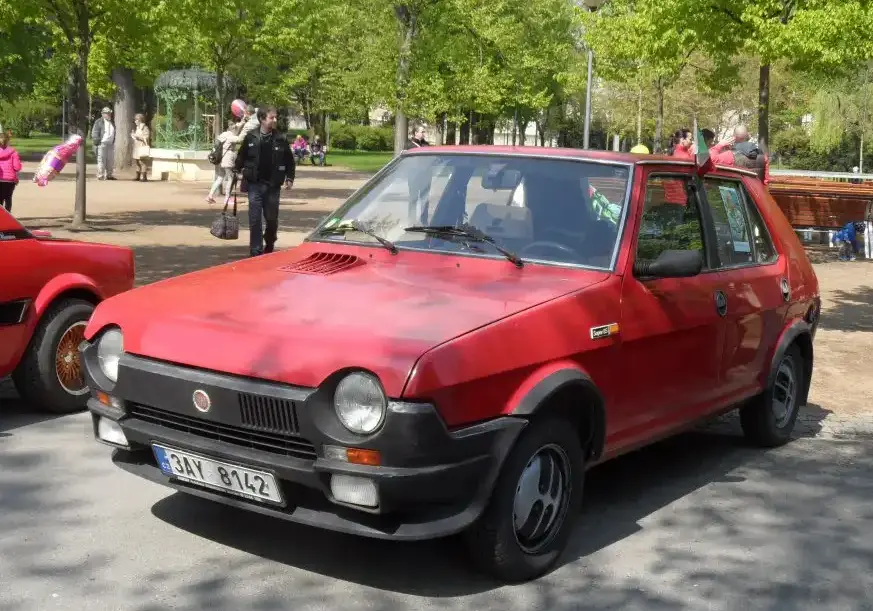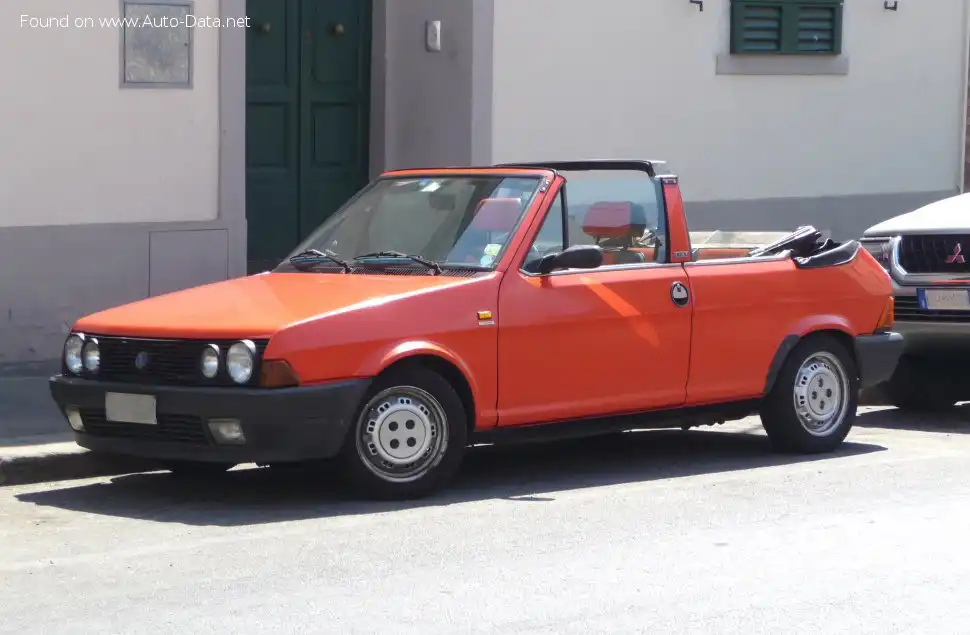
The Fiat Ritmo Bertone Cabriolet, specifically the 85 1.5 variant producing 82 horsepower, represents a unique and relatively rare offering from Fiat during the early to mid-1980s. Produced between 1983 and 1986, this open-top version of the Ritmo (also known as the Strade in some markets) was a collaborative effort between Fiat and Bertone, the renowned Italian design house. It aimed to provide an affordable and stylish convertible option within the European compact car segment. This particular 1.5-liter, 82 hp configuration occupied an entry-level position within the Cabriolet range, offering a balance between cost and usability.
Technical Specifications
| Brand | Fiat |
| Model | Ritmo |
| Generation | Ritmo Bertone Cabrio I |
| Type (Engine) | 85 1.5 (82 Hp) |
| Start of Production | 1983 |
| End of Production | 1986 |
| Powertrain Architecture | Internal Combustion Engine |
| Body Type | Cabriolet |
| Fuel Type | Petrol (Gasoline) |
| Power | 82 Hp |
| Engine Model/Code | 138B3.000 |
| Engine Aspiration | Naturally Aspirated |
| Engine Oil Capacity | 4.2 l (4.44 US qt | 3.7 UK qt) |
| Coolant Capacity | 7 l (7.4 US qt | 6.16 UK qt) |
Introduction
The Fiat Ritmo, launched in 1978, was designed as a modern, front-wheel-drive replacement for the aging Fiat 128. The Ritmo aimed to compete with rivals like the Volkswagen Golf and Renault 5. The Bertone Cabriolet, introduced in 1983, was a significant departure, transforming the practical hatchback into a stylish and desirable open-top vehicle. Bertone handled the entire conversion, including structural reinforcement to compensate for the loss of the roof. The 85 1.5 variant, with its 82 horsepower engine, was positioned as the most accessible version of the Cabriolet, appealing to buyers seeking an affordable entry into the convertible market. It was part of the first generation (Type 138) of the Ritmo, and shared its basic mechanical underpinnings with the standard hatchback.
Powertrain & Engine Architecture
The heart of the Ritmo Bertone Cabriolet 85 1.5 is the Fiat 138B3.000 engine, a 1.5-liter inline-four cylinder gasoline engine. This engine is a naturally aspirated unit, meaning it doesn’t employ turbocharging or supercharging. It features a single overhead camshaft (SOHC) valvetrain operating two valves per cylinder. Fuel delivery is managed by a Weber 32 ADFA carburetor, a common setup for Fiat engines of this era. The engine produces 82 horsepower (SAE net) at 6000 rpm and approximately 85 lb-ft of torque at 3600 rpm. The engine block is cast iron, while the cylinder head is aluminum. The 85 1.5 was typically paired with a four-speed manual transmission, but a three-speed automatic transmission was also available, though less common. The automatic transmission, a Fiat-sourced unit, was geared towards comfort and ease of use rather than performance.
Driving Characteristics
The Ritmo Bertone Cabriolet 85 1.5, particularly with the automatic transmission, offered a relaxed and comfortable driving experience. Acceleration was modest, with a 0-60 mph time estimated around 13-14 seconds. The engine’s torque delivery was relatively flat, providing adequate power for everyday driving but lacking the punch of higher-output versions. The automatic transmission, while convenient, contributed to a slight reduction in fuel economy and responsiveness compared to the manual gearbox. Gear ratios were optimized for cruising, making it suitable for highway driving, but less engaging on winding roads. The Cabriolet’s open-top nature added to the enjoyment, but also introduced some wind noise and reduced structural rigidity compared to the hatchback version. Compared to the more powerful 105 TC version, the 85 1.5 felt noticeably slower, but it offered a more economical and accessible entry point to the Cabriolet experience.
Equipment & Trim Levels
The Ritmo Bertone Cabriolet 85 1.5 typically came equipped with a relatively basic level of standard features. Interior upholstery was usually cloth, available in a range of colors. The dashboard featured a simple, functional design with analog gauges for speed, tachometer, fuel level, and coolant temperature. Power steering was not standard on the base 85 1.5 model, but it was often included as an option. Other optional extras included alloy wheels, upgraded audio systems, and a leather steering wheel. The convertible top was manually operated and featured a rear window made of plastic. The trim level was generally focused on providing a stylish and affordable convertible experience, prioritizing aesthetics over luxury features.
Chassis & Braking
The Ritmo Bertone Cabriolet utilized a front-wheel-drive chassis with independent front suspension featuring MacPherson struts and a torsion beam rear suspension. The Cabriolet received significant structural reinforcement compared to the standard Ritmo hatchback to compensate for the removal of the roof. This included additional bracing in the sills and underbody. Braking was initially provided by front disc brakes and rear drum brakes. Later models often featured rear disc brakes as standard equipment. The braking system was hydraulically operated with no anti-lock braking system (ABS) available. Stabilizer bars were fitted to both the front and rear axles to reduce body roll during cornering. The suspension tuning was geared towards comfort, providing a relatively soft ride quality.
Market Reception & Comparison
The Fiat Ritmo Bertone Cabriolet was generally well-received by automotive critics for its stylish design and affordable price point. However, the 85 1.5 variant was sometimes criticized for its lack of performance, particularly when paired with the automatic transmission. Compared to the more powerful 105 TC version, the 85 1.5 offered a more economical option, but at the expense of driving excitement. Fuel economy was reasonable for the time, averaging around 28-32 mpg. Reliability was generally good, although the carburetor required periodic adjustment and maintenance. The Cabriolet competed with other affordable convertibles such as the Peugeot 205 Cabriolet and the Volkswagen Golf Cabriolet, offering a unique Italian flair and a slightly lower price point.
Legacy
The Fiat Ritmo Bertone Cabriolet, including the 85 1.5 variant, remains a relatively rare and sought-after classic car today. The 138B3.000 engine, while not particularly powerful, is known for its durability and relative simplicity, making it relatively easy to maintain. Parts availability can be a challenge, but a dedicated community of Fiat enthusiasts helps to keep these cars on the road. The Cabriolet’s unique styling and open-top experience continue to appeal to collectors and enthusiasts. Well-maintained examples command a premium in the used car market, reflecting their rarity and historical significance. The Ritmo Bertone Cabriolet represents a charming and affordable piece of Italian automotive history, offering a glimpse into the design and engineering of the 1980s.