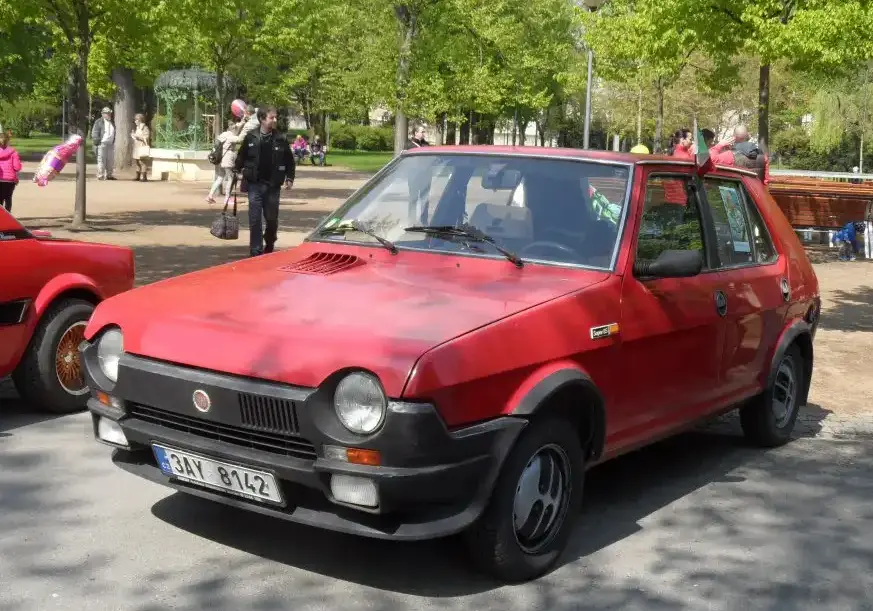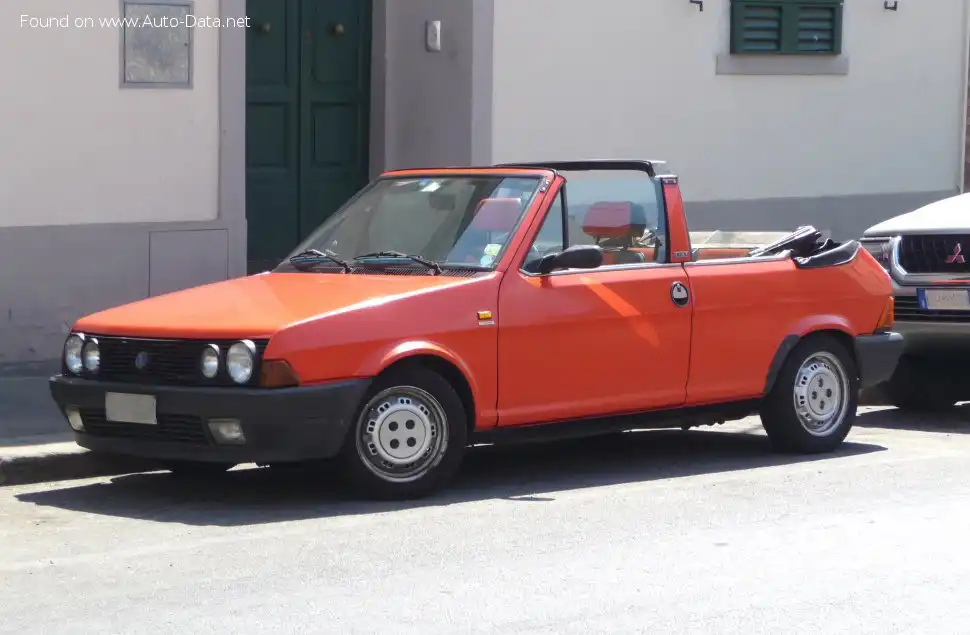
The Fiat Ritmo Bertone Cabriolet, specifically the 85 1.5 variant producing 86 horsepower, represents a unique and relatively rare offering from the Italian automaker during the 1980s. Produced from 1980 to 1989, this open-top version of the Ritmo (also known as the Strade in some markets) was a collaborative effort between Fiat and Bertone, the renowned Italian design house. It aimed to provide an affordable and stylish convertible option within the European compact car segment. This particular 1.5-liter, 86 hp configuration occupied a mid-range position within the Cabriolet lineup, offering a balance between performance and economy.
Technical Specifications
| Brand | Fiat |
| Model | Ritmo |
| Generation | Ritmo Bertone Cabrio I |
| Type (Engine) | 85 1.5 (86 Hp) |
| Start of Production | 1980 |
| End of Production | 1989 |
| Powertrain Architecture | Internal Combustion Engine |
| Body Type | Cabriolet |
| Fuel Type | Petrol (Gasoline) |
| Power | 86 Hp |
| Engine Aspiration | Naturally Aspirated |
Powertrain & Engine Architecture
The heart of the Ritmo Bertone Cabriolet 85 1.5 is a 1498 cc (91.4 cubic inches) inline-four cylinder engine. This engine, internally designated as the 164A.000, is a naturally aspirated unit featuring a single overhead camshaft (SOHC) and two valves per cylinder. Fuel delivery is managed by a Weber 32 ADFA carburetor, a common setup for Fiat engines of this era. The engine’s bore and stroke measure 80mm x 80mm, resulting in a relatively square configuration. The compression ratio is 9.2:1. While not a particularly high-performance engine, it was known for its reliability and relatively easy maintenance. The 86 horsepower peak is achieved at 6000 rpm, with a torque output of approximately 83 lb-ft at 3600 rpm. The engine is paired with a three-speed automatic transmission, a relatively uncommon option for European cars of this period, and one that significantly altered the driving experience compared to the available five-speed manual.
Driving Characteristics
The Ritmo Bertone Cabriolet 85 1.5 with the automatic transmission offers a relaxed and comfortable driving experience. However, it’s important to note that the three-speed automatic isn’t geared for rapid acceleration. The gear ratios are fairly widely spaced, prioritizing fuel economy over outright performance. Acceleration from 0 to 60 mph is estimated to be around 12-13 seconds, making it noticeably slower than the manual transmission versions or the higher-powered 1.6-liter variants. The automatic transmission does smooth out the power delivery, making it more accessible for everyday driving, but it also diminishes the sense of driver engagement. The car feels best suited for cruising on open roads rather than spirited driving. The relatively soft suspension, typical of Italian cars of the era, contributes to a comfortable ride, but also results in noticeable body roll during cornering.
Equipment & Trim Levels
The Ritmo Bertone Cabriolet 85 1.5 typically came equipped with a reasonable level of standard features for its time. Interior appointments included cloth upholstery, often in a patterned design, and a basic dashboard layout with analog gauges. Power steering was not standard, but was often an optional extra. Other available options included a radio, upgraded sound system, and alloy wheels. The convertible top was manually operated, and while relatively straightforward to use, it wasn’t particularly sophisticated. The interior trim quality was generally considered adequate, but not luxurious. The 85 1.5 trim level positioned itself as a step up from the base models, offering a slightly more refined interior and a more powerful engine, but falling short of the more premium trims with leather upholstery and additional features.
Chassis & Braking
The Ritmo Bertone Cabriolet utilizes a front-engine, front-wheel-drive layout. The suspension consists of independent front suspension with MacPherson struts and a twist-beam rear axle. The braking system features disc brakes on the front wheels and drum brakes on the rear wheels. The braking performance is adequate for normal driving conditions, but not particularly strong by modern standards. The steering is a recirculating ball system, which provides a relatively heavy feel but is generally precise. The chassis, while structurally sound, does exhibit some flex inherent in convertible designs, particularly on uneven road surfaces. Stabilizer bars were fitted to both the front and rear axles to help reduce body roll, but their effectiveness is limited by the overall suspension design.
Market Reception & Comparison
The Fiat Ritmo Bertone Cabriolet was generally well-received by automotive critics for its stylish design and affordability. However, the 85 1.5 automatic variant received mixed reviews. Critics acknowledged the convenience of the automatic transmission, but often lamented its impact on performance. Compared to the manual transmission versions, the automatic was noticeably slower and less engaging to drive. The 1.6-liter variants offered a significant performance boost, making them a more attractive option for driving enthusiasts. Fuel economy for the 85 1.5 automatic was around 25-30 mpg, which was reasonable for the time. Reliability was generally good, although the carburetor required periodic adjustment and maintenance. The Ritmo Bertone Cabriolet competed with other affordable convertibles of the era, such as the Peugeot 205 Cabriolet and the Volkswagen Golf Cabriolet.
Legacy
The Fiat Ritmo Bertone Cabriolet, particularly the 85 1.5 automatic, has become a sought-after classic car among enthusiasts. While not the most powerful or dynamically engaging version of the Ritmo, it represents a unique and stylish piece of Italian automotive history. The 164A engine is known for its durability, and well-maintained examples can still provide reliable transportation today. However, finding parts can be challenging, as many components are now discontinued. The car’s relatively low production numbers and increasing popularity among collectors have led to a steady appreciation in value in recent years. The Ritmo Bertone Cabriolet serves as a reminder of a time when affordable and stylish convertibles were within reach of a wider audience, and it continues to evoke a sense of Italian flair and driving enjoyment.