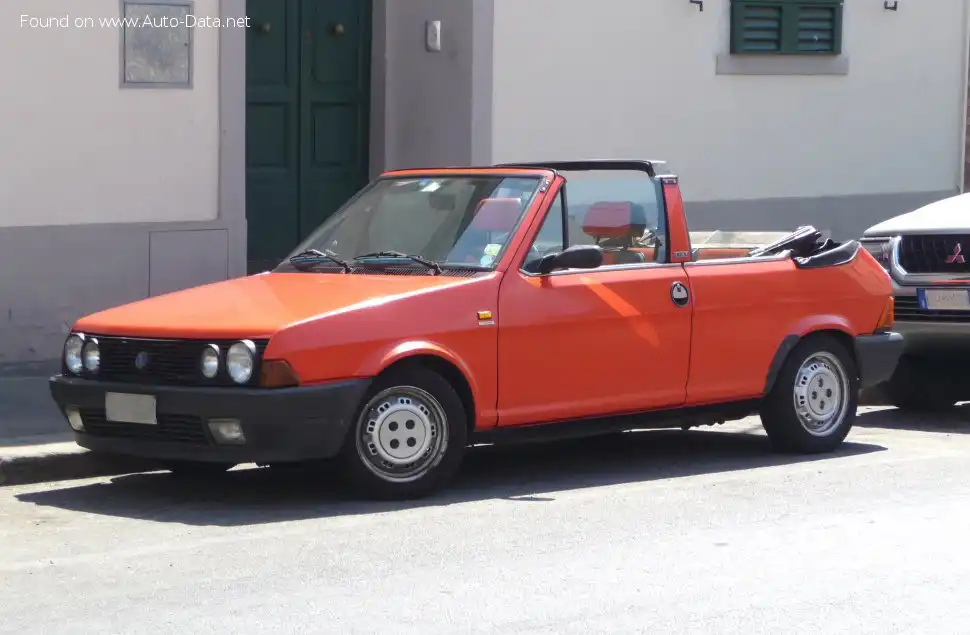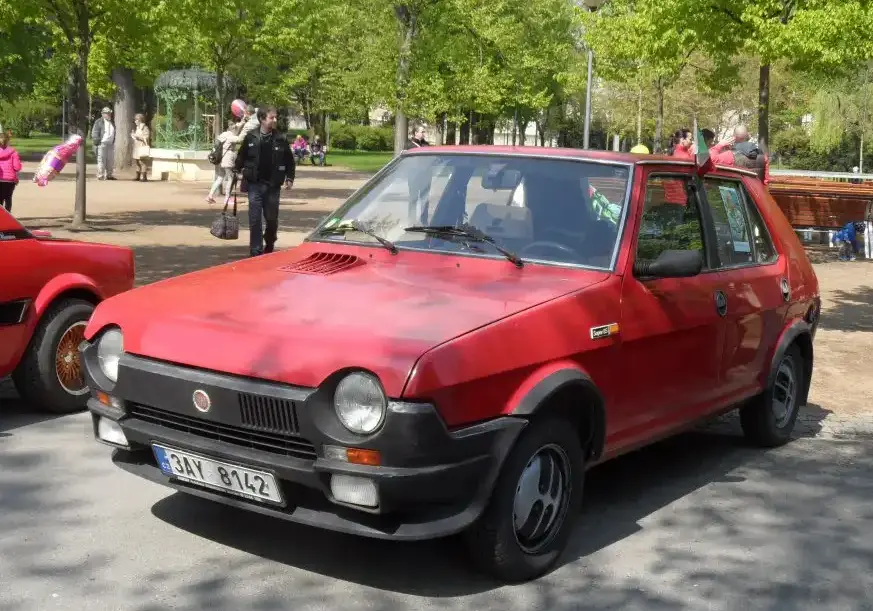
The Fiat Ritmo 60 1.0, produced between 1978 and 1982, represents the entry-level variant of the Ritmo (Type 138A) hatchback. Launched as Fiat’s replacement for the aging 128, the Ritmo aimed to offer a modern, spacious, and practical family car. The 60 1.0 model, powered by a 1.0-liter engine producing 60 horsepower, was specifically targeted at buyers seeking economical transportation and served as the foundation of the Ritmo range. It played a crucial role in establishing the Ritmo’s presence in the European market, particularly in Italy, where it competed with vehicles like the Renault 5 and Volkswagen Polo.
Technical Specifications
| Brand | Fiat |
| Model | Ritmo |
| Generation | Ritmo I (138A) |
| Type (Engine) | 60 1.0 (60 Hp) |
| Start of production | 1978 |
| End of production | 1982 |
| Powertrain Architecture | Internal Combustion Engine |
| Body type | Hatchback |
| Fuel Type | Petrol (Gasoline) |
| Power | 60 Hp |
| Engine Model/Code | 127 A6.000 |
| Engine aspiration | Naturally Aspirated |
Powertrain & Engine Architecture
The heart of the Ritmo 60 1.0 is the Fiat 127 A6.000 engine, a 999cc inline-four cylinder unit. This engine, derived from the successful 127 model, is a naturally aspirated, overhead valve (OHV) design. It features a single overhead camshaft operating two valves per cylinder. Fuel delivery is managed by a single, down-draft Weber carburetor, a common setup for European economy cars of the era. The engine’s relatively simple design prioritized reliability and ease of maintenance over outright performance. The 127 A6.000 engine produced 60 horsepower at 6000 rpm and approximately 59 lb-ft of torque at 4000 rpm. The engine block is cast iron, while the cylinder head is aluminum, contributing to a reasonable weight for its size.
The Ritmo 60 1.0 was typically paired with a four-speed manual transmission, although a three-speed automatic transmission was offered as an option, albeit less common. The automatic transmission, while providing convenience, further reduced acceleration performance. The transmission is a conventional design, with synchromesh on all forward gears. The final drive is a standard hypoid gear set.
Driving Characteristics
The Ritmo 60 1.0 offered modest performance, geared towards urban driving and economical commuting. With 60 horsepower propelling a vehicle weighing around 1,800 lbs, acceleration was leisurely. Zero to sixty mph times were typically in the 14-16 second range. The four-speed manual transmission allowed drivers to make the most of the engine’s limited power, while the optional automatic transmission resulted in even slower acceleration. The gear ratios were relatively tall, prioritizing fuel efficiency over rapid acceleration. The Ritmo’s suspension, consisting of independent front suspension with MacPherson struts and a twist-beam rear axle, provided a comfortable ride, absorbing bumps and imperfections in the road reasonably well. Handling was predictable, but not particularly sporty. Compared to the more powerful 1.6-liter versions of the Ritmo, the 60 1.0 felt significantly slower and less engaging to drive. However, its lighter weight and simpler mechanicals made it more nimble in tight urban environments.
Equipment & Trim Levels
The Ritmo 60 1.0 was the base model, and as such, it featured a relatively sparse equipment list. Standard features typically included cloth upholstery, vinyl floor covering, and basic instrumentation consisting of a speedometer, fuel gauge, and temperature gauge. The steering wheel was a simple two-spoke design. Exterior features included steel wheels with hubcaps, black plastic bumpers, and chrome trim around the windows. Optional extras included a radio, upgraded upholstery, and a sunroof. The interior was functional and durable, designed to withstand the rigors of daily use. The dashboard layout was straightforward, with all controls within easy reach of the driver.
Chassis & Braking
The Ritmo’s chassis was a monocoque construction, providing a good balance of strength and weight. The front suspension utilized MacPherson struts, offering independent wheel control and a comfortable ride. The rear suspension employed a twist-beam axle, a cost-effective and space-efficient design. Braking on the Ritmo 60 1.0 typically consisted of front disc brakes and rear drum brakes. The braking system was hydraulically operated, providing adequate stopping power for the vehicle’s weight and performance. Steering was a rack-and-pinion system, offering precise and responsive control. The Ritmo’s relatively simple chassis design contributed to its affordability and ease of maintenance.
Market Reception & Comparison
The Ritmo 60 1.0 was generally well-received as an affordable and practical family car. Critics praised its spacious interior, comfortable ride, and fuel efficiency. However, its modest performance was often criticized. Compared to the more powerful Ritmo variants, such as the 1.6-liter models, the 60 1.0 lacked the punch needed for spirited driving. However, it offered a lower purchase price and better fuel economy, making it an attractive option for budget-conscious buyers. The 60 1.0 typically achieved fuel economy figures in the range of 35-40 mpg, making it a relatively economical car to operate. Compared to rivals like the Renault 5 and Volkswagen Polo, the Ritmo 60 1.0 offered a similar level of practicality and affordability, with a slightly more spacious interior.
Legacy
The Ritmo 60 1.0, while not the most exciting version of the Ritmo, played a vital role in establishing the model’s success. Its affordability and fuel efficiency made it a popular choice for first-time car buyers and families on a budget. The 127 A6.000 engine proved to be a reliable and durable unit, and many examples of the Ritmo 60 1.0 are still on the road today. In the used car market, the Ritmo 60 1.0 is often sought after by enthusiasts looking for a classic Italian hatchback. Its simplicity and affordability make it an easy car to maintain and repair. While parts availability can be a challenge, many components are still available from specialist suppliers. The Ritmo 60 1.0 represents a significant piece of automotive history, embodying the spirit of affordable and practical transportation in 1970s and early 1980s Europe.