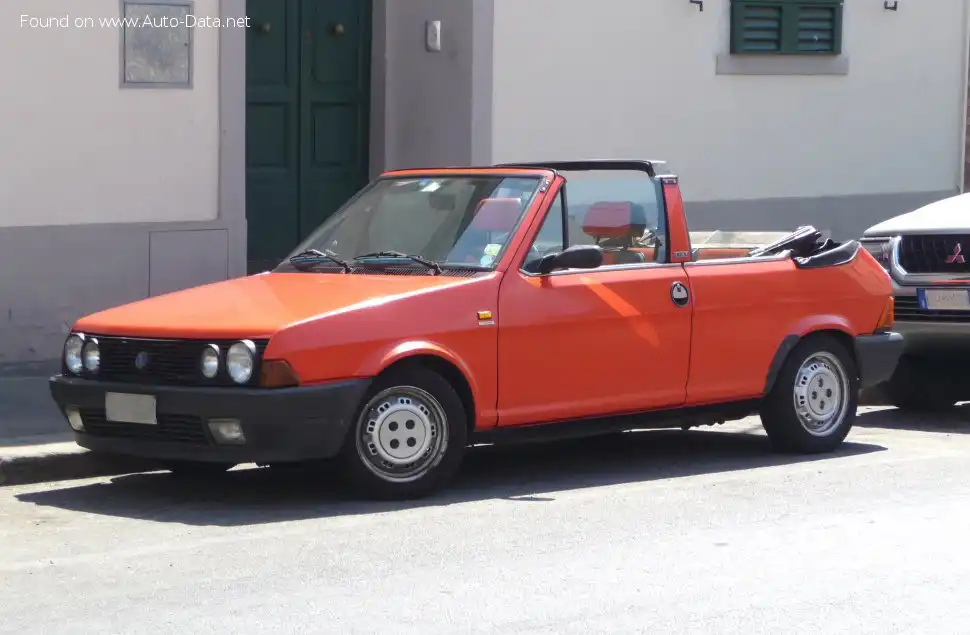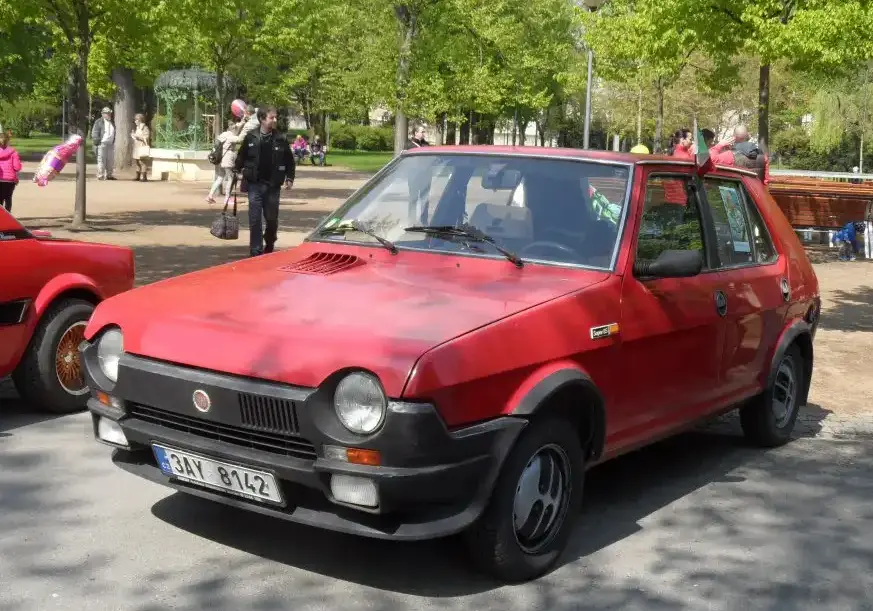
The Fiat Ritmo 70 1.3, produced between 1983 and 1985, represents an entry-level variant of the Ritmo (Type 138) hatchback. Introduced as a more affordable option within the Ritmo range, it aimed to broaden the car’s appeal to budget-conscious buyers in Europe. The Ritmo, designed by the renowned Italian design house Bertone, was Fiat’s attempt to modernize its small family car offerings and compete with rivals like the Volkswagen Golf and Opel Kadett. The 70 1.3 model, with its modest 65 horsepower engine, occupied the base trim level, offering a practical and economical mode of transportation.
Technical Specifications
| Brand | Fiat |
| Model | Ritmo |
| Generation | Ritmo I (138A) |
| Type (Engine) | 70 1.3 (65 Hp) |
| Start of Production | 1983 |
| End of Production | 1985 |
| Powertrain Architecture | Internal Combustion Engine |
| Body Type | Hatchback |
| Fuel Type | Petrol (Gasoline) |
| Power | 65 Hp |
| Engine Model/Code | 138 B2.000 |
| Engine Aspiration | Naturally Aspirated |
| Engine Oil Capacity | 4.1 l (4.33 US qt | 3.61 UK qt) |
| Coolant Capacity | 7 l (7.4 US qt | 6.16 UK qt) |
Powertrain & Engine Architecture
The Fiat Ritmo 70 1.3 was powered by the 138 B2.000 engine, a 1301cc inline-four cylinder petrol engine. This engine was a relatively simple design, featuring a single overhead camshaft (SOHC) operating two valves per cylinder. Fuel delivery was managed by a Weber 32 ADFA carburetor, a common setup for European cars of this era aiming for affordability and ease of maintenance. The engine’s modest output of 65 horsepower at 6000 rpm and 86 lb-ft of torque at 3600 rpm was achieved through a relatively low compression ratio of 8.8:1. The engine block was cast iron, while the cylinder head was aluminum, contributing to a reasonable weight for its size. The Ritmo 70 1.3 was typically paired with a four-speed manual transmission, although a three-speed automatic transmission was also available, albeit less common. The automatic transmission, a Fiat-sourced unit, was known for its simplicity but also for its relatively slow shift times and tendency to hunt for gears, especially under load.
Driving Characteristics
The driving experience in the Ritmo 70 1.3 was characterized by its practicality and ease of use rather than outright performance. With 65 horsepower propelling a car weighing around 1,800 lbs, acceleration was leisurely. Zero to sixty mph times were in the 14-15 second range. The four-speed manual transmission allowed drivers to make the most of the engine’s limited power, while the optional automatic, while convenient, noticeably dulled acceleration. The Ritmo’s suspension, consisting of MacPherson struts at the front and a twist-beam axle at the rear, provided a comfortable ride, absorbing bumps and imperfections in the road reasonably well. However, the car’s handling was not particularly sharp, with noticeable body roll in corners. The steering was light and easy, making it well-suited for city driving. Compared to the more powerful Ritmo 100 TC, which featured a fuel-injected 1.6-liter engine, the 70 1.3 felt significantly underpowered. The 100 TC offered a much more engaging driving experience, with noticeably quicker acceleration and improved handling.
Equipment & Trim Levels
The Ritmo 70 1.3 was positioned as the entry-level model, and its equipment level reflected this. Standard features typically included cloth upholstery, vinyl floor covering, and basic instrumentation consisting of a speedometer, fuel gauge, and temperature gauge. The dashboard was constructed from durable plastic and featured a simple, functional design. Power steering and central locking were not typically included as standard equipment on this trim level, but were available as optional extras. The exterior featured steel wheels with hubcaps, black plastic bumpers, and relatively basic trim. Optional extras included a radio, upgraded upholstery, and tinted glass. The interior space was reasonably generous for a car of its size, offering comfortable seating for four adults. The rear seats could be folded down to increase luggage capacity, providing added versatility.
Chassis & Braking
The Ritmo 70 1.3 utilized a relatively conventional chassis design for the early 1980s. The front suspension employed MacPherson struts with coil springs and an anti-roll bar, while the rear suspension featured a twist-beam axle with coil springs. The braking system consisted of disc brakes at the front and drum brakes at the rear. The brakes were adequate for the car’s performance, but lacked the stopping power of more modern systems. The steering was a rack-and-pinion system, providing light and easy steering feel. The Ritmo’s wheelbase was 94.5 inches, and its track width was approximately 56.3 inches. The car’s relatively lightweight construction contributed to its decent handling characteristics, despite its simple suspension design.
Market Reception & Comparison
The Fiat Ritmo 70 1.3 was generally well-received as an affordable and practical small family car. Critics praised its comfortable ride, spacious interior, and fuel efficiency. However, it was also criticized for its lack of performance and its somewhat dated design. Compared to rivals like the Volkswagen Golf and Opel Kadett, the Ritmo 70 1.3 offered a lower price point but lacked the refinement and performance of those models. Fuel economy was a strong point, with the Ritmo 70 1.3 achieving around 35-40 mpg in mixed driving conditions. Reliability was generally good, although the carburetor required periodic adjustment and maintenance. The automatic transmission, when equipped, was often criticized for its sluggishness and tendency to contribute to higher fuel consumption.
Legacy
The Fiat Ritmo 70 1.3, while not a particularly groundbreaking vehicle, played an important role in Fiat’s lineup during the early 1980s. It provided an affordable entry point into the Ritmo range, attracting budget-conscious buyers. Today, the Ritmo 70 1.3 is a relatively rare sight on the roads, but it has gained a following among classic car enthusiasts. The 138 B2.000 engine is known for its durability and relative simplicity, making it a relatively easy engine to maintain and repair. Parts availability can be a challenge, but many components are still available through specialist suppliers. The Ritmo 70 1.3 represents a snapshot of 1980s European motoring, offering a glimpse into a time when practicality and affordability were prioritized over outright performance and luxury. Well-maintained examples are increasingly sought after by collectors and enthusiasts looking for a charming and affordable classic hatchback.