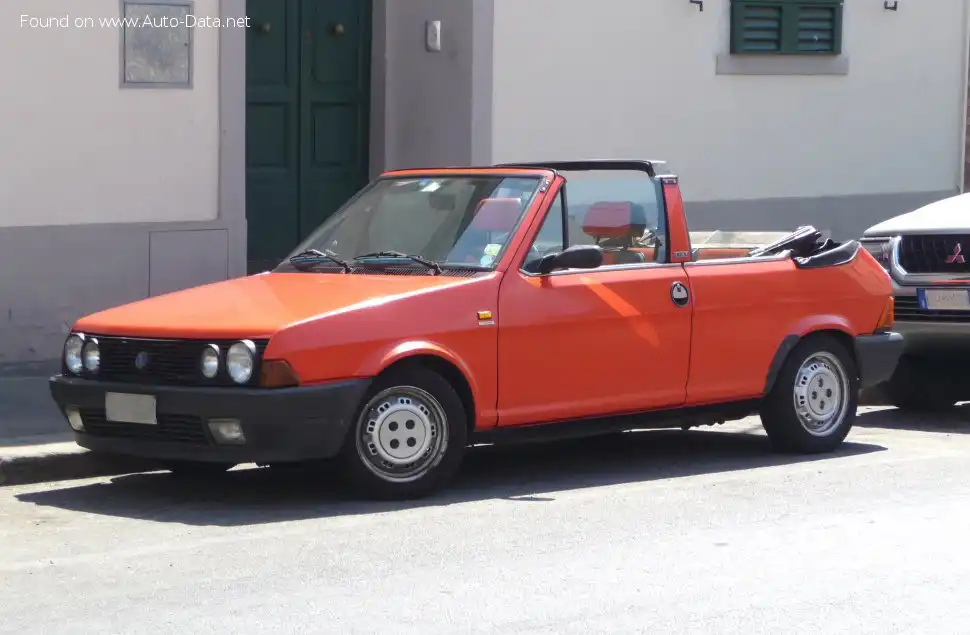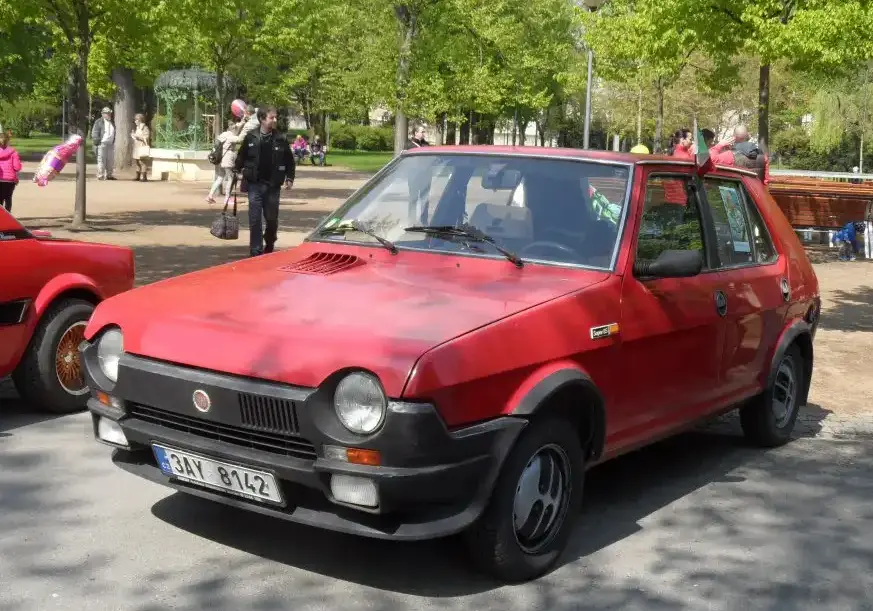
The Fiat Ritmo 85 1.5, produced between 1981 and 1982, represents a mid-range offering within the first generation (138A) of the Ritmo series. Introduced as a more potent alternative to the base models, it aimed to bridge the gap between affordability and performance in the European hatchback market. The Ritmo, designed by the renowned Italian design house Bertone under the leadership of Marcello Gandini, was Fiat’s attempt to modernize its compact car lineup and compete with rivals like the Volkswagen Golf and Renault 5. This particular 85 1.5 variant, with its increased horsepower, offered a more engaging driving experience while still maintaining the Ritmo’s reputation for practicality and relatively low running costs.
Technical Specifications
| Brand | Fiat |
| Model | Ritmo |
| Generation | Ritmo I (138A) |
| Type (Engine) | 85 1.5 (85 Hp) |
| Start of production | 1981 |
| End of production | 1982 |
| Powertrain Architecture | Internal Combustion engine |
| Body type | Hatchback |
| Fuel Type | Petrol (Gasoline) |
| Power | 85 Hp |
| Engine Model/Code | 138 A4.000 |
| Engine aspiration | Naturally aspirated engine |
Powertrain & Engine Architecture
The heart of the Ritmo 85 1.5 is the 138 A4.000 engine, a 1.5-liter inline-four cylinder gasoline engine. This engine is a naturally aspirated unit, meaning it doesn’t employ forced induction like a turbocharger or supercharger. It features a single overhead camshaft (SOHC) valvetrain operating two valves per cylinder. Fuel delivery is managed by a Weber 32 ADFA carburetor, a common setup for European cars of this era. The carburetor provides a relatively simple and cost-effective method of fuel atomization, though less precise than later fuel injection systems. The engine’s 85 horsepower output is achieved at 6000 rpm, while peak torque of approximately 116 Nm (86 lb-ft) arrives at 4000 rpm. The engine block is cast iron, providing durability, while the cylinder head is aluminum, helping to reduce weight. The Ritmo 85 1.5 was typically paired with a four-speed manual transmission, although a three-speed automatic transmission was also available, albeit less common. The automatic transmission, while offering convenience, did impact acceleration and fuel economy compared to the manual counterpart.
Driving Characteristics
The Ritmo 85 1.5 offered a noticeable step up in performance compared to the lower-powered versions. While not a sports car by any means, the 85 horsepower engine provided adequate acceleration for everyday driving and even allowed for reasonably brisk progress on open roads. The four-speed manual transmission allowed drivers to keep the engine in its optimal power band, resulting in a more responsive feel. The automatic transmission, while smooth, resulted in slower acceleration times and a less engaging driving experience. Gear ratios were relatively tall, prioritizing fuel economy over outright performance. Handling was typical for a front-wheel-drive hatchback of the early 1980s – safe and predictable, but not particularly sporty. The suspension, consisting of MacPherson struts at the front and a twist-beam axle at the rear, provided a comfortable ride, absorbing bumps and imperfections in the road surface reasonably well. Steering was unassisted, requiring a bit more effort at low speeds but providing a direct connection to the road.
Equipment & Trim Levels
The Ritmo 85 1.5 occupied a mid-range position in the Ritmo lineup. As such, it came equipped with a reasonable level of standard features. Interior appointments typically included cloth upholstery, a basic dashboard layout with analog gauges, and vinyl floor coverings. The steering wheel was a two-spoke design, and the seats offered moderate comfort. Optional extras included a sunroof, upgraded stereo system, and metallic paint finishes. The Ritmo 85 1.5 generally featured body-colored bumpers and door handles, distinguishing it from the more basic models. The instrument cluster included a speedometer, fuel gauge, and temperature gauge, with warning lights for essential systems. Air conditioning was a relatively rare option, even for this trim level.
Chassis & Braking
The Ritmo’s chassis was a monocoque construction, providing a good balance of strength and weight. The front suspension utilized MacPherson struts with coil springs and an anti-roll bar, while the rear suspension employed a twist-beam axle with coil springs. Braking on the Ritmo 85 1.5 typically consisted of disc brakes at the front and drum brakes at the rear. The size of the brakes was adequate for the vehicle’s weight and performance, providing reasonable stopping power. Power steering was not standard on this model, requiring manual effort for steering. Tire size was typically 175/70 R14, providing a good compromise between ride comfort and handling. The Ritmo’s wheelbase was relatively short, contributing to its nimble handling characteristics.
Market Reception & Comparison
The Ritmo 85 1.5 was generally well-received by automotive critics as a practical and affordable hatchback with a decent level of performance. It was seen as a more appealing option than the base models, offering a more enjoyable driving experience without a significant price premium. Compared to rivals like the Volkswagen Golf, the Ritmo was often praised for its stylish design and comfortable ride, but criticized for its somewhat basic interior and less refined engine. Against the Renault 5, the Ritmo offered more interior space and a more powerful engine, but was generally considered less sporty to drive. Fuel economy was respectable for the time, averaging around 35-40 mpg in mixed driving conditions. Reliability was generally good, although the Weber carburetor could sometimes require adjustment to maintain optimal performance. The automatic transmission versions were often criticized for their sluggishness and reduced fuel efficiency.
Legacy
The Fiat Ritmo, and specifically the 85 1.5 variant, holds a nostalgic place in the hearts of many European car enthusiasts. While not a groundbreaking vehicle in terms of technology or performance, it represented a significant step forward for Fiat in terms of design and practicality. The 138 A4.000 engine proved to be a relatively durable and reliable unit, and many examples are still on the road today. In the used car market, the Ritmo 85 1.5 is considered a relatively affordable classic, appealing to those seeking a stylish and characterful hatchback from the 1980s. Parts availability can be a challenge, but a dedicated community of enthusiasts helps to keep these cars running. The Ritmo paved the way for future Fiat models, influencing the design and engineering of subsequent generations of compact hatchbacks.