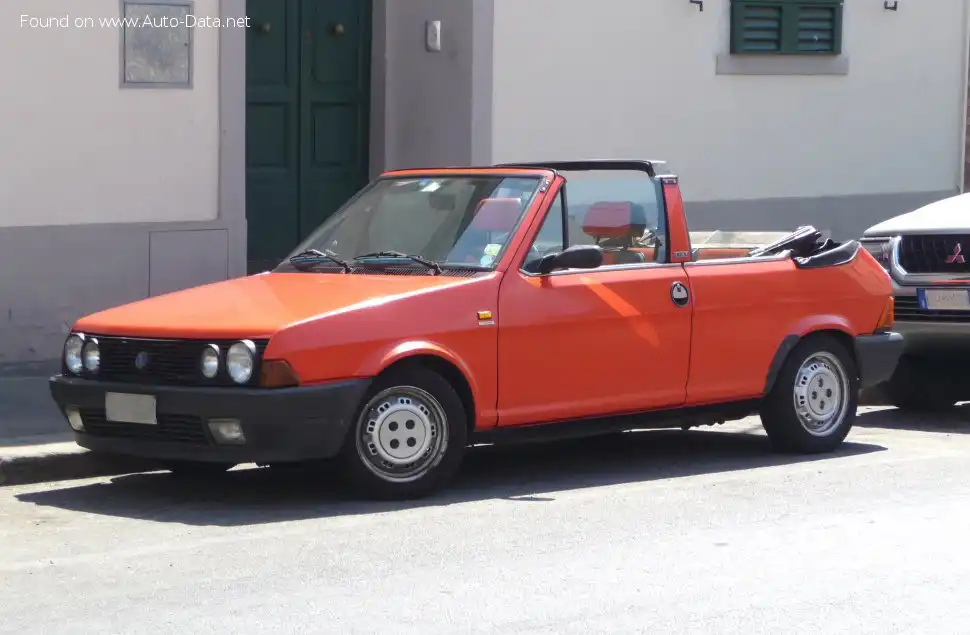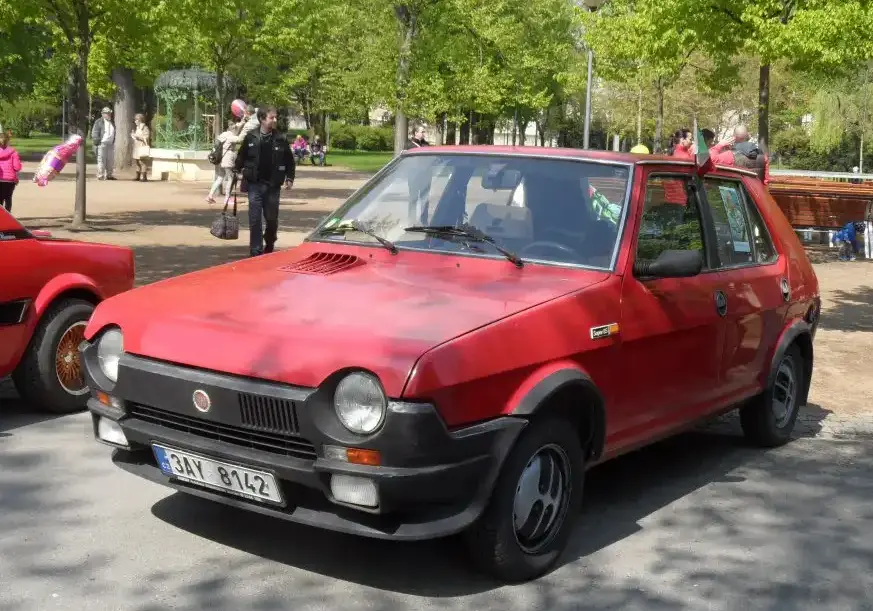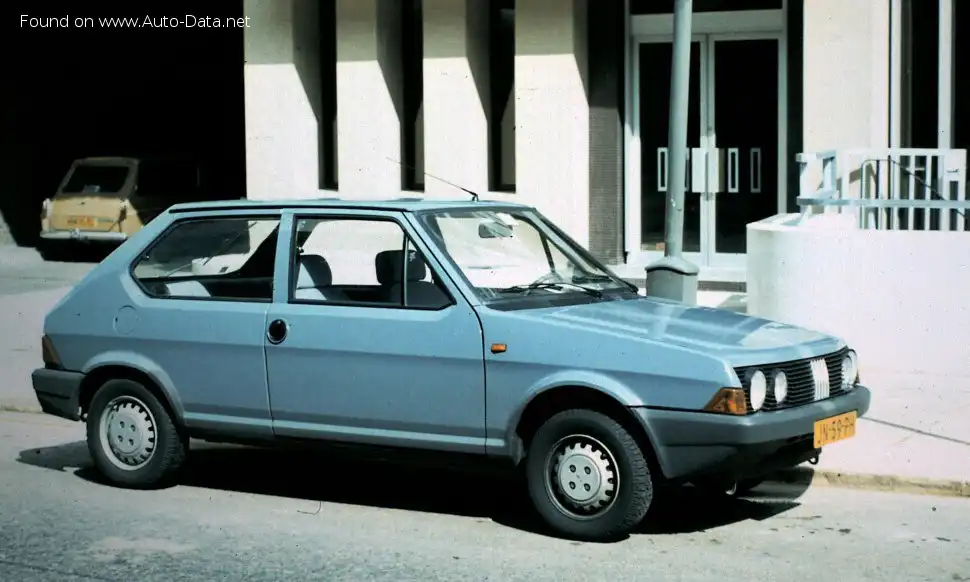
The Fiat Ritmo I (138A, facelift 1982) 130 TC Abarth 2.0, produced between 1983 and 1987, represented the performance pinnacle of the Ritmo range. Positioned as the sportiest variant of the first-generation Ritmo, it aimed to deliver a more engaging driving experience than the standard models. The Ritmo, designed by Mario Bellini, was Fiat’s attempt to modernize its compact offerings and compete with rivals like the Volkswagen Golf and Opel Kadett. The 130 TC Abarth 2.0, with its larger engine and Abarth tuning, was a relatively niche model, appealing to enthusiasts seeking a spirited and stylish hatchback.
Technical Specifications
| Brand | Fiat |
| Model | Ritmo |
| Generation | Ritmo I (138A, facelift 1982) |
| Type (Engine) | 130 TC Abarth 2.0 (130 Hp) |
| Start of production | 1983 |
| End of production | 1987 |
| Powertrain Architecture | Internal Combustion engine |
| Body type | Coupe |
| Doors | 3 |
| Fuel Type | Petrol (Gasoline) |
| Power | 130 Hp @ 6700 rpm |
| Power per litre | 65 Hp/l |
| Engine layout | Front, Transverse |
| Engine Model/Code | 138AR2.000 B |
| Engine displacement | 2000 cm3 / 122.05 cu. in. |
| Number of cylinders | 4 |
| Engine configuration | Inline |
| Compression ratio | 11.2:1 |
| Number of valves per cylinder | 4 |
| Fuel injection system | Carburettor |
| Engine aspiration | Naturally aspirated engine |
| Valvetrain | DOHC |
| Engine oil capacity | 4.4 l / 4.65 US qt | 3.87 UK qt |
| Coolant | 7.5 l / 7.93 US qt | 6.6 UK qt |
| Drivetrain Architecture | The Internal combustion engine (ICE) drives the front wheels of the vehicle. |
| Drive wheel | Front wheel drive |
| Number of gears and type of gearbox | 5 gears, manual transmission |
| Front suspension | Independent type McPherson |
| Rear suspension | Coil spring |
| Front brakes | Ventilated discs |
| Rear brakes | Drum |
| Steering type | Steering rack and pinion |
Powertrain & Engine Architecture
The heart of the 130 TC Abarth 2.0 was the 138AR2.000 B engine, a 1995cc inline-four cylinder unit. This engine was derived from the Fiat twin-cam design, featuring a dual overhead camshaft (DOHC) valvetrain – a relatively sophisticated setup for its time. Unlike later fuel-injected versions, the 130 TC Abarth utilized a Weber 32 ADFA carburetor, which, while offering simplicity, required more careful tuning and was less efficient than modern fuel injection systems. The 11.2:1 compression ratio contributed to the engine’s respectable 130 horsepower output at 6700 rpm. The engine’s transverse mounting and front-wheel drive configuration were typical of European hatchbacks of the era, maximizing interior space and improving traction in adverse conditions. The five-speed manual transmission was the only gearbox option available, geared to complement the engine’s powerband.
Driving Characteristics
The 130 TC Abarth 2.0 offered a noticeably more engaging driving experience than the lower-spec Ritmo models. The increased power and torque allowed for quicker acceleration and a higher top speed. While not a true sports car, the Ritmo Abarth provided a lively and responsive feel, particularly on winding roads. The five-speed gearbox allowed drivers to keep the engine within its optimal power range. Compared to the more economical 1.3 or 1.5 liter versions, the 2.0 liter engine demanded more driver involvement and offered a more visceral experience. The front-wheel drive layout, while providing good traction, could exhibit torque steer under hard acceleration. The steering, utilizing a rack and pinion system, was reasonably precise, though lacking the feedback of some contemporary rivals.
Equipment & Trim Levels
The 130 TC Abarth 2.0 was generally well-equipped for its time, though it wasn’t a luxury vehicle. Standard features typically included cloth upholstery, a basic instrument cluster with a tachometer, and a sporty three-spoke steering wheel. The interior design was functional and relatively minimalist, reflecting the Ritmo’s overall focus on practicality and affordability. Optional extras could include upgraded audio systems, alloy wheels (often Abarth-branded), and a sunroof. The Abarth designation also included some subtle exterior styling enhancements, such as a rear spoiler and unique badging. The interior trim was generally dark colored, with a focus on durability rather than lavishness.
Chassis & Braking
The Ritmo’s chassis featured an independent McPherson strut suspension at the front, providing a comfortable ride and decent handling. The rear suspension utilized a coil spring setup. The 130 TC Abarth 2.0 benefited from a slightly stiffer suspension tuning compared to the standard models, reducing body roll and improving cornering stability. Braking duties were handled by ventilated discs at the front and drum brakes at the rear. While adequate for normal driving, the braking system wasn’t particularly powerful by modern standards. The Ritmo’s relatively lightweight construction helped to offset the limitations of the braking system. Stabilizer bars were fitted to both the front and rear axles to further enhance handling.
Market Reception & Comparison
The Fiat Ritmo 130 TC Abarth 2.0 was generally well-received by automotive journalists, who praised its lively performance and sporty handling. However, some critics noted the carburetor’s impact on fuel economy and emissions. Compared to other hot hatchbacks of the era, such as the Volkswagen Golf GTI, the Ritmo Abarth offered a slightly different character – less refined but arguably more characterful. The Ritmo Abarth was often seen as a more affordable alternative to the Golf GTI, appealing to buyers who prioritized performance over luxury. Reliability was generally good, though the carburetor required periodic adjustment and maintenance. Fuel economy, while not terrible, was lower than that of the smaller-engined Ritmo models.
Legacy
The Fiat Ritmo 130 TC Abarth 2.0 remains a fondly remembered classic among Fiat enthusiasts. The 138AR2.000 B engine, while not known for exceptional longevity, is generally robust when properly maintained. Today, finding a well-preserved example can be challenging, as many have succumbed to rust or been modified over the years. The Ritmo Abarth’s relative rarity and its status as the performance leader of the Ritmo range have contributed to its increasing collectibility. Parts availability can be an issue, though many components are still available through specialist Fiat parts suppliers. The Ritmo Abarth represents a significant chapter in Fiat’s history, showcasing the company’s ability to produce engaging and affordable performance cars.