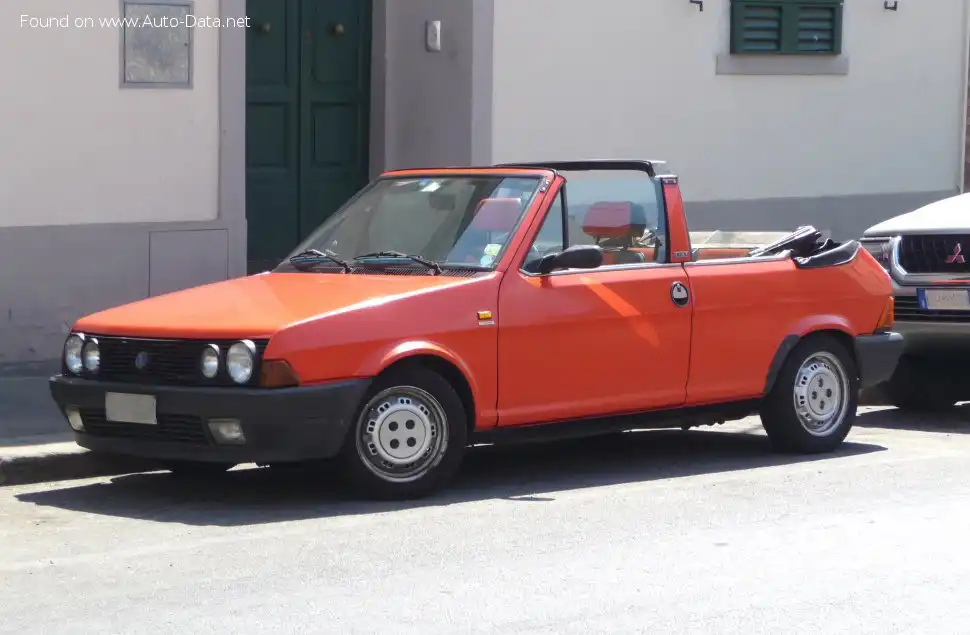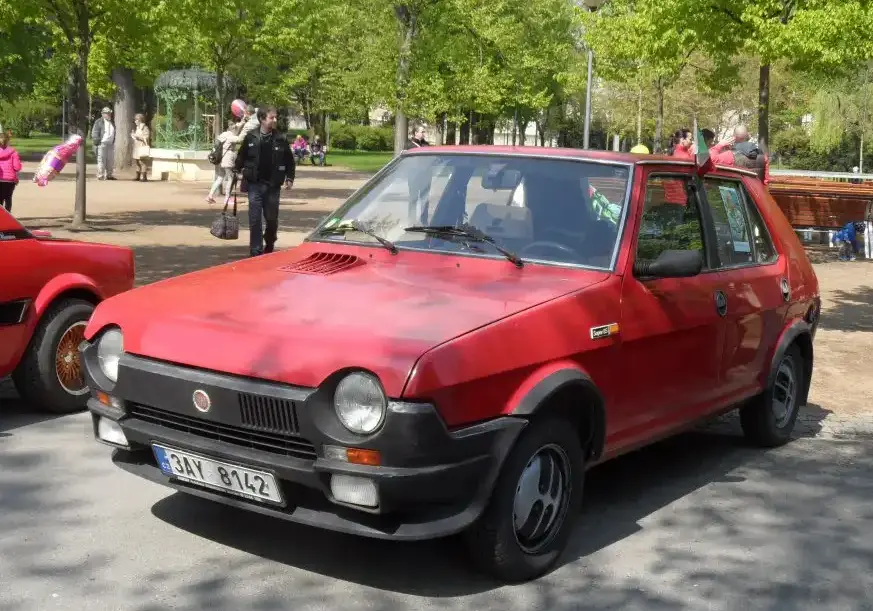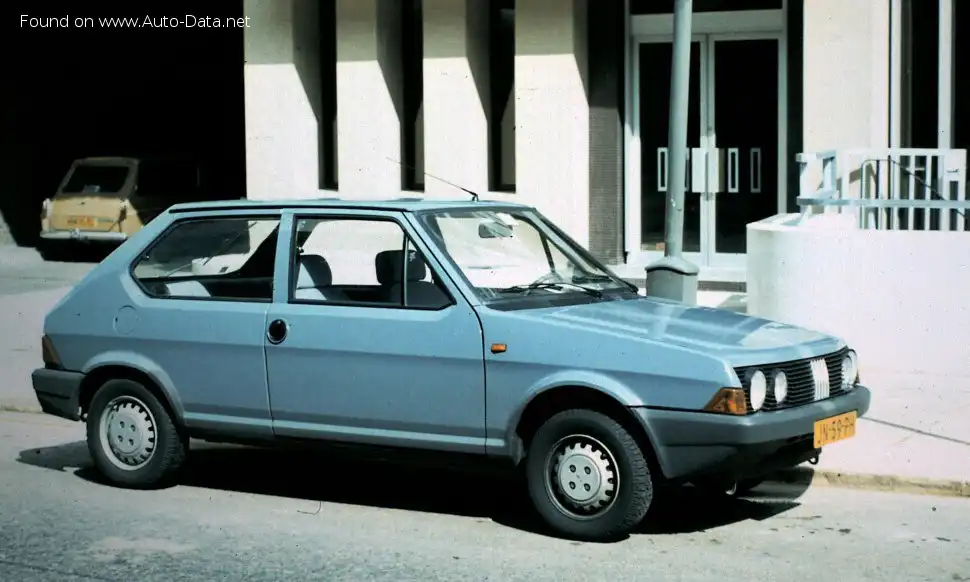
The Fiat Ritmo 60 1.1, produced from 1982 to 1985, represents an entry-level variant of the Ritmo (Type 138) family. Introduced as part of the facelifted Ritmo I series (138A), this model aimed to provide affordable and economical transportation within the European market. Positioned as the base trim, it offered a more accessible price point compared to the higher-specification 75 and 105 models. The Ritmo, designed by Aldo Sessano, was intended to modernize Fiat’s offerings and compete with rivals like the Volkswagen Golf and Renault 5. The 60 1.1, with its modest power output, was geared towards drivers prioritizing fuel efficiency and ease of use over outright performance.
Technical Specifications
| Brand | Fiat |
| Model | Ritmo |
| Generation | Ritmo I (138A, facelift 1982) |
| Type (Engine) | 60 1.1 (55 Hp) |
| Start of production | 1982 |
| End of production | 1985 |
| Powertrain Architecture | Internal Combustion engine |
| Body type | Coupe |
| Fuel Type | Petrol (Gasoline) |
| Power | 55 Hp |
| Engine Model/Code | 138 B1.000 |
| Engine aspiration | Naturally aspirated engine |
| Engine oil capacity | 4.1 l (4.33 US qt | 3.61 UK qt) |
| Coolant capacity | 6.5 l (6.87 US qt | 5.72 UK qt) |
Powertrain & Engine Architecture
The heart of the Ritmo 60 1.1 is the 138 B1.000 engine, a 1.1-liter (1043 cc) inline-four cylinder petrol engine. This engine utilizes a naturally aspirated configuration, meaning it doesn’t employ a turbocharger or supercharger. It features a single overhead camshaft (SOHC) valvetrain operating two valves per cylinder. Fuel delivery is managed by a Weber 32 ADFA carburetor, a common setup for European cars of this era aiming for cost-effectiveness. The engine produces 55 horsepower (41 kW) at 5800 rpm and approximately 69 lb-ft (94 Nm) of torque at 3600 rpm. The engine is paired with a three-speed automatic transmission, a relatively uncommon option for this class of vehicle at the time, and one that contributed to the Ritmo 60 1.1’s focus on ease of driving. The automatic transmission was designed to provide smooth, if not particularly rapid, gear changes, prioritizing comfort over performance.
Driving Characteristics
The Ritmo 60 1.1’s driving experience is best described as utilitarian. The 55 hp engine, coupled with the three-speed automatic, results in modest acceleration. Zero to sixty mph times were in the 14-15 second range, making it noticeably slower than the manual transmission versions or the more powerful 75 and 105 models. The automatic transmission’s gear ratios are geared towards fuel economy, with a relatively tall final drive. This means that while highway cruising is acceptable, overtaking maneuvers require careful planning. The steering is light and relatively precise, making it easy to maneuver in urban environments. However, the suspension, while comfortable, can feel somewhat soft and prone to body roll during cornering. Compared to the manual versions, the automatic Ritmo 60 1.1 feels less engaging to drive, but it offers a more relaxed experience for drivers unfamiliar or uninterested in manual gear changes.
Equipment & Trim Levels
As the entry-level model, the Ritmo 60 1.1 came equipped with a fairly basic set of features. Standard equipment typically included cloth upholstery, vinyl floor covering, and a simple dashboard layout. The instrument cluster featured a speedometer, fuel gauge, and temperature gauge. Power steering was not standard, and air conditioning was rarely fitted. Optional extras included a radio, upgraded upholstery, and tinted glass. The interior trim was generally functional and durable, reflecting the car’s focus on affordability. The exterior featured steel wheels with hubcaps, black plastic bumpers, and relatively simple body trim. The Ritmo 60 1.1 was often seen as a practical and economical choice for first-time car buyers or those seeking a reliable city car.
Chassis & Braking
The Ritmo 60 1.1 utilizes a front-engine, front-wheel-drive layout. The suspension consists of independent front suspension with MacPherson struts and a twist-beam rear axle. The braking system is comprised of disc brakes on the front wheels and drum brakes on the rear wheels. The braking performance is adequate for everyday driving, but it lacks the stopping power of more modern vehicles. The Ritmo’s chassis was designed to provide a balance between comfort and handling. The relatively lightweight construction of the 60 1.1 helps to mitigate the effects of the modest engine power. Stabilizer bars were not standard on the base model, contributing to the car’s tendency to roll in corners.
Market Reception & Comparison
The Ritmo 60 1.1 received mixed reviews from automotive critics. While praised for its affordability and fuel economy, it was often criticized for its lack of performance and basic interior. Compared to the more powerful Ritmo 75 and 105 models, the 60 1.1 felt underpowered and less refined. However, it offered a lower price point, making it accessible to a wider range of buyers. Fuel economy was a strong point, with the 1.1-liter engine achieving around 35-40 mpg in real-world driving conditions. Reliability was generally good, although the carburetor required periodic adjustment and maintenance. The automatic transmission, while convenient, was sometimes criticized for its sluggishness and lack of responsiveness.
Legacy
The Fiat Ritmo 60 1.1, while not a performance icon, played a significant role in providing affordable transportation to European drivers during the early 1980s. The 138 B1.000 engine proved to be a relatively durable and reliable unit, and many examples are still on the road today. In the used car market, the Ritmo 60 1.1 is often sought after by enthusiasts looking for a classic Italian car with simple mechanics. Parts availability can be a challenge, but many components are still available through specialist suppliers. The automatic transmission version is less common than the manual, making it a potentially more desirable collector’s item. The Ritmo 60 1.1 represents a snapshot of a bygone era of automotive design, prioritizing practicality and affordability over outright performance and luxury.