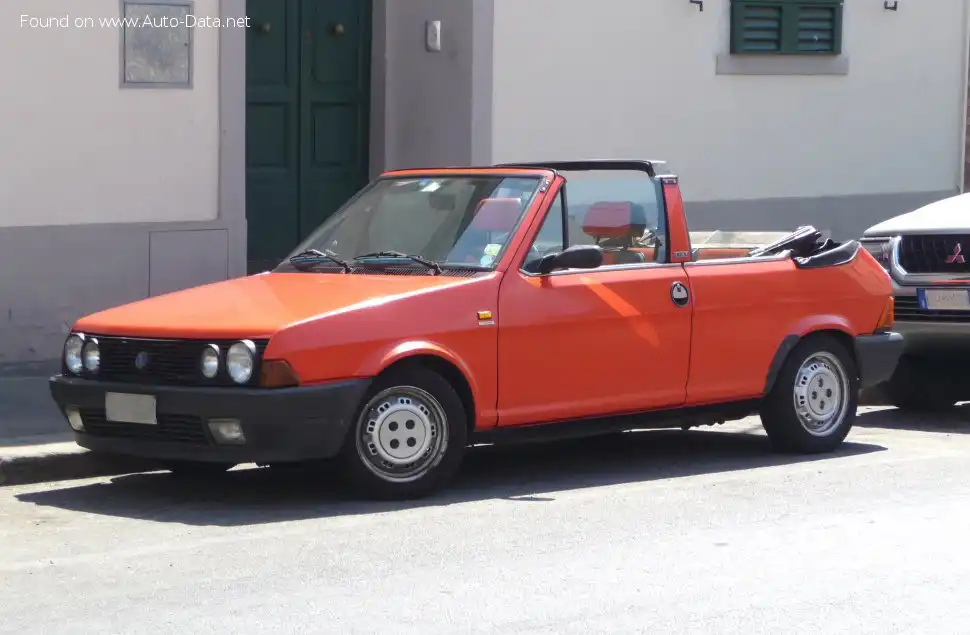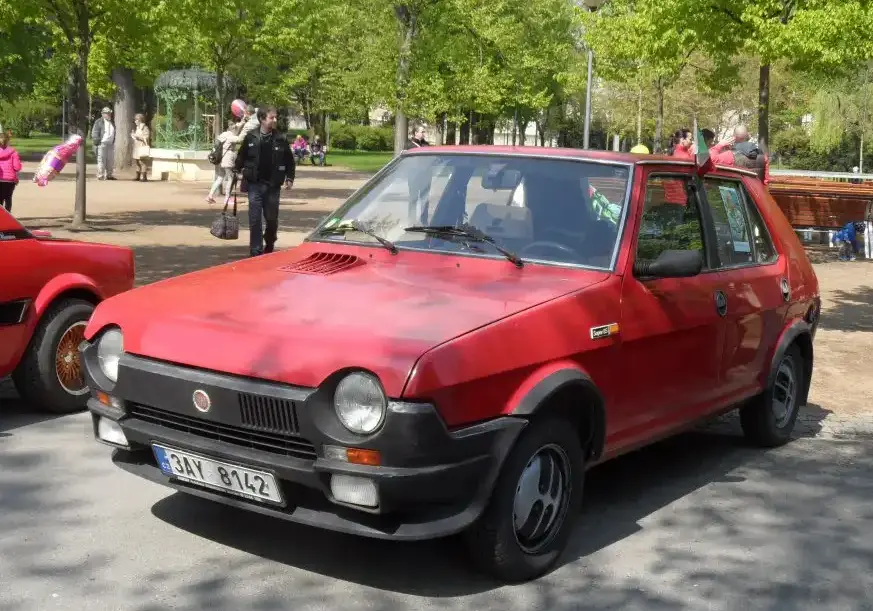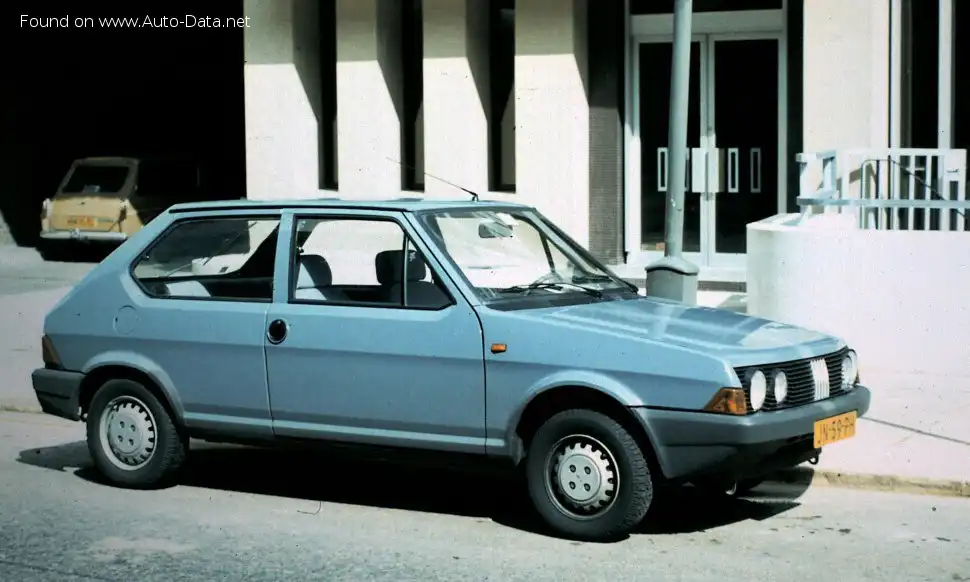
The Fiat Ritmo 60 1.1, produced from 1985 to 1987, represents an entry-level variant of the Ritmo I (138A) series, following the 1982 facelift. Positioned as the most accessible model in the Ritmo lineup, it aimed to provide affordable transportation within the European market, particularly appealing to first-time car buyers and those seeking a compact, economical vehicle. The Ritmo, designed by Aldo Sessano and based on the Tipo 3 project, was Fiat’s attempt to modernize its compact offerings and compete with rivals like the Volkswagen Golf and Opel Kadett. This 1.1-liter version, while not known for its performance, played a significant role in broadening the Ritmo’s appeal and sales volume.
Technical Specifications
| Brand | Fiat |
| Model | Ritmo |
| Generation | Ritmo I (138A, facelift 1982) |
| Type (Engine) | 60 1.1 (58 Hp) |
| Start of production | 1985 |
| End of production | 1987 |
| Powertrain Architecture | Internal Combustion engine |
| Body type | Coupe |
| Fuel consumption (extra urban) | 8 l/100 km (29.4 US mpg, 35.3 UK mpg, 12.5 km/l) |
| Fuel Type | Petrol (Gasoline) |
| Power | 58 Hp |
| Engine layout | Front, Longitudinal |
| Engine Model/Code | 146 A4.048 |
| Engine aspiration | Naturally aspirated engine |
| Engine oil capacity | 4.1 l (4.33 US qt, 3.61 UK qt) |
| Coolant capacity | 6.5 l (6.87 US qt, 5.72 UK qt) |
Powertrain & Engine Architecture
The Ritmo 60 1.1 was powered by the Fiat 146 A4.048 engine, a 1.1-liter (1116 cc) inline-four cylinder gasoline engine. This engine was a relatively simple design, featuring a single overhead camshaft (SOHC) and two valves per cylinder. Fuel delivery was managed by a Weber 32 ADFA carburetor, a common setup for European economy cars of the era. The engine produced 58 horsepower (43 kW) at 5800 rpm and 66 lb-ft (90 Nm) of torque at 3600 rpm. The engine’s longitudinal front-engine layout was a characteristic of the Ritmo, contributing to its relatively balanced handling. The transmission was a four-speed manual, designed for durability and ease of use rather than sporty performance. While an automatic transmission was offered on some Ritmo models, it wasn’t typically paired with the 1.1-liter engine due to the limited power output.
Driving Characteristics
The Ritmo 60 1.1 offered modest performance. Acceleration was leisurely, with a 0-60 mph time estimated around 14-15 seconds. Top speed was approximately 95 mph (153 km/h). The four-speed gearbox was geared for economy, meaning higher engine speeds were required for highway cruising. Compared to the more powerful Ritmo 100 or the later Ritmo Turbo, the 1.1-liter version felt significantly underpowered. However, its lighter weight and simple mechanics made it relatively nimble in city driving. The steering was light and responsive, and the suspension, while basic, provided a reasonably comfortable ride. The engine’s torque curve was relatively flat, providing adequate pulling power for everyday driving, but lacked the punch needed for quick overtaking maneuvers. The driving experience was geared towards practicality and fuel efficiency, rather than excitement.
Equipment & Trim Levels
The Ritmo 60 1.1 was the base model, and as such, came with a fairly spartan level of equipment. Standard features typically included cloth upholstery, vinyl floor covering, basic instrumentation (speedometer, fuel gauge, temperature gauge), and manually operated windows and door locks. The interior was functional and durable, prioritizing practicality over luxury. Optional extras included a radio, upgraded upholstery, and a sunroof. The exterior trim was minimal, with black plastic bumpers and steel wheels with hubcaps being standard. The Ritmo 60 1.1 was often seen as a blank canvas for buyers who wanted a basic, affordable car that they could personalize over time.
Chassis & Braking
The Ritmo featured a MacPherson strut front suspension and a torsion beam rear suspension. This setup provided a good balance between ride comfort and handling. The steering was a rack-and-pinion system, offering precise control. Braking was initially equipped with front disc brakes and rear drum brakes. Later models sometimes featured all-round disc brakes, depending on the market and specific trim level. The braking system was adequate for the car’s performance, but lacked the stopping power of more modern vehicles. The Ritmo’s chassis was relatively lightweight, contributing to its nimble handling. Stabilizer bars were typically omitted on the base 60 1.1 model to keep costs down.
Market Reception & Comparison
The Ritmo 60 1.1 was generally well-received as an affordable and practical city car. Critics praised its fuel economy and ease of driving, but noted its lack of performance. Compared to the more powerful Ritmo variants, such as the 100 or the Turbo, the 1.1-liter version was significantly slower and less refined. However, it was also considerably cheaper to buy and run. Fuel economy was a key selling point, averaging around 35 mpg in mixed driving conditions. Reliability was generally good, although the carburetor required periodic adjustment and maintenance. The Ritmo 60 1.1 competed with other small, economical cars such as the Peugeot 205, Renault 5, and Volkswagen Polo.
Legacy
The Ritmo 60 1.1, while not a performance icon, remains a fondly remembered example of 1980s European motoring. The 146 A4.048 engine proved to be a durable and reliable unit, and many examples are still on the road today. In the used car market, the Ritmo 60 1.1 is valued for its simplicity, affordability, and classic styling. Parts availability can be a challenge, but many components are still available from specialist suppliers. The Ritmo, in general, is gaining recognition as a significant design of its era, and the 60 1.1 represents a particularly accessible entry point for enthusiasts looking to experience this iconic Fiat model. Its enduring appeal lies in its honest, no-frills approach to transportation and its representation of a bygone era of automotive design.