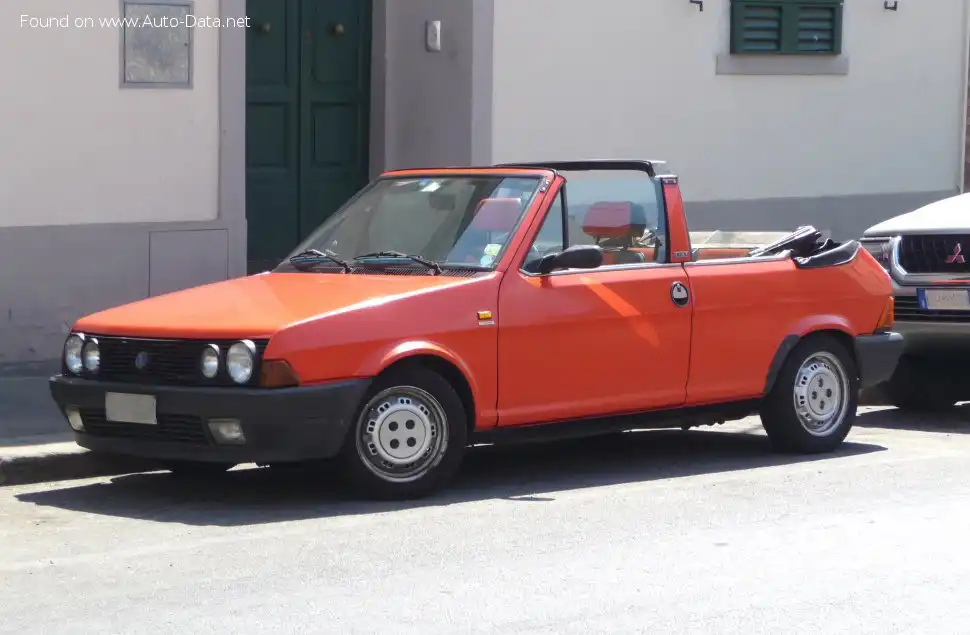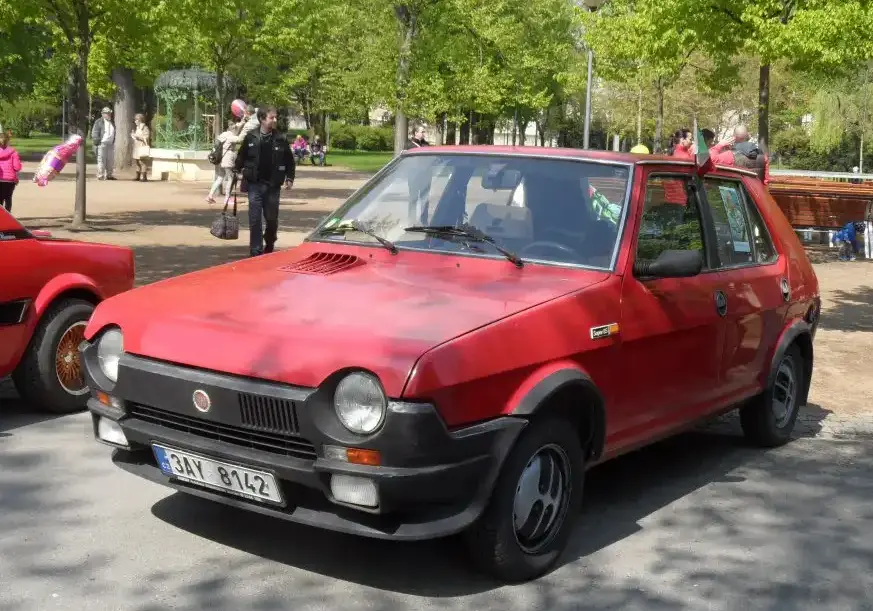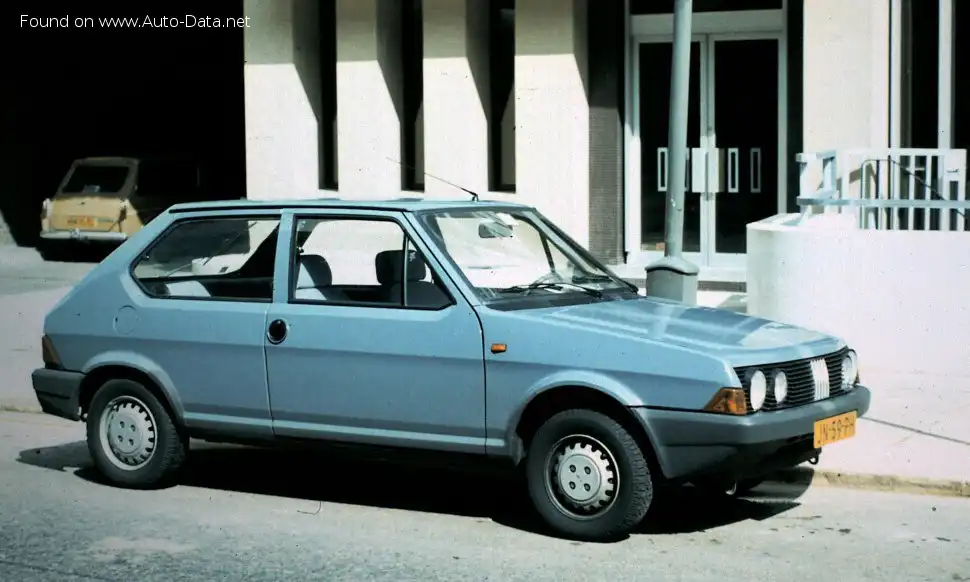
The Fiat Ritmo 70 1.3, produced from 1983 to 1985, represents an entry-level variant within the Ritmo I (138A) range, following the 1982 facelift. Positioned as an affordable and practical hatchback, it aimed to provide economical transportation for a broad customer base in Europe, particularly Italy. The Ritmo, designed by Aldo Sessano and based on the Tipo 3 project, was Fiat’s attempt to modernize its compact car offerings and compete with rivals like the Volkswagen Golf and Renault 5. This 1.3-liter version, with its modest 68 horsepower, served as the base model, offering a more accessible price point than the higher-performance or larger-engined options available.
Technical Specifications
| Brand | Fiat |
| Model | Ritmo |
| Generation | Ritmo I (138A, facelift 1982) |
| Type (Engine) | 70 1.3 (68 Hp) |
| Start of production | 1983 |
| End of production | 1985 |
| Powertrain Architecture | Internal Combustion engine |
| Body type | Coupe (Hatchback) |
| Fuel Type | Petrol (Gasoline) |
| Power | 68 Hp |
| Engine Model/Code | 138 B2.000 |
| Engine aspiration | Naturally aspirated engine |
| Engine oil capacity | 4.1 l (4.33 US qt | 3.61 UK qt) |
| Coolant capacity | 7 l (7.4 US qt | 6.16 UK qt) |
Powertrain & Engine Architecture
The Ritmo 70 1.3 was powered by the Fiat 138 B2.000 engine, a 1301cc inline-four cylinder unit. This engine was a relatively simple design, featuring a single overhead camshaft (SOHC) operating two valves per cylinder. Fuel delivery was managed by a Weber 32 ADFA carburetor, a common setup for European cars of this era aiming for affordability and ease of maintenance. The engine’s bore and stroke measured 76.2mm x 80mm, contributing to its modest output. The engine block was cast iron, while the cylinder head was aluminum alloy.
The transmission paired with the 1.3-liter engine was a four-speed manual gearbox. An optional three-speed automatic transmission was available, though less common. The automatic, while offering convenience, further reduced the car’s already limited acceleration. The drivetrain was front-wheel drive, a relatively modern configuration for Fiat at the time, contributing to improved handling and interior space utilization. The engine’s relatively low compression ratio (around 8.8:1) meant it could run on lower octane fuel, further enhancing its appeal as an economical choice.
Driving Characteristics
The Ritmo 70 1.3 offered a predictable, if uninspiring, driving experience. With 68 horsepower and approximately 88 lb-ft of torque, acceleration was leisurely. Zero to sixty mph times were typically in the 13-14 second range. The four-speed manual transmission allowed drivers to make the most of the available power, but the engine felt strained at higher speeds. The automatic transmission, while providing ease of use, significantly hampered performance. Gear ratios were geared towards fuel efficiency rather than outright speed.
Handling was generally considered adequate for everyday driving. The Ritmo featured independent front suspension with MacPherson struts and a twist-beam rear axle. Steering was rack and pinion, providing reasonable precision. However, the car’s relatively soft suspension setup resulted in noticeable body roll during cornering. Compared to the more powerful 1.5 or 1.6-liter Ritmo variants, the 1.3 felt noticeably slower and less engaging to drive. The 1.5 and 1.6 models offered a more spirited driving experience, while the diesel versions prioritized fuel economy.
Equipment & Trim Levels
The Ritmo 70 1.3 was typically equipped with basic amenities. Standard features included cloth upholstery, vinyl floor covering, and a simple dashboard layout. The instrument cluster consisted of a speedometer, fuel gauge, and temperature gauge. A basic two-speaker AM/FM radio was often included. The interior was functional and durable, prioritizing practicality over luxury.
Optional extras included upgraded cloth upholstery, a more comprehensive instrument panel, and a sunroof. Higher trim levels, such as the Ritmo 85 or 100, offered more luxurious features like power windows, central locking, and alloy wheels. The 70 1.3 served as the entry point to the Ritmo range, with buyers able to upgrade to more well-equipped models if desired.
Chassis & Braking
The Ritmo 70 1.3 utilized a monocoque chassis construction, providing a good balance of strength and weight. Front suspension consisted of independent MacPherson struts with an anti-roll bar. The rear suspension employed a twist-beam axle with trailing arms. Braking was initially provided by front disc brakes and rear drum brakes. Later models sometimes featured rear disc brakes as standard equipment. The braking system was hydraulic, with dual-circuit operation for added safety.
The car’s relatively light weight (around 1800-1900 lbs) helped to compensate for its modest engine output. Tire size was typically 165/80 R13. The suspension setup was tuned for comfort, prioritizing ride quality over sporty handling. Stabilizer bar thickness was relatively modest, contributing to the car’s tendency to roll in corners.
Market Reception & Comparison
The Ritmo 70 1.3 was generally well-received as an affordable and practical city car. Critics praised its fuel efficiency and ease of driving. However, its performance was often criticized as being underwhelming, particularly when compared to rivals like the Volkswagen Golf. Fuel economy was a strong point, typically achieving around 35-40 mpg. Reliability was generally good, although the carburetor required periodic adjustment and maintenance.
Compared to the Ritmo 85 or 100, the 70 1.3 offered significantly less power and performance. The diesel versions of the Ritmo provided even better fuel economy but were even slower. The Ritmo 70 1.3 appealed to buyers who prioritized affordability and practicality over performance and luxury.
Legacy
The Fiat Ritmo 70 1.3, while not a performance icon, remains a popular classic car among enthusiasts. The 138 B2.000 engine is known for its durability and relative simplicity, making it relatively easy to maintain. Parts availability is generally good, although some components can be difficult to find. Today, the Ritmo 70 1.3 represents an affordable entry point into classic Fiat ownership. Its simple design and economical operation continue to appeal to those seeking a practical and charming vintage hatchback. The Ritmo, in all its variants, played a significant role in modernizing Fiat’s model range and establishing the company as a major player in the European compact car market.