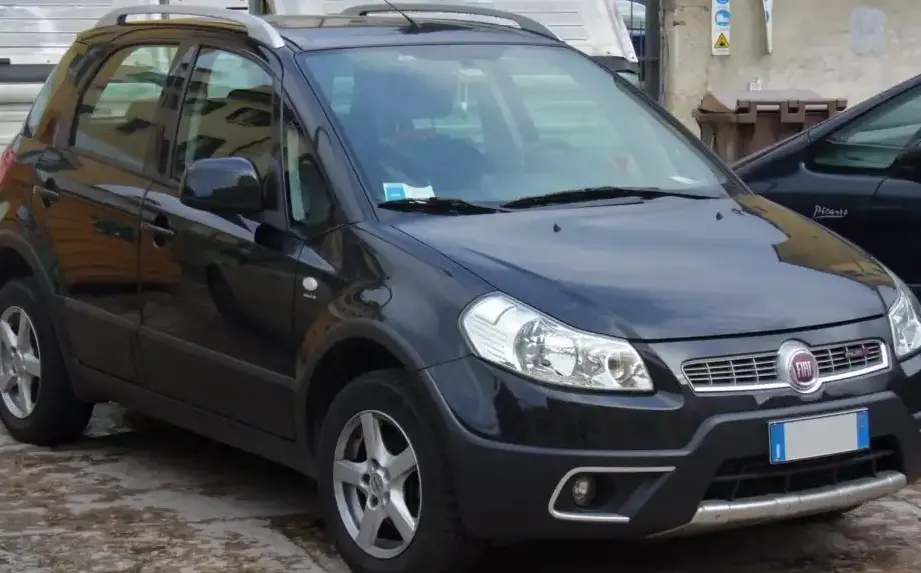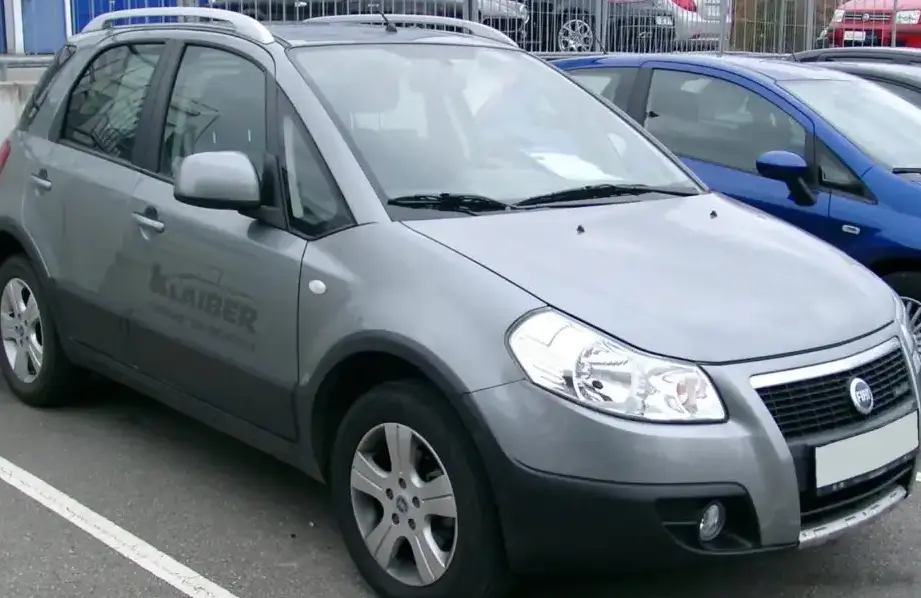
The Fiat Sedici 1.6 i 16V Automatic, produced between 2005 and 2009, represents a unique offering in Fiat’s lineup during that period. Built in collaboration with Suzuki, the Sedici (Italian for “sixteen”) was a compact SUV designed to appeal to European buyers seeking a versatile and affordable vehicle with available all-wheel drive. This particular variant, equipped with the 1.6-liter inline-four engine and a four-speed automatic transmission, served as a mid-range option, positioned between the base models and potentially more powerful, though less commonly available, engine choices. It was primarily marketed in Europe, where small SUVs were gaining popularity as practical urban vehicles.
Technical Specifications
| Brand | Fiat |
| Model | Sedici |
| Generation | Sedici |
| Type (Engine) | 1.6 i 16V (107 Hp) Automatic |
| Start of production | 2005 |
| End of production | 2009 |
| Powertrain Architecture | Internal Combustion engine |
| Body type | SUV |
| Seats | 5 |
| Doors | 5 |
| Fuel consumption (urban) | 8.4 l/100 km (28 US mpg, 33.6 UK mpg, 11.9 km/l) |
| Fuel consumption (extra urban) | 5.7 l/100 km (41.3 US mpg, 49.6 UK mpg, 17.5 km/l) |
| Fuel consumption (combined) | 6.7 l/100 km (35.1 US mpg, 42.2 UK mpg, 14.9 km/l) |
| Fuel Type | Petrol (Gasoline) |
| Acceleration 0 – 100 km/h | 10.7 sec |
| Acceleration 0 – 62 mph | 10.7 sec |
| Acceleration 0 – 60 mph | 10.2 sec |
| Maximum speed | 180 km/h (111.85 mph) |
| Power | 107 Hp @ 5600 rpm |
| Power per litre | 67.5 Hp/l |
| Torque | 145 Nm @ 4000 rpm (106.95 lb.-ft. @ 4000 rpm) |
| Engine layout | Front, Transverse |
| Engine Model/Code | M16A |
| Engine displacement | 1586 cm3 (96.78 cu. in.) |
| Number of cylinders | 4 |
| Engine configuration | Inline |
| Cylinder Bore | 78 mm (3.07 in.) |
| Piston Stroke | 83 mm (3.27 in.) |
| Compression ratio | 10.5:1 |
| Number of valves per cylinder | 4 |
| Fuel injection system | Multi-port manifold injection |
| Engine aspiration | Naturally aspirated engine |
| Engine oil capacity | 3.9 l (4.12 US qt | 3.43 UK qt) |
| Coolant capacity | 7.7 l (8.14 US qt | 6.78 UK qt) |
| Trunk (boot) space – minimum | 270 l (9.53 cu. ft.) |
| Trunk (boot) space – maximum | 670 l (23.66 cu. ft.) |
| Fuel tank capacity | 50 l (13.21 US gal | 11 UK gal) |
| Length | 4115 mm (162.01 in.) |
| Width | 1755 mm (69.09 in.) |
| Height | 1620 mm (63.78 in.) |
| Wheelbase | 2500 mm (98.43 in.) |
| Front track | 1495 mm (58.86 in.) |
| Rear track | 1495 mm (58.86 in.) |
| Minimum turning circle | 11 m (36.09 ft.) |
| Drive wheel | All wheel drive (4×4) |
| Number of gears | 4 |
| Gearbox type | Automatic transmission |
| Front suspension | Spring Strut |
| Rear suspension | Torsion |
| Front brakes | Disc |
| Rear brakes | Drum |
| Steering type | Steering rack and pinion |
| Tires size | 205/60 R16 |
Powertrain & Engine Architecture
The Fiat Sedici 1.6 i 16V Automatic utilizes Fiat’s M16A engine, a naturally aspirated, 1.6-liter inline-four cylinder gasoline engine. This engine features a multi-point fuel injection system and a double overhead camshaft (DOHC) valvetrain with four valves per cylinder. The engine’s 107 horsepower at 5600 rpm and 145 Nm (107 lb-ft) of torque at 4000 rpm were considered adequate for the vehicle’s weight and intended purpose. Paired with this engine is a four-speed automatic transmission. While not the most modern transmission available at the time, it provided ease of use, particularly appealing to buyers prioritizing convenience over outright performance. The transmission was designed to work in conjunction with the all-wheel-drive system, distributing power to all four wheels as needed.
Driving Characteristics
The driving experience in the Sedici 1.6 Automatic is best described as comfortable and practical rather than sporty. The four-speed automatic transmission, while smooth, lacks the responsiveness of a manual gearbox or a more modern automatic with additional gears. Acceleration from 0-60 mph takes around 10.2 seconds, which is typical for a vehicle of this class with this engine and transmission combination. The all-wheel-drive system provides enhanced traction, particularly on slippery surfaces, but adds to the vehicle’s overall weight, slightly impacting fuel economy and agility. Compared to the manual transmission version of the same engine, the automatic sacrifices some performance and fuel efficiency. Higher-output engine options, though less common, offered significantly more spirited driving experiences.
Equipment & Trim Levels
The Sedici 1.6 i 16V Automatic typically came equipped with a reasonable level of standard features. These included air conditioning, power windows, central locking, and an audio system. Interior upholstery was generally cloth, with a functional, if not luxurious, design. Optional extras could include alloy wheels, a sunroof, and upgraded audio systems. Trim levels varied slightly depending on the market, but generally focused on adding cosmetic enhancements and convenience features. Safety features included ABS brakes and airbags, though the level of safety equipment was relatively basic by modern standards.
Chassis & Braking
The Sedici’s chassis features a MacPherson strut suspension in the front and a torsion beam suspension in the rear. This setup provides a comfortable ride quality, suitable for everyday driving. The front brakes are disc brakes, while the rear brakes are drum brakes – a cost-saving measure common in this segment. The steering is rack and pinion, providing adequate precision. The all-wheel-drive system adds to the vehicle’s weight, but also enhances stability and handling, particularly in adverse weather conditions. Stabilizer bars were included to reduce body roll during cornering, though the vehicle’s overall handling characteristics are geared towards comfort and practicality rather than sporty performance.
Market Reception & Comparison
The Fiat Sedici 1.6 Automatic received mixed reviews from automotive critics. While praised for its practicality, affordability, and available all-wheel drive, it was often criticized for its relatively unrefined engine and transmission, as well as its somewhat basic interior. Compared to other small SUVs of the time, such as the Renault Captur or Nissan Juke (which emerged later), the Sedici offered a more utilitarian approach. Fuel economy was reasonable for its class, averaging around 35.1 US mpg in combined driving. Reliability was generally considered average, with some reports of minor issues with the engine and transmission. The manual transmission versions of the Sedici were generally favored by enthusiasts for their improved performance and fuel efficiency.
Legacy
The Fiat Sedici, while not a groundbreaking vehicle, served as an important stepping stone for Fiat in the small SUV segment. The 1.6-liter engine and four-speed automatic transmission combination, while not particularly memorable, proved to be reasonably reliable in many cases. Today, the Sedici can be found on the used car market at relatively affordable prices. Its simplicity and practicality make it an appealing option for buyers seeking a budget-friendly and versatile vehicle. However, potential buyers should be aware of the age of the vehicle and the potential for maintenance issues associated with older components. The Sedici’s collaboration with Suzuki also highlighted the benefits of joint ventures in the automotive industry, paving the way for future partnerships.