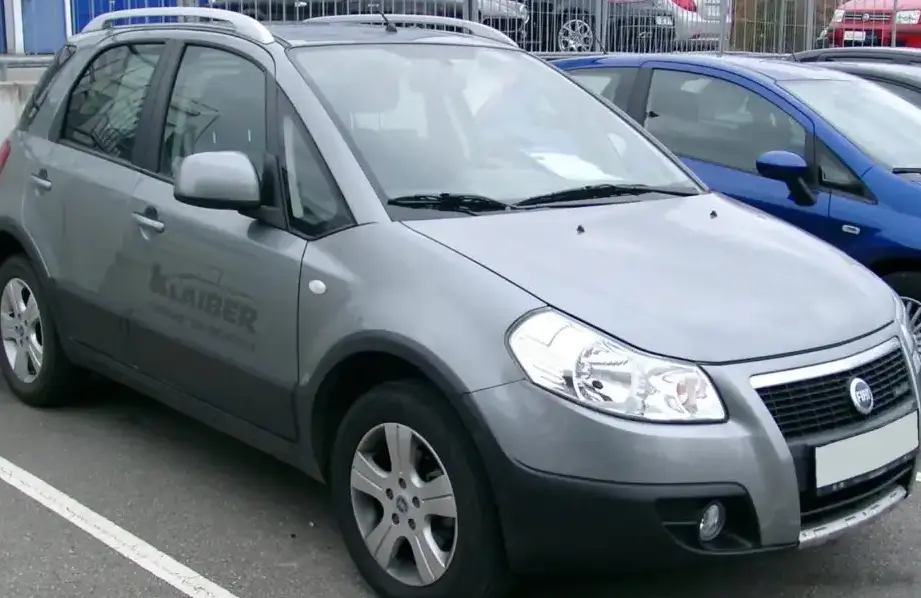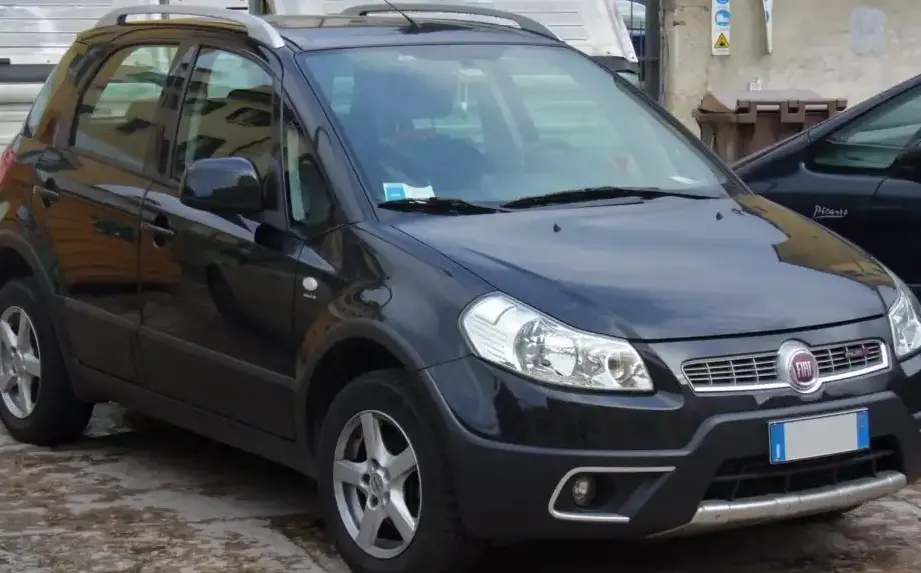
The Fiat Sedici, particularly the facelifted version introduced in 2009, represented Fiat’s entry into the burgeoning compact SUV segment. Produced from 2009 to 2014, the Sedici (Italian for “sixteen,” referencing the 16-valve engine) was a collaborative effort with Suzuki, sharing its platform and many components with the Suzuki SX4. The 1.6 16V variant, producing 120 horsepower, was a key offering in the lineup, positioned as a balance between affordability and acceptable performance. It aimed to appeal to buyers seeking a practical, versatile vehicle for urban and light off-road use. This version was primarily sold in European markets, where smaller SUVs were gaining popularity.
Technical Specifications
| Brand | Fiat |
| Model | Sedici |
| Generation | Sedici (facelift 2009) |
| Type (Engine) | 1.6 16V (120 Hp) |
| Start of production | 2009 |
| End of production | 2014 |
| Powertrain Architecture | Internal Combustion engine |
| Body type | SUV |
| Seats | 5 |
| Doors | 5 |
| Fuel consumption (urban) | 7.9 l/100 km (29.8 US mpg) |
| Fuel consumption (extra urban) | 5.2 l/100 km (45.2 US mpg) |
| Fuel consumption (combined) | 6.2 l/100 km (37.9 US mpg) |
| Fuel Type | Petrol (Gasoline) |
| Acceleration 0 – 100 km/h | 10.7 sec |
| Acceleration 0 – 62 mph | 10.7 sec |
| Acceleration 0 – 60 mph | 10.2 sec |
| Maximum speed | 185 km/h (114.95 mph) |
| Emission standard | Euro 5 |
| Weight-to-power ratio | 9.9 kg/Hp |
| Weight-to-torque ratio | 7.6 kg/Nm |
| Power | 120 Hp @ 6000 rpm |
| Torque | 156 Nm @ 4400 rpm (115.06 lb.-ft. @ 4400 rpm) |
| Engine layout | Front, Transverse |
| Engine Model/Code | M16A |
| Engine displacement | 1598 cm3 (97.52 cu. in.) |
| Number of cylinders | 4 |
| Engine configuration | Inline |
| Number of valves per cylinder | 4 |
| Fuel injection system | Multi-port manifold injection |
| Engine aspiration | Naturally aspirated engine |
| Valvetrain | DOHC |
| Engine oil capacity | 3.9 l (4.12 US qt | 3.43 UK qt) |
| Coolant capacity | 7.7 l (8.14 US qt | 6.78 UK qt) |
| Kerb Weight | 1190 kg (2623.5 lbs.) |
| Max. weight | 1650 kg (3637.63 lbs.) |
| Max load | 460 kg (1014.13 lbs.) |
| Trunk (boot) space – minimum | 270 l (9.53 cu. ft.) |
| Trunk (boot) space – maximum | 670 l (23.66 cu. ft.) |
| Fuel tank capacity | 50 l (13.21 US gal | 11 UK gal) |
| Length | 4115 mm (162.01 in.) |
| Width | 1755 mm (69.09 in.) |
| Height | 1620 mm (63.78 in.) |
| Wheelbase | 2500 mm (98.43 in.) |
| Front track | 1495 mm (58.86 in.) |
| Rear track | 1495 mm (58.86 in.) |
| Minimum turning circle | 11 m (36.09 ft.) |
| Drivetrain | Front wheel drive |
| Number of gears | 5 |
| Gearbox type | Manual transmission |
| Front suspension | Independent type McPherson |
| Rear suspension | Torsion |
| Front brakes | Disc |
| Rear brakes | Disc |
| Assisting systems | ABS (Anti-lock braking system) |
| Steering type | Steering rack and pinion |
| Power steering | Electric Steering |
| Tires size | 205/60 R16 |
| Wheel rims size | 16 |
Powertrain & Engine Architecture
The heart of the Sedici 1.6 16V is the Fiat M16A engine, a 1.6-liter inline-four cylinder gasoline engine. This engine utilizes a multi-point fuel injection system, delivering fuel directly into the intake ports. The engine features a double overhead camshaft (DOHC) valvetrain, operating four valves per cylinder, which contributes to improved breathing and higher-end power. The 16-valve configuration, as the name suggests, was a key feature. The engine’s output of 120 horsepower at 6000 rpm and 156 Nm (115 lb-ft) of torque at 4400 rpm was considered adequate for the vehicle’s weight and intended purpose. The engine is naturally aspirated, meaning it doesn’t rely on a turbocharger or supercharger for forced induction. The Sedici 1.6 16V was exclusively offered with a five-speed manual transmission, providing drivers with direct control over gear selection. This transmission was chosen for its simplicity and reliability, aligning with the vehicle’s overall focus on practicality.
Driving Characteristics
The 1.6-liter engine, paired with the five-speed manual transmission, provided a reasonably engaging driving experience. Acceleration from 0 to 100 km/h (0-62 mph) took approximately 10.7 seconds, which was competitive within its class but noticeably slower than the more powerful engine options available in the Sedici lineup, such as the 1.9-liter diesel. The gear ratios were tuned for everyday usability, prioritizing fuel efficiency and smooth cruising over outright performance. While not a sporty vehicle, the Sedici 1.6 16V offered sufficient power for overtaking maneuvers and maintaining comfortable speeds on highways. The front-wheel-drive configuration provided predictable handling, and the relatively lightweight construction contributed to nimble steering. Compared to the diesel variants, the 1.6-liter engine was generally considered quieter and smoother, but lacked the low-end torque that made the diesel models more effortless in certain situations.
Equipment & Trim Levels
The Sedici 1.6 16V typically came equipped with a reasonable level of standard features. These included air conditioning, power windows, central locking, and an audio system with CD player. Safety features such as ABS (Anti-lock Braking System) and front airbags were also standard. Interior upholstery was typically cloth, with a functional and durable design. Higher trim levels offered optional extras such as alloy wheels, a sunroof, and upgraded audio systems. The dashboard layout was straightforward and user-friendly, prioritizing practicality over luxury. The Sedici aimed to provide a comfortable and functional interior without excessive frills.
Chassis & Braking
The Sedici utilized a McPherson strut independent suspension system at the front, providing a comfortable ride and decent handling characteristics. The rear suspension employed a torsion beam setup, which was a cost-effective solution that offered adequate stability. The braking system consisted of disc brakes on all four wheels, providing sufficient stopping power for the vehicle’s weight and performance. The steering was rack and pinion with electric power assistance, offering a light and responsive feel. The tires were typically 205/60 R16, providing a good balance between grip and ride comfort.
Market Reception & Comparison
The Fiat Sedici 1.6 16V was generally well-received by automotive critics as a practical and affordable compact SUV. It was praised for its fuel efficiency, comfortable ride, and versatile interior. However, it was also criticized for its relatively modest performance and somewhat basic interior appointments. Compared to the 1.9-liter diesel variants, the 1.6-liter engine offered lower running costs but sacrificed some performance and refinement. Fuel economy figures of around 6.2 l/100 km (37.9 US mpg) were competitive for its class. The Sedici faced competition from other compact SUVs such as the Renault Captur, Nissan Juke, and Peugeot 2008.
Legacy
The Fiat Sedici, while not a groundbreaking vehicle, established Fiat as a player in the compact SUV market. The 1.6 16V engine proved to be relatively reliable, although regular maintenance is crucial for long-term durability. On the used car market, the Sedici 1.6 16V represents a good value proposition for buyers seeking an affordable and practical SUV. Its simplicity and relatively low running costs make it an attractive option for those seeking a dependable and economical vehicle. Parts availability is generally good, thanks to the shared components with the Suzuki SX4. While not a collector’s item, the Sedici 1.6 16V remains a viable and practical choice for everyday transportation.