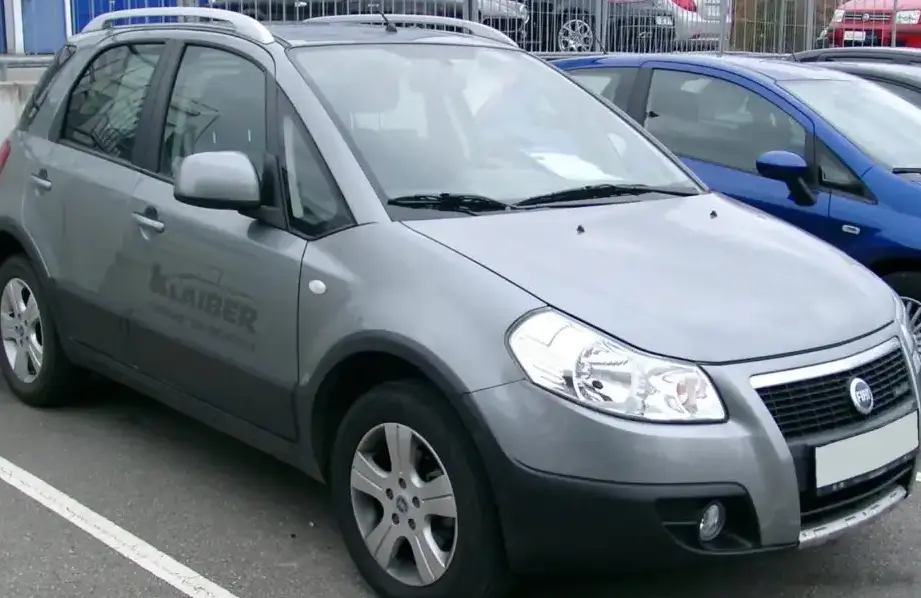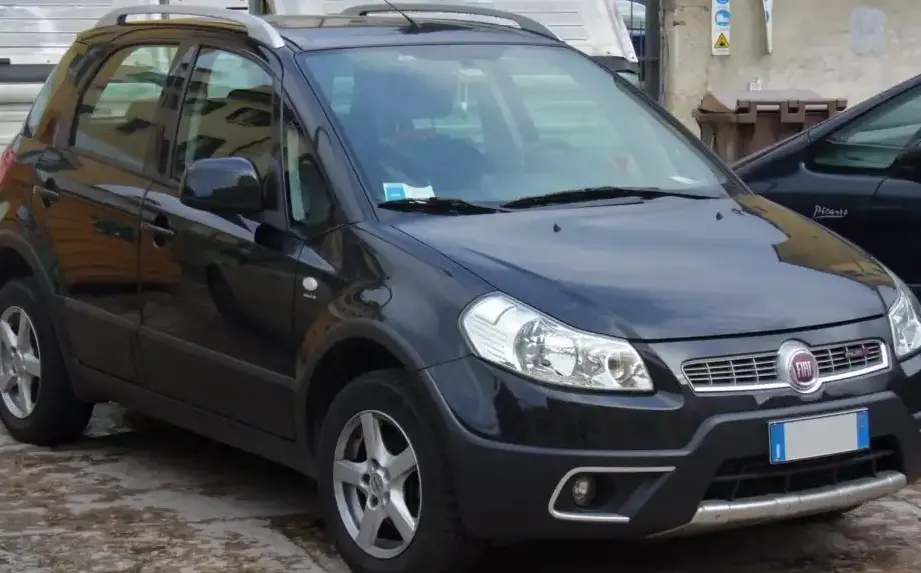
The Fiat Sedici, particularly the facelifted version introduced in 2009, represented Fiat’s entry into the burgeoning compact SUV segment. Produced from 2009 to 2014, this model was a collaborative effort with Suzuki, sharing its platform and many components with the Suzuki SX4. The 2.0 16V Multijet 4×4 variant, boasting 135 horsepower, occupied a mid-range position within the Sedici lineup, offering a balance between fuel efficiency, performance, and all-weather capability. It was primarily marketed in Europe, where compact SUVs were gaining popularity as versatile family vehicles.
Technical Specifications
| Brand | Fiat |
| Model | Sedici |
| Generation | Sedici (facelift 2009) |
| Type (Engine) | 2.0 16V MULTIJET (135 Hp) 4×4 |
| Start of production | 2009 |
| End of production | 2014 |
| Powertrain Architecture | Internal Combustion engine |
| Body type | SUV |
| Seats | 5 |
| Doors | 5 |
| Fuel consumption (urban) | 7 l/100 km (33.6 US mpg, 40.4 UK mpg, 14.3 km/l) |
| Fuel consumption (extra urban) | 4.6 l/100 km (51.1 US mpg, 61.4 UK mpg, 21.7 km/l) |
| Fuel consumption (combined) | 5.4 l/100 km (43.6 US mpg, 52.3 UK mpg, 18.5 km/l) |
| Fuel Type | Diesel |
| Acceleration 0 – 100 km/h | 11.2 sec |
| Acceleration 0 – 62 mph | 11.2 sec |
| Acceleration 0 – 60 mph | 10.6 sec |
| Maximum speed | 180 km/h (111.85 mph) |
| Emission standard | Euro 5 |
| Weight-to-power ratio | 10.1 kg/Hp |
| Weight-to-torque ratio | 4.3 kg/Nm |
| Power | 135 Hp @ 3500 rpm |
| Torque | 320 Nm @ 1500 rpm (236.02 lb.-ft. @ 1500 rpm) |
| Engine layout | Front, Transverse |
| Engine Model/Code | D20AA |
| Engine displacement | 1956 cm3 (119.36 cu. in.) |
| Number of cylinders | 4 |
| Engine configuration | Inline |
| Number of valves per cylinder | 4 |
| Fuel injection system | Diesel Commonrail |
| Engine aspiration | Turbocharger, Intercooler |
| Valvetrain | DOHC |
| Engine oil capacity | 4.4 l (4.65 US qt | 3.87 UK qt) |
| Coolant capacity | 6.5 l (6.87 US qt | 5.72 UK qt) |
| Kerb Weight | 1370 kg (3020.33 lbs) |
| Trunk (boot) space – minimum | 270 l (9.53 cu. ft.) |
| Trunk (boot) space – maximum | 670 l (23.66 cu. ft.) |
| Fuel tank capacity | 50 l (13.21 US gal | 11 UK gal) |
| Length | 4115 mm (162.01 in) |
| Width | 1755 mm (69.09 in) |
| Height | 1620 mm (63.78 in) |
| Wheelbase | 2500 mm (98.43 in) |
| Front track | 1495 mm (58.86 in) |
| Rear track | 1495 mm (58.86 in) |
| Minimum turning circle | 11 m (36.09 ft) |
| Drive wheel | All wheel drive (4×4) |
| Number of gears | 6 |
| Gearbox type | Manual transmission |
| Front suspension | Independent type McPherson |
| Rear suspension | Torsion |
| Front brakes | Disc |
| Rear brakes | Disc |
| Assisting systems | ABS (Anti-lock braking system) |
| Steering type | Steering rack and pinion |
| Power steering | Electric |
| Tires size | 205/60 R16 |
| Wheel rims size | 16 |
Introduction
The Fiat Sedici 2.0 16V Multijet 4×4, launched in 2009 after a facelift, built upon the foundation of the original Sedici introduced in 2006. This iteration benefited from styling updates and, crucially, the availability of a more powerful and efficient diesel engine. The Sedici, a joint venture between Fiat and Suzuki, was designed to appeal to European buyers seeking a compact, versatile, and affordable SUV. The 4×4 system, combined with the 2.0-liter diesel, aimed to provide confident handling in various weather conditions and terrains. It sat within the 1HX0/A3 platform family, sharing underpinnings with the Suzuki SX4.
Powertrain & Engine Architecture
The heart of the Sedici 2.0 Multijet 4×4 is the D20AA engine, a 1956cc inline-four cylinder diesel. This engine utilizes a common rail direct injection system, delivering fuel at extremely high pressure for optimized combustion. The engine features a turbocharger with an intercooler, boosting power output and improving torque delivery. The 16-valve DOHC (Double Overhead Camshaft) valvetrain ensures efficient gas exchange. The engine is transversely mounted in the front of the vehicle. The 6-speed manual transmission was the standard offering for this variant, providing a good balance between fuel economy and driver control. The transmission’s gear ratios were tuned to maximize the engine’s torque, providing strong acceleration from low speeds.
Driving Characteristics
The 135 horsepower and 320 Nm (236 lb-ft) of torque offered by the 2.0 Multijet engine provided a noticeable step up in performance compared to the lower-powered 1.6-liter petrol engine available in other Sedici models. While not a sports SUV, the 2.0 Multijet 4×4 offered brisk acceleration, achieving 0-60 mph in around 10.6 seconds. The all-wheel-drive system provided enhanced traction, particularly on slippery surfaces. The manual transmission allowed for greater driver engagement, but the gear ratios were somewhat tall, prioritizing fuel economy over outright acceleration. Compared to the SX4 with the same engine, the Sedici’s suspension tuning was generally considered slightly softer, offering a more comfortable ride.
Equipment & Trim Levels
The Sedici 2.0 Multijet 4×4 typically came equipped with a reasonable level of standard features. These included air conditioning, power windows, central locking, and an audio system with CD player. Safety features such as ABS brakes, front airbags, and side airbags were also standard. Higher trim levels offered options like alloy wheels, a sunroof, parking sensors, and a more sophisticated audio system with Bluetooth connectivity. Interior upholstery was typically cloth, with options for leather upgrades. The dashboard layout was functional and straightforward, prioritizing usability over luxury.
Chassis & Braking
The Sedici’s chassis featured an independent McPherson strut suspension at the front and a torsion beam suspension at the rear. This setup provided a good compromise between ride comfort and handling. The all-wheel-drive system employed a viscous coupling, automatically distributing torque between the front and rear axles as needed. Braking duties were handled by disc brakes on all four wheels, providing adequate stopping power. The steering was rack and pinion with electric power assistance, offering a light and responsive feel. The 205/60 R16 tires provided a good balance between grip and rolling resistance.
Market Reception & Comparison
The Fiat Sedici 2.0 Multijet 4×4 was generally well-received by automotive critics. It was praised for its fuel efficiency, versatile interior, and capable all-wheel-drive system. However, some reviewers noted that the interior materials were somewhat basic and that the ride could be a bit firm on rough roads. Compared to other compact SUVs of the time, such as the Nissan Qashqai and the Renault Kadjar, the Sedici offered a more affordable price point and a more rugged character. The 1.9 TDI versions of the Sedici were often seen as a more economical choice, while the petrol versions offered a smoother, quieter driving experience but with lower torque.
Legacy
The Fiat Sedici, while not a massive sales success, established Fiat as a player in the compact SUV market. The 2.0 Multijet engine proved to be a reliable and durable unit, and examples are still commonly found on the used car market today. The engine’s robust construction and relatively simple design contribute to its longevity. However, potential buyers should be aware of the typical maintenance requirements for diesel engines, such as regular servicing of the fuel injectors and the diesel particulate filter. The Sedici’s collaborative development with Suzuki also highlighted the benefits of shared platforms and componentry in the automotive industry.