
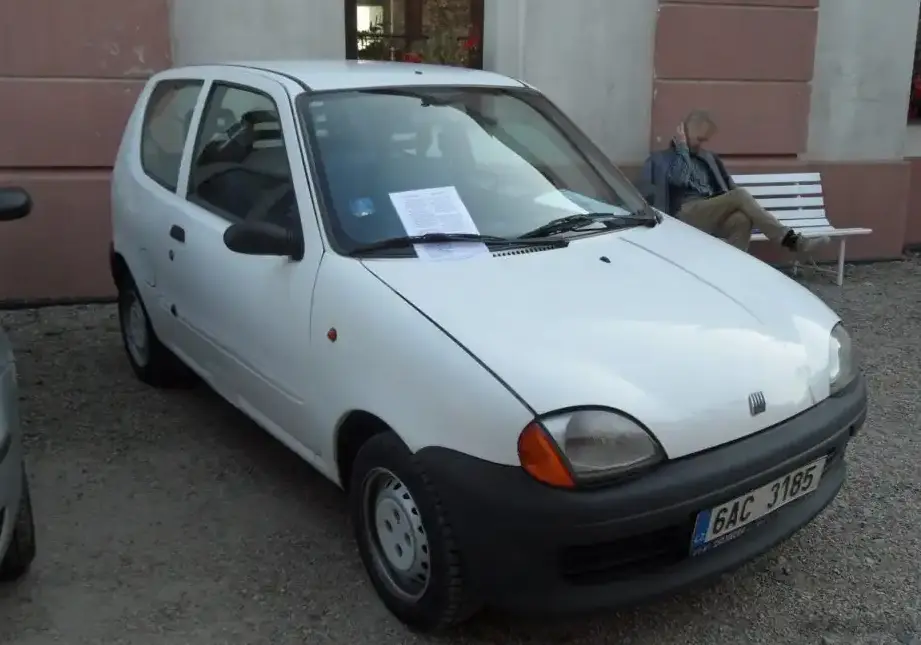
The Fiat Seicento 1.1, produced between 1998 and 2000, represented the entry point into the Seicento (Type 187) range. Positioned as an affordable and economical city car, it was a key component of Fiat’s strategy to offer accessible transportation in the European market. The Seicento itself was a replacement for the Fiat 900, aiming to provide a modern and practical alternative in the ultra-compact car segment. This 1.1-liter variant, delivering 55 horsepower, was specifically tailored for buyers prioritizing fuel efficiency and low running costs over outright performance. It served as a direct competitor to vehicles like the Renault Twingo and Peugeot 106 in the A-segment.
Technical Specifications
| Brand | Fiat |
| Model | Seicento |
| Generation | Seicento (187) |
| Type (Engine) | 1.1 (55 Hp) |
| Start of production | 1998 |
| End of production | 2000 |
| Powertrain Architecture | Internal Combustion engine |
| Body type | Hatchback |
| Seats | 5 |
| Doors | 3 |
| Fuel consumption (urban) | 8.3 l/100 km (28.3 US mpg, 34 UK mpg, 12 km/l) |
| Fuel consumption (extra urban) | 4.7 l/100 km (50 US mpg, 60.1 UK mpg, 21.3 km/l) |
| Fuel consumption (combined) | 6 l/100 km (39.2 US mpg, 47.1 UK mpg, 16.7 km/l) |
| Fuel Type | Petrol (Gasoline) |
| Acceleration 0 – 100 km/h | 13.5 sec |
| Acceleration 0 – 62 mph | 13.5 sec |
| Acceleration 0 – 60 mph | 12.8 sec |
| Maximum speed | 150 km/h (93.21 mph) |
| Weight-to-power ratio | 13.3 kg/Hp |
| Weight-to-torque ratio | 8.3 kg/Nm |
| Power | 55 Hp @ 5000 rpm |
| Power per litre | 49.6 Hp/l |
| Torque | 88 Nm @ 2750 rpm (64.91 lb.-ft. @ 2750 rpm) |
| Engine layout | Front, Transverse |
| Engine Model/Code | 176 B2.000 |
| Engine displacement | 1108 cm3 (67.61 cu. in.) |
| Number of cylinders | 4 |
| Engine configuration | Inline |
| Cylinder Bore | 70 mm (2.76 in.) |
| Piston Stroke | 72 mm (2.83 in.) |
| Compression ratio | 9.6:1 |
| Number of valves per cylinder | 2 |
| Fuel injection system | Multi-port manifold injection |
| Engine aspiration | Naturally aspirated |
| Valvetrain | OHC |
| Engine oil capacity | 3.5 l (3.7 US qt | 3.08 UK qt) |
| Coolant capacity | 4 l (4.23 US qt | 3.52 UK qt) |
| Kerb Weight | 730 kg (1609.37 lbs.) |
| Max. weight | 1190 kg (2623.5 lbs.) |
| Max load | 460 kg (1014.13 lbs.) |
| Trunk (boot) space – minimum | 170 l (6 cu. ft.) |
| Trunk (boot) space – maximum | 810 l (28.6 cu. ft.) |
| Fuel tank capacity | 38 l (10.04 US gal | 8.36 UK gal) |
| Length | 3335 mm (131.3 in.) |
| Width | 1510 mm (59.45 in.) |
| Height | 1450 mm (57.09 in.) |
| Wheelbase | 2200 mm (86.61 in.) |
| Front track | 1275 mm (50.2 in.) |
| Rear track | 1275 mm (50.2 in.) |
| Minimum turning circle | 8.8 m (28.87 ft.) |
| Drivetrain Architecture | Front wheel drive |
| Number of gears | 5 |
| Gearbox type | Manual transmission |
| Front suspension | Spring Strut |
| Rear suspension | Coil spring |
| Front brakes | Disc |
| Rear brakes | Drum |
| Assisting systems | ABS (Anti-lock braking system) |
| Steering type | Steering rack and pinion |
| Power steering | Hydraulic |
| Tires size | 145/70 R13 |
Powertrain & Engine Architecture
The Seicento 1.1 was powered by Fiat’s 176 B2.000 engine, a 1.1-liter inline-four cylinder unit. This engine was a relatively simple design, utilizing a single overhead camshaft (OHC) and two valves per cylinder. Fuel delivery was managed by a multi-port fuel injection system, a common setup for vehicles of this era. The engine produced 55 horsepower at 5000 rpm and 88 Nm (65 lb-ft) of torque at 2750 rpm. The engine’s design prioritized fuel economy and reliability over high performance. The five-speed manual transmission was the standard offering, providing a reasonable spread of gears for urban driving and occasional highway use. The transmission was known for its light shift action, but wasn’t particularly sporty in feel.
Driving Characteristics
The Seicento 1.1’s driving experience was defined by its lightweight construction and modest power output. Acceleration was leisurely, taking approximately 13.5 seconds to reach 62 mph (100 km/h). However, the car felt nimble and easy to maneuver in city traffic. The gear ratios were tuned for maximizing fuel efficiency, meaning the engine often needed to be revved to extract the best performance. Compared to the more powerful 1.4-liter versions, the 1.1 felt noticeably slower, particularly when carrying passengers or luggage. The suspension provided a comfortable ride on smooth roads, but could become unsettled on rough surfaces. The hydraulic power steering offered light and easy steering, making parking and low-speed maneuvers effortless.
Equipment & Trim Levels
The Seicento 1.1 typically came with a basic level of equipment. Standard features included central locking, front power windows, and a basic audio system. Interior upholstery was typically cloth, with a simple and functional dashboard layout. Optional extras included air conditioning, power steering (sometimes standard depending on the market), and upgraded audio systems. The trim level was generally considered the base model, focusing on affordability and practicality. Higher trim levels, available with the 1.4-liter engine, offered features like alloy wheels, electric mirrors, and more luxurious interior appointments.
Chassis & Braking
The Seicento 1.1 utilized a simple chassis design, featuring a front strut suspension and a rear coil spring setup. The front brakes were disc brakes, providing adequate stopping power, while the rear brakes were drums, a cost-saving measure common in this segment. ABS (Anti-lock Braking System) was often included as standard equipment, enhancing safety. The car’s lightweight construction contributed to its nimble handling. The steering was rack and pinion, providing precise and responsive steering feel.
Market Reception & Comparison
The Seicento 1.1 was generally well-received as an affordable and economical city car. Critics praised its fuel efficiency, nimble handling, and low running costs. However, the engine’s lack of power was a common criticism. Compared to the 1.4-liter versions, the 1.1 offered significantly less performance, making it less suitable for highway driving or carrying heavy loads. Fuel economy was a strong point, consistently achieving around 39-47 mpg in real-world driving. Reliability was generally good, with the 1.1-liter engine proving to be durable and relatively trouble-free.
Legacy
The Fiat Seicento 1.1 remains a popular choice in the used car market, particularly for first-time drivers or those seeking an inexpensive and reliable city car. The 176 B2.000 engine is known for its durability, and parts availability is generally good. While not a performance car, the Seicento 1.1 offers a practical and economical solution for urban transportation. Its simple design and relatively low maintenance costs make it an attractive option for budget-conscious buyers. Today, well-maintained examples are becoming increasingly sought after by enthusiasts looking for a classic city car with a charming character.
