
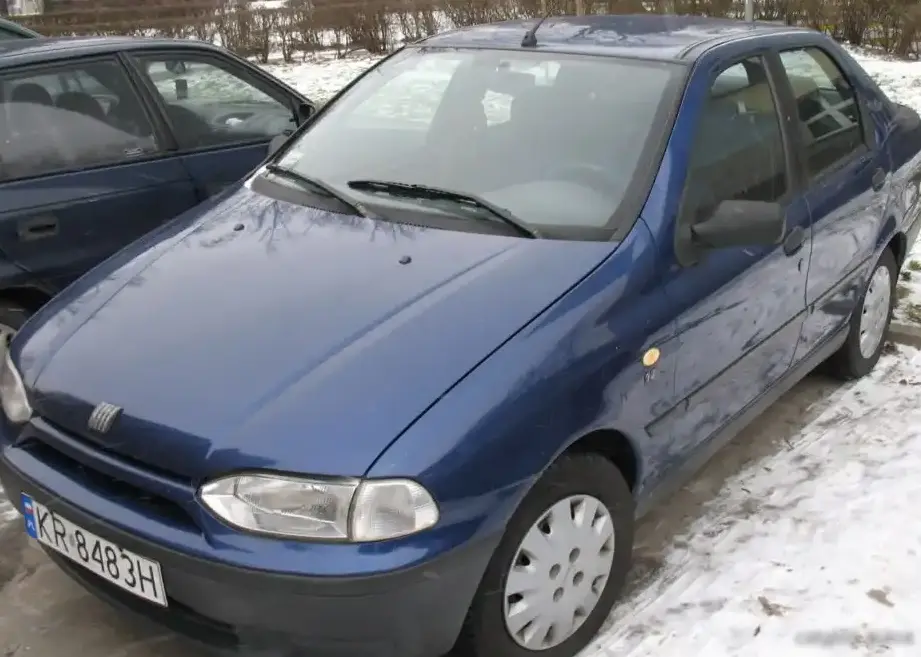
The Fiat Siena (178) 1.0 i 16V, produced between 1997 and 2000, represented an entry-level offering within the broader Siena range. The Siena, a subcompact sedan, was primarily marketed in South America and Europe as an affordable and practical family vehicle. This particular 1.0-liter variant aimed to provide economical transportation, appealing to budget-conscious buyers. It was positioned as the base model, offering a more accessible price point compared to higher-trim levels equipped with larger engines and more features. The 178 series Siena was a significant update to the original model, offering improved styling and a more refined interior.
Technical Specifications
| Brand | Fiat |
| Model | Siena |
| Generation | Siena (178) |
| Type (Engine) | 1.0 i 16V (70 Hp) |
| Start of production | 1997 |
| End of production | 2000 |
| Powertrain Architecture | Internal Combustion engine |
| Body type | Sedan |
| Seats | 5 |
| Doors | 4 |
| Fuel Type | Petrol (Gasoline) |
| Acceleration 0 – 100 km/h | 14.9 sec |
| Acceleration 0 – 62 mph | 14.9 sec |
| Acceleration 0 – 60 mph | 14.2 sec |
| Maximum speed | 160 km/h (99.42 mph) |
| Weight-to-power ratio | 14.6 kg/Hp, 68.6 Hp/tonne |
| Weight-to-torque ratio | 10.9 kg/Nm, 92.2 Nm/tonne |
| Power | 70 Hp @ 5750 rpm |
| Power per litre | 70.1 Hp/l |
| Torque | 94 Nm @ 4000 rpm (69.33 lb.-ft. @ 4000 rpm) |
| Engine layout | Front, Transverse |
| Engine displacement | 999 cm3 (60.96 cu. in.) |
| Number of cylinders | 4 |
| Engine configuration | Inline |
| Cylinder Bore | 70 mm (2.76 in.) |
| Piston Stroke | 64.9 mm (2.56 in.) |
| Compression ratio | 10.2:1 |
| Number of valves per cylinder | 4 |
| Fuel injection system | Multi-port manifold injection |
| Engine aspiration | Naturally aspirated engine |
| Kerb Weight | 1020 kg (2248.72 lbs.) |
| Max. weight | 1420 kg (3130.56 lbs.) |
| Max load | 400 kg (881.85 lbs.) |
| Trunk (boot) space – minimum | 500 l (17.66 cu. ft.) |
| Trunk (boot) space – maximum | 850 l (30.02 cu. ft.) |
| Fuel tank capacity | 48 l (12.68 US gal | 10.56 UK gal) |
| Length | 4100 mm (161.42 in.) |
| Width | 1614 mm (63.54 in.) |
| Height | 1445 mm (56.89 in.) |
| Wheelbase | 2360 mm (92.91 in.) |
| Front track | 1388 mm (54.65 in.) |
| Rear (Back) track | 1378 mm (54.25 in.) |
| Drivetrain Architecture | The Internal combustion engine (ICE) drives the front wheels of the vehicle. |
| Drive wheel | Front wheel drive |
| Number of gears and type of gearbox | 5 gears, manual transmission |
| Front suspension | Coil spring |
| Rear suspension | Coil spring |
| Front brakes | Disc |
| Rear brakes | Drum |
| Assisting systems | ABS (Anti-lock braking system) |
| Steering type | Steering rack and pinion |
| Power steering | Hydraulic Steering |
| Tires size | 175/70 R13 |
Powertrain & Engine Architecture
The heart of the Siena 1.0 i 16V is the Fiat 178A.044 engine, a 999cc inline-four cylinder petrol engine. This engine utilizes a multi-port fuel injection system, a common setup for the time, providing a balance between fuel efficiency and performance. The 16-valve cylinder head, with four valves per cylinder, enhances breathing and contributes to the engine’s relatively high output for its displacement. The engine’s design prioritized simplicity and reliability, making it relatively easy to maintain. The 5-speed manual transmission was the only gearbox option available with this engine, geared towards maximizing fuel economy rather than outright acceleration. The engine’s relatively small displacement and modest power output meant it was designed for urban driving and moderate highway speeds.
Driving Characteristics
The Siena 1.0 i 16V offered a predictable, though uninspiring, driving experience. With 70 horsepower, acceleration was leisurely, taking approximately 14.9 seconds to reach 62 mph. The 5-speed manual transmission allowed drivers to keep the engine in its optimal power band, but frequent downshifting was often necessary for overtaking or climbing hills. The gear ratios were tuned for economy, resulting in a relatively high final drive ratio. Compared to the more powerful 1.6-liter versions of the Siena, the 1.0-liter felt significantly underpowered. However, its lighter weight and nimble handling made it relatively easy to maneuver in city traffic. The steering, while hydraulic, lacked significant feedback.
Equipment & Trim Levels
The 1.0 i 16V Siena typically came with a basic level of equipment. Standard features generally included power steering, a basic audio system, and cloth upholstery. Air conditioning was often an optional extra, as were power windows and central locking. The interior was functional and durable, prioritizing practicality over luxury. The dashboard layout was straightforward, with clearly labeled controls. Trim levels were relatively limited for this base model, with most options being offered as individual upgrades rather than as part of a specific package.
Chassis & Braking
The Siena 178 featured a relatively simple chassis design. Front suspension utilized coil springs, while the rear suspension also employed coil springs. The front brakes were discs, providing adequate stopping power, while the rear brakes were drums, a cost-saving measure common in this segment. ABS (Anti-lock Braking System) was available as an option, enhancing safety. The suspension was tuned for comfort, providing a reasonably smooth ride on typical road surfaces. Stabilizer bars were typically absent on the base model, contributing to a slightly more pronounced body roll during cornering.
Market Reception & Comparison
The Siena 1.0 i 16V was generally well-received as an affordable and reliable city car. Critics acknowledged its fuel efficiency and practicality, but often noted its lack of power and refinement. Compared to other subcompact sedans available at the time, such as the Renault Clio or Peugeot 206, the Siena offered a more spacious interior and a larger trunk. However, it lagged behind in terms of driving dynamics and overall build quality. Its fuel economy was a key selling point, making it an attractive option for drivers on a budget. Reliability was generally good, with the 1.0-liter engine proving to be durable and relatively trouble-free.
Legacy
The Fiat Siena 1.0 i 16V remains a relatively common sight on the roads of South America and Europe, a testament to its durability and affordability. The 178A.044 engine, while not particularly powerful, is known for its longevity and ease of maintenance. In the used car market, these models are typically very affordable, making them a popular choice for first-time car buyers or those seeking a basic, reliable form of transportation. While not a performance icon, the Siena 1.0 i 16V played a significant role in providing economical transportation to a wide range of drivers.
