
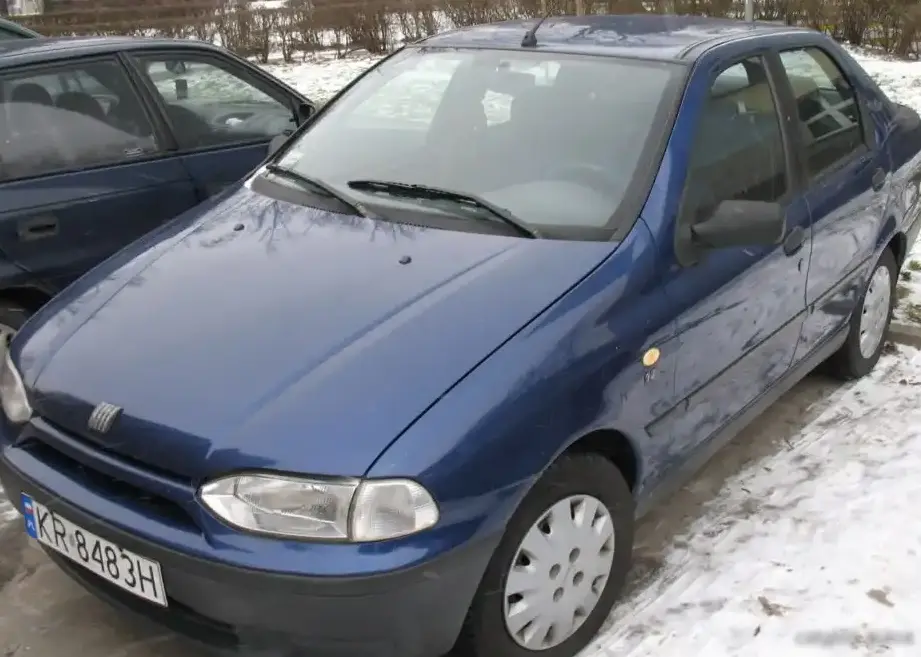
The Fiat Siena (178) 1.2 i 16V, produced between 1997 and 2000, represented an entry-level offering within the broader Siena range. Positioned as a budget-friendly sedan, it aimed to provide practical transportation for families and individuals in markets where fuel efficiency and affordability were paramount. The 178 series Siena was a significant update to the original model, offering improved styling and a more refined interior. This particular 1.2-liter 16-valve variant served as the base engine option, appealing to buyers seeking a low cost of ownership. It was primarily sold in South America and Europe, where compact sedans were a popular choice.
Technical Specifications
| Brand | Fiat |
| Model | Siena |
| Generation | Siena (178) |
| Type (Engine) | 1.2 i 16V (80 Hp) |
| Start of production | 1997 |
| End of production | 2000 |
| Powertrain Architecture | Internal Combustion engine |
| Body type | Sedan |
| Seats | 5 |
| Doors | 4 |
| Fuel Type | Petrol (Gasoline) |
| Acceleration 0 – 100 km/h | 12.6 sec |
| Acceleration 0 – 62 mph | 12.6 sec |
| Acceleration 0 – 60 mph | 12 sec |
| Maximum speed | 168 km/h (104.39 mph) |
| Weight-to-power ratio | 13 kg/Hp, 76.9 Hp/tonne |
| Weight-to-torque ratio | 9.1 kg/Nm, 109.6 Nm/tonne |
| Power | 80 Hp @ 5000 rpm |
| Power per litre | 64.4 Hp/l |
| Torque | 114 Nm @ 4000 rpm (84.08 lb.-ft. @ 4000 rpm) |
| Engine layout | Front, Transverse |
| Engine Model/Code | 178D6011 |
| Engine displacement | 1242 cm3 (75.79 cu. in.) |
| Number of cylinders | 4 |
| Engine configuration | Inline |
| Cylinder Bore | 70.8 mm (2.79 in.) |
| Piston Stroke | 78.86 mm (3.1 in.) |
| Compression ratio | 10.6:1 |
| Number of valves per cylinder | 4 |
| Fuel injection system | Multi-port manifold injection |
| Engine aspiration | Naturally aspirated engine |
| Valvetrain | OHC |
| Engine oil capacity | 2.8 l (2.96 US qt | 2.46 UK qt) |
| Coolant | 5.8 l (6.13 US qt | 5.1 UK qt) |
| Kerb Weight | 1040 kg (2292.81 lbs.) |
| Max. weight | 1440 kg (3174.66 lbs.) |
| Max load | 400 kg (881.85 lbs.) |
| Trunk (boot) space – minimum | 500 l (17.66 cu. ft.) |
| Trunk (boot) space – maximum | 850 l (30.02 cu. ft.) |
| Fuel tank capacity | 48 l (12.68 US gal | 10.56 UK gal) |
| Length | 4100 mm (161.42 in.) |
| Width | 1614 mm (63.54 in.) |
| Height | 1445 mm (56.89 in.) |
| Wheelbase | 2360 mm (92.91 in.) |
| Front track | 1388 mm (54.65 in.) |
| Rear (Back) track | 1378 mm (54.25 in.) |
| Drivetrain Architecture | The Internal combustion engine (ICE) drives the front wheels of the vehicle. |
| Drive wheel | Front wheel drive |
| Number of gears and type of gearbox | 5 gears, manual transmission |
| Front suspension | Coil spring |
| Rear suspension | Coil spring |
| Front brakes | Disc |
| Rear brakes | Drum |
| Assisting systems | ABS (Anti-lock braking system) |
| Steering type | Steering rack and pinion |
| Power steering | Hydraulic Steering |
| Tires size | 175/70 R13 |
Powertrain & Engine Architecture
The heart of the Siena 1.2 i 16V is the 178D6011 engine, a 1.2-liter inline-four cylinder gasoline engine. This engine utilizes a single overhead camshaft (OHC) design operating 16 valves – four per cylinder – to enhance breathing and improve volumetric efficiency. The engine employs multi-point fuel injection, delivering fuel directly into the intake ports, optimizing combustion and contributing to reasonable fuel economy. The 1.2-liter engine produced 80 horsepower at 5000 rpm and 84 lb-ft of torque at 4000 rpm. This engine was known for its simplicity and relatively low maintenance requirements. The transmission paired with this engine was a standard five-speed manual, offering a balance between fuel efficiency and driver control. An automatic transmission was not offered with this engine configuration.
Driving Characteristics
The 1.2-liter engine, coupled with the five-speed manual transmission, provided adequate, though not exhilarating, performance. Acceleration from 0 to 60 mph took approximately 12 seconds, and the top speed was around 104 mph. The engine felt somewhat strained at higher speeds or when carrying a full load of passengers and luggage. The gear ratios were tuned for fuel economy rather than outright performance, meaning frequent downshifts were necessary when overtaking or climbing hills. Compared to the more powerful 1.6-liter versions of the Siena, the 1.2 felt noticeably slower, but it offered a more economical driving experience. The light weight of the vehicle helped to mitigate the lack of power to some extent.
Equipment & Trim Levels
The 1.2 i 16V Siena typically came with a basic level of equipment. Standard features generally included power steering, central locking, and a basic audio system. Interior upholstery was typically cloth, and the dashboard featured a functional, if somewhat spartan, design. Optional extras, depending on the market, could include air conditioning, power windows, and upgraded audio systems. The trim level was generally considered the base model, focusing on providing essential transportation at an affordable price point. Safety features were limited by the standards of the time, typically including only a driver’s airbag and ABS as optional equipment.
Chassis & Braking
The Siena 178 utilized a relatively simple chassis design. Front suspension consisted of coil springs, while the rear suspension also employed coil springs. The front brakes were disc brakes, providing adequate stopping power, while the rear brakes were drum brakes, a cost-saving measure common in this segment. The steering system was a rack and pinion setup with hydraulic power assistance. The suspension was tuned for comfort rather than sporty handling, providing a reasonably smooth ride on typical road surfaces. The relatively narrow tires (175/70 R13) contributed to fuel efficiency but limited grip in cornering situations.
Market Reception & Comparison
The Siena 1.2 i 16V was generally well-received as an affordable and practical family sedan. Critics praised its fuel efficiency and low running costs, but noted its lack of power and somewhat basic interior. Compared to other vehicles in its class, such as the Renault Clio or Peugeot 206, the Siena offered a more spacious interior and a larger trunk, but lacked the refinement and driving dynamics of its European rivals. The 1.6-liter Siena models offered significantly better performance, but at a higher price point. The 1.2-liter version appealed to buyers who prioritized economy and practicality over performance.
Legacy
The Fiat Siena 1.2 i 16V, while not a performance icon, proved to be a reliable and durable vehicle. The 178D6011 engine is known for its robustness and relatively simple maintenance requirements. In the used car market, these models are often sought after by buyers looking for an inexpensive and dependable means of transportation. Parts availability can be a concern in some regions, but the engine’s simplicity makes it relatively easy to repair. The Siena 1.2 i 16V represents a practical and affordable option for those seeking a no-frills, economical sedan.
