
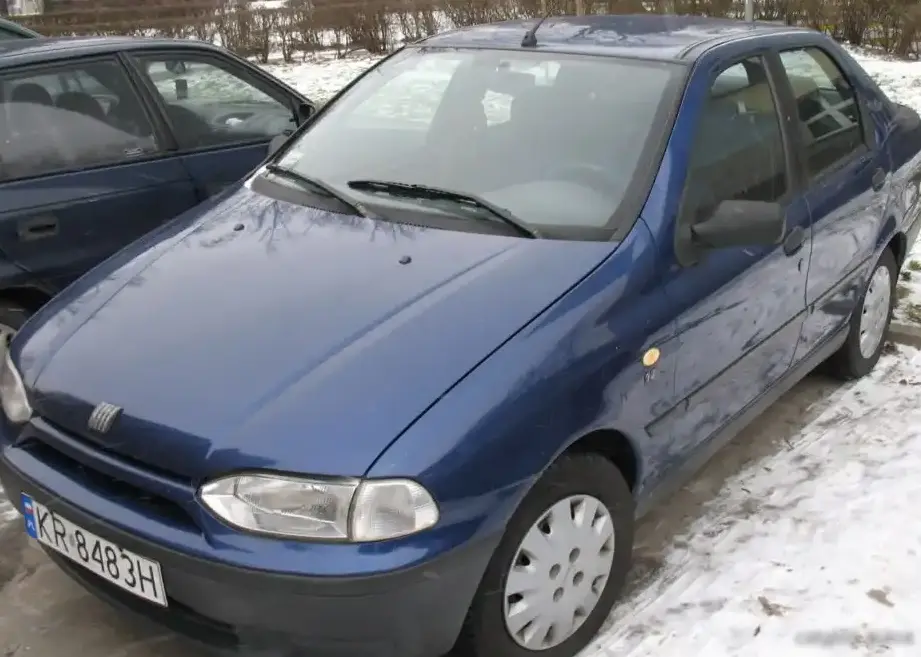
The Fiat Siena (178) 1.3 i 16V, produced between 1996 and 2000, represented a significant offering in the subcompact sedan segment, particularly within the South American and European markets. Positioned as a practical and affordable family vehicle, the 1.3 i 16V trim served as a mid-range option within the broader Siena lineup, offering a balance between performance and fuel economy. It was part of the first generation (Project 178) of the Siena, which was based on the Tipo platform, and aimed to provide a modern and spacious alternative to competitors like the Renault Clio and Peugeot 205.
Technical Specifications
| Brand | Fiat |
| Model | Siena |
| Generation | Siena (178) |
| Type (Engine) | 1.3 i 16V (100 Hp) |
| Start of production | 1996 |
| End of production | 2000 |
| Powertrain Architecture | Internal Combustion engine |
| Body type | Sedan |
| Seats | 5 |
| Doors | 4 |
| Fuel Type | Petrol (Gasoline) |
| Acceleration 0 – 100 km/h | 10.2 sec |
| Acceleration 0 – 62 mph | 10.2 sec |
| Acceleration 0 – 60 mph | 9.7 sec |
| Maximum speed | 186 km/h (115.58 mph) |
| Weight-to-power ratio | 10.5 kg/Hp, 95.2 Hp/tonne |
| Weight-to-torque ratio | 7.5 kg/Nm, 133.3 Nm/tonne |
| Power | 100 Hp @ 5500 rpm |
| Power per litre | 63.3 Hp/l |
| Torque | 140 Nm @ 3000 rpm (103.26 lb.-ft. @ 3000 rpm) |
| Engine layout | Front, Transverse |
| Engine Model/Code | 188A9000 |
| Engine displacement | 1581 cm3 (96.48 cu. in.) |
| Number of cylinders | 4 |
| Engine configuration | Inline |
| Cylinder Bore | 86.4 mm (3.4 in.) |
| Piston Stroke | 67.4 mm (2.65 in.) |
| Compression ratio | 10.2:1 |
| Number of valves per cylinder | 4 |
| Fuel injection system | Multi-port manifold injection |
| Engine aspiration | Naturally aspirated engine |
| Engine oil capacity | 3 l (3.17 US qt | 2.64 UK qt) |
| Kerb Weight | 1050 kg (2314.85 lbs.) |
| Max. weight | 1450 kg (3196.7 lbs.) |
| Max load | 400 kg (881.85 lbs.) |
| Trunk (boot) space – minimum | 460 l (16.24 cu. ft.) |
| Trunk (boot) space – maximum | 1540 l (54.38 cu. ft.) |
| Fuel tank capacity | 48 l (12.68 US gal | 10.56 UK gal) |
| Length | 4100 mm (161.42 in.) |
| Width | 1614 mm (63.54 in.) |
| Height | 1445 mm (56.89 in.) |
| Wheelbase | 2360 mm (92.91 in.) |
| Front track | 1388 mm (54.65 in.) |
| Rear (Back) track | 1378 mm (54.25 in.) |
| Drivetrain Architecture | The Internal combustion engine (ICE) drives the front wheels of the vehicle. |
| Drive wheel | Front wheel drive |
| Number of gears and type of gearbox | 5 gears, manual transmission |
| Front suspension | Coil spring |
| Rear suspension | Coil spring |
| Front brakes | Disc |
| Rear brakes | Drum |
| Assisting systems | ABS (Anti-lock braking system) |
| Steering type | Steering rack and pinion |
| Power steering | Hydraulic Steering |
| Tires size | 175/65 R14 |
Powertrain & Engine Architecture
The heart of the Siena 1.3 i 16V was the 188A9000 engine, a 1.6-liter (1581cc) inline-four cylinder gasoline engine. This engine featured a multi-port fuel injection system, which improved fuel atomization and combustion efficiency compared to earlier carburetor-based systems. The 16-valve cylinder head, with four valves per cylinder, enhanced volumetric efficiency, contributing to the engine’s respectable power output for its displacement. The engine produced 100 horsepower at 5500 rpm and 140 Nm (103.26 lb-ft) of torque at 3000 rpm. The engine’s design prioritized reliability and ease of maintenance, making it a popular choice for budget-conscious buyers. The five-speed manual transmission was the standard offering, providing a reasonable balance between acceleration and fuel economy.
Driving Characteristics
The Siena 1.3 i 16V offered a fairly typical driving experience for a subcompact sedan of its era. Acceleration to 60 mph took around 9.7 seconds, and it had a top speed of 115.58 mph. While not particularly sporty, the engine provided adequate power for everyday driving situations, including city commutes and highway cruising. The five-speed manual transmission allowed drivers to keep the engine in its optimal power band, maximizing performance. Compared to the more powerful versions of the Siena, such as those equipped with larger engines, the 1.3 i 16V felt less responsive, especially when fully loaded with passengers or cargo. However, its lighter weight and more efficient engine contributed to better fuel economy.
Equipment & Trim Levels
The 1.3 i 16V trim level typically included features such as power steering, central locking, and basic instrumentation. Interior upholstery was generally cloth, with a functional and durable design. Optional extras included air conditioning, power windows, and a radio/cassette player. The dashboard layout was straightforward and easy to use, prioritizing practicality over luxury. The Siena aimed to provide a comfortable and functional interior for families, with sufficient space for passengers and luggage. The trim level sat in the middle of the range, offering more features than the base models but lacking the premium appointments of the higher-end versions.
Chassis & Braking
The Siena 1.3 i 16V utilized a relatively simple chassis design, featuring coil spring suspension at both the front and rear. The front brakes were disc brakes, providing adequate stopping power, while the rear brakes were drum brakes, a cost-saving measure common in this class of vehicle. The steering system was a rack and pinion setup with hydraulic power assistance, offering reasonable steering feel and maneuverability. The suspension was tuned for comfort, providing a relatively smooth ride over uneven road surfaces. The car’s weight of around 2314.85 lbs contributed to its manageable handling characteristics.
Market Reception & Comparison
The Fiat Siena 1.3 i 16V was generally well-received by critics as a practical and affordable family car. It was praised for its spacious interior, comfortable ride, and reasonable fuel economy. However, some reviewers noted that its performance was somewhat lacking compared to competitors with more powerful engines. In terms of reliability, the Siena 1.3 i 16V proved to be a fairly dependable vehicle, with relatively few major mechanical issues. Compared to other trims in the Siena lineup, the 1.3 i 16V offered a good balance between price and features, making it a popular choice for buyers seeking a practical and economical sedan.
Legacy
The Fiat Siena 1.3 i 16V has maintained a modest following in the used car market, particularly in regions where it was originally sold. Its simple mechanical design and readily available parts make it relatively easy and inexpensive to maintain. While not a collector’s item, it remains a viable option for buyers seeking an affordable and reliable transportation solution. The 188A9000 engine, in particular, is known for its durability and longevity, and many examples are still on the road today. The Siena 1.3 i 16V represents a significant chapter in Fiat’s history, showcasing the company’s commitment to providing practical and affordable vehicles to a wide range of customers.
