
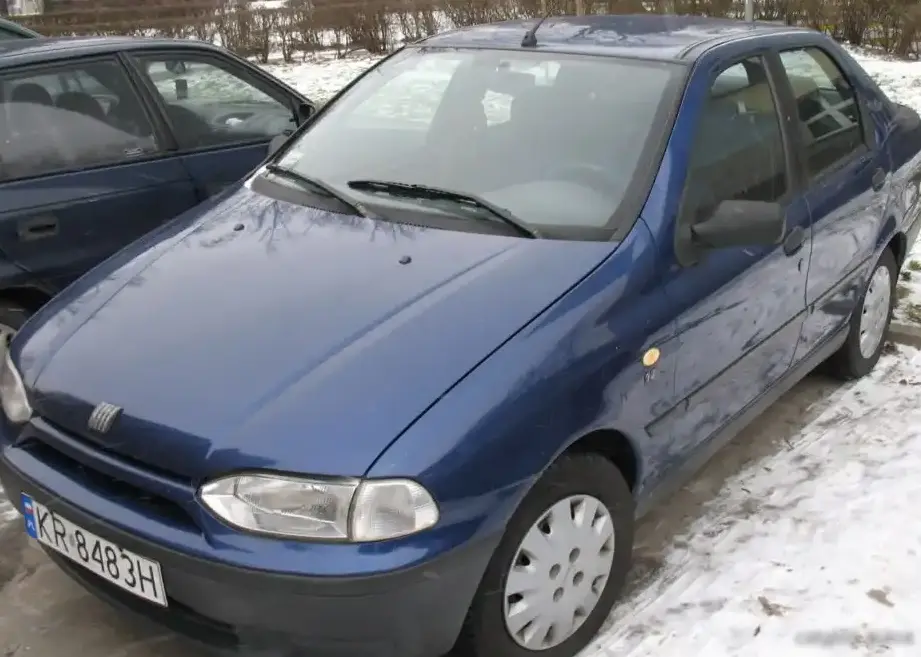
The Fiat Siena (178) 1.6 i 16V, produced between 2001 and 2002, represented a mid-range offering within the second generation of the Siena compact sedan. Positioned above the base 1.0L and 1.2L models, and below the more powerful 1.8L variants, the 1.6L aimed to strike a balance between affordability, fuel economy, and acceptable performance for the Brazilian and Latin American markets where the Siena was primarily sold. The 178 series Siena was a significant update to the original, offering improved styling, interior space, and mechanical refinements. It was built on the Fiat Tipo-derived platform, known for its relatively simple and robust engineering.
Technical Specifications
| Brand | Fiat |
| Model | Siena |
| Generation | Siena (178) |
| Type (Engine) | 1.6 i 16V (103 Hp) |
| Start of production | 2001 |
| End of production | 2002 |
| Powertrain Architecture | Internal Combustion engine |
| Body type | Sedan |
| Seats | 5 |
| Doors | 4 |
| Fuel Type | Petrol (Gasoline) |
| Acceleration 0 – 100 km/h | 10.2 sec |
| Acceleration 0 – 62 mph | 10.2 sec |
| Acceleration 0 – 60 mph | 9.7 sec |
| Maximum speed | 186 km/h (115.58 mph) |
| Weight-to-power ratio | 10.3 kg/Hp, 96.7 Hp/tonne |
| Weight-to-torque ratio | 7.6 kg/Nm, 131.5 Nm/tonne |
| Power | 103 Hp @ 5500 rpm |
| Power per litre | 65.1 Hp/l |
| Torque | 140 Nm @ 4500 rpm (103.26 lb.-ft. @ 4500 rpm) |
| Engine layout | Front, Transverse |
| Engine Model/Code | 178B3000 |
| Engine displacement | 1581 cm3 (96.48 cu. in.) |
| Number of cylinders | 4 |
| Engine configuration | Inline |
| Cylinder Bore | 86.4 mm (3.4 in.) |
| Piston Stroke | 67.4 mm (2.65 in.) |
| Compression ratio | 9.3:1 |
| Number of valves per cylinder | 4 |
| Fuel injection system | Multi-port manifold injection |
| Engine aspiration | Naturally aspirated engine |
| Engine oil capacity | 3.8 l (4.02 US qt | 3.34 UK qt) |
| Coolant | 6.9 l (7.29 US qt | 6.07 UK qt) |
| Kerb Weight | 1065 kg (2347.92 lbs.) |
| Trunk (boot) space – minimum | 500 l (17.66 cu. ft.) |
| Trunk (boot) space – maximum | 850 l (30.02 cu. ft.) |
| Fuel tank capacity | 48 l (12.68 US gal | 10.56 UK gal) |
| Length | 4100 mm (161.42 in.) |
| Width | 1614 mm (63.54 in.) |
| Height | 1440 mm (56.69 in.) |
| Wheelbase | 2360 mm (92.91 in.) |
| Front track | 1388 mm (54.65 in.) |
| Rear (Back) track | 1378 mm (54.25 in.) |
| Drivetrain Architecture | The Internal combustion engine (ICE) drives the front wheels of the vehicle. |
| Drive wheel | Front wheel drive |
| Number of gears and type of gearbox | 5 gears, manual transmission |
| Front suspension | Coil spring |
| Rear suspension | Coil spring |
| Front brakes | Disc |
| Rear brakes | Drum |
| Assisting systems | ABS (Anti-lock braking system) |
| Steering type | Steering rack and pinion |
| Power steering | Hydraulic Steering |
| Tires size | 175/65 R13 |
Powertrain & Engine Architecture
The heart of the Siena 1.6 i 16V is the Fiat 178B3000 engine, a 1.6-liter inline-four cylinder gasoline engine. This engine is a naturally aspirated unit featuring multi-port fuel injection. The 16-valve cylinder head, with four valves per cylinder, contributes to improved breathing and higher-end power delivery. The engine utilizes a timing belt to drive the camshafts, a common feature in Fiat engines of this era. The 1.6L engine produced 103 horsepower at 5500 rpm and 140 Nm (103 lb-ft) of torque at 4500 rpm. The engine’s design prioritized reliability and ease of maintenance, making it a popular choice in regions with limited access to specialized repair facilities. The transmission paired with this engine was a standard five-speed manual gearbox. While an automatic transmission was offered on some Siena models, it was not typically paired with the 1.6L engine due to torque limitations.
Driving Characteristics
The Siena 1.6 i 16V offered a noticeable step up in performance compared to the lower-displacement engines. Acceleration to 100 km/h (62 mph) took approximately 10.2 seconds, making it reasonably capable for everyday driving and highway merging. The five-speed manual transmission allowed drivers to keep the engine in its optimal power band. The gear ratios were fairly conventional, prioritizing fuel economy in lower gears and reasonable cruising speed in higher gears. Compared to the 1.8L versions, the 1.6L felt less powerful, particularly when fully loaded or climbing hills. However, it offered a more responsive and engaging driving experience than the lower-powered 1.0L and 1.2L models. The handling was typical of a compact sedan, with a focus on comfort rather than sporty dynamics.
Equipment & Trim Levels
The 1.6 i 16V trim typically included features such as power steering, central locking, and electric front windows. Interior upholstery was generally cloth, with a simple and functional dashboard layout. Optional extras included air conditioning, a radio/cassette player, and alloy wheels. The Siena 1.6 i 16V was often positioned as a mid-range model, offering a good balance of features and affordability. It was a popular choice for families and individuals seeking a reliable and practical sedan.
Chassis & Braking
The Siena 178 utilized a relatively simple chassis design, featuring coil spring suspension at all four wheels. The front suspension employed MacPherson struts, while the rear suspension utilized a twist beam axle. Braking consisted of disc brakes at the front and drum brakes at the rear. An Anti-lock Braking System (ABS) was often included as standard equipment, enhancing safety. The suspension setup prioritized ride comfort over sporty handling, providing a smooth and compliant ride on typical road surfaces. Stabilizer bars were present, but relatively thin, contributing to a slight degree of body roll during cornering.
Market Reception & Comparison
The Siena 1.6 i 16V was generally well-received in its target markets. Critics praised its reliability, affordability, and practical interior space. Compared to the 1.0L and 1.2L models, the 1.6L offered a significant improvement in performance, making it a more appealing option for drivers who frequently traveled on highways or carried passengers. However, the 1.8L versions offered even greater performance, albeit at a higher price point. Fuel economy was respectable for a 1.6L engine, typically ranging from 7 to 9 liters per 100 kilometers (34 to 41 mpg) depending on driving conditions. The 1.6L engine was considered more reliable than the 1.8L, which was sometimes prone to overheating issues.
Legacy
The Fiat Siena 1.6 i 16V has proven to be a durable and reliable vehicle, with many examples still on the road today. The 178B3000 engine is known for its longevity and relatively low maintenance costs. In the used car market, the Siena 1.6 i 16V represents a good value proposition for buyers seeking an affordable and practical sedan. Parts availability is generally good, and the engine’s simple design makes it relatively easy to repair. While not a particularly exciting or technologically advanced vehicle, the Siena 1.6 i 16V remains a testament to Fiat’s commitment to building reliable and affordable transportation for the masses.
