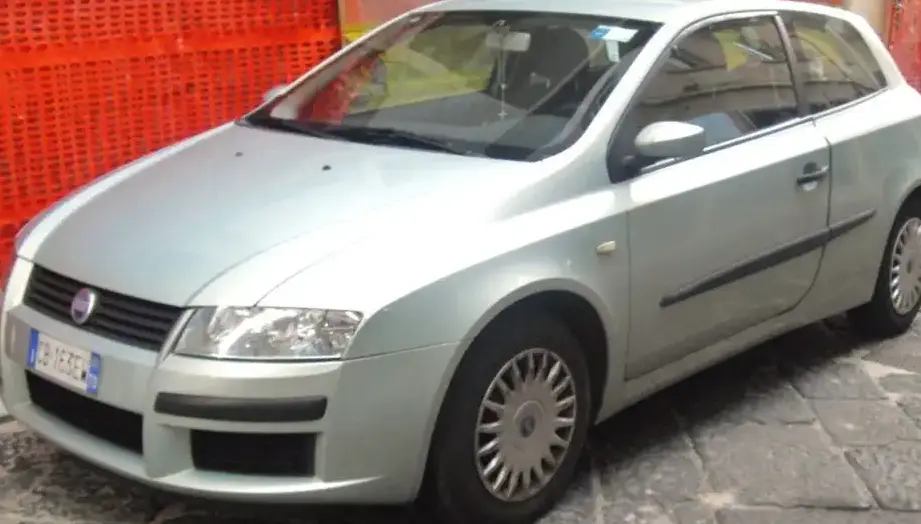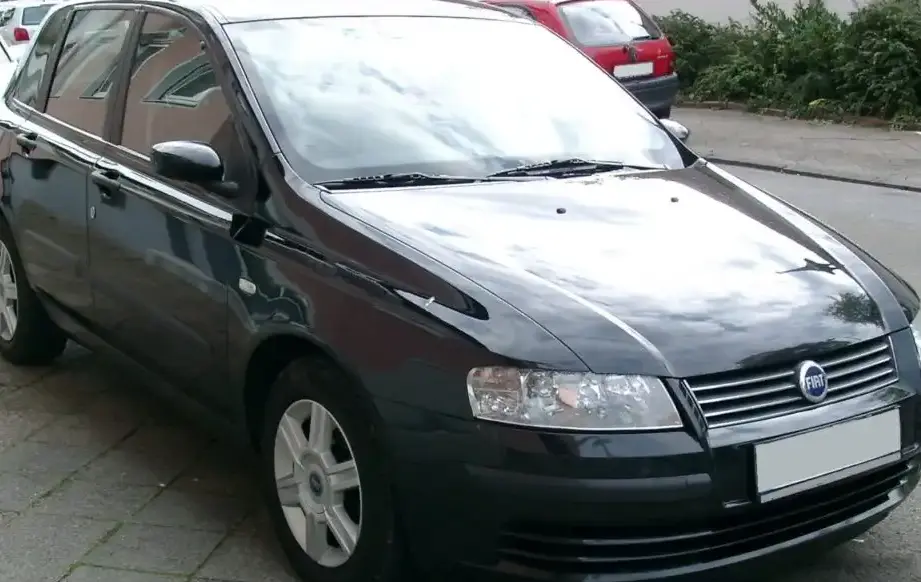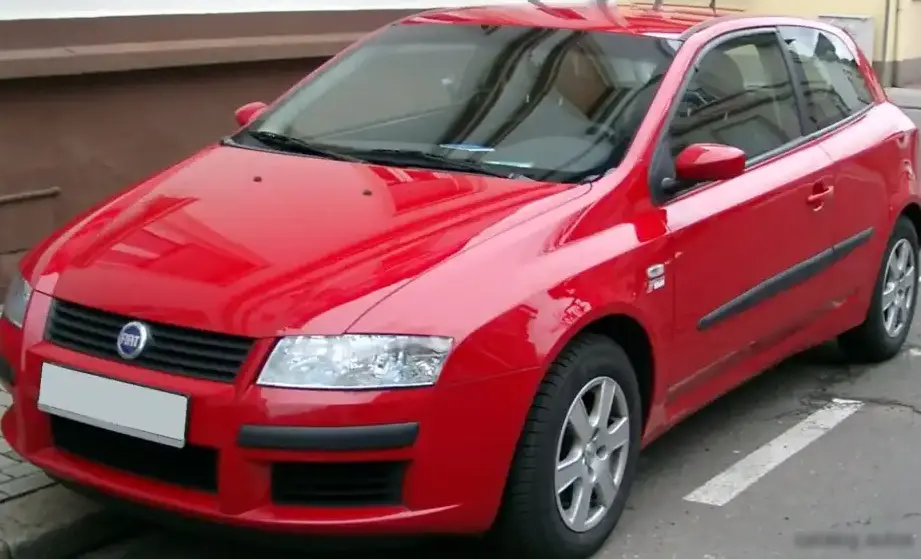
The Fiat Stilo 3-door, particularly the facelifted version introduced in 2003, represented Fiat’s attempt to create a modern and stylish competitor in the European compact hatchback segment. The 1.9 16V JTD variant, producing 140 horsepower, was a key offering within the Stilo range from 2003 to 2005. Positioned as a mid-range option, it aimed to balance performance, fuel efficiency, and practicality for buyers seeking a more engaging driving experience than the base models, but without the higher price tag of the more powerful or luxurious trims. It was built on the Fiat 1HX0/A3 platform, shared with other Stellantis products of the era.
Technical Specifications
| Brand | Fiat |
| Model | Stilo |
| Generation | Stilo (3-door, facelift 2003) |
| Type (Engine) | 1.9 16V JTD (140 Hp) |
| Start of production | 2003 |
| End of production | 2005 |
| Powertrain Architecture | Internal Combustion engine |
| Body type | Hatchback |
| Seats | 5 |
| Doors | 3 |
| Fuel consumption (urban) | 7.6 l/100 km (30.9 US mpg, 37.2 UK mpg, 13.2 km/l) |
| Fuel consumption (extra urban) | 4.2 l/100 km (56 US mpg, 67.3 UK mpg, 23.8 km/l) |
| Fuel consumption (combined) | 5.4 l/100 km (43.6 US mpg, 52.3 UK mpg, 18.5 km/l) |
| Fuel Type | Diesel |
| Acceleration 0 – 100 km/h | 9.7 sec |
| Acceleration 0 – 62 mph | 9.7 sec |
| Acceleration 0 – 60 mph | 9.2 sec |
| Maximum speed | 203 km/h (126.14 mph) |
| Emission standard | Euro 3 |
| Weight-to-power ratio | 9.2 kg/Hp, 108.9 Hp/tonne |
| Weight-to-torque ratio | 4.2 kg/Nm, 237.4 Nm/tonne |
| Power | 140 Hp @ 4000 rpm |
| Power per litre | 73.3 Hp/l |
| Torque | 305 Nm @ 2000 rpm (224.96 lb.-ft. @ 2000 rpm) |
| Engine layout | Front, Transverse |
| Engine Model/Code | 192A5000 |
| Engine displacement | 1910 cm3 (116.56 cu. in.) |
| Number of cylinders | 4 |
| Engine configuration | Inline |
| Cylinder Bore | 82 mm (3.23 in.) |
| Piston Stroke | 90.4 mm (3.56 in.) |
| Compression ratio | 18:1 |
| Number of valves per cylinder | 4 |
| Fuel injection system | Diesel Commonrail |
| Engine aspiration | Turbocharger, Intercooler |
| Valvetrain | DOHC |
| Engine oil capacity | 4.5 l (4.76 US qt | 3.96 UK qt) |
| Coolant | 6.3 l (6.66 US qt | 5.54 UK qt) |
| Kerb Weight | 1285 kg (2832.94 lbs.) |
| Max. weight | 1650 kg (3637.63 lbs.) |
| Max load | 365 kg (804.69 lbs.) |
| Trunk (boot) space – minimum | 305 l (10.77 cu. ft.) |
| Trunk (boot) space – maximum | 1000 l (35.31 cu. ft.) |
| Fuel tank capacity | 58 l (15.32 US gal | 12.76 UK gal) |
| Length | 4180 mm (164.57 in.) |
| Width | 1785 mm (70.28 in.) |
| Height | 1455 mm (57.28 in.) |
| Wheelbase | 2600 mm (102.36 in.) |
| Front track | 1515 mm (59.65 in.) |
| Rear (Back) track | 1510 mm (59.45 in.) |
| Drivetrain Architecture | The Internal combustion engine (ICE) drives the front wheels of the vehicle. |
| Drive wheel | Front wheel drive |
| Number of gears and type of gearbox | 6 gears, manual transmission |
| Front suspension | Independent type McPherson |
| Rear suspension | Coil spring |
| Front brakes | Ventilated discs |
| Rear brakes | Disc |
| Assisting systems | ABS (Anti-lock braking system) |
| Steering type | Steering rack and pinion |
| Tires size | 205/55 R16 |
| Wheel rims size | 6.5J x 16 |
Powertrain & Engine Architecture
The heart of the Stilo 1.9 JTD was the 192A5000 engine, a 1.9-liter inline-four cylinder diesel. This engine was a product of Fiat’s ongoing development of common rail direct injection technology. The 16-valve DOHC configuration, combined with a turbocharger and intercooler, allowed for a relatively high output of 140 horsepower and a substantial 305 Nm (224.96 lb-ft) of torque. The common rail system, operating at a pressure of 1600 bar, ensured precise fuel delivery and optimized combustion. The engine featured a cast iron block and aluminum cylinder head. The 6-speed manual transmission was the standard offering, providing a good balance between fuel economy and performance. The engine’s design prioritized low-end torque, making it well-suited for everyday driving and overtaking maneuvers.
Driving Characteristics
The Stilo 1.9 JTD offered a noticeably more spirited driving experience compared to the lower-powered petrol variants. The abundant torque available from low RPMs meant that the car felt responsive and effortless in most driving situations. While not a sports car, the 140 hp engine provided adequate acceleration, with a 0-60 mph time of around 9.2 seconds. The 6-speed gearbox allowed drivers to keep the engine in its optimal power band, maximizing efficiency and performance. Compared to the 1.4-liter petrol engine, the JTD offered significantly more pulling power, especially when fully loaded. However, it lacked the high-revving nature of the petrol engines. The diesel engine also produced more engine noise and vibration, although Fiat made efforts to minimize this through engine mounts and sound insulation.
Equipment & Trim Levels
The 1.9 JTD trim typically included features such as air conditioning, power steering, electric front windows, and a basic audio system. Higher trim levels, often denoted by “Active” or “Dynamic” designations, added features like alloy wheels, fog lights, a multi-function display, and upgraded interior trim. Optional extras included a sunroof, leather upholstery, and a more sophisticated audio system with CD changer. Interior upholstery was generally cloth, with a focus on durability rather than luxury. The dashboard layout was functional and modern for its time, with a clear instrument cluster and logically placed controls.
Chassis & Braking
The Stilo 3-door featured independent McPherson strut suspension at the front and a coil spring setup at the rear. This configuration provided a reasonable balance between ride comfort and handling. The front brakes were ventilated discs, while the rear brakes were solid discs, providing adequate stopping power for the vehicle’s weight and performance. ABS (Anti-lock Braking System) was standard equipment. The steering was a rack and pinion system, offering precise and responsive control. The suspension was tuned to prioritize comfort, but the Stilo still offered a relatively stable and predictable handling experience.
Market Reception & Comparison
The Fiat Stilo 1.9 JTD was generally well-received by automotive critics, who praised its fuel efficiency, strong torque output, and comfortable ride. However, some critics noted the engine’s noise and vibration, as well as the somewhat bland interior styling. Compared to other diesel hatchbacks of the time, such as the Volkswagen Golf TDI and the Ford Focus TDCi, the Stilo offered a competitive package in terms of performance and economy. The Stilo’s fuel economy was particularly impressive, with combined figures of around 5.4 l/100 km (43.6 US mpg). Reliability was generally good, although some owners reported issues with the common rail fuel injection system.
Legacy
The Fiat Stilo 1.9 JTD has become a relatively affordable and practical used car option. The 192A5000 engine is known for its durability and relatively low maintenance costs, provided it is properly serviced. However, as with any diesel engine, it is important to address any issues with the fuel injection system promptly. The Stilo’s 3-door body style remains popular with those seeking a stylish and economical hatchback. While it may not have achieved the same iconic status as some of its rivals, the Stilo 1.9 JTD remains a capable and well-rounded vehicle that offers a good balance of performance, economy, and practicality.