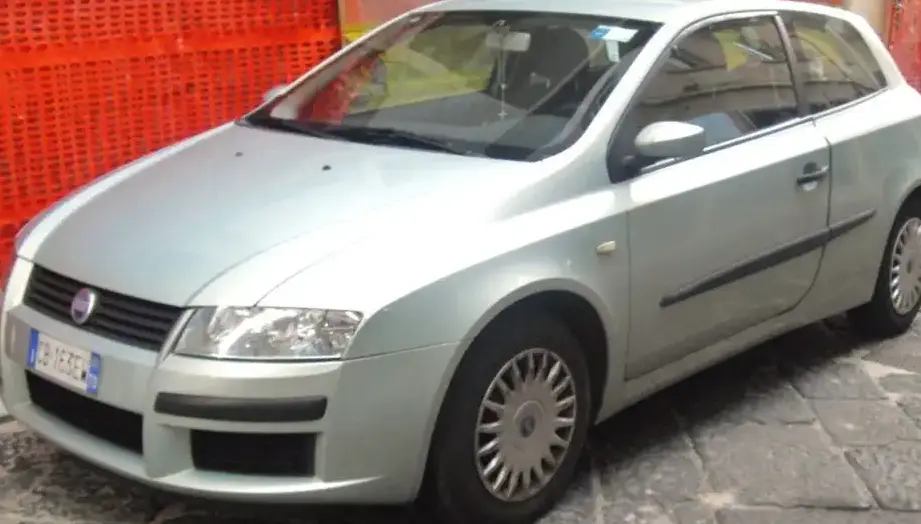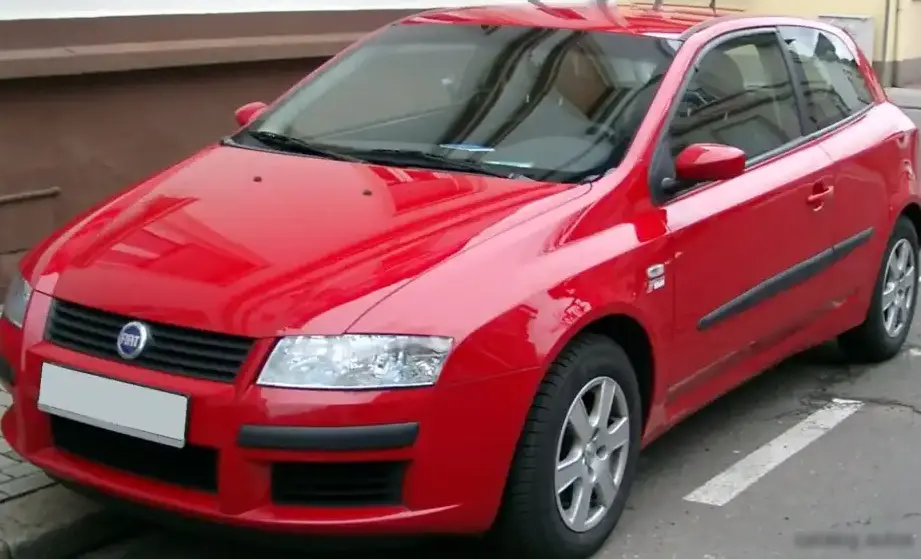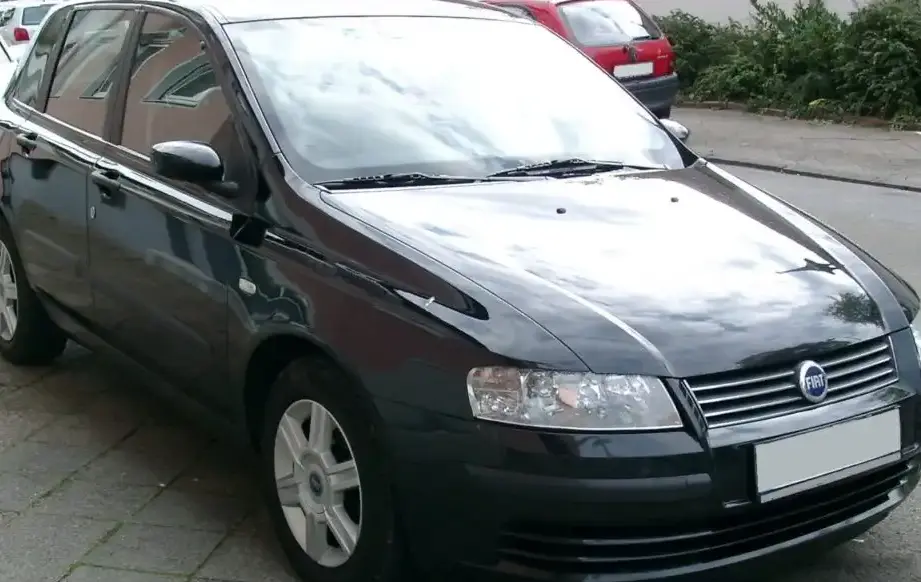
The Fiat Stilo 5-door 1.9 JTD (115 hp) was a popular compact hatchback produced by the Italian automaker Fiat from 2001 to 2003. Positioned as a mid-range offering within the Stilo lineup, it aimed to provide a balance of fuel efficiency, practicality, and reasonable performance. The Stilo, launched as a replacement for the Bravo/Brava, represented Fiat’s attempt to move upmarket and compete more effectively with established European rivals like the Volkswagen Golf and Ford Focus. This particular variant, powered by a turbocharged diesel engine, was primarily sold in European markets where diesel fuel was more prevalent and tax incentives favored lower-emission vehicles.
Technical Specifications
| Brand | Fiat |
| Model | Stilo |
| Generation | Stilo (5-door) |
| Type (Engine) | 1.9 JTD (115 Hp) |
| Start of production | 2001 |
| End of production | 2003 |
| Powertrain Architecture | Internal Combustion engine |
| Body type | Hatchback |
| Seats | 5 |
| Doors | 5 |
| Fuel consumption (urban) | 7.4 l/100 km (31.8 US mpg) |
| Fuel consumption (extra urban) | 4.3 l/100 km (54.7 US mpg) |
| Fuel consumption (combined) | 5.4 l/100 km (43.6 US mpg) |
| Fuel Type | Diesel |
| Acceleration 0 – 100 km/h | 10.7 sec |
| Acceleration 0 – 62 mph | 10.7 sec |
| Acceleration 0 – 60 mph | 10.2 sec |
| Maximum speed | 190 km/h (118.06 mph) |
| Weight-to-power ratio | 11.5 kg/Hp |
| Weight-to-torque ratio | 5.2 kg/Nm |
| Power | 115 Hp @ 4000 rpm |
| Torque | 255 Nm @ 2000 rpm (188.08 lb.-ft. @ 2000 rpm) |
| Engine layout | Front, Transverse |
| Engine Model/Code | 192 A1.000 |
| Engine displacement | 1910 cm3 (116.56 cu. in.) |
| Number of cylinders | 4 |
| Engine configuration | Inline |
| Cylinder Bore | 82 mm (3.23 in.) |
| Piston Stroke | 90.4 mm (3.56 in.) |
| Compression ratio | 18.5:1 |
| Number of valves per cylinder | 2 |
| Fuel injection system | Diesel Commonrail |
| Engine aspiration | Turbocharger, Intercooler |
| Valvetrain | OHC |
| Engine oil capacity | 4.7 l (4.97 US qt | 4.14 UK qt) |
| Coolant capacity | 7.3 l (7.71 US qt | 6.42 UK qt) |
| Kerb Weight | 1320 kg (2910.1 lbs.) |
| Max. weight | 1750 kg (3858.09 lbs.) |
| Max load | 430 kg (947.99 lbs.) |
| Trunk (boot) space – minimum | 335 l (11.83 cu. ft.) |
| Trunk (boot) space – maximum | 410 l (14.48 cu. ft.) |
| Fuel tank capacity | 58 l (15.32 US gal | 12.76 UK gal) |
| Length | 4255 mm (167.52 in.) |
| Width | 1755 mm (69.09 in.) |
| Height | 1525 mm (60.04 in.) |
| Wheelbase | 2600 mm (102.36 in.) |
| Front track | 1515 mm (59.65 in.) |
| Rear track | 1510 mm (59.45 in.) |
| Drivetrain Architecture | Front wheel drive |
| Number of gears | 5 |
| Gearbox type | Manual transmission |
| Front suspension | Spring Strut |
| Rear suspension | Coil spring |
| Front brakes | Ventilated discs |
| Rear brakes | Disc |
| Assisting systems | ABS (Anti-lock braking system) |
| Steering type | Steering rack and pinion |
| Tires size | 195/65 R15 |
| Wheel rims size | 6.5J x 15 |
Powertrain & Engine Architecture
The heart of the Stilo 1.9 JTD was the 192 A1.000 engine, a 1.9-liter inline-four cylinder diesel. This engine was a product of Fiat’s second-generation JTD (Jet Direct Injection) technology, utilizing a common rail direct injection system supplied by Bosch. Common rail injection allowed for multiple injection events per combustion cycle, improving refinement, reducing noise, and optimizing combustion efficiency. The engine featured an overhead camshaft (OHC) valvetrain with two valves per cylinder. A turbocharger with an intercooler was employed to boost power output and improve torque across the rev range. The 192 A1.000 engine was known for its robust construction and relatively simple design, contributing to its longevity. The five-speed manual transmission was the standard offering, providing a good balance between fuel economy and drivability. The gear ratios were fairly conventional for the time, prioritizing mid-range acceleration over outright top speed.
Driving Characteristics
The 115 hp 1.9 JTD Stilo offered a distinctly different driving experience compared to the gasoline-powered variants. While not a particularly fast car, it provided ample torque from low engine speeds, making it easy to drive in urban environments and capable of comfortable cruising on the highway. The turbocharger provided a noticeable boost in power once past 2000 rpm, allowing for relatively quick overtaking maneuvers. However, the engine could feel somewhat strained at higher revs. Compared to the more powerful 2.4 JTD or the sporty 2.0 16V petrol models, the 1.9 JTD prioritized fuel economy and practicality over outright performance. The manual transmission was smooth and precise, although the shift linkage could feel a little vague in some examples. The steering was light and responsive, making the car easy to maneuver, but lacked significant feedback.
Equipment & Trim Levels
The 1.9 JTD typically came with a reasonable level of standard equipment. This included central locking, power windows, power steering, and an anti-lock braking system (ABS). Interior upholstery was typically cloth, with a relatively simple dashboard layout. Optional extras included air conditioning, alloy wheels, a CD stereo, and front fog lights. Higher trim levels, such as the “Active” or “Dynamic” variants, added features like automatic climate control, upgraded upholstery, and more comprehensive audio systems. The Stilo’s interior was generally considered functional and well-built, although the design was somewhat conservative compared to some of its rivals.
Chassis & Braking
The Stilo utilized a MacPherson strut front suspension and a coil spring rear suspension. This setup provided a comfortable ride quality, although it wasn’t particularly sporty. The front brakes were ventilated discs, while the rear brakes were solid discs. The braking system was generally effective, providing adequate stopping power for the car’s weight and performance. Stabilizer bars were fitted to both the front and rear axles to reduce body roll during cornering. The Stilo’s chassis was relatively lightweight, contributing to its fuel efficiency and handling agility.
Market Reception & Comparison
The Fiat Stilo 1.9 JTD was generally well-received by automotive critics, particularly for its fuel economy and refined diesel engine. It was praised for its practicality, comfortable ride, and reasonable price. However, some critics noted that the interior design was somewhat bland and that the handling wasn’t as engaging as some of its rivals. Compared to the petrol-powered Stilo variants, the 1.9 JTD offered significantly better fuel economy and more torque, making it a popular choice for drivers who covered long distances. Against competitors like the Volkswagen Golf TDI and Ford Focus TDCi, the Stilo 1.9 JTD offered a competitive package, often at a slightly lower price point.
Legacy
The 1.9 JTD engine proved to be remarkably durable and reliable, and many examples are still on the road today. The engine’s robust construction and relatively simple design contribute to its longevity. However, like any older vehicle, regular maintenance is essential to ensure continued reliability. Common issues include wear and tear on the turbocharger, fuel injector problems, and potential issues with the common rail system. On the used car market, the Stilo 1.9 JTD remains an affordable and practical option for those seeking a fuel-efficient and reliable hatchback. Its reputation for durability and low running costs makes it a popular choice among budget-conscious buyers.