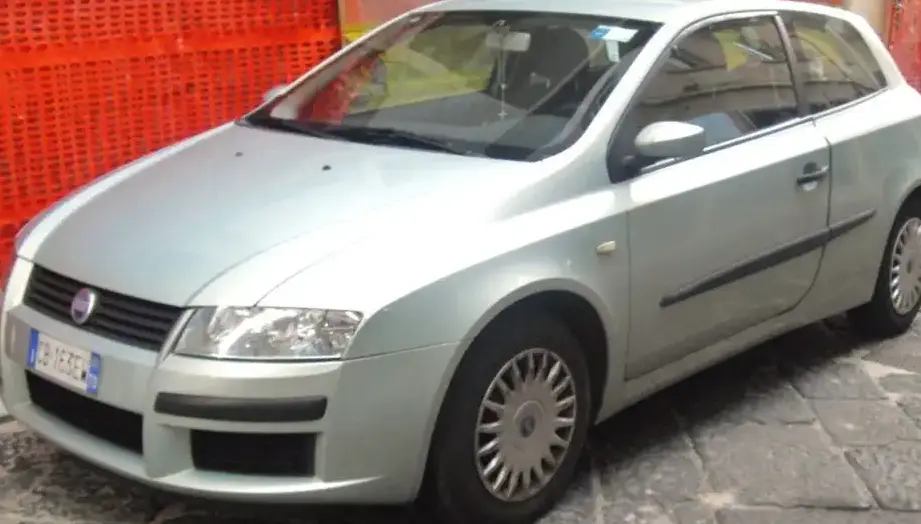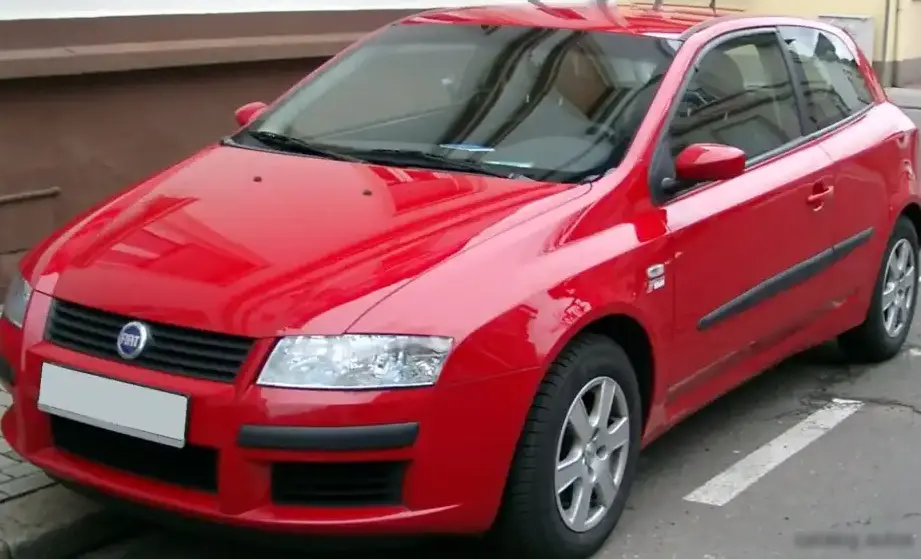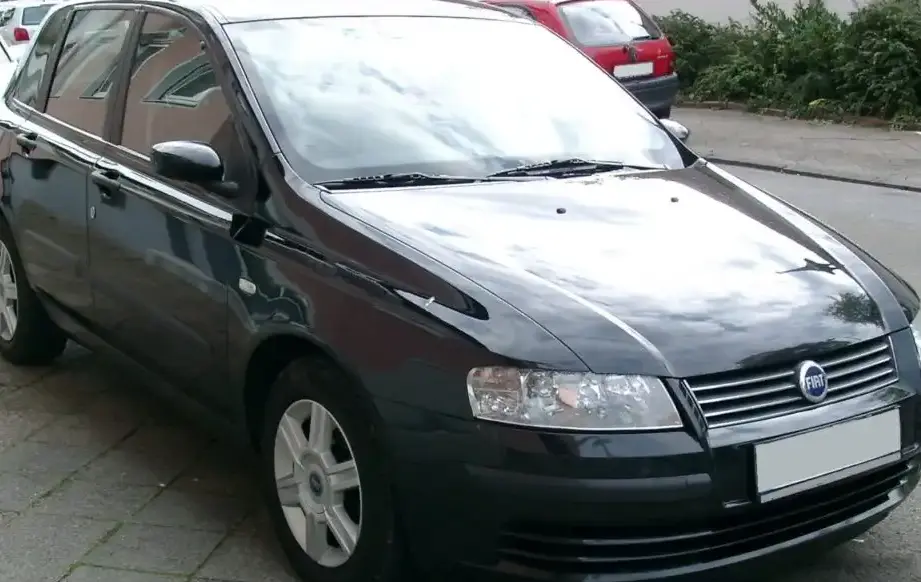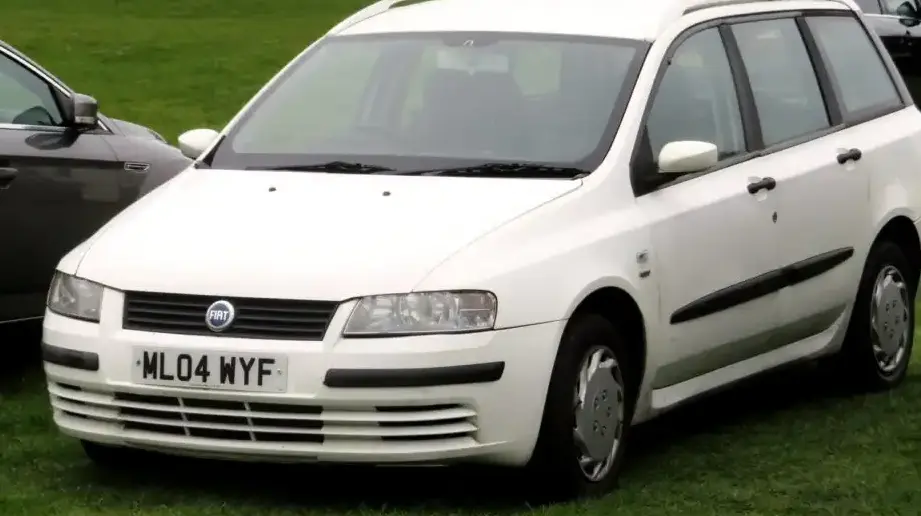
The Fiat Stilo Multi Wagon 1.4 i 16V (95 hp) was a practical and affordable station wagon offered by Fiat between 2004 and 2005, primarily aimed at the European market. Introduced as part of the facelifted Stilo range (following the initial 2001 launch), this variant occupied the entry to mid-level position within the Multi Wagon lineup. It provided a balance between fuel efficiency, reasonable performance, and cargo capacity, making it a popular choice for families and those needing a versatile vehicle. The Stilo Multi Wagon itself was based on the 1HX0/A3 platform, shared with other Stellantis vehicles of the era.
Technical Specifications
| Brand | Fiat |
| Model | Stilo |
| Generation | Stilo Multi Wagon (facelift 2003) |
| Type (Engine) | 1.4 i 16V (95 Hp) |
| Start of production | 2004 |
| End of production | 2005 |
| Powertrain Architecture | Internal Combustion engine |
| Body type | Station wagon (estate) |
| Seats | 5 |
| Doors | 5 |
| Fuel consumption (urban) | 8.7 l/100 km (27 US mpg, 32.5 UK mpg, 11.5 km/l) |
| Fuel consumption (extra urban) | 5.8 l/100 km (40.6 US mpg, 48.7 UK mpg, 17.2 km/l) |
| Fuel consumption (combined) | 6.8 l/100 km (34.6 US mpg, 41.5 UK mpg, 14.7 km/l) |
| Fuel Type | Petrol (Gasoline) |
| Acceleration 0 – 100 km/h | 13 sec |
| Acceleration 0 – 62 mph | 13 sec |
| Acceleration 0 – 60 mph | 12.4 sec |
| Maximum speed | 176 km/h (109.36 mph) |
| Weight-to-power ratio | 13 kg/Hp, 76.9 Hp/tonne |
| Weight-to-torque ratio | 9.6 kg/Nm, 103.6 Nm/tonne |
| Power | 95 Hp @ 5800 rpm |
| Power per litre | 59.5 Hp/l |
| Torque | 128 Nm @ 4500 rpm (94.41 lb.-ft. @ 4500 rpm) |
| Engine layout | Front, Transverse |
| Engine Model/Code | 843A1000 |
| Engine displacement | 1596 cm3 (97.39 cu. in.) |
| Number of cylinders | 4 |
| Engine configuration | Inline |
| Cylinder Bore | 80.5 mm (3.17 in.) |
| Piston Stroke | 78.4 mm (3.09 in.) |
| Compression ratio | 10.6:1 |
| Number of valves per cylinder | 4 |
| Fuel injection system | Multi-port manifold injection |
| Engine aspiration | Naturally aspirated engine |
| Engine oil capacity | 2.8 l (2.96 US qt, 2.46 UK qt) |
| Coolant capacity | 5.3 l (5.6 US qt, 4.66 UK qt) |
| Kerb Weight | 1235 kg (2722.71 lbs.) |
| Max. weight | 1804 kg (3977.14 lbs.) |
| Max load | 569 kg (1254.43 lbs.) |
| Trunk (boot) space – minimum | 510 l (18.01 cu. ft.) |
| Trunk (boot) space – maximum | 1480 l (52.27 cu. ft.) |
| Fuel tank capacity | 58 l (15.32 US gal, 12.76 UK gal) |
| Length | 4516 mm (177.8 in.) |
| Width | 1756 mm (69.13 in.) |
| Height | 1570 mm (61.81 in.) |
| Wheelbase | 2600 mm (102.36 in.) |
| Front track | 1514 mm (59.61 in.) |
| Rear track | 1508 mm (59.37 in.) |
| Drivetrain Architecture | Front wheel drive |
| Number of gears | 5 |
| Gearbox type | Manual transmission |
| Front suspension | Spring Strut |
| Rear suspension | Coil spring |
| Front brakes | Ventilated discs |
| Rear brakes | Disc |
| Assisting systems | ABS (Anti-lock braking system) |
| Steering type | Steering rack and pinion |
| Tires size | 195/65 R15 |
| Wheel rims size | 6.5J x 15 |
Powertrain & Engine Architecture
The heart of this Stilo Multi Wagon variant was the 843A1000 1.4-liter inline-four cylinder engine. This engine was a common fixture in many Fiat and Stellantis models of the period. It featured a 16-valve cylinder head, operated by a single overhead camshaft. Fuel delivery was handled by a multi-point sequential fuel injection system, providing a balance between efficiency and performance. The engine’s 10.6:1 compression ratio contributed to its modest power output. The engine was transversely mounted, driving the front wheels. The five-speed manual transmission was a standard feature, offering a relatively conventional gear ratio spread. While not particularly sophisticated, the transmission was known for its durability.
Driving Characteristics
The 95 hp 1.4-liter engine, paired with the five-speed manual transmission, provided adequate, but not exhilarating, performance. Acceleration from 0-60 mph took around 12.4 seconds, and top speed was approximately 109 mph. The engine felt somewhat strained when fully loaded or climbing hills. The gear ratios were tuned for fuel economy rather than outright speed. Compared to the more powerful 1.8-liter or diesel variants, this version felt noticeably slower. However, it offered a more forgiving and economical driving experience, particularly in urban environments. The steering was light and precise, making it easy to maneuver in tight spaces.
Equipment & Trim Levels
The 1.4 i 16V Multi Wagon typically came with a reasonable level of standard equipment. This included central locking, electric front windows, power steering, and an ABS anti-lock braking system. Interior upholstery was typically cloth, with a functional, if somewhat basic, dashboard layout. Optional extras included air conditioning, alloy wheels, a radio/CD player, and rear electric windows. The trim level generally sat in the middle of the Stilo Multi Wagon range, offering a good balance of features and affordability.
Chassis & Braking
The Stilo Multi Wagon featured a MacPherson strut front suspension and a coil spring rear suspension. This setup provided a comfortable ride, although it wasn’t particularly sporty. The front brakes were ventilated discs, while the rear brakes were solid discs. The braking system was adequate for the vehicle’s weight and performance, with ABS providing added safety. The suspension was tuned for comfort and practicality, prioritizing ride quality over handling precision.
Market Reception & Comparison
The Fiat Stilo Multi Wagon 1.4 i 16V was generally well-received as a practical and affordable family car. Critics praised its spacious interior, versatile cargo area, and reasonable fuel economy. However, some criticized its lack of outright performance and somewhat uninspired styling. Compared to the 1.8-liter version, the 1.4 offered better fuel economy but significantly less power. The diesel variants provided even better fuel economy and more torque, but at a higher initial cost. The 1.4 i 16V appealed to buyers who prioritized practicality and affordability over performance.
Legacy
The Fiat Stilo Multi Wagon 1.4 i 16V has become a relatively affordable and reliable used car. The 843A1000 engine is known for its durability, although regular maintenance is essential. Common issues include oil leaks and occasional sensor failures. Parts availability is generally good, and the car is relatively easy to repair. Today, it represents a practical and economical option for those seeking a spacious and versatile station wagon. While it may not be the most exciting car on the road, it offers a dependable and affordable transportation solution.