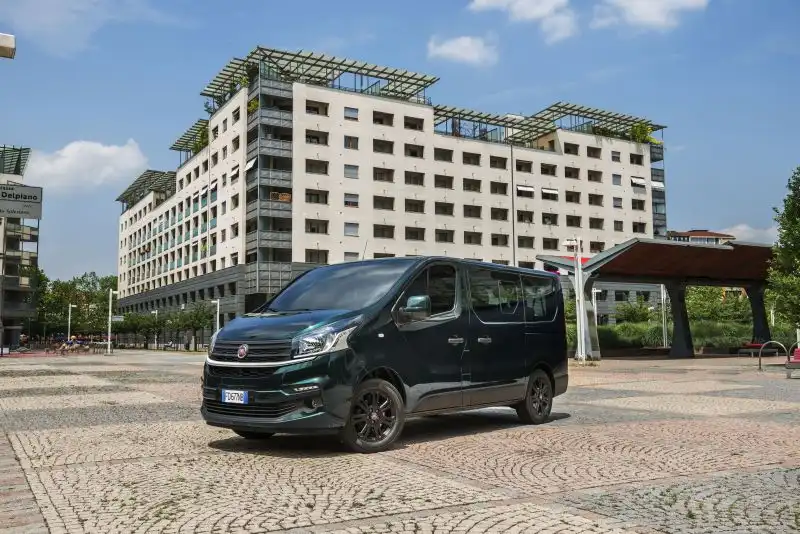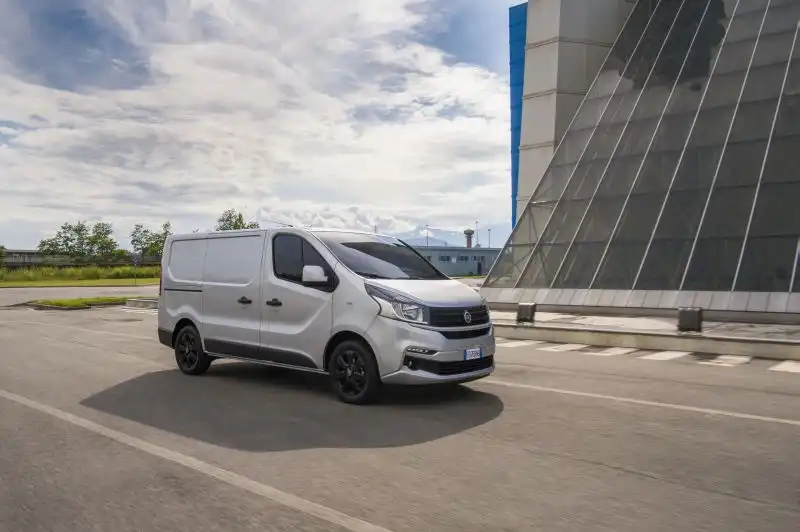
The Fiat Talento Van 1.6 Ecojet (95 hp) L1H1 was a light commercial vehicle produced by Fiat Professional from 2016 to 2021. Part of the second generation Talento range, this variant occupied the entry-level position in the lineup, offering a balance of affordability and practicality for businesses requiring a versatile van. The L1H1 designation refers to the vehicle’s body length and roof height – a standard length and standard roof configuration. It was primarily marketed in Europe, where the demand for compact, efficient vans for urban delivery and service applications was high. The Talento itself is closely related to the Renault Trafic and Opel/Vauxhall Vivaro, stemming from a collaborative effort between the PSA Group (now Stellantis) and Renault-Nissan Alliance.
Technical Specifications
| Brand | Fiat |
| Model | Talento |
| Generation | Talento Van |
| Type (Engine) | 1.6 Ecojet (95 Hp) L1H1 |
| Start of production | 2016 |
| End of production | 2021 |
| Powertrain Architecture | Internal Combustion engine |
| Body type | Minivan |
| Seats | 3 |
| Doors | 5 |
| Fuel consumption (urban) | 7.2 l/100 km (32.7 US mpg) |
| Fuel consumption (extra urban) | 5.6 l/100 km (42 US mpg) |
| Fuel consumption (combined) | 6.1 l/100 km (38.6 US mpg) |
| CO2 emissions | 160 g/km |
| Fuel Type | Diesel |
| Maximum speed | 154 km/h (95.69 mph) |
| Emission standard | Euro 6 |
| Weight-to-power ratio | 18.3 kg/Hp |
| Weight-to-torque ratio | 6.7 kg/Nm |
| Power | 95 Hp @ 3500 rpm |
| Torque | 260 Nm @ 1500 rpm (191.77 lb.-ft. @ 1500 rpm) |
| Engine layout | Front, Transverse |
| Engine Model/Code | R9M 413 |
| Engine displacement | 1598 cm3 (97.52 cu. in.) |
| Number of cylinders | 4 |
| Engine configuration | Inline |
| Cylinder Bore | 80 mm (3.15 in.) |
| Piston Stroke | 79.5 mm (3.13 in.) |
| Compression ratio | 15.45:1 |
| Number of valves per cylinder | 4 |
| Fuel injection system | Diesel Commonrail |
| Engine aspiration | Turbocharger, Intercooler |
| Engine oil capacity | 7.4 l (7.82 US qt | 6.51 UK qt) |
| Coolant | 9.5 l (10.04 US qt | 8.36 UK qt) |
| Kerb Weight | 1743 kg (3842.66 lbs.) |
| Max. weight | 2820 kg (6217.04 lbs.) |
| Max load | 1077 kg (2374.38 lbs.) |
| Trunk (boot) space – maximum | 5200 l (183.64 cu. ft.) |
| Fuel tank capacity | 80 l (21.13 US gal | 17.6 UK gal) |
| AdBlue tank | 20 l (5.28 US gal | 4.4 UK gal) |
| Permitted trailer load with brakes (12%) | 2000 kg (4409.25 lbs.) |
| Permitted trailer load without brakes | 750 kg (1653.47 lbs.) |
| Length | 4999 mm (196.81 in.) |
| Width | 1956 mm (77.01 in.) |
| Width including mirrors | 2283 mm (89.88 in.) |
| Height | 1971 mm (77.6 in.) |
| Wheelbase | 3098 mm (121.97 in.) |
| Front track | 1615 mm (63.58 in.) |
| Rear (Back) track | 1628 mm (64.09 in.) |
| Drivetrain Architecture | Front wheel drive |
| Number of gears and type of gearbox | 6 gears, manual transmission |
| Front suspension | Independent, type McPherson with coil spring and anti-roll bar |
| Rear suspension | Semi-independent, coil spring |
| Front brakes | Ventilated discs |
| Rear brakes | Disc |
| Tires size | 205/65 R16; 215/60 R17 |
| Wheel rims size | 16; 17 |
Powertrain & Engine Architecture
The Fiat Talento 1.6 Ecojet utilized the Renault-sourced R9M engine family, specifically the R9M 413 variant. This is a 1.6-liter, inline-four cylinder diesel engine employing common-rail direct injection and a turbocharger with intercooling. The engine produces 95 horsepower at 3500 rpm and 260 Nm (191.77 lb-ft) of torque at a low 1500 rpm, prioritizing usability and fuel efficiency over outright performance. The engine features a relatively high compression ratio of 15.45:1, contributing to its thermal efficiency. The 6-speed manual transmission was standard on this model, chosen for its cost-effectiveness and suitability for commercial applications. While an automated manual transmission (AMT) was available on some Talento trims, it wasn’t offered with the 95 hp engine.
Driving Characteristics
The 95 hp 1.6 Ecojet engine, paired with the manual transmission, provided adequate, but not exhilarating, performance. Acceleration was modest, geared towards smooth operation and fuel economy rather than rapid transit. The engine’s peak torque, available from 1500 rpm, meant that the van felt reasonably responsive in everyday driving situations, particularly when lightly loaded. The gear ratios were optimized for hauling and maintaining momentum on inclines. Compared to higher-output versions of the Talento (such as those with the 125 hp or 145 hp engines), this variant felt noticeably slower, especially when fully laden. However, the lower power output also translated to improved fuel economy, making it a popular choice for businesses prioritizing running costs.
Equipment & Trim Levels
The 1.6 Ecojet 95 hp L1H1 Talento typically came with a functional, rather than luxurious, specification. Standard equipment included a driver’s airbag, ABS brakes, power steering, and a basic audio system. The interior was primarily focused on durability and practicality, with hard-wearing plastics and easy-to-clean surfaces. Trim levels were relatively simple, with options often including air conditioning, rear parking sensors, and a basic navigation system. Higher trim levels added features like cruise control, upgraded audio systems, and more comfortable seating. The emphasis was on providing a reliable and cost-effective work vehicle.
Chassis & Braking
The Talento Van utilized a front-wheel-drive layout with an independent McPherson strut suspension at the front and a semi-independent coil spring suspension at the rear. This setup provided a reasonable balance between ride comfort and load-carrying capacity. The front brakes were ventilated discs, while the rear brakes were solid discs. The steering was hydraulic power-assisted, offering a direct and responsive feel. The L1H1 variant’s suspension was tuned to handle the typical weight distribution of a light commercial vehicle, with a focus on stability and control when carrying a load.
Market Reception & Comparison
The Fiat Talento 1.6 Ecojet (95 hp) L1H1 was generally well-received as a practical and affordable light commercial vehicle. Critics praised its fuel efficiency and low running costs, but noted its modest performance. Compared to its rivals – the Renault Trafic, Opel/Vauxhall Vivaro, and Volkswagen Transporter – the Talento offered a competitive price point and a good level of standard equipment. The 95 hp engine was seen as a good option for businesses that primarily used the van for urban deliveries or service applications, where high speed wasn’t a priority. The higher-powered versions of the Talento were favored by those who frequently carried heavy loads or traveled long distances.
Legacy
The Fiat Talento 1.6 Ecojet (95 hp) L1H1 has proven to be a relatively reliable workhorse in the used vehicle market. The R9M engine, while not without its quirks, is generally considered durable and capable of high mileage with proper maintenance. Common issues include diesel particulate filter (DPF) problems, particularly on vehicles used primarily for short journeys, and occasional turbocharger wear. However, these issues are typically manageable with regular servicing and preventative maintenance. The Talento’s simple construction and readily available parts contribute to its relatively low cost of ownership, making it a popular choice for small businesses and tradespeople seeking a dependable and affordable van.