
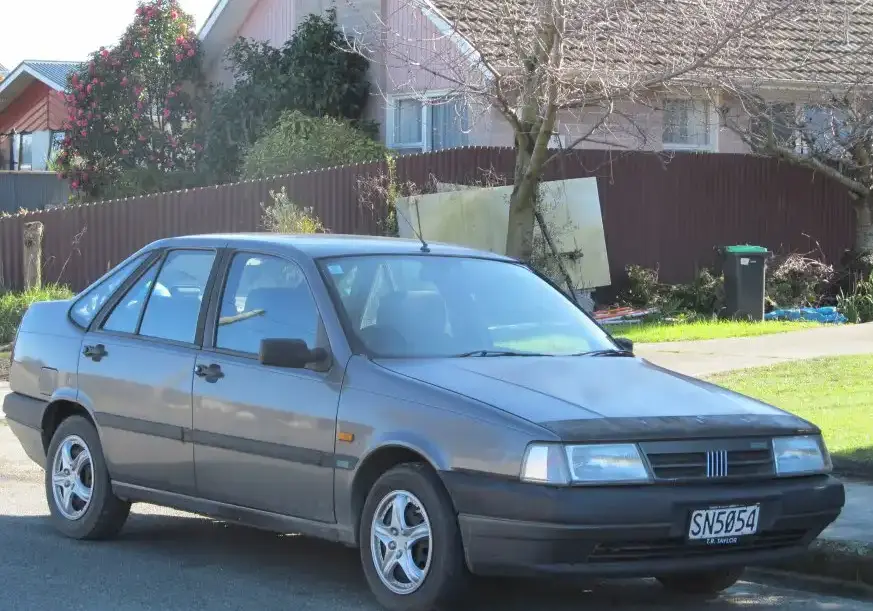
The Fiat Tempra 1.8 i.e. (159.AV), produced between 1993 and 1996, represented a key offering in Fiat’s mid-size sedan lineup. Part of the 159 series, the Tempra aimed to provide a comfortable and relatively affordable family car, bridging the gap between the smaller Tipo and the larger Croma. This 1.8-liter variant occupied a middle ground in the Tempra range, offering a balance between performance and economy, positioned above the base 1.6-liter models and below the more powerful 2.0-liter versions. It was primarily marketed in Europe and Latin America, serving as a competitor to vehicles like the Ford Mondeo, Opel Vectra, and Renault Laguna.
Technical Specifications
| Brand | Fiat |
| Model | Tempra |
| Generation | Tempra (159) |
| Type (Engine) | 1.8 i.e. (159.AV) (103 Hp) |
| Start of production | 1993 |
| End of production | 1996 |
| Powertrain Architecture | Internal Combustion engine |
| Body type | Sedan |
| Fuel Type | Petrol (Gasoline) |
| Power | 103 Hp |
| Engine Model/Code | 835 C2.000 |
| Engine aspiration | Naturally aspirated engine |
| Engine oil capacity | 5.2 l (5.49 US qt | 4.58 UK qt) |
| Coolant capacity | 6.9 l (7.29 US qt | 6.07 UK qt) |
| Length | 4354 mm (171.42 in.) |
| Width | 1695 mm (66.73 in.) |
| Height | 1445 mm (56.89 in.) |
| Front overhang | 918 mm (36.14 in.) |
| Rear overhang | 896 mm (35.28 in.) |
Powertrain & Engine Architecture
The heart of the Tempra 1.8 i.e. was the 835 C2.000 engine, an 1769 cc inline-four cylinder powerplant. This engine featured a cast iron block and an aluminum cylinder head, a common configuration for Fiat engines of the era. It employed a single overhead camshaft (SOHC) valvetrain with two valves per cylinder. Fuel delivery was managed by Bosch Mono-Motronic fuel injection, a single-point injection system that was relatively simple and reliable, though less sophisticated than multi-point injection systems becoming increasingly common at the time. The Mono-Motronic system contributed to reasonable fuel efficiency but limited ultimate performance. The engine produced 103 horsepower at 5500 rpm and 137 Nm (101 lb-ft) of torque at 3000 rpm. The engine was mated to a four-speed automatic transmission, a GM-sourced unit known for its durability but also its relatively conservative gear ratios. This transmission was chosen to provide smooth, comfortable shifts, prioritizing ease of driving over sporty performance.
Driving Characteristics
The Tempra 1.8 i.e. with the automatic transmission offered a comfortable, if not particularly exhilarating, driving experience. Acceleration was adequate for everyday driving, with a 0-60 mph time estimated around 11-12 seconds. The automatic transmission, while smooth, did detract from the engine’s available power, resulting in a noticeable delay in response during overtaking maneuvers. The gear ratios were spaced to prioritize fuel economy and cruising comfort, rather than outright acceleration. Compared to the five-speed manual version of the 1.8, the automatic suffered a slight performance penalty. The manual offered quicker acceleration and a more engaging driving experience, appealing to drivers who prioritized performance. The suspension, a conventional MacPherson strut front and semi-trailing arm rear setup, provided a comfortable ride, absorbing bumps and imperfections in the road well. However, it wasn’t particularly sporty, with noticeable body roll during cornering.
Equipment & Trim Levels
The Tempra 1.8 i.e. typically came equipped with a reasonable level of standard features for its price point. These included central locking, power steering, electric front windows, and a basic stereo system. Interior upholstery was typically cloth, with a relatively simple dashboard layout. Optional extras included air conditioning, alloy wheels, a sunroof, and upgraded stereo systems. Higher trim levels, often denoted by suffixes like “SX” or “LX”, added features such as upgraded interior trim, additional soundproofing, and more comprehensive instrumentation. The Tempra aimed for a balance between affordability and comfort, offering a step up in features compared to the base models without venturing into the luxury segment.
Chassis & Braking
The Tempra 159 utilized a relatively conventional chassis design. The front suspension employed MacPherson struts, while the rear featured a semi-trailing arm setup. Braking on the Tempra 1.8 i.e. typically consisted of disc brakes on the front wheels and drum brakes on the rear. This configuration was common for vehicles in this class during the early 1990s, offering adequate stopping power for everyday driving. Anti-lock braking system (ABS) was available as an optional extra, enhancing safety in emergency braking situations. The steering was a recirculating ball system, providing a relatively light and easy steering feel, but lacking the precision of more modern rack-and-pinion systems. Stabilizer bars were fitted to both the front and rear axles to reduce body roll during cornering.
Market Reception & Comparison
The Fiat Tempra 1.8 i.e. automatic received mixed reviews from automotive critics. It was generally praised for its comfortable ride, spacious interior, and reasonable price. However, the automatic transmission was often criticized for its sluggish performance and lack of responsiveness. Compared to the manual transmission versions, the automatic was seen as a compromise, sacrificing performance for convenience. Fuel economy was considered average for the class, falling somewhere in the middle of the pack. Reliability was generally good, although the Mono-Motronic fuel injection system could occasionally require maintenance. Compared to rivals like the Ford Mondeo and Opel Vectra, the Tempra offered a more affordable entry point, but lacked the same level of refinement and performance. The 2.0-liter Tempra offered a significant performance boost, but at a higher price point.
Legacy
The Fiat Tempra, while not a groundbreaking vehicle, served as a solid and reliable family car for many owners. The 1.8 i.e. automatic powertrain, while not the most exciting configuration, proved to be reasonably durable and relatively easy to maintain. Today, Tempra 1.8 i.e. models are becoming increasingly rare, and well-maintained examples are sought after by classic Fiat enthusiasts. The engine, while aging, is known for its robustness, and parts availability remains reasonable. The Tempra represents a snapshot of early 1990s automotive design and engineering, offering a glimpse into a time when comfort and affordability were prioritized over outright performance and technological innovation. Its legacy lies in providing dependable transportation for a generation of families.
