
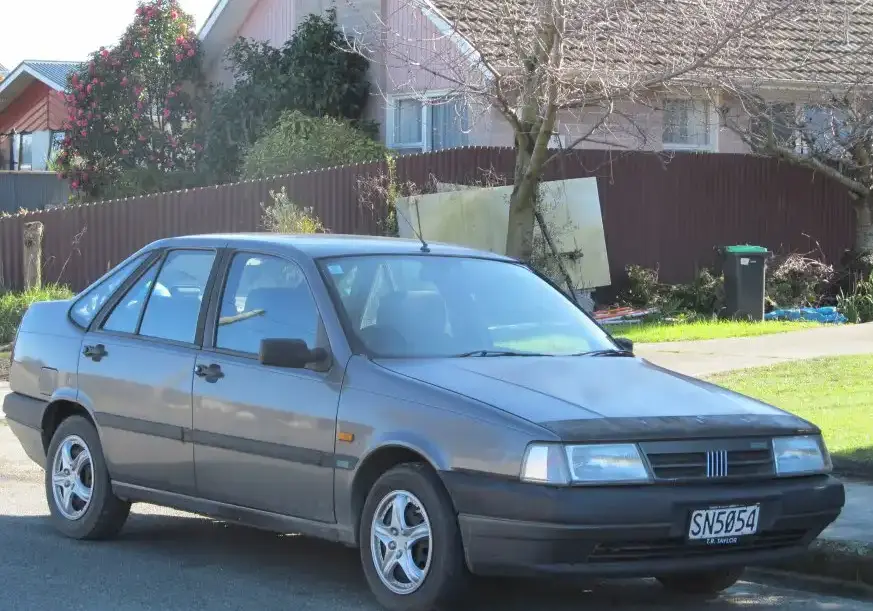
The Fiat Tempra 1.9 TD (designated 159.AQ) was a diesel-powered variant of the Tempra (Type 159) sedan produced between 1992 and 1996. Positioned as an economy-focused option within the Tempra range, it aimed to provide fuel efficiency and practicality for buyers in European markets. The Tempra itself was Fiat’s replacement for the aging Tipo, representing a significant step up in terms of size, comfort, and technology. The 1.9 TD model, while not the most powerful in the lineup, offered a compelling blend of affordability and reasonable performance for long-distance driving.
Technical Specifications
| Brand | Fiat |
| Model | Tempra |
| Generation | Tempra (159) |
| Type (Engine) | 1.9 TD (159.AQ) (80 Hp) |
| Start of production | 1992 |
| End of production | 1996 |
| Powertrain Architecture | Internal Combustion engine |
| Body type | Sedan |
| Fuel Type | Diesel |
| Power | 80 Hp |
| Engine Model/Code | 160 B6.046 |
| Engine aspiration | Turbocharger |
| Engine oil capacity | 5 l (5.28 US qt | 4.4 UK qt) |
| Coolant capacity | 8.8 l (9.3 US qt | 7.74 UK qt) |
| Length | 4354 mm (171.42 in.) |
| Width | 1695 mm (66.73 in.) |
| Height | 1445 mm (56.89 in.) |
| Front overhang | 918 mm (36.14 in.) |
| Rear overhang | 896 mm (35.28 in.) |
Powertrain & Engine Architecture
The heart of the Tempra 1.9 TD was the 160 B6.046 engine, a 1.9-liter inline-four cylinder diesel. This engine was a common sight in various Fiat and Alfa Romeo models of the era. It featured indirect injection, utilizing a Bosch rotary injection pump to deliver fuel into the pre-chamber. This system, while not as refined as direct injection, offered good fuel economy and acceptable performance for its time. The engine was turbocharged, which significantly boosted power output compared to naturally aspirated diesel engines. The turbocharger helped to overcome the inherent limitations of diesel engines, providing increased torque and improved acceleration. The engine produced 80 horsepower and approximately 147 lb-ft of torque. The engine was typically paired with a five-speed manual transmission, but a four-speed automatic transmission was also available, though less common. The automatic transmission was a conventional hydraulic unit, offering smooth but not particularly quick shifts.
Driving Characteristics
The Tempra 1.9 TD, particularly with the automatic transmission, wasn’t designed for outright speed. Acceleration was adequate for everyday driving, but overtaking maneuvers required careful planning. The engine’s torque, however, provided good pulling power, making it well-suited for highway cruising and carrying passengers or cargo. The automatic transmission, while convenient, did sap some of the engine’s power, resulting in slightly slower acceleration compared to the manual version. Gear ratios were optimized for fuel efficiency rather than performance. The suspension was tuned for comfort, providing a relatively smooth ride, although it could feel somewhat soft and wallowy when pushed hard through corners. Steering was light and easy, making it suitable for urban driving, but lacked the precision of more sporty vehicles.
Equipment & Trim Levels
The Tempra 1.9 TD typically came with a reasonable level of standard equipment, reflecting its position as a mainstream family sedan. Standard features generally included power steering, central locking, electric front windows, and a basic stereo system. Interior upholstery was typically cloth, with a durable and practical design. Higher trim levels, such as the SX, offered additional features like alloy wheels, a sunroof, upgraded upholstery, and air conditioning. Optional extras included a trip computer, rear electric windows, and a more sophisticated audio system. The dashboard layout was functional and straightforward, with clearly labeled controls. The overall interior ambiance was pleasant but not luxurious.
Chassis & Braking
The Tempra utilized a relatively conventional chassis design, with independent front suspension and a torsion beam rear axle. The front suspension featured MacPherson struts, while the rear torsion beam provided a simple and cost-effective solution for maintaining ride comfort. Braking systems varied depending on the trim level. Base models typically featured disc brakes on the front wheels and drum brakes on the rear. Higher trim levels often included disc brakes all around, providing improved stopping power. Anti-lock braking system (ABS) was available as an option, enhancing safety in emergency braking situations. Stabilizer bars were fitted to both the front and rear axles to reduce body roll during cornering.
Market Reception & Comparison
The Fiat Tempra 1.9 TD was generally well-received in European markets as a practical and fuel-efficient family sedan. Critics praised its spacious interior, comfortable ride, and reasonable price. However, it was often criticized for its somewhat bland styling and lack of driving excitement. Compared to other diesel-powered sedans of the time, such as the Volkswagen Passat TDI or the Ford Mondeo TD, the Tempra offered a competitive price point but lacked the refinement and performance of its German rivals. The 1.9 TD version was particularly popular with drivers who prioritized fuel economy and long-distance comfort. The automatic transmission, while convenient, was often seen as a compromise, sacrificing some performance for ease of use.
Legacy
The Fiat Tempra 1.9 TD, while not a particularly iconic vehicle, remains a relatively common sight on European roads today. The 160 B6.046 engine is known for its durability and reliability, provided it is properly maintained. Parts availability is generally good, making it a relatively affordable vehicle to keep running. However, like all older vehicles, it is susceptible to age-related issues such as rust and wear and tear on suspension components. In the used car market, the Tempra 1.9 TD is often sought after by buyers looking for a cheap and reliable workhorse. Its fuel efficiency and simple mechanical design make it a practical choice for those who need a dependable vehicle for everyday transportation. The Tempra represented a significant step forward for Fiat in terms of design and technology, and the 1.9 TD variant played a key role in its success.
