
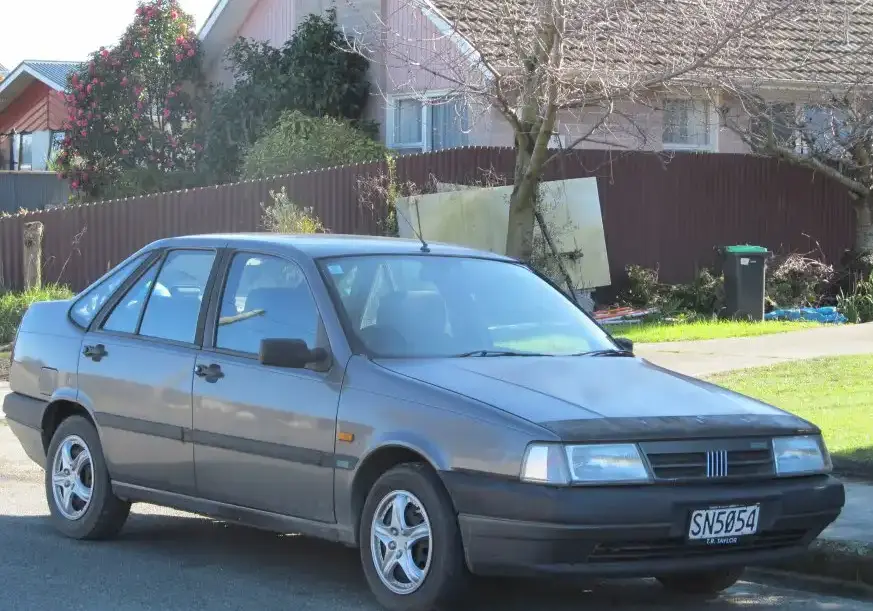
The Fiat Tempra 2.0 i.e. (159.AP), produced between 1990 and 1996, represented a significant step forward for Fiat in the mid-size sedan segment. Part of the 159 series, the Tempra aimed to replace the aging Fiat Regata and offered a more modern design, improved comfort, and a wider range of engine options. The 2.0 i.e. variant, equipped with a 113 horsepower engine and a four-speed automatic transmission, occupied a middle ground in the Tempra lineup, offering a balance between performance and convenience. It was positioned above the base 1.6-liter models and below the more powerful 2.1-liter versions, targeting buyers who desired a comfortable and reasonably quick family sedan without the added cost of the top-tier trims.
Technical Specifications
| Brand | Fiat |
| Model | Tempra |
| Generation | Tempra (159) |
| Type (Engine) | 2.0 i.e. (159.AP) (113 Hp) |
| Start of production | 1990 |
| End of production | 1996 |
| Powertrain Architecture | Internal Combustion engine |
| Body type | Sedan |
| Seats | 5 |
| Doors | 4 |
| Fuel consumption (combined) | 9.5 l/100 km (24.8 US mpg, 29.7 UK mpg, 10.5 km/l) |
| Fuel Type | Petrol (Gasoline) |
| Acceleration 0 – 100 km/h | 12.9 sec |
| Acceleration 0 – 62 mph | 12.9 sec |
| Acceleration 0 – 60 mph | 12.3 sec |
| Maximum speed | 185 km/h (114.95 mph) |
| Weight-to-power ratio | 10.6 kg/Hp, 94.3 Hp/tonne |
| Weight-to-torque ratio | 7.7 kg/Nm, 130.2 Nm/tonne |
| Power | 113 Hp @ 5750 rpm |
| Power per litre | 56.6 Hp/l |
| Torque | 156 Nm @ 3300 rpm (115.06 lb.-ft. @ 3300 rpm) |
| Engine layout | Front, Transverse |
| Engine Model/Code | 159 A6.046 |
| Engine displacement | 1995 cm3 (121.74 cu. in.) |
| Number of cylinders | 4 |
| Engine configuration | Inline |
| Cylinder Bore | 84 mm (3.31 in.) |
| Piston Stroke | 90 mm (3.54 in.) |
| Compression ratio | 9.5:1 |
| Number of valves per cylinder | 2 |
| Fuel injection system | Multi-port manifold injection |
| Engine aspiration | Naturally aspirated engine |
| Valvetrain | DOHC |
| Engine oil capacity | 5.2 l (5.49 US qt | 4.58 UK qt) |
| Coolant | 6.9 l (7.29 US qt | 6.07 UK qt) |
| Kerb Weight | 1198 kg (2641.14 lbs.) |
| Max. weight | 1720 kg (3791.95 lbs.) |
| Max load | 522 kg (1150.81 lbs.) |
| Trunk (boot) space – minimum | 500 l (17.66 cu. ft.) |
| Fuel tank capacity | 60 l (15.85 US gal | 13.2 UK gal) |
| Length | 4354 mm (171.42 in.) |
| Width | 1695 mm (66.73 in.) |
| Height | 1445 mm (56.89 in.) |
| Wheelbase | 2540 mm (100 in.) |
| Front track | 1435 mm (56.5 in.) |
| Rear (Back) track | 1415 mm (55.71 in.) |
| Front overhang | 918 mm (36.14 in.) |
| Rear overhang | 896 mm (35.28 in.) |
| Drivetrain Architecture | The Internal combustion engine (ICE) drives the front wheels of the vehicle. |
| Drive wheel | Front wheel drive |
| Number of gears and type of gearbox | 4 gears, automatic transmission |
| Front suspension | Wishbone |
| Rear suspension | Coil spring |
| Front brakes | Ventilated discs |
| Rear brakes | Disc |
| Assisting systems | ABS (Anti-lock braking system) |
| Steering type | Steering rack and pinion |
| Power steering | Hydraulic Steering |
| Tires size | 185/60 R14 |
Powertrain & Engine Architecture
The heart of the Tempra 2.0 i.e. was the 159 A6.046 engine, a 1995cc inline-four cylinder unit. This engine featured a dual overhead camshaft (DOHC) valvetrain operating two valves per cylinder. Fuel delivery was handled by a multi-port fuel injection system, a significant upgrade over the carburetor systems found in older Fiat models. The engine produced 113 horsepower at 5750 rpm and 156 Nm (115 lb-ft) of torque at 3300 rpm. The automatic transmission was a conventional four-speed unit, designed for smooth operation and ease of use. While not particularly advanced, it was a reliable unit that suited the Tempra’s intended role as a comfortable family car. The engine’s design prioritized smooth power delivery over outright performance, making it well-suited to everyday driving conditions.
Driving Characteristics
The Tempra 2.0 i.e. with the automatic transmission offered a comfortable, if not particularly sporty, driving experience. Acceleration from 0 to 60 mph took around 12.3 seconds, and top speed was approximately 115 mph. The automatic transmission, while convenient, did detract somewhat from the engine’s potential. Gear changes were not always the quickest, and the transmission could sometimes feel hesitant during overtaking maneuvers. Compared to the five-speed manual version, the automatic was noticeably slower. However, the automatic’s smooth operation and ease of use made it a popular choice for drivers who prioritized comfort over performance. The suspension provided a reasonably comfortable ride, absorbing most road imperfections without excessive body roll.
Equipment & Trim Levels
The 2.0 i.e. trim level typically included features such as power steering, central locking, electric front windows, and an upgraded interior trim compared to the base models. Optional extras included air conditioning, a sunroof, and alloy wheels. Interior upholstery was typically cloth, with a relatively simple dashboard layout. The Tempra aimed for a functional and practical interior rather than a luxurious one. The focus was on providing a comfortable and spacious cabin for passengers.
Chassis & Braking
The Tempra utilized a front-wheel-drive layout with a wishbone front suspension and a coil spring rear suspension. Braking was handled by ventilated discs at the front and solid discs at the rear. An anti-lock braking system (ABS) was often included as standard equipment, enhancing safety. The chassis was designed to provide a balance between comfort and handling, prioritizing ride quality over sharp cornering ability. The steering was a rack and pinion system with hydraulic assistance, providing relatively light and easy steering.
Market Reception & Comparison
The Fiat Tempra 2.0 i.e. automatic was generally well-received by automotive critics as a practical and comfortable family sedan. However, it wasn’t considered a particularly exciting car to drive. Compared to the 1.6-liter models, the 2.0 i.e. offered noticeably more power and refinement. However, the 2.1-liter versions provided even greater performance. Fuel economy was reasonable for the time, averaging around 24.8 US mpg. Reliability was generally good, although some owners reported issues with the electrical system. The Tempra competed with other mid-size sedans such as the Ford Escort, Opel Vectra, and Renault 19.
Legacy
The Fiat Tempra, while not a groundbreaking vehicle, played an important role in modernizing Fiat’s lineup in the early 1990s. The 2.0 i.e. automatic variant remains a relatively affordable and practical classic car today. The engine and transmission combination, while not known for exceptional performance, proved to be reasonably durable. Finding well-maintained examples can be challenging, as many Tempra’s have succumbed to rust or have been scrapped. However, for those seeking a comfortable and affordable classic Italian sedan, the Tempra 2.0 i.e. automatic represents a viable option.
