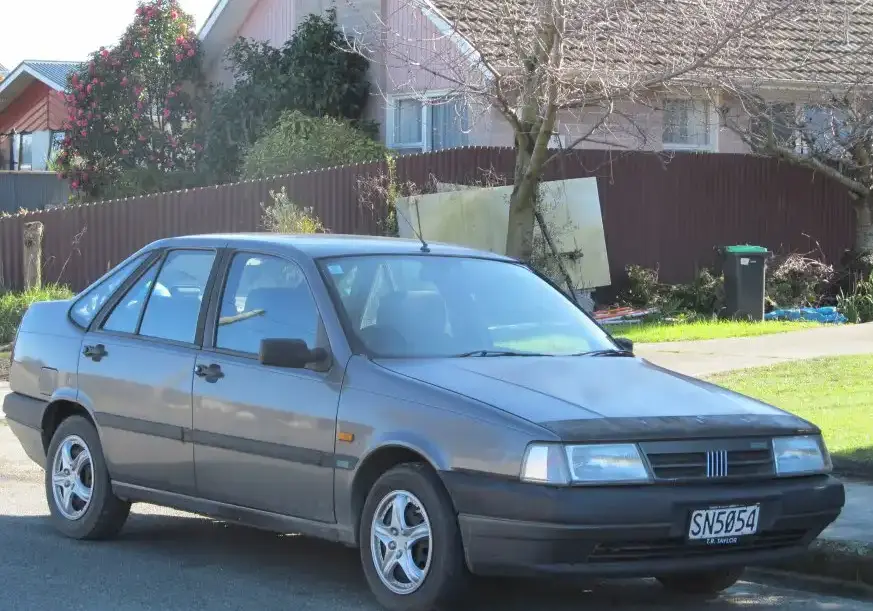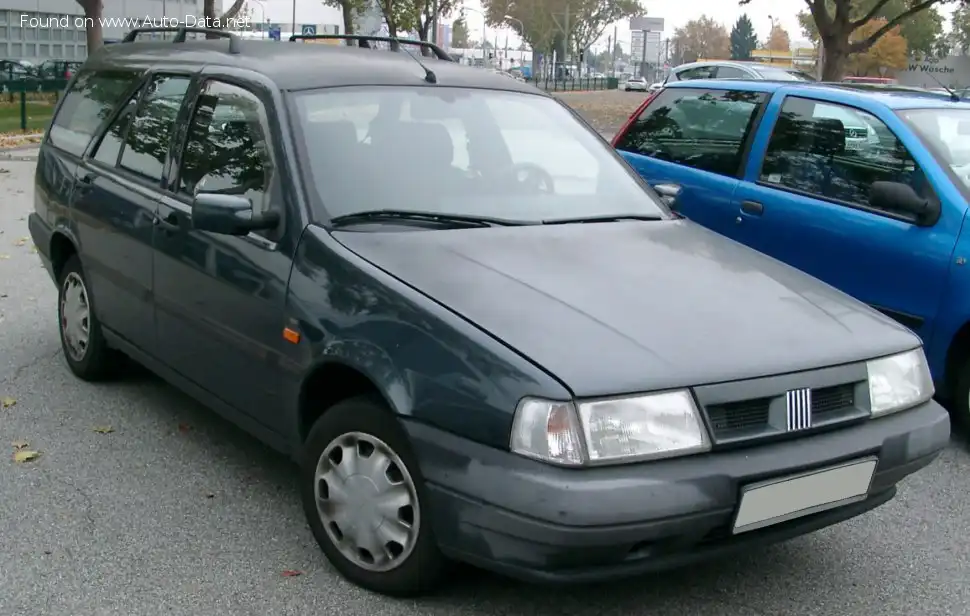
The Fiat Tempra S.w. (159) 1.8 i.e. (159.AV), produced between 1993 and 1996, represented a significant offering in the European family car market. As a station wagon variant of the Tempra, it aimed to provide practicality and space without sacrificing the comfort and relatively modern engineering of the broader Tempra range. The 1.8 i.e. trim, powered by the 835 C2.000 engine producing 103 horsepower, occupied a middle ground within the Tempra lineup, offering a balance between affordability and performance. It was positioned above the base 1.6-liter models and below the more powerful 2.0-liter versions, targeting families and individuals needing a versatile vehicle for everyday use.
Technical Specifications
| Brand | Fiat |
| Model | Tempra |
| Generation | Tempra S.w. (159) |
| Type (Engine) | 1.8 i.e. (159.AV) (103 Hp) |
| Start of production | 1993 |
| End of production | 1996 |
| Powertrain Architecture | Internal Combustion engine |
| Body type | Station wagon (estate) |
| Fuel Type | Petrol (Gasoline) |
| Power | 103 Hp |
| Engine Model/Code | 835 C2.000 |
| Engine aspiration | Naturally aspirated engine |
| Engine oil capacity | 5.2 l (5.49 US qt | 4.58 UK qt) |
| Coolant capacity | 6.9 l (7.29 US qt | 6.07 UK qt) |
Powertrain & Engine Architecture
The heart of the Tempra 1.8 i.e. was the 835 C2.000, an 1769cc inline-four cylinder engine. This engine featured a cast iron block and an aluminum cylinder head, a common configuration for European engines of the era. It employed a single overhead camshaft (SOHC) design operating two valves per cylinder. Fuel delivery was managed by Bosch Mono-Motronic fuel injection, a relatively sophisticated system for its time, offering improved fuel efficiency and reduced emissions compared to earlier carburetor-based systems. The Mono-Motronic system combined fuel injection and engine management into a single unit, controlling ignition timing and fuel mixture based on various sensor inputs. The engine’s 103 horsepower output was achieved at 5500 rpm, with peak torque of 137 Nm (101 lb-ft) arriving at 3500 rpm. The engine was typically paired with a four-speed automatic transmission, although a five-speed manual was also available. The automatic transmission, while providing convenience, was known for being somewhat conservative in its shift programming, prioritizing smoothness over outright performance.
Driving Characteristics
The Tempra 1.8 i.e. with the automatic transmission offered a comfortable, if not particularly sporty, driving experience. Acceleration was adequate for everyday driving, with a 0-60 mph time estimated around 11-12 seconds. The automatic transmission’s gear ratios were geared towards fuel economy and relaxed cruising, rather than rapid acceleration. Compared to the five-speed manual version, the automatic suffered a noticeable performance deficit, as the manual allowed the engine to operate within its optimal power band more effectively. The suspension, consisting of MacPherson struts at the front and a twist-beam rear axle, provided a reasonably comfortable ride, absorbing bumps and imperfections in the road surface well. However, it wasn’t particularly engaging for enthusiastic drivers, exhibiting a degree of body roll in corners. Steering was light and easy, making it well-suited for urban driving, but lacked the precision and feedback desired by those seeking a more connected driving experience.
Equipment & Trim Levels
The Tempra S.w. 1.8 i.e. typically came equipped with a reasonable level of standard features for a family car of the early 1990s. These included central locking, power windows, and a basic stereo system. Interior upholstery was typically cloth, with a durable and practical design. Higher trim levels, often denoted by additional badging, offered options such as air conditioning, alloy wheels, and upgraded interior trim. The dashboard layout was functional and straightforward, with clearly labeled controls. Optional extras included a sunroof, metallic paint, and a more advanced audio system. Safety features were relatively basic by modern standards, consisting primarily of seatbelts and a collapsible steering column.
Chassis & Braking
The Tempra S.w. utilized a front-wheel-drive layout. The front suspension employed MacPherson struts with an anti-roll bar, while the rear suspension featured a torsion beam axle. Braking was typically accomplished with disc brakes at the front and drum brakes at the rear. The braking system was adequate for normal driving conditions, but lacked the stopping power and fade resistance of more modern systems. The steering was a power-assisted rack and pinion system, providing light and easy steering feel. The chassis was designed to prioritize comfort and practicality over outright handling performance.
Market Reception & Comparison
The Fiat Tempra S.w. 1.8 i.e. was generally well-received by automotive critics as a practical and affordable family car. It offered a good balance of space, comfort, and fuel economy. However, it wasn’t considered a particularly exciting or dynamic vehicle to drive. Compared to other station wagons in its class, such as the Ford Mondeo and the Opel/Vauxhall Vectra, the Tempra offered a competitive price point but lacked the refinement and driving dynamics of its rivals. The 1.8-liter engine provided adequate performance, but the automatic transmission could feel sluggish at times. Fuel economy was reasonable, averaging around 28-32 mpg in mixed driving conditions. Reliability was generally good, although some owners reported issues with the electrical system and the automatic transmission.
Legacy
The Fiat Tempra, and specifically the 1.8 i.e. S.w. variant, holds a modest place in automotive history. While not a groundbreaking vehicle, it represented a solid and practical offering in the European family car market. The 835 C2.000 engine proved to be reasonably durable, and many examples are still on the road today, albeit often showing their age. In the used car market, Tempra S.w. models are relatively affordable and appeal to those seeking a classic 1990s station wagon. Maintenance costs are generally low, as parts are readily available and the engine is relatively simple to work on. However, potential buyers should be aware of the possibility of age-related issues, such as corrosion and wear and tear on the suspension and braking systems. The Tempra S.w. 1.8 i.e. remains a testament to Fiat’s ability to produce practical and affordable vehicles for the masses.