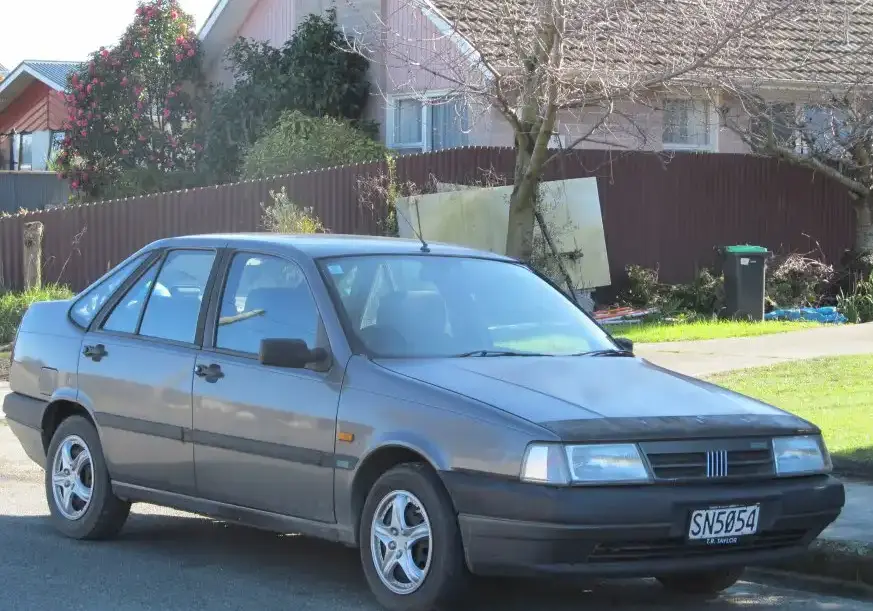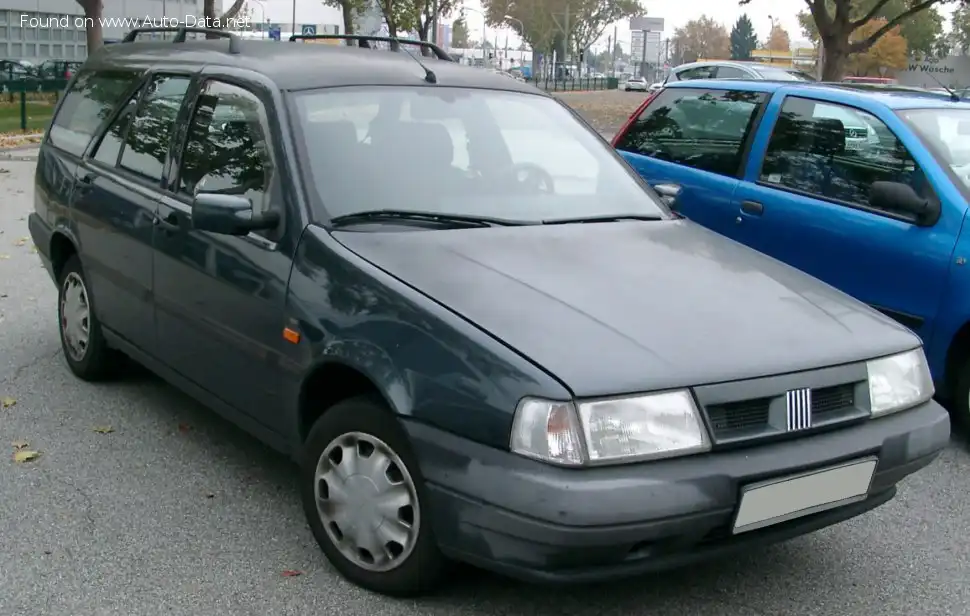
The Fiat Tempra S.w. (159) 1.8 i.e., produced between 1993 and 1996, represents a significant offering in Fiat’s lineup during that period. As a station wagon variant of the Tempra, it aimed to provide practicality and space without sacrificing the comfort and relative affordability that characterized the Tempra range. This particular 1.8-liter, 90 horsepower version (designated 159.AZ) occupied a mid-range position within the Tempra S.w. family, offering a balance between performance and fuel economy, appealing to families and those needing a versatile vehicle. It was part of the broader Type 814 project, which also encompassed the sedan and coupe versions of the Tempra.
Technical Specifications
| Brand | Fiat |
| Model | Tempra |
| Generation | Tempra S.w. (159) |
| Type (Engine) | 1.8 i.e. (159.AZ) (90 Hp) |
| Start of production | 1993 |
| End of production | 1996 |
| Powertrain Architecture | Internal Combustion engine |
| Body type | Station wagon (estate) |
| Fuel Type | Petrol (Gasoline) |
| Power | 90 Hp |
| Engine Model/Code | 835 C4.000 |
| Engine aspiration | Naturally aspirated engine |
| Engine oil capacity | 5.2 l (5.49 US qt | 4.58 UK qt) |
| Coolant capacity | 6.9 l (7.29 US qt | 6.07 UK qt) |
Powertrain & Engine Architecture
The heart of the Tempra S.w. 1.8 i.e. is the 835 C4.000 engine, an 1769cc inline-four cylinder gasoline engine. This engine is naturally aspirated, meaning it doesn’t utilize a turbocharger or supercharger. It features a single overhead camshaft (SOHC) valvetrain operating two valves per cylinder. Fuel delivery is managed by Bosch Mono-Motronic fuel injection, a relatively simple but effective system for its time. This system controls fuel delivery based on engine speed, load, and other parameters, optimizing for both performance and fuel efficiency. The 1.8-liter engine produces 90 horsepower at 5200 rpm and approximately 137 Nm (101 lb-ft) of torque at 2900 rpm. The engine is paired with a three-speed automatic transmission, a common choice for drivers prioritizing ease of use over outright performance. This transmission was known for its smooth operation, but its limited number of gears meant it wasn’t as efficient as more modern automatic gearboxes.
Driving Characteristics
The driving experience in the Tempra S.w. 1.8 i.e. with the automatic transmission is best described as comfortable and relaxed. Acceleration is adequate for everyday driving, but it’s not particularly brisk. The three-speed automatic transmission contributes to this, with relatively wide gear ratios. The engine feels somewhat strained when accelerating hard, and passing maneuvers require planning. Compared to the manual transmission versions of the 1.8, the automatic suffers a noticeable performance penalty. The manual offered quicker acceleration and a more engaging driving experience. Compared to the higher-performance 2.0-liter Tempra models, the 1.8 i.e. automatic is significantly slower, but it offers better fuel economy. The suspension is tuned for comfort, providing a reasonably smooth ride even on less-than-perfect road surfaces. Steering is light and easy, making it maneuverable in urban environments.
Equipment & Trim Levels
The Tempra S.w. 1.8 i.e. typically came equipped with a reasonable level of standard features for a vehicle in its class during the early 1990s. These included power steering, central locking, electric front windows, and a basic stereo system. Interior upholstery was typically cloth, with a relatively simple dashboard layout. Optional extras included air conditioning, alloy wheels, and a more advanced stereo system. Higher trim levels, if available in specific markets, might have added features like a sunroof, upgraded upholstery, and additional exterior trim. The overall interior design was functional and practical, prioritizing space and usability over luxury.
Chassis & Braking
The Tempra S.w. utilizes a MacPherson strut front suspension and a torsion beam rear suspension. This setup provides a good balance between ride comfort and handling. The torsion beam rear suspension is a cost-effective solution that helps maximize interior space. Braking on the Tempra S.w. 1.8 i.e. typically consisted of disc brakes on the front wheels and drum brakes on the rear wheels. This configuration was common for vehicles in this price range at the time. The braking system is adequate for normal driving conditions, but it lacks the stopping power of more modern braking systems. Anti-lock braking system (ABS) was not standard equipment and was often only available as an optional extra.
Market Reception & Comparison
The Fiat Tempra S.w. 1.8 i.e. was generally well-received as a practical and affordable family vehicle. Critics praised its spacious interior, comfortable ride, and reasonable fuel economy. However, the automatic transmission was often criticized for its lack of responsiveness and limited number of gears. Compared to other station wagons available at the time, such as the Ford Escort Estate or the Opel/Vauxhall Astra Estate, the Tempra S.w. offered a competitive level of space and practicality. Fuel economy was comparable to its rivals, but the performance of the 1.8 i.e. automatic was generally considered to be slightly below average. Reliability was generally good, although some owners reported issues with the Bosch Mono-Motronic fuel injection system.
Legacy
The Fiat Tempra S.w. 1.8 i.e. represents a significant chapter in Fiat’s history, showcasing the company’s ability to produce practical and affordable family vehicles. While not a particularly exciting or groundbreaking car, it served its purpose well and remains a relatively common sight on European roads today. The 835 C4.000 engine, while not known for its exceptional performance, is generally considered to be a reliable unit. In the used car market, the Tempra S.w. 1.8 i.e. is often sought after by enthusiasts looking for a classic Italian car that is relatively easy to maintain and repair. Parts availability can be a challenge in some regions, but many parts are still available through specialist suppliers. The automatic transmission, while not the most desirable configuration, is often preferred by drivers who prioritize ease of use over performance.