Technical Specifications
| Brand | Fiat |
| Model | Tempra |
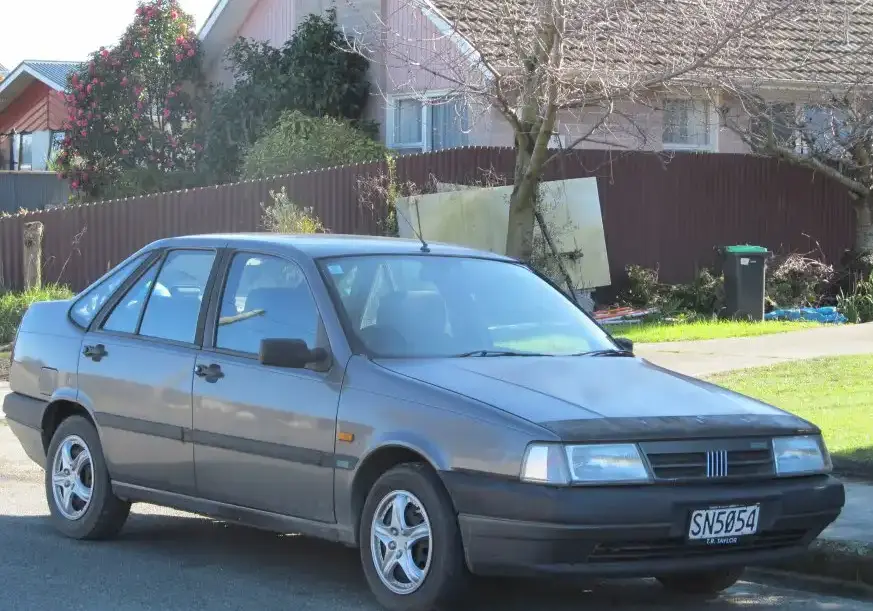
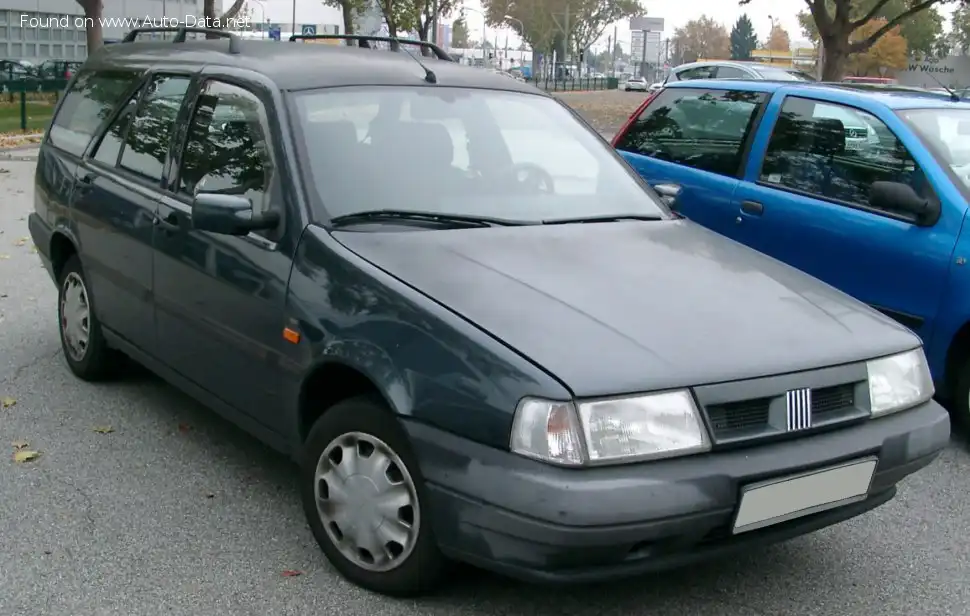
| Generation | Tempra S.w. (159) |
| Type (Engine) | 1.8 i.e. (159.BY) (101 Hp) |
| Start of production | 1994 |
| End of production | 1996 |
| Powertrain Architecture | Internal Combustion engine |
| Body type | Station wagon (estate) |
| Seats | 5 |
| Doors | 5 |
| Fuel consumption (combined) | 8.9 l/100 km (26.4 US mpg, 31.7 UK mpg, 11.2 km/l) |
| Fuel Type | Petrol (Gasoline) |
| Acceleration 0 – 100 km/h | 12.6 sec |
| Acceleration 0 – 62 mph | 12.6 sec |
| Acceleration 0 – 60 mph | 12 sec |
| Maximum speed | 183 km/h (113.71 mph) |
| Weight-to-power ratio | 12.1 kg/Hp, 82.7 Hp/tonne |
| Weight-to-torque ratio | 8.7 kg/Nm, 114.6 Nm/tonne |
| Power | 101 Hp @ 6000 rpm |
| Power per litre | 57.5 Hp/l |
| Torque | 140 Nm @ 2750 rpm (103.26 lb.-ft. @ 2750 rpm) |
| Engine layout | Front, Transverse |
| Engine Model/Code | 836 A5.000 |
| Engine displacement | 1756 cm3 (107.16 cu. in.) |
| Number of cylinders | 4 |
| Engine configuration | Inline |
| Cylinder Bore | 84 mm (3.31 in.) |
| Piston Stroke | 79.2 mm (3.12 in.) |
| Compression ratio | 9.5:1 |
| Number of valves per cylinder | 2 |
| Fuel injection system | Multi-port manifold injection |
| Engine aspiration | Naturally aspirated engine |
| Valvetrain | DOHC |
| Engine oil capacity | 5.2 l (5.49 US qt | 4.58 UK qt) |
| Coolant | 6.9 l (7.29 US qt | 6.07 UK qt) |
| Kerb Weight | 1222 kg (2694.05 lbs.) |
| Max. weight | 1820 kg (4012.41 lbs.) |
| Max load | 598 kg (1318.36 lbs.) |
| Trunk (boot) space – minimum | 500 l (17.66 cu. ft.) |
| Trunk (boot) space – maximum | 1015 l (35.84 cu. ft.) |
| Fuel tank capacity | 60 l (15.85 US gal | 13.2 UK gal) |
| Length | 4472 mm (176.06 in.) |
| Width | 1695 mm (66.73 in.) |
| Height | 1540 mm (60.63 in.) |
| Wheelbase | 2540 mm (100 in.) |
| Front track | 1435 mm (56.5 in.) |
| Rear (Back) track | 1415 mm (55.71 in.) |
| Drivetrain Architecture | The Internal combustion engine (ICE) drives the front wheels of the vehicle. |
| Drive wheel | Front wheel drive |
| Number of gears and type of gearbox | 5 gears, manual transmission |
| Front suspension | Wishbone |
| Rear suspension | Coil spring |
| Front brakes | Disc |
| Rear brakes | Disc |
| Assisting systems | ABS (Anti-lock braking system) |
| Steering type | Steering rack and pinion |
| Power steering | Hydraulic Steering |
| Tires size | 185/60 R14 |
The Fiat Tempra Station Wagon (SW), specifically the 1.8 i.e. (159.BY) variant, was a significant model in Fiat’s European lineup from 1994 to 1996. Part of the Tempra range (Type 814), which included saloon and coupe body styles, the SW offered the practicality of a station wagon within the mid-size segment. It was designed to appeal to families and those requiring ample cargo space, competing with other European estate cars like the Ford Mondeo Estate and Opel/Vauxhall Vectra Estate. The 1.8 i.e. trim occupied a middle ground in the Tempra SW range, balancing performance and fuel economy, and offering a more affordable alternative to the higher-specification 2.0L models.
Powertrain & Engine Architecture
The 1.8 i.e. Tempra SW is powered by the Fiat 836 A5.000 engine, a 1756cc inline-four cylinder gasoline engine. This engine is a key member of Fiat’s Lampredi series, known for its robust construction and relatively simple design. The engine features a dual overhead camshaft (DOHC) valvetrain operating two valves per cylinder, enhancing volumetric efficiency. A multi-point fuel injection system delivers fuel directly to each intake port, improving combustion and reducing emissions compared to earlier carbureted designs. The 9.5:1 compression ratio represents a compromise between performance and fuel efficiency. The engine produces 101 horsepower at 6000 rpm and 140 Nm (103.26 lb-ft) of torque at 2750 rpm. The engine is mounted transversely in the front of the vehicle, driving the front wheels through a standard five-speed manual transmission. This transmission provides a good spread of ratios for both urban driving and highway cruising.
Driving Characteristics
The Tempra SW 1.8 i.e. offered a comfortable and practical driving experience, though not particularly sporty. Acceleration from 0 to 60 mph took approximately 12 seconds, and the car could reach a top speed of around 114 mph. The engine provided adequate power for everyday driving, with a usable mid-range torque band. While it didn’t offer the brisk acceleration of the 2.0L variant, it was more than capable of handling typical family transportation needs. The five-speed manual transmission was well-matched to the engine’s characteristics, allowing for smooth gear changes and efficient cruising. The suspension, tuned for comfort, absorbed bumps and road imperfections effectively, providing a relatively smooth ride. Steering was light and precise, making the car easy to maneuver in urban environments. The overall driving experience was geared towards practicality and comfort rather than outright performance.
Equipment & Trim Levels
The 1.8 i.e. trim level of the Tempra SW came reasonably well-equipped for its time. Standard features typically included power steering, central locking, electric front windows, and an adjustable steering column. Interior appointments generally featured cloth upholstery, with a durable and functional design. The dashboard layout was straightforward and user-friendly, with logically placed controls. Optional extras available for the 1.8 i.e. included air conditioning, a sunroof, and an upgraded audio system. Safety features, while basic by modern standards, included ABS anti-lock brakes as standard equipment, enhancing braking performance and stability.
Chassis & Braking
The Tempra SW utilized a front-wheel-drive chassis with an independent wishbone suspension system at the front, providing good handling and ride comfort. The rear suspension employed a coil spring setup, further contributing to the car’s comfortable ride quality. The braking system consisted of disc brakes on all four wheels, offering adequate stopping power for the vehicle’s weight and performance. The inclusion of ABS (Anti-lock Braking System) was a significant safety feature, preventing wheel lockup during hard braking and maintaining steering control. The steering system employed a rack and pinion setup with hydraulic power assistance, providing precise and responsive steering feel.
Market Reception & Comparison
The Fiat Tempra SW 1.8 i.e. was generally well-received by automotive journalists and consumers as a practical and affordable family car. It was praised for its spacious interior, comfortable ride, and reasonable fuel economy. However, some critics noted that the engine lacked the refinement and performance of some competitors, such as the Ford Mondeo. Compared to other Tempra SW variants, the 1.8 i.e. offered a good balance between performance and economy. The smaller 1.6L engine was more fuel-efficient but felt underpowered, while the larger 2.0L engine provided more performance but at a higher price point and with increased fuel consumption. The diesel variants, while offering excellent fuel economy, were significantly more expensive to purchase.
Legacy
The Fiat Tempra SW 1.8 i.e. has proven to be a relatively reliable vehicle, with a reasonable number of examples still in use today. The 836 A5.000 engine is known for its durability, although regular maintenance, including timing belt replacement, is crucial to prevent potential issues. Parts availability can be a challenge in some regions, but many components are still available through specialist Fiat parts suppliers. In the used car market, the Tempra SW 1.8 i.e. represents a budget-friendly option for those seeking a spacious and practical estate car. Its relatively simple mechanical design makes it accessible for DIY maintenance and repair, appealing to enthusiasts and those looking for a cost-effective transportation solution.