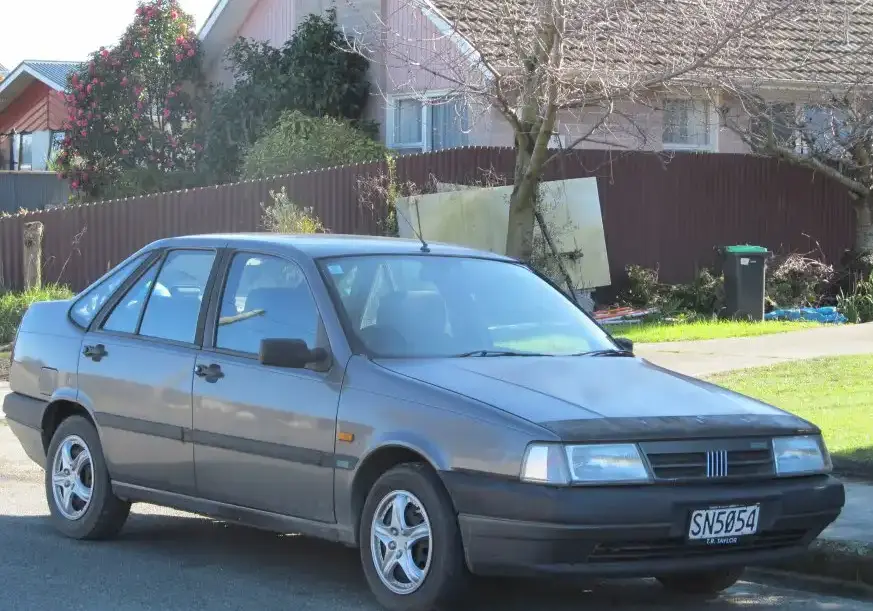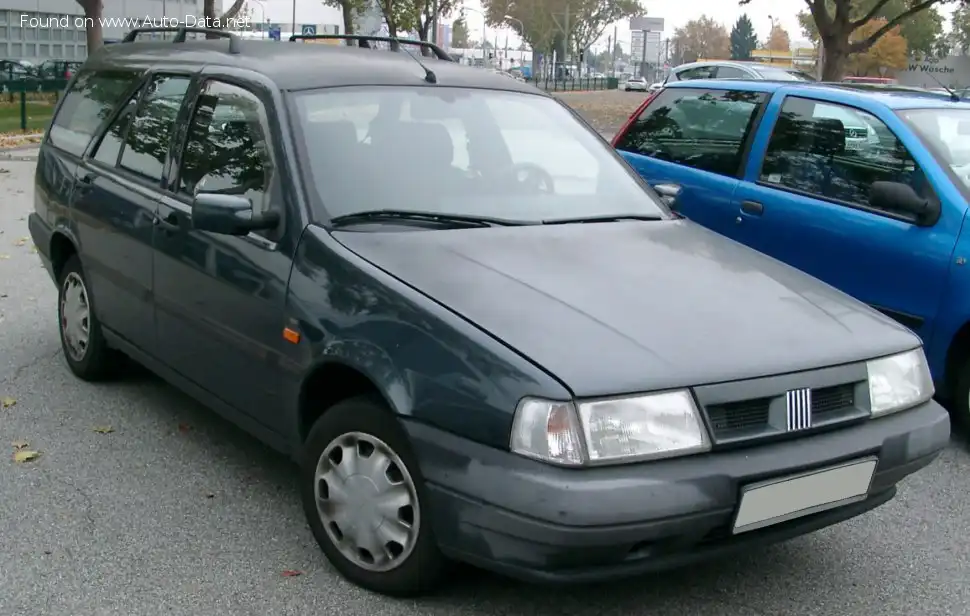
The Fiat Tempra S.w. (159) 2.0 i.e. was a station wagon produced by the Italian manufacturer Fiat between 1991 and 1995. Part of the Tempra range, the S.w. – signifying “Station Wagon” – offered a practical, family-oriented alternative to the sedan and coupe body styles. The 2.0 i.e. variant, designated 159.AP, represented a mid-range offering within the Tempra lineup, positioned above the base 1.6-liter models and below the more performance-focused 2.1-liter versions. It was primarily sold in European markets, where the station wagon body style enjoyed significant popularity. The Tempra itself was a significant model for Fiat, representing a move upmarket in terms of design, technology, and overall refinement compared to its predecessors.
Technical Specifications
| Brand | Fiat |
| Model | Tempra |
| Generation | Tempra S.w. (159) |
| Type (Engine) | 2.0 i.e. (159.AP) (113 Hp) |
| Start of production | 1991 |
| End of production | 1995 |
| Powertrain Architecture | Internal Combustion engine |
| Body type | Station wagon (estate) |
| Seats | 5 |
| Doors | 5 |
| Fuel consumption (combined) | 9.6 l/100 km |
| Fuel consumption (US mpg) | 24.5 US mpg |
| Fuel consumption (UK mpg) | 29.4 UK mpg |
| Fuel consumption (km/l) | 10.4 km/l |
| Fuel Type | Petrol (Gasoline) |
| Acceleration 0 – 100 km/h | 13.3 sec |
| Acceleration 0 – 62 mph | 13.3 sec |
| Acceleration 0 – 60 mph | 12.6 sec |
| Maximum speed | 180 km/h (111.85 mph) |
| Weight-to-power ratio | 11.1 kg/Hp |
| Weight-to-torque ratio | 8 kg/Nm |
| Power | 113 Hp @ 5750 rpm |
| Power per litre | 56.6 Hp/l |
| Torque | 156 Nm @ 3300 rpm (115.06 lb.-ft. @ 3300 rpm) |
| Engine layout | Front, Transverse |
| Engine Model/Code | 160 A6.000 |
| Engine displacement | 1995 cm3 (121.74 cu. in.) |
| Number of cylinders | 4 |
| Engine configuration | Inline |
| Cylinder Bore | 84 mm (3.31 in.) |
| Piston Stroke | 90 mm (3.54 in.) |
| Compression ratio | 9.5:1 |
| Number of valves per cylinder | 2 |
| Fuel injection system | Multi-port manifold injection |
| Engine aspiration | Naturally aspirated engine |
| Valvetrain | DOHC |
| Engine oil capacity | 5 l (5.28 US qt | 4.4 UK qt) |
| Coolant capacity | 8.8 l (9.3 US qt | 7.74 UK qt) |
| Kerb Weight | 1252 kg (2760.19 lbs.) |
| Max. weight | 1850 kg (4078.55 lbs.) |
| Max load | 598 kg (1318.36 lbs.) |
| Trunk (boot) space – minimum | 500 l (17.66 cu. ft.) |
| Trunk (boot) space – maximum | 1025 l (36.2 cu. ft.) |
| Fuel tank capacity | 60 l (15.85 US gal | 13.2 UK gal) |
| Length | 4472 mm (176.06 in.) |
| Width | 1695 mm (66.73 in.) |
| Height | 1540 mm (60.63 in.) |
| Wheelbase | 2540 mm (100 in.) |
| Front track | 1435 mm (56.5 in.) |
| Rear track | 1415 mm (55.71 in.) |
| Drivetrain Architecture | Front wheel drive |
| Number of gears | 4 |
| Gearbox type | Automatic transmission |
| Front suspension | Wishbone |
| Rear suspension | Coil spring |
| Front brakes | Ventilated discs |
| Rear brakes | Disc |
| Assisting systems | ABS (Anti-lock braking system) |
| Steering type | Steering rack and pinion |
| Power steering | Hydraulic Steering |
| Tires size | 185/65 R14 |
INTRODUCTION
The Fiat Tempra S.w. 2.0 i.e. (159.AP) was produced from 1991 to 1995 as part of the Tempra range, which replaced the aging Fiat Regata. The Tempra represented a significant step forward for Fiat, offering a more modern design, improved safety features, and a wider range of engines. The S.w. (Station Wagon) variant catered to buyers needing more cargo space and practicality. The 2.0 i.e. engine, coupled with a four-speed automatic transmission, positioned this model as a comfortable and convenient choice for families and those prioritizing ease of driving over outright performance. It was built on the Fiat Tipo platform (project 176), also known as the 1HX0/A3 platform, which was shared with other models like the Lancia Delta and Alfa Romeo 155.
Powertrain & Engine Architecture
The heart of the Tempra S.w. 2.0 i.e. is the 160 A6.000 engine, a 1995cc inline-four cylinder gasoline engine. This engine featured a dual overhead camshaft (DOHC) valvetrain with two valves per cylinder. It utilized a multi-port fuel injection system, which improved fuel efficiency and throttle response compared to earlier carburetor-equipped engines. The 2.0-liter engine produced 113 horsepower at 5750 rpm and 156 Nm (115 lb-ft) of torque at 3300 rpm. The four-speed automatic transmission was a conventional hydraulic unit, offering smooth but not particularly quick shifts. This transmission was chosen to provide a relaxed driving experience, appealing to buyers who preferred convenience over sporty handling. The engine’s design was relatively simple and robust, contributing to its overall reliability.
Driving Characteristics
The Tempra S.w. 2.0 i.e. with the automatic transmission offered a comfortable, if not exhilarating, driving experience. Acceleration from 0-60 mph took around 12.6 seconds, and top speed was approximately 112 mph. The automatic transmission’s gear ratios were geared towards fuel economy and smooth cruising rather than rapid acceleration. Compared to the manual transmission versions of the 2.0 i.e., the automatic suffered a slight performance penalty. The automatic also felt less engaging to drive. However, the automatic provided a significant advantage in stop-and-go traffic, making it a popular choice for urban drivers. The suspension was tuned for comfort, providing a reasonably smooth ride, although it could feel somewhat soft in corners.
Equipment & Trim Levels
The Tempra S.w. 2.0 i.e. typically came equipped with features such as power steering, central locking, electric front windows, and an adjustable steering column. Interior upholstery was typically cloth, with a relatively simple dashboard layout. Optional extras included air conditioning, a sunroof, and upgraded audio systems. The trim level of the 2.0 i.e. was generally considered mid-range, offering a good balance of features and affordability. It was a step up from the base models in terms of interior appointments and standard equipment, but lacked some of the luxury features found on the higher-spec 2.1-liter versions.
Chassis & Braking
The Tempra S.w. featured a front-wheel-drive layout with an independent wishbone suspension at the front and a coil spring rear suspension. Braking was provided by ventilated discs at the front and solid discs at the rear. An anti-lock braking system (ABS) was standard equipment, enhancing safety. The chassis was designed to provide a comfortable ride and reasonable handling, prioritizing stability over sporty dynamics. The steering was a rack-and-pinion system with hydraulic power assistance, offering light and easy steering feel.
Market Reception & Comparison
The Tempra S.w. 2.0 i.e. was generally well-received by automotive critics as a practical and comfortable family car. The 2.0-liter engine was considered adequate for most driving situations, and the automatic transmission provided a convenient driving experience. However, some critics noted that the performance was not particularly exciting, and the handling was not as sharp as some of its competitors. Compared to the 1.6-liter Tempra S.w., the 2.0 i.e. offered noticeably more power and refinement. Compared to the 2.1-liter versions, it lacked the extra performance and prestige. Fuel economy was reasonable for the time, averaging around 24.5 mpg in combined driving.
Legacy
The Fiat Tempra S.w. 2.0 i.e. has become a relatively rare sight on the roads today. The 160 A6.000 engine is known for its reliability, provided it is properly maintained. Common issues include oil leaks and wear on the timing belt. The automatic transmission is generally durable, but can require servicing over time. In the used car market, Tempra S.w. models in good condition are sought after by enthusiasts and collectors. The Tempra S.w. represents a significant chapter in Fiat’s history, showcasing the company’s ability to produce practical, well-equipped, and reliable family cars.